Connect with us

Technology

AfDB Signs $525,000 Grant to Strengthen Fintech Development

Published

on

African fintech

By Adedapo Adesanya

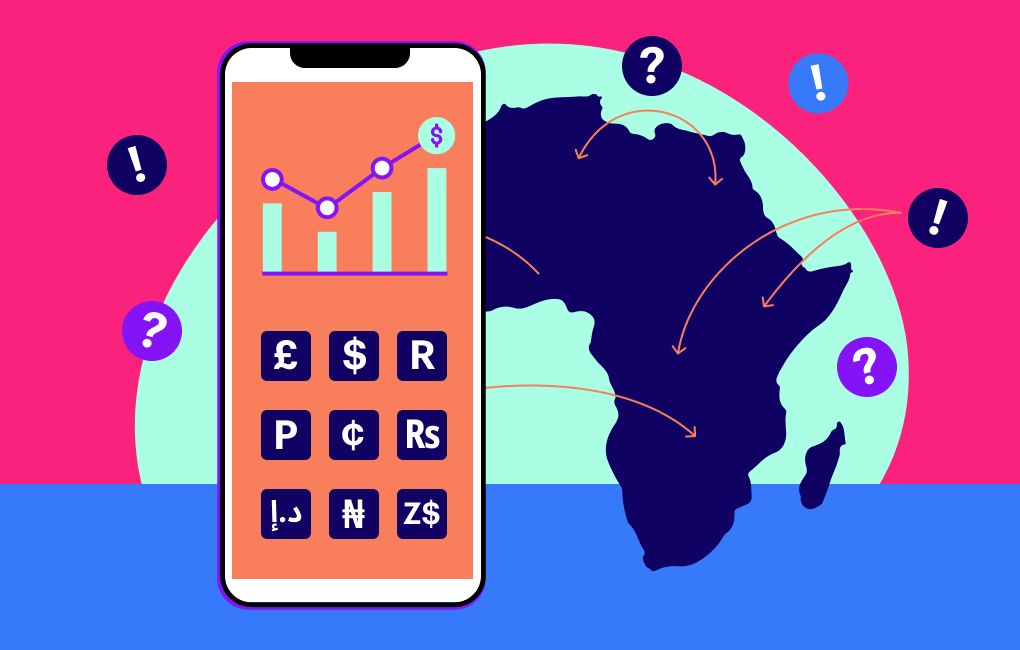
The African Development Bank (AfDB) has signed a $525,000 grant agreement with Africa Fintech Network (AFN) to set up an online portal that will serve as a one-stop shop for all fintech activities in Africa.

The agreement for the portal, the Africa Fintech Hub, was signed on April 4, 2023.

The Africa Digital Financial Inclusion Facility (ADFI) will provide funding and technical assistance to the Africa Fintech Network to host and manage the African Fintech Hub.

The hub is a digital platform that will enable fintech associations across Africa to pool resources and knowledge, strengthen relationships and partnerships, as well as showcase the work of fintech on the continent, including those which are female-led or owned.

The African Fintech Hub will be delivered through a strategic partnership between AFN and the Centre for Financial Regulation and Inclusion (Cenfri), which will provide technical support in the development of the Hub, as well as promote research, knowledge creation and other innovative initiatives.

Speaking on this, Mr Lamin Barrow, Director General of the African Development Bank’s Nigeria Country Department, underscored the importance of the bank’s support to the project, saying it would contribute to strengthening the fintech ecosystem in Africa, boost competitiveness in the digital world, whilst leveraging partnerships.

“At the African Development Bank (AfDB), we recognize that we have a major role to play in helping to create a robust, efficient and sustainable fintech ecosystem across the continent. We are accelerating the delivery of our High 5 strategic priorities through our various innovative interventions.

“These have helped improve access to digital infrastructure, including Information and Communications Technology linkages to landlocked countries and broadband internet services. The need to leapfrog barriers and scale up inclusive digital financial solutions to accelerate economic resilience across Africa has become even more urgent.”

AfDB, together with its partners, launched the Africa Digital Financial Inclusion Facility to make catalytic investments in support of innovative ideas such as the Africa Fintech Hub Project aimed at expanding access and usage of digital financial solutions to meet the needs of all Africans.

On his part, Mr Segun Aina, President of Africa Fintech Network, commended the Bank for supporting the initiative, noted, “We are truly excited about this partnership with the African Development Bank, and the possibilities of working in partnership with Cenfri on multiple initiatives with fintech across Africa to further our mission to drive Africa-led fintech solutions, stimulate information exchange, ideation and the support and to promote innovative technologies within the financial services sector across Africa and beyond.”

ADFI Coordinator, Mrs Sheila Okiro, said the bank, through the partnership with the Africa Digital Financial Inclusion Facility, is delighted “to support this project to strengthen the fintech sector, furthering our work to leverage technology to contribute to closing the financial inclusion gap and creating employment across Africa.”

Currently, ADFI-supported projects are enhancing digital financial infrastructure and regional interoperability through the development of payment systems and infrastructure in Ethiopia and the ECOWAS region. Other projects are equipping financial sector regulators with innovative technology to strengthen consumer protection in Ghana, Rwanda and Zambia.

The facility is also supporting projects to enhance the deployment of digital micro-insurance to smallholder farmers in Nigeria, Zambia and Kenya, as well as to build capacity for cyber resilience and help to remove barriers to access to fintech services across the continent.


Adedapo Adesanya is a journalist, polymath, and connoisseur of everything art. When he is not writing, he has his nose buried in one of the many books or articles he has bookmarked or simply listening to good music with a bottle of beer or wine. He supports the greatest club in the world, Manchester United F.C.

Click to comment

Leave a Reply

Your email address will not be published. Required fields are marked *

Technology

The Best AI Face Swap Tools in 2026: A Complete Guide

Published

on

AI Face Swap Technology

The Rise of AI Face Swap Technology

AI face swap technology has evolved from a novelty into a powerful creative tool. What once required professional video editing software and hours of manual work can now be done in seconds with a single click. Fueled by advances in deep learning and generative AI, face swap tools have become remarkably realistic and accessible. By 2026, millions of content creators, marketers, filmmakers, and everyday users rely on these tools for entertainment, business, and personal projects. As the technology matures, choosing the right tool has never been more important — or more competitive.

How to Use AI Face Swap in Your Work and Daily Life

AI face swap tools are no longer just for fun — they’re reshaping how we work and communicate:

  • Content Creation & Social Media: Swap faces to create viral memes, funny videos, or personalized content that drives engagement on TikTok, Instagram, and YouTube.
  • Marketing & Advertising: Brands use face swap to localize ad campaigns by replacing models with regional faces, saving time and budget on reshoots.
  • Film & Video Production: Indie filmmakers use AI face swap for de-aging effects, stunt doubles, or recreating scenes without expensive CGI.
  • E-Commerce & Fashion: Virtual try-on experiences let shoppers see how they’d look in different outfits or hairstyles.
  • Personal Fun: Swap your face onto movie characters, historical figures, or your favorite celebrities for entertaining social content.
  • Education & Training: Create realistic training simulations or educational videos with customized faces.

How to Judge a Good AI Face Swap Tool

Not all face swap tools are created equal. Here’s what to look for:

  • Realism & Quality: Smooth blending, accurate skin tone matching, and consistent lighting.
  • Speed: Results in seconds, not minutes.
  • Ease of Use: An intuitive interface for non-technical users.
  • Privacy & Security: Clear data policy — no storing images without consent.
  • Multi-Format Support: Handles photos, videos, and real-time swaps.
  • Customization Options: Fine-tuning for expression, angle, and lighting.
  • Pricing & Value: Transparent pricing with a free tier or trial.

Part 4: Top 5 AI Face Swap Tools in 2026

🥇 1. Easemate — Best Overall Pick

Website: https://www.easemate.ai/

AI Face Swap Technology

🔑 Key Features: Supports photo & video face swapping with real-time preview, batch processing, automatic skin tone matching, intelligent lighting adjustment, and multi-face detection for group photos. Privacy-first design — images are never stored without consent.

✅ Pros: Exceptional realism with accurate edge detection and shadow rendering. Lightning-fast even for HD video. Beginner-friendly interface with zero technical knowledge required. Flexible, affordable pricing for individuals and teams. Strong privacy policy for peace of mind.

❌ Cons: Batch video processing and 4K export require a paid plan.

2. DeepFaceLab — Best for Advanced Users & Filmmakers

DeepFaceLab

🔑 Key Features: Deep neural network-based swaps with full control over face alignment, blending modes, mask refinement, and custom model training on personal datasets.

✅ Pros: Completely free and open-source. Unmatched customization for experienced users. Huge active community with tutorials and pre-trained models. Ideal for long-form video and cinematic-quality projects.

❌ Cons: Steep learning curve, requires high-performance GPU, no cloud version.

3. Reface — Best for Fun & Social Media

🔑 Key Features: Mobile-first app with a massive library of celebrity clips, movie scenes, GIFs, and meme templates. Real-time facial landmark mapping and one-tap social sharing to Instagram, TikTok, and WhatsApp.

✅ Pros: Extremely easy to use — just take a selfie and pick a template. Library updated regularly with trending pop culture content. Perfect for casual entertainment and viral social content.

❌ Cons: Mobile only; not suitable for professional or high-resolution output.

4. FaceSwapper.ai — Best for Quick, No-Fuss Photo Swaps

🔑 Key Features: Browser-based, one-click photo face swap with no account required. Supports JPG, PNG, and WEBP formats. Developer-friendly API for app integration and automated workflows.

✅ Pros: Zero-signup experience — incredibly accessible for one-off tasks. Fast, straightforward, and frictionless. Robust API for developers needing programmatic access.

❌ Cons: Limited video support and fewer customization options. Best for simple, single-image use cases.

5. Vidnoz AI — Best All-in-One Video Platform

🔑 Key Features: Full video creation suite including face swap, AI avatar generation, text-to-video, voice cloning, lip-sync dubbing, and multilingual video translation. Face swap integrates seamlessly with the broader production workflow.

✅ Pros: Outstanding value as a multi-function platform. Solid video output quality with regular improvements. Generous free tier available. Great for businesses producing localized or multilingual video content at scale.

❌ Cons: Face swap is a secondary feature — lacks the depth and advanced controls of dedicated tools.

Part 5: Conclusion

AI face swap in 2026 is smarter and more accessible than ever. Among all options, Easemate stands out as the best all-around choice — combining professional-grade quality with an effortless experience and a privacy-first approach. Start with Easemate today.

Part 6: FAQ

Q1: Is AI face swap legal?
Yes, for personal and creative use. Using it for deception or non-consensual imagery is illegal in many jurisdictions.

Q2: Is Easemate free?
It offers a free tier; premium plans unlock batch processing and high-res video output.

Q3: Can these tools work on videos?
Yes — Easemate, DeepFaceLab, and Vidnoz AI all support video face swapping.

Q4: How do I protect my privacy?
Choose platforms with clear privacy policies. Easemate is known for its privacy-first approach.

Q5: Photo vs. video face swap — what’s the difference?
Photo swap is faster and simpler. Video requires frame-by-frame processing but delivers more impressive results.

Q6: Do I need technical skills?
Not at all! Tools like Easemate are designed for everyday users — just upload and let the AI handle the rest.

Continue Reading

Technology

Nigeria Jumps to 38th Globally, Tops Africa in Responsible AI Index

Published

on

Responsible AI Index

By Adedapo Adesanya

Nigeria has emerged as Africa’s highest-ranked country in the latest Global Index on Responsible AI (GIRAI), climbing 42 places globally in just two years.

Nigeria rose from 80th globally in 2024 to 38th in the world with a score of 45.93.

The GIRIA ranking boosts Nigeria’s appeal as a destination for AI talent, innovation and investment.

According to the Cape Town-based independent research and policy think tank, the ranking is one of the world’s most comprehensive assessments of responsible AI. It evaluates 135 countries across five pillars: inclusion and diversity, ethics and sustainability, labour and skills, trust and safety, and AI use in public services.

Despite that rapid adoption, the report found that public governance capacity remains weak. Average GIRAI scores stand at only about 35 out of 100 globally, while evidence of implementation exists in just 55 per cent of countries with responsible AI frameworks, dropping to 45% across the Global South.

Nigeria’s rise reflects deliberate policy efforts to strengthen its AI ecosystem.

According to the Minister of Communications, Innovation and Digital Economy, Mr Bosun Tijani, the government has accelerated work on its National Artificial Intelligence Strategy (NAIS), expanded digital public infrastructure, invested in digital skills, developed governance frameworks for emerging technologies, and strengthened international partnerships to ensure AI is deployed responsibly.

“This recognition is a testament to Nigeria’s deliberate efforts to build an AI ecosystem that is inclusive, responsible, and aligned with our development priorities,” he said.

“We believe that Africa must not only participate in the AI revolution but also contribute meaningfully to shaping how these technologies are governed and deployed globally.

“Our focus remains on creating the infrastructure, talent, and policy environment that will enable AI to deliver real value for our people and support President Bola Tinubu’s vision of building a $1 trillion economy,” he added.

The report identified Nigeria as a global “Bright Spot” for combining AI skills development with safeguards for children and vulnerable groups.

The index noted that Nigeria is among the few African countries that have attempted to simultaneously prepare citizens for an AI-driven future while strengthening protections against the risks posed by emerging technologies.

It highlighted the National Artificial Intelligence Strategy, which mandates AI literacy programmes, teacher training and broader capacity-building initiatives across the country.

The report also cited the Federal Government’s flagship 3 Million Technical Talent (3MTT) programme for delivering structured AI and machine learning training through a hybrid model designed to reach young people nationwide.

In terms of regulation, GIRAI recognised the Nigeria Data Protection Act and the General Application and Implementation Directive (GAID) 2025 for introducing enhanced safeguards for children’s personal data, including parental consent requirements and restrictions on decisions based solely on automated processing.

The report said these initiatives position Nigeria as an example of how governments can pursue AI adoption without overlooking digital rights and citizen protection.

Continue Reading

Technology

ipNX Seeks Accessible, Affordable, Locally Relevant AI to Drive Africa’s Digital Future

Published

on

ipNX Africa digital future

By Modupe Gbadeyanka

The need for accessible, affordable and locally relevant Artificial Intelligence (AI) to drive Africa’s digital future has been emphasised by the Managing Director of ipNX, Mr Ejovi Aror.

Mr Aror, whose paper was presented by the company’s Director of Strategic Business Initiatives, Mr Olusola Teniola, at the West Africa Telecoms Infrastructure Summit and Exhibition (WATISE) on June 18, 2028, said AI is not a new concept, but has been in existence since 1955 and is an integral part of today’s digital ecosystem, with intelligent algorithms already embedded in so-called ‘traditional’ telecommunications networks and services.

At the event held in Lagos, Mr Aror, in his paper titled Next-G Telecoms Infrastructure and Ethical AI in Networking Management, stated that, “Artificial Intelligence already shapes how networks are managed, optimised, and secured. The conversation is not about whether AI will transform telecommunications, but how we can ensure that its benefits are responsibly deployed.”

He emphasised that while Africa may not have played a leading role during the earliest stages of AI development, the continent still has a significant opportunity to shape the next phase of innovation by developing technologies that address local challenges and realities.

“Africa does not need to be solely a consumer of AI technologies developed elsewhere. There is a unique opportunity to build solutions that reflect our local contexts, address our specific needs, and create value for our economies and communities,” he stated.

The presentation also highlighted the importance of ethical considerations in AI deployment, particularly as intelligent systems become increasingly involved in network operations, service delivery, decision-making processes, and customer interactions.

Mr Aror stressed that the development of AI must be guided by principles of transparency, accountability, privacy, and inclusivity to ensure that innovation delivers meaningful benefits to society.

He further noted that the success of AI across Africa will depend on continued investment in digital infrastructure, including broadband connectivity, data centres, cloud platforms, and reliable telecommunications networks capable of supporting advanced digital services.

The discussions at WATISE 2026 reinforced the strategic importance of the telecommunications industry as the foundation of Nigeria’s digital economy. While stakeholders highlighted the role of telecom infrastructure in enabling innovation across various sectors, participants underscored the need for improved digital literacy, public awareness, and responsible use of emerging technologies.

ipNX was recognised at the event as the Best Customer-centric Telecoms Operator. As Nigeria’s leading technology and connectivity provider, the brand remains committed to advancing the infrastructure, innovation, and collaborative partnerships required to unlock the full potential of AI and support Africa’s digital transformation.

Continue Reading