
Technology
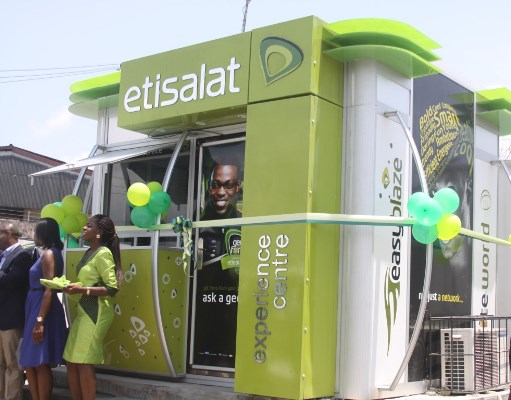
Anxiety as Etisalat Nigeria Largest Shareholder with 70% Pulls Out

By Dipo Olowookere
The crisis rocking Etisalat Nigeria in recent times may have just taken its worst turn going by latest report by Premium Times.
It was said that the largest shareholder of the company, Mubadala Development Company of United Arab Emirates, has withdrawn its 70 percent stake in the firm.
Etisalat Nigeria is the country’s fourth largest telecommunication firm and has been having talks with banks in Nigeria on how to repay a loan it got from them few years ago.
Premium Times, relying on information relayed to it by its source, who begged not to be named, said Mubadala, an Abu Dhabi Government-owned investment and development company, has hinted Etisalat Nigeria as well as the Nigerian Telecommunications Commission (NCC) of its decision to quit the firm.
“I can tell you that Mubadala’s withdrawal takes effect from today (Thursday),” one source said, asking not to be named because he was not authorised to speak on the matter, Premium Times reports.
It was gathered that the remaining 30 percent stake in Etisalat Nigeria is controlled by Emerging Markets Telecommunications Services (EMTS, promoted by Mr Hakeem Bello-Osagie, who is the Chairman.
The latest development means the board of Etisalat Nigeria might be dissolved, with the creditor banks effectively taking control.
Etisalat, which commenced business in Nigeria in 2009, acquired the unified access license, including a mobile license and spectrum in the GSM 1800 and 900 MHZ bands from the NCC in January 2007.
The company is rated by the NCC as Nigeria’s fourth largest telecoms operator, with about 21 million subscribers or about 12.9 percent of the telecom market share as at January 2017.
MTN takes the lead with 60 million, or 40 percent market share; Globacom, 37million, or 24.6 percent; and Airtel 34.6 million, or 22.8 percent.
“The banks do not want the services of the company to cease,” one of our sources said. “So they are setting up a vehicle to keep whatever remains of Etisalat afloat. The banks may approach the NCC tomorrow or latest next week,” Premium Times said.
Mubadala could not be reached for comments Thursday evening. Repeated telephone calls to its Abu Dhabi headquarters were unanswered. An email enquiry is yet to be responded to as at the time of publishing this report.
Also, Chairman of Etisalat, Mr Hakeem Bello-Osagie, did not answer calls made to him by PREMIUM TIMES Thursday.
But an official of the company, Seyi Osunfedo, later called back to say she was not aware of the latest action by Mubadala.
“I can’t confirm that information for now,” she said. “As you are aware, discussions have been ongoing for some time now with various authorities to find ways to resolve the crisis. I am not aware that that decision has been taken.”
Asked whether Etisalat stands a chance of surviving should the UAE investor fail to rescind its decision to leave, Ms Osunfedo said, “I don’t think there is any difficulty that cannot be surmounted.”
A spokesperson for Access Bank, Mr Abdul Imoyo, did not answer or return multiple calls. He also did not respond to a text message.
Also, the spokesperson for the NCC, Mr Tony Ojobo, did not respond to calls. He however responded to a text message, saying he was in a meeting.
Source: Premium Times







By Modupe Gbadeyanka
The leading global communications platform, Truecaller, now has a strategic direct sales reseller partnership with AnyMind Group, a Business-Process-as-a-Service company for marketing, e-commerce and digital transformation.
Under this partnership, AnyMind Group will serve as the exclusive intermediary for Truecaller’s advertising inventory across Egypt, UAE, Qatar, Saudi Arabia, Israel, Ghana, Nigeria, Morocco, Malaysia, Singapore and Vietnam.
The scope of the partnership is focused specifically on enabling brands and agencies to leverage Truecaller’s premium ad formats to reach highly engaged, high-intent users through relevant, data-driven advertising solutions.
Through this collaboration, Truecaller will accelerate its direct advertising business across the Middle East & North Africa (MENA) and Southeast Asia (SEA) regions.
With a strong on-ground presence and established relationships with leading advertisers and agencies across MENA and SEA markets, AnyMind Group brings deep regional expertise that will support the scaling of Truecaller’s advertising footprint locally.
The partnership is designed to empower brands with impactful placements on Truecaller’s trusted communications platform, helping drive meaningful engagement with users in these fast-growing digital economies.
“As Truecaller continues to expand its global advertising business, partnerships with strong regional players like AnyMind Group are critical to delivering localised expertise and measurable outcomes for advertisers.
“MENA and Southeast Asia represent high-growth markets with evolving digital maturity, and through this collaboration, we aim to bring brands closer to consumers via trusted and contextual communication experiences on our platform,” the Vice President and Global Head for Truecaller Ads Business, Hemant Arora, said.
Also, the Managing Director for Growth Markets at AnyMind Group, Aditya Aima, said, “We are excited to partner with Truecaller to open its inventory to brands across MENA and Southeast Asia. With Truecaller’s scale and trusted user ecosystem, combined with our market depth and networks, we see strong potential to drive more relevant, high-impact advertising outcomes for advertisers looking to deepen engagement in these dynamic markets.”
By Modupe Gbadeyanka
A software product company established in 2012, Capillary Technologies India Limited, has acquired the customer engagement and loyalty company, SessionM, from Mastercard.
This followed a definitive agreement signed by the global leader in AI-powered customer loyalty and engagement solutions with the renowned digital payments firm.
The acquisition of SessionM is the latest in a series of strategic moves by Capillary, following its successful listing on the Indian Stock Exchange in November 2025.
With SessionM in its portfolio, Capillary reinforces its position as a global leader in enterprise loyalty, offering a leading platform to the world’s most sophisticated enterprise brands.
Mastercard has identified Capillary Technologies—consistently recognised as a Leader in The Forrester Wave as the ideal partner to lead SessionM into its next era of growth.
As part of the agreement, a specialised team within SessionM will transition to Capillary, ensuring that the platform’s deep technical expertise is preserved.
SessionM’s esteemed global customer base—which includes Fortune 500 retailers, airlines, and CPG brands—will continue to receive the same high-calibre support and service they experienced before the acquisition.
“M&A has been a key growth strategy for Capillary over the years, and as a public company, we are delivering on that promise to our shareholders and the market.
“By bringing SessionM into our portfolio, we are not just expanding our footprint across the globe; we are further strengthening our loyalty capabilities to deliver one of the industry’s most comprehensive offerings.
“Our mission remains to provide enterprises across industries with specialised, AI-native loyalty technology solutions,” the chief executive of Capillary Technologies, Aneesh Reddy, commented.
By Dipo Olowookere
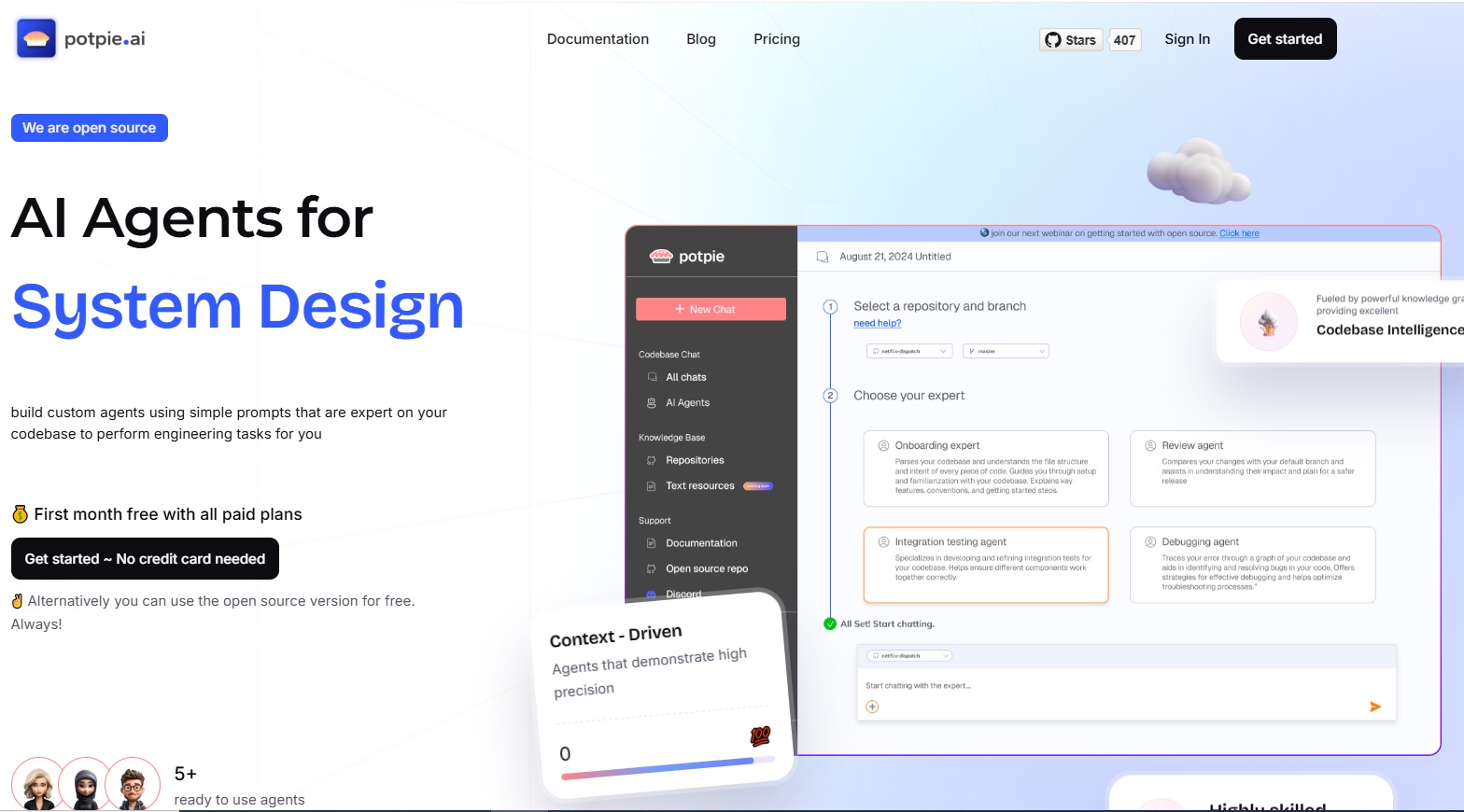
About $2.2 million pre-seed round to help engineering teams unify context across their entire stack and make AI agents genuinely useful in complex software environments has been announced by Potpie.
Potpie was established by Aditi Kothari and Dhiren Mathur, who were determined to unify context across the entire engineering stack and enabling spec driven development.
As generative AI adoption accelerates, most tools focus on surface-level code generation while ignoring the deeper problem of context.
Large language models are powerful, but without access to system-level understanding, tooling history, and architectural intent, they struggle in real production environments.
Traditional approaches rely on senior engineers to manually hold this context together, a model that breaks down at scale and fails when AI agents are introduced.
The platform enables teams to automate high-impact and non-trivial use cases across the software development lifecycle, like debugging cross-service failures, maintaining and writing end-to-end tests, blast radius detection and system design.
It is designed for enterprise companies with large and complex codebases, starting at around one million lines of code and scaling to hundreds of millions.
Rather than acting as another coding assistant, Potpie builds a graphical representation of software systems, infers behaviour and patterns across modules, and creates structured artefacts that allow agents to operate consistently and safely.
A statement made available to Business Post on Monday revealed that the funding support came from Emergent Ventures, All In Capital, DeVC and Point One Capital.
The capital will be used to support early enterprise deployments, expand the engineering team, and continue building Potpie’s core context and agent infrastructure, it was disclosed.
“As AI makes code generation easier, the real challenge shifts to reasoning across massive, interconnected systems. Potpie is our answer to that shift, an ontology-first layer that helps enterprises truly understand and manage their software,” Kothari was quoted as saying in the disclosure.
A Managing Partner at Emergent Ventures, Anupam Rastogi, said, “In large enterprises, the real challenge is not generating code, it is understanding the system deeply enough to change it safely.
“Potpie’s ontology-first architecture, combined with rigorous context curation and spec-driven development, creates a structured model of the entire engineering ecosystem. This allows AI agents to reason across services, dependencies, tickets, and production signals with the clarity of a senior engineer. That is what makes Potpie uniquely capable of solving complex RCA, impact analysis, and high-risk feature work even in codebases exceeding 50 million lines.”












-
 Feature/OPED6 years ago
Davos was Different this year
-
Travel/Tourism10 years ago
Lagos Seals Western Lodge Hotel In Ikorodu
-

 Showbiz3 years ago
Estranged Lover Releases Videos of Empress Njamah Bathing
-
 Banking8 years ago
Sort Codes of GTBank Branches in Nigeria
-

 Economy3 years ago
Subsidy Removal: CNG at N130 Per Litre Cheaper Than Petrol—IPMAN
-

 Banking3 years ago
Sort Codes of UBA Branches in Nigeria
-

 Banking3 years ago
First Bank Announces Planned Downtime
-

 Sports3 years ago
Highest Paid Nigerian Footballer – How Much Do Nigerian Footballers Earn