Connect with us

Technology

Fourth Industrial Revolution: NITDA Working to Ensure Job Security—DG

Published

on

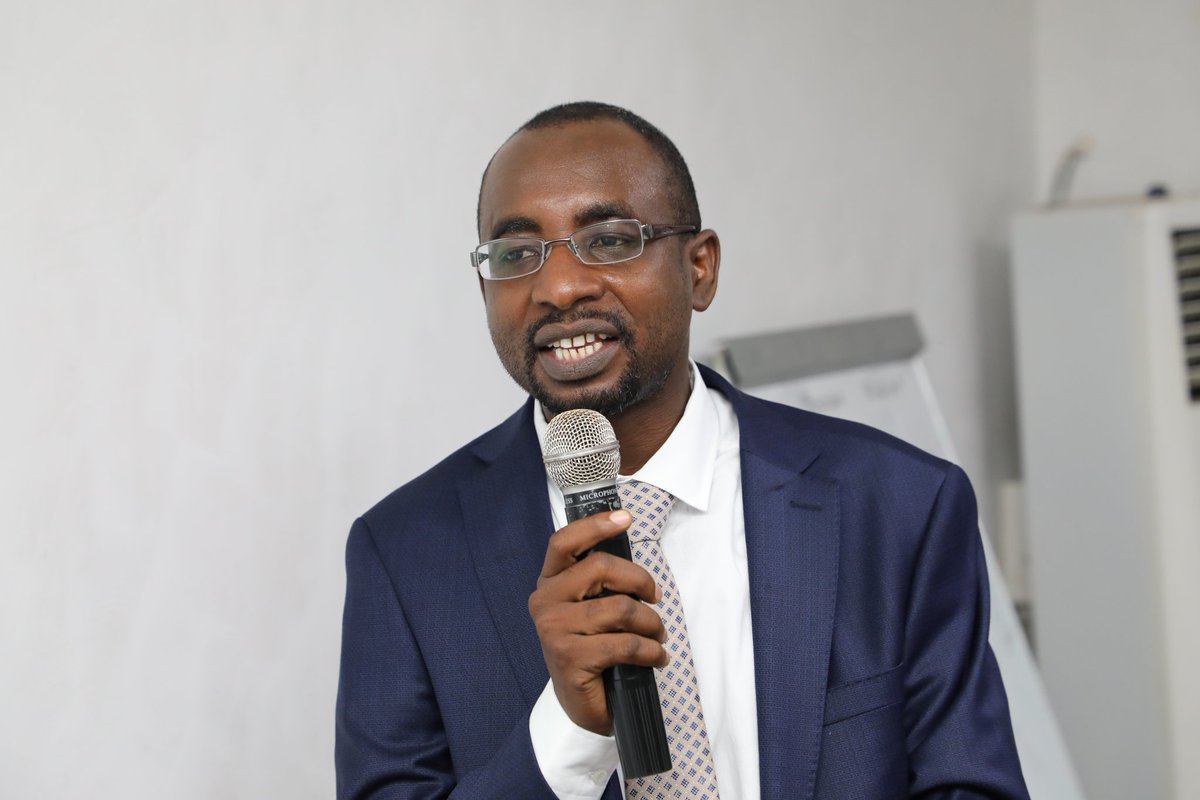
NITDA DG Kashifu Inuwa Abdullahi

By Adedapo Adesanya

The National Information Technology Development Agency (NITDA) has said that it was working hard to ensure Nigerians are not left without jobs as the country works towards digital automation in the country.

This disclosure was made by the agency’s Director-General, Mr Kashifu Inuwa Abdullahi, at an international conference on Information Technology in Education and Development (ITED 2020) organised by Academia in Information Technology Profession, Ahmadu Bello University Zaria.

He said it was necessary to look into the concerns and advantages of Fourth Industrial Revolution (FIR) particularly as it relates to the fear of people losing their jobs due to digital automation.

The Director-General said that the agency was working round the clock help organisations adapt to the rapid transformation and also to prevent security risks triggered by digitisation.

Mr Inuwa, who was represented by Mr Usman Gambo Abdullahi, Director IT Infrastructure Solutions, stated that in order to adapt to the ICT Development in the FIR, the agency was developing new and updating regulatory framework putting into consideration economic, environmental and social aspects in a way it serves and benefits the people.

He assured participants that NITDA is quite aware of the concerns as it has and will continue to establish an adequate regulatory system for new business models and services while allowing the economy and the society to benefit from innovative ideas.

“One of our priorities as a regulatory agency is to strengthen the innovation capacity of the IT industry, which is why we have been deploying hubs and technology infrastructures in various parts of the nation,” he noted.

He also added that “We provide assistance to SMEs, start-ups and researchers by funding projects in line with digital innovation.”

The DG stressed that in order to better understand the FIR, it’s of importance to focus on the technologies driven aspects, which are: Artificial Intelligence (AI), Block-chain, Virtual Reality (VR), Augmented Reality, Holographic storages, Nanotechnology, Robotics, Biotechnology, IOT and many others.

“It is important to note that with the 4th Industrial Revolution presenting both immense opportunities and challenges, utmost cooperation is required to ensure it benefits our economic, social, cultural, and individual lives.

“This is the reason we are ensuring that all stakeholders from civil society, private and public sector are fully involved in the decision-making. We do engage stakeholders in our policy-making processes,” he assured.


Adedapo Adesanya is a journalist, polymath, and connoisseur of everything art. When he is not writing, he has his nose buried in one of the many books or articles he has bookmarked or simply listening to good music with a bottle of beer or wine. He supports the greatest club in the world, Manchester United F.C.

Technology

19 Startups Pitch Solutions to Investors, Others at Demo Day in Ilorin

Published

on

Ilorin Innovation Hub 19 Emerging Startups

By Modupe Gbadeyanka

Nineteen emerging startups are being showcased at the 2026 Demo Day organised by the Ilorin Innovation Hub in partnership with IHS Nigeria, a part of IHS Holding Limited, also known as IHS Towers.

The participating small firms took part in the hub’s accelerator and incubation programmes. At this event, themed The Convergence, they will pitch their solutions to investors, venture capital funds, corporate partners, and the media.

The platform would be used to help them unlock funding opportunities, foster strategic collaborations, and amplify visibility for these startups that are developing solutions across critical sectors, including agriculture, health-tech, green energy, lifestyle, and digital services.

“We believe innovation and digital technology are powerful drivers of economic growth and sustainable development. This is why we partnered with the Kwara State Government on the Ilorin Innovation Hub.

“It is impressive and very fulfilling to see the diverse portfolio of ideas and solutions showcased today from the hub within a year of the commencement of operations. This speaks to the depth of creativity among Nigerians and what is possible when they are equipped and supported.

“Today’s event makes me proud of our investment in the space and underscores IHS Nigeria’s continued commitment to supporting technology, entrepreneurship, and digital innovation in Nigeria,” the chief executive of IHS Nigeria, Mr Mohamad Darwish, said.

The Managing Director of Ilorin Innovation Hub, Temi Kolawole, also said, “Today, we showcase 19 startups that have shown that when you combine talent with the right support, the results speak for themselves.

“The Ilorin Innovation Hub exists to ensure that geography is never a barrier to building something extraordinary, and this Demo Day is proof that we are on the right track.”

The Ilorin Innovation Hub, a partnership between the Kwara State Government and IHS Nigeria, began operations in February 2025 with programmes managed by Co-creation Hub and Future Africa.

The Demo Day presents an opportunity to take stock and assess how the Ilorin Innovation Hub is helping to nurture and bring to life groundbreaking ideas and solutions supporting economic resilience and addressing real-world societal challenges.

Continue Reading

Technology

Lagos Tightens Cyber Defences to Attract Investment, Protect Businesses

Published

on

Securing Africa’s Digital Future

By Adedapo Adesanya

The Lagos State Government has released a set of cybersecurity guidelines to enhance digital safety for businesses, public institutions, and residents in the state, which is home to thousands of enterprises.

A statement by the State’s Commissioner, Information and Strategy, Mr Gbenga Omotoso, noted that the development represents another decisive step in Lagos’ mission to become a secure and globally competitive digital hub.

The National Information Technology Development Agency (NITDA) estimates that Nigeria loses over $500 million (approximately N250 billion) annually to cybercrime, underscoring the urgency for stronger, coordinated security measures.

Lagos’s rapid evolution into a SMART City heightens vulnerability to cyber threats, Omotosho noted, adding that the newly issued guidelines outline clear, practical, and scalable cybersecurity best practices for small businesses, medium and large enterprises, and Ministries, Departments, and Agencies (MDAs).

They are aligned with key national frameworks, including the Cybercrime Act (2024), the Nigeria Data Protection Act (2023), and the National Cybersecurity Policy and Strategy (2021).

According to the guidelines, these recommendations are not regulatory mandates but tools designed to empower stakeholders with practical, context-specific guidance.

The Lagos State Government reaffirmed its commitment to fostering a secure digital environment that promotes innovation, investment, and public trust.

“The guidelines further strengthen Lagos State’s leadership in advancing digital trust and building a resilient, future-ready digital economy.

“The Government praised the Lagos State Cybersecurity Advisory Council, chaired by Prof. Fene Osakwe, for its strategic leadership and technical expertise in developing the framework.

“The release of these guidelines underscores Lagos State’s unwavering dedication to safeguarding digital assets, enhancing public-private collaboration, and ensuring that every organisation—from sole proprietorships to multinational corporations—can operate confidently in a secure digital environment.

“As the document highlights, A cybersecure Lagos is essential for sustaining its position as one of the most dynamic and globally competitive tech hubs of the 21st century”, the statement added.

The Lagos State Government said it will continue to refine and expand the guidelines to address emerging threats and evolving technologies, ensuring that cybersecurity remains a foundational pillar of the State’s digital transformation.

Continue Reading

Technology

Zoho Nigeria Champions Women’s Digital Empowerment at Guardian Women Festival

Published

on

Kehinde Ogundare Guardian Women Festival

By Modupe Gbadeyanka

The urgent need to bridge the digital gap for female entrepreneurs has again been emphasised by the Country Head of Zoho Nigeria, Mr Kehinde Ogundare.

Speaking at the Guardian Woman Festival held at the Federal Palace Hotel in Lagos recently, Mr Ogundare stressed that technology does not replace the strengths women already bring to business, such as relationship building and community engagement, but instead, it amplifies them, enabling entrepreneurs to reach wider audiences and scale more efficiently.

“The difference is not talent. Not capital. Not ambition. It is digital adoption,” he said during his keynote address titled Give Value, Gain Growth: Women Driving Reciprocal Innovation in the Digital Economy.

“Smart tools create smart businesses. Smart businesses create strong economies. When women entrepreneurs and leaders have access to the right tools, the possibilities for growth are limitless,” he added.

Zoho Nigeria partnered with Guardian Newspapers for the event as part of activities to mark a month-long initiative celebrating women’s contributions to business, governance, and social development while promoting digital empowerment for female entrepreneurs.

The Guardian Women Festival, themed Reciprocity, was to encourage the exchange of value, networks, and digital innovation to strengthen women-led businesses and foster collaboration.

While Nigeria has the highest concentration of women-owned businesses in Africa, fewer than 30 per cent currently use digital tools to manage or grow their operations.

During the festival’s panel session tagged Women in the Business of Digital Innovation, the Sales Manager for Zoho Nigeria, Ms Zubaida Aliyu, highlighted how women are uniquely positioned to create shared value in digital spaces by building platforms that encourage knowledge sharing, mentorship, and collaboration.

She also challenged organisations that continue to view women’s digital inclusion primarily as corporate social responsibility rather than a strategic business priority.

“Tech creates a level playing field,” Ms Aliyu said, noting that digital platforms remove limitations related to location and infrastructure size.

Addressing organisations that overlook the economic value of inclusive digital strategies, she added, “They are leaving money on the table — they need to think of it as a strategy, not charity.”

Through its participation in the Guardian Woman Festival, Zoho reaffirmed its commitment to providing affordable and accessible enterprise-grade technology to businesses of all sizes. By helping women transition from manual effort to digital efficiency, Zoho aims to support entrepreneurs in building scalable enterprises and ensure their sustained success in Africa’s digital economy.

Continue Reading

Trending