Connect with us

Technology

Ilori Wants More Investments in Technology in Solving Problems

Published

on

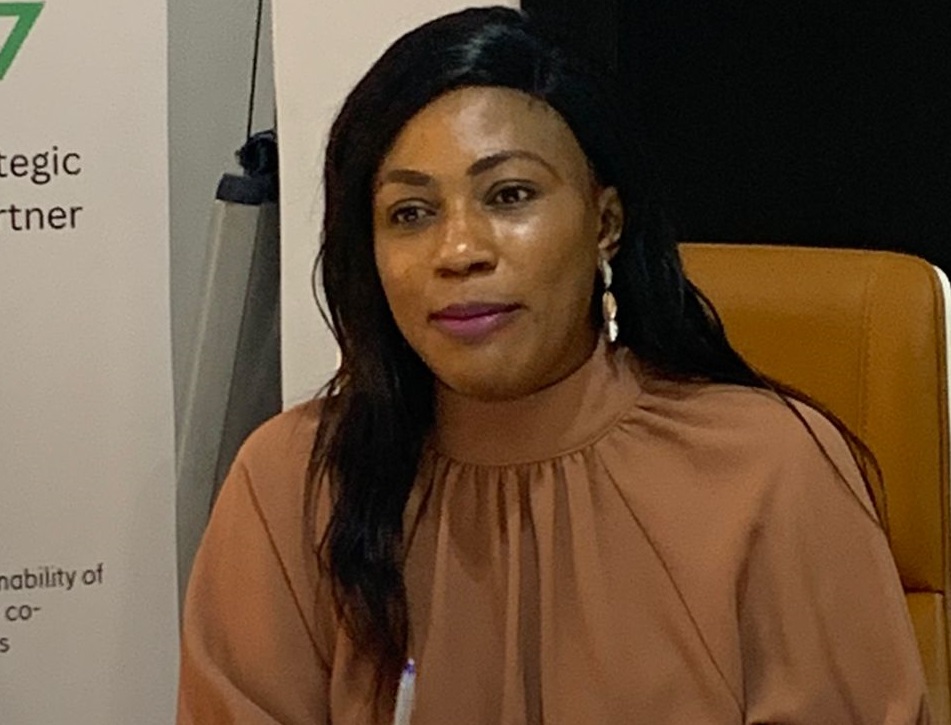
Roseline Ilori more investments in technology

A technology enthusiast, Mrs Roseline Ilori, has reiterated the need for government at all levels and stakeholders to consider more investments in technology; not just software development, but in robotics, artificial intelligence, bio-medicine, voice biometrics and a host of other technology spectra.

Mrs Ilori, the founder and Chief Executive Officer (CEO) of Bridge57 Solutions Limited, made the call in a statement in Lagos.

According to her, such investments will shore up manufacturing competitiveness via authentication and traceability of goods and services and improve physical and cyber security, among others.

She said that government needs to be more proactive in making the Nigerian technology environment more friendly, seeing that the growth and young people’s interest in technology were massive.

She noted that Nigerian technology experts were the most sought-after in developed economies as the relocation syndrome had taken up to half of the country’s technology brains.

“The fact is that the environment we are in is not conducive enough for technology to thrive, so the government has to do more in that regard to bring out more technology to the fore.

“The ‘Japa Syndrome’ has been a major challenge affecting our human capital potential, hence, the need to grow more of these professionals internally so that when some leave, many more would be around to keep the country going.

According to the Bridge57 boss, Nigeria still lags earnestly in innovation as she submitted that, unlike the notion many are having, technology is quite different from innovation.

She noted; “In terms of innovation, we are still very far in Nigeria. For instance, while I had the opportunity to go through some training on innovation in some international organizations, I realized that many people talk about innovation, but very few people do innovation, as a lot of people don’t really understand what innovation means.

“For technology, yes, we are doing well, but for innovation as a practice itself, we still lag. Innovation is not just about technology, it is deeper than that. Innovation can be applied to processes, products, marketing and different areas of business models. But technology can use innovation; when people often mention innovation, people assume that it is technology, but they are two different things. They both need each other in a way to flourish.”

However, the technology expert also advised the government to remodel the Nigerian educational curriculum across levels to accommodate the practical aspects of technology to engender early exposure to the nitty-gritty of technology and innovation.

She said that the need to expose, encourage and sensitise the Nigerian child through the educational system from a tender age was due to the massive economic potential of technology and its ability to solve almost every problem across sectors.

“Technology as of today is beyond computers and smartphones as it encompasses a whole lot which, if youths are properly exposed to practice, can yield massive economic potential and gains for the country.

“We must, therefore, rework the curriculum to accommodate technology, innovation and robotics beyond the surface use of computers.

“In our universities, a lot is going on technologically that the government can take advantage of, but they must first invest enormous resources right from the universities to open students’ minds to the practical aspects of technology.

“More practical approach that is relatable to real life more than the abstract classes the Nigerian child is used to is what is needed to open up their minds to the endless possibilities of technology,” she said.

Mrs Ilori said that government funding, upon disbursement, must be put to good use to secure the future of technology and educate more persons willing to use their intelligence for the nation’s development.

She charged young girls with interest in the technology industry, perceived as a male-dominated industry, to take the bulls by the horn, even if they might be few, and assert their competencies and capabilities.

“Funding is key, and the cash flow is the blood of any business, and this is necessary to build innovation-driven start-ups.

Speaking on Bridge57 Solutions, where she had implemented diverse business initiatives and products for several organizations, NGOs, and government parastatals using strategic foresight, drive and determination, Ilori said the organisation was established to organise workshops, using innovative practices, methodology and tools to improve the Nigerian technology environment.

“I have been in the technology space for 18 years now in Nigeria and several other countries in Africa where we have deployed many solutions in the past. I decided to start Bridge57 Solutions because I saw that there are more problems to be solved in Nigeria and in Africa at large. Our problems are in abundance, if I can put it that way. But where there are problems, there are opportunities as well. So I was looking for the opportunity to solve more problems on a larger scale. That was one of the things that prompted me. I see there are lots of opportunities that would enable more entrepreneurs to be born.

“At Bridge57, there are two pillars; innovation and technology and in between them is digital transformation. Those are the two pillars our business is being built on.

“We have a lot of international partners that we work with that are technology providers. We partner with them to bring such technology that does not exist here. For instance, looking at voice biometrics, we have a solution in voice biometrics. It would surprise you that our voices are as unique as our fingerprints. We can use that to help people using services, but they are not very literate. Some people have problems with remembering their PINs, because they are not literate, and you see people that are not so literate telling people their passwords and therefore exposing themselves. How can we use that voice, for example, in terms of security, as we have a lot of security issues in our society?

“These are some of the problems that this technology, as simple as it might seem, can solve. Aside the voice technology, there is a technology that uses artificial intelligence, AI. There is a partner we are working with, we use AI to identify moving objects. It can tell if the person is a male or female. These are some innovations we do at Bridge57,” Mrs Ilori submitted.


Click to comment

Leave a Reply

Your email address will not be published. Required fields are marked *

Technology

Interswitch Inducts New Interns into Developer Academy to Fortify Tech Talent Pipeline

Published

on

Interswitch’s Developer Academy

By Aduragbemi Omiyale

A cohort of developer interns has been inducted into the Developer Academy of Interswitch as part of efforts to deepen Africa’s tech talent pipeline.

The new cohort emerged through a rigorous multi-stage process involving technical assessments and interviews. They were chosen from over 20,000 applications.

The talents were sourced from across key engineering tracks, including Backend Development, DevOps, Mobile Development, Frontend Engineering, and Quality Assurance.

Their induction highlights both the scale of interest in software engineering opportunities in Nigeria and Interswitch’s role in nurturing the next generation of highly skilled technology professionals.

During the 9-month programme, participants will benefit from mentorship by experienced professionals, exposure to enterprise-grade systems, and the development of workplace readiness skills essential for today’s dynamic work environment.

Designed as an intensive and structured learning experience, the Developer Academy combines theoretical instruction with real-world application, equipping participants with the skills required to thrive in an increasingly global and competitive technology landscape.

At the end of the programme, top-performing interns may be offered full-time roles within Interswitch, while others are well-positioned to pursue opportunities across the broader technology landscape.

“At Interswitch, we have always believed in the capacity to see beyond the immediate challenges and focus on long-term impact. While the migration of skilled talent remains a reality, our approach is to actively shape the outcomes by building a strong and sustainable pipeline of technology professionals,” the chief executive of Interswitch, Mr Mitchell Elegbe, said.

“We are therefore committed to equipping individuals with the capabilities to contribute meaningfully to the broader technology ecosystem, locally and globally, not just for our own needs at Interswitch. In doing so, we are not only strengthening the industry but also reinforcing Nigeria’s position as a source of globally competitive engineering talent,” he added.

Also commenting, the Human Resources Officer, Mr Franklin Ali, said, “The Developer Academy reflects our long-term commitment to building talent at scale. We are equipping these young professionals not just with technical skills, but with the mindset, discipline, and adaptability required to thrive in diverse environments.

“Whether they build their careers within Interswitch, contribute to the local ecosystem, or explore global opportunities, they represent the strength and potential of Nigerian talent and carry forward the standard of excellence we are committed to building.”

Beyond its immediate training objectives, Interswitch’s Developer Academy is anchored on a broader strategic vision, one that addresses the ongoing migration of skilled talent from Nigeria and other developing economies.

As global demand for software engineers continues to rise, many highly skilled professionals are increasingly recruited by international organisations.

Interswitch’s approach reframes this trend, positioning talent development both as a means of local capacity building and as an opportunity to strengthen Nigeria’s reputation as a global hub for technology expertise.

Continue Reading

Technology

Flexmobile to Disrupt Nigeria’s Telecom Landscape

Published

on

Flexmobile

By Modupe Gbadeyanka

Nigeria’s telecom landscape is about to be abuzz, with the much-anticipated launch of Flexmobile from Hazon Technologies.

Feelers indicate that the company will soon make a commercial debut, as the regulatory approval is now in the final stage.

It was gathered that the commercial rollout for Flexmobile should be June 1, 2026, as this depends on the authorisation of the Nigerian Communications Commission (NCC), which regulates the sector. The telco will have the distinctive 081 number series.

Early signals suggest a product ecosystem engineered around flexibility, data-centricity, and user control—an approach aligned with the evolving expectations of Nigeria’s digitally connected population.

For seamless operations, Flexmobile has sealed commercial agreements with its MVNE, IMBIL, and Airtel Nigeria.

“What lies ahead is more than a launch—it is the beginning of a new way to experience telecoms in Nigeria,” the chief executive of Hazon Technologies, Mr Victor ‘Gbenga Afolabi, said at a recent media briefing.

“After years of building the right partnerships and infrastructure, we are approaching a defining milestone. Flexmobile is designed to challenge conventions and introduce a smarter, more flexible telecom experience for Nigerians,” he added.

While full details of its offering will be unveiled at launch, Flexmobile is expected to introduce a suite of value-added services designed to go beyond traditional connectivity—positioning the brand at the intersection of telecoms, lifestyle, and digital enablement.

Backed by strong institutional partnerships and a robust MVNE framework, Flexmobile enters the market not just as another operator, but as a platform with the potential to reshape how telecom services are consumed and experienced.

Continue Reading

Technology

ipNX, NCC to Drive Inclusive Digital Growth Across Nigeria

Published

on

ipNX Nigeria NCC

By Aduragbemi Omiyale

A leading Information and Communications Technology (ICT) company, ipNX Nigeria, is joining forces with the Nigerian Communications Commission (NCC) to accelerate broadband penetration and drive inclusive digital growth across the country.

Recently, an executive delegation of the organisation paid a visit to the chairman of the regulatory agency, Mr Idris Olorunimbe.

“We are pleased to engage with the new chairman of the NCC and show our support as he takes on this important role.

“Strong leadership and a clear policy direction are essential to unlocking the full potential of Nigeria’s digital economy.

“At ipNX, we remain committed to working closely with the commission and other stakeholders to expand broadband access, enhance connectivity in educational institutions, and ultimately bridge the digital divide.

“This collaboration will empower millions of Nigerians and further position the country as a leader in Africa’s technological evolution,” the Managing Director of ipNX Nigeria, Mr Ejovi Aror, said at the visit.

In his remarks, Mr Olorunnimbe thanked the firm for the show of support, reiterating the commission’s commitment to fostering an enabling environment for private sector participation in achieving universal broadband access across Nigeria.

This collaboration is expected to advance Nigeria’s transformation agenda in technology and help boost the federal government’s broadband agenda for the country.

ipNX Nigeria has said it remains at the forefront of delivering cutting-edge broadband and ICT solutions, and this engagement underscores its unwavering dedication to supporting national development through technology-driven initiatives.

Continue Reading

Trending