Connect with us

Technology

Interswitch Fosters Innovation Through Technovation Competition

Published

on

Technovation competition

Africa’s leading integrated payments and digital commerce company, Interswitch, has successfully concluded the second edition of its Technovation competition, a hackathon aimed at nurturing innovation and creativity among its employees. The initiative showcases Interswitch’s commitment to fostering innovation and creating impactful solutions that address diverse challenges across the African continent.

The competition, which spanned several weeks, provided a unique platform for Interswitch employees to explore their problem-solving capabilities and devise innovative solutions to real-world problems. With a strong focus on technology-driven advancements, this program provided participants with the necessary tools, mentorship, and a platform to develop groundbreaking ideas and transform them into viable prototypes.

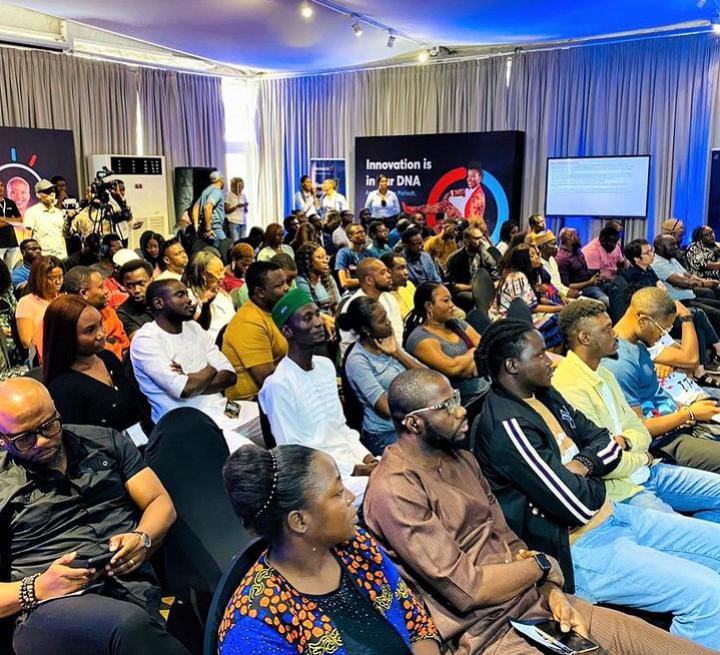
Following a review of numerous entries, five teams were shortlisted to compete at the grand finale. The chosen teams include Paystars, The Innovators, Team Spark, Team Flash, and The Pioneers who pitched solutions focused on healthcare, food and financial technology.

At the end of the keenly contested pitch session which took place on Friday, July 7, 2023, at the Radisson Blu Anchorage Hotel, Victoria Island, Lagos, Team Flash emerged winner of Technovation 2.0, receiving N1,000,000. Team Spark followed closely behind in second place, wining N750,000 and Team Paystars emerged in third place, winning the sum of N500,000.

Interswitch recognizes the immense potential within its workforce and is dedicated to unlocking the creative genius of its employees. By providing a conducive environment for innovation, the company continues to harness the collective brilliance and expertise of its staff members to drive positive change in various sectors, including finance, e-commerce, healthcare, oil and gas and transportation, among others.

Speaking on the successful completion of the Technovation 2.0, Akeem Lawal, Managing Director, Payment Processing & Switching (Interswitch Purepay) emphasized the significance of empowering employees to design solutions that address Africa’s unique challenges.

He said, “At Interswitch, we firmly believe that the key to driving meaningful change in Africa lies in nurturing and empowering our talented people. The Technovation 2.0 competition is a testament to our commitment to innovation and our unwavering belief in the transformative power of technology. By supporting our staff members in their pursuit of groundbreaking solutions, we aim to create a brighter future for Africa.”

Throughout the competition, participants were encouraged to avidly explore novel approaches to tackle complex problems. Leveraging Interswitch’s extensive industry expertise and cutting-edge technologies, the developers devised ingenious solutions that hold the potential to revolutionize various sectors and improve the lives of millions of people across Africa.

The grand finale ended on a high note as participants and other Interswitch employees were treated to an exciting after-party.

As an organization deeply rooted in Africa, Interswitch understands the unique challenges facing the continent and is dedicated to playing a pivotal role in developing solutions to these challenges and driving the growth and development of the continent. The Technovation competition serves as a testament to Interswitch’s unwavering commitment to creating innovative solutions that address Africa’s most pressing needs, ultimately contributing to the continent’s overall advancement.


Technology

Nigeria Trails Global Internet Shift as IPv6 Uptake Stalls at 5%—NCC

Published

on

IPv6 Uptake Nigeria

By Adedapo Adesanya 

The Nigerian Communications Commission (NCC) has warned that Nigeria’s internet future is at risk, with IPv6 adoption stuck at just five per cent while global reserves of IPv4 addresses are completely exhausted.

Speaking at the inauguration of the Nigeria IPv6 Council in Lagos, the chief executive of the NCC, Mr Aminu Maida, described the moment as “a defining moment in Nigeria’s digital evolution,” but said major gaps remain.

IPv4 and IPv6 are two versions of the Internet Protocol (IP) addressing system. IP is a set of communication rules that provides data exchange over the Internet. His warning indicates that Nigeria is still relying on an obsolete internet addressing system, and unless it accelerates IPv6 adoption, it could face slower growth, higher costs, and reduced competitiveness in the digital economy.

“According to our 2026 approval measurements, Nigerians’ IPv6 adoption stands at approximately five per cent, while leading economies have surpassed that.

“Global IPv4 reserves are exhausted, while the rapid expansion of IT networks, IoT, cloud services and AI-driven applications has pushed the limits of legacy internet addressing,” Mr Maida said.

He stressed that the transition to IPv6 was no longer optional but “a strategic necessity for national competitiveness, security and economic sovereignty.” The council, established as a national chapter of the global IPv6 Forum in 2014, has led advocacy efforts over the past four years, but Maida said more coordinated action was required.

“This is not a task any single institution can accomplish alone. It demands collaboration among regulators, operators, enterprises, academia and consumers,” he stated.

He added that the NCC had signed a Memorandum of Understanding with an international partner for capacity building across the public sector, while some government agencies and private organisations have launched pilot IPv6 deployments.

The NCC EVC charged the newly inaugurated council members to deliver quarterly progress updates, drive capacity building with academic institutions, lead migration of government networks, and unlock industry investment in IPv6 infrastructure.

“The time for adoption and prioritisation of IPv6 deployments across your networks and platforms is now. “The decisions you make today will determine Nigeria’s digital competitiveness,” he added.

Speaking about the newly inaugurated Council, the National President of the IPv6 Council, Mr Muhammed Rudman, emphasised that Nigeria lagged behind in IPv6 adoption.

He said Nigeria’s internet readiness trailed global standards, with only about five per cent of internet users connected via IPv6 compared to a 40 per cent global average.

Mr Rudman noted that Africa’s average stands at six per cent, putting Nigeria below the continental benchmark despite its large digital economy.

He identified key challenges: the continued availability of IPv4 addresses in the AfriNIC region, lack of financial support for training, and no urgent push from ISPs because IPv4 still meets customer needs. “It doesn’t affect their bottom line,” he said.

Continue Reading

Technology

Interswitch Retail Summit 2026: Rethinking the Playbook for Nigeria’s Retail Leaders

Published

on

Interswitch

The Interswitch Retail Summit 2026 will convene on April 23, 2026, at the Lagos Marriott Hotel Ikeja, bringing together senior leaders across Nigeria’s retail ecosystem for a focused conversation on the future of commerce. The forum, themed “The Modern Retail Playbook: What Works, What’s Changing, What’s Next?”, is designed to foster meaningful, execution-driven dialogue among decision-makers and key industry stakeholders. At its core, the event aims to bridge the gap between insight and action in a rapidly evolving market.

Nigeria’s retail sector is undergoing a profound and inevitable evolution. The familiar structures that once defined how businesses operate, how customers engage, and how transactions are completed are steadily giving way to a more dynamic, technology-driven ecosystem. For many organisations, this shift has moved beyond theory into daily reality, where decisions around growth, efficiency, and customer experience must now be made within the context of constant change.

At the centre of this evolution is the growing influence of digital technology. Consumers are more informed, more connected, and more demanding than ever before. They expect seamless interactions, faster service, and consistent experiences across both physical and digital channels. Meeting these expectations requires more than incremental improvements; it calls for a fundamental rethinking of how retail operations are structured, delivered, and scaled.

Leadership, therefore, has taken on a more integrated and strategic role. Today’s Chief Executive Officers (CEOs), Chief Technology Officers (CTOs), and Chief Financial Officers (CFOs) are not just managing their respective functions; they are collectively responsible for navigating a new kind of business environment. Strategy, technology, and finance are no longer separate conversations; they intersect in ways that directly influence an organisation’s ability to compete and grow.

Across Nigeria, there are already clear signs of adaptation. Retailers are leveraging data to better understand customer preferences and tailor their offerings in real time. Payment solutions are becoming more seamless, reducing friction at checkout and enabling new forms of commerce. At the same time, partnerships across the ecosystem are unlocking efficiencies and opening new pathways for growth. Yet, while progress is evident, it remains uneven.

Many organisations are still grappling with how to translate emerging trends into practical strategies that deliver measurable outcomes. This underscores the importance of platforms that bring industry leaders together. When decision-makers exchange ideas, challenge assumptions, and learn from one another, the entire ecosystem benefits. It is through these shared conversations that best practices are refined, new approaches are tested, and meaningful progress is accelerated.

As a company with over two decades of experience enabling digital payments and commerce across Africa, Interswitch Group has seen firsthand how collaboration drives innovation. Its work across retail and the broader commerce ecosystem reinforces a simple but powerful reality: the most effective solutions are often developed through partnership. Whether it is integrating payment systems, improving operational efficiency, or enhancing customer engagement, the ability to work across boundaries is becoming a defining feature of successful organisations.

The timing of the forum is particularly significant. Nigeria’s economic landscape continues to evolve, presenting both challenges and opportunities for businesses. Rising operational costs, shifting consumer spending patterns, and increased competition are prompting organisations to rethink traditional approaches. At the same time, advances in technology are opening new possibilities for efficiency, scalability, and innovation. Navigating this dual reality requires a balanced approach, one that combines strategic foresight with disciplined execution.

Operational efficiency will be a key area of focus at the forum. In a competitive environment, the ability to streamline processes, reduce waste, and optimise resources can significantly impact performance. Technology plays a central role in enabling this shift through automation, improved visibility, and more informed decision-making. However, unlocking these benefits requires more than tools; it demands organisational alignment and strong leadership commitment.

The forum will also explore the future of retail in Nigeria, with a focus on emerging trends and their implications for business strategy. From the rise of omnichannel retailing to the growing importance of data-driven insights, the forces shaping the industry are increasingly interconnected. Understanding these dynamics is essential for leaders looking to position their organisations for sustained success.

Ultimately, the evolution of Nigeria’s retail sector is not a distant prospect; it is already underway. The question for business leaders is no longer whether they will be affected, but how they will respond. Will they take a proactive approach, seeking out insights and building the partnerships needed to thrive, or will they struggle to keep pace with change?

Platforms like the Interswitch Retail Summit 2026 offer a timely opportunity to choose the former. By bringing together the individuals shaping the future of retail, the forum creates space for learning, collaboration, and decisive action. In a rapidly evolving landscape, such platforms are no longer optional; they are essential for leaders looking to build resilient, future-ready retail businesses in Nigeria.

Continue Reading

Technology

4 Nigerian Firms for 2026 Google for Startups Accelerator Africa Cohort

Published

on

Startups Accelerator Africa Cohort1

By Aduragbemi Omiyale

Four Nigerian firms have been selected to join the 10th Google for Startups Accelerator Africa Cohort, which began on April 13 and will end on June 19, 2026.

Fifteen companies are participating in the hybrid programme, which will receive dedicated guidance from experienced mentors and industry experts, alongside hands-on technical workshops focused on AI and machine learning.

The four Nigerian startups chosen for this scheme include Bani, MasteryHive AI, Regxta, and Termii.

They were picked from an exceptionally competitive pool of nearly 2,600 applications. The beneficiaries are utilising Artificial Intelligence (AI) to address critical local and regional challenges.

As for Bani, it is a cross-border payments infrastructure platform eliminating settlement delays for African businesses trading globally, while MasteryHive AI is an AI-native platform automating transaction reconciliation, fraud detection, and AML monitoring.

On its part, Regxta combines alternative data-driven credit scoring with a hybrid digital-agent distribution model to deliver financial products to unbanked micro businesses, while Termii uses its AI-native communications infrastructure platform to ensure reliable financial messaging for banks and fintechs.

African tech founders are actively solving fundamental infrastructural challenges, bridging gaps in financial inclusion, healthcare, and supply chains with complex AI.

The continent’s venture ecosystem showed remarkable resilience by raising $3.9 billion in 2025. However, scaling deep-tech solutions requires specialised technical infrastructure, advanced cloud capabilities, and strategic mentorship to complement this capital.

Accelerator initiatives provide these exact tools, ensuring local innovations can sustainably grow into businesses that power the continent’s digital economy.

“At Termii, we’re building AI-powered infrastructure that ensures financial transactions don’t fail, from login PINs to payment OTPs and fraud alerts.

“The Google Startup Accelerator is helping us accelerate our AI roadmap and scale globally, and even in the first week, access to technical support and insights has been incredibly valuable for our next phase of growth,” the chief executive of Termii, Mr Gbolade Emmanuel, stated.

“We are absolutely thrilled to welcome these exceptional founders into Class 10. African startups are driving essential economic growth and social development.

“Our role is to serve as a supportive partner, providing these developers and founders with the technical infrastructure, mentorship, and global network they need to scale their solutions and amplify their real-world impact,” the Head of Startup Ecosystem for Google Africa, Mr Folarin Aiyegbusi, disclosed.

Since launching in 2018, the Google for Startups Accelerator Africa program has supported 106 startups from 17 African countries, empowering them to collectively raise over $263 million and create more than 2,800 jobs.

Continue Reading

Trending