Connect with us

Technology

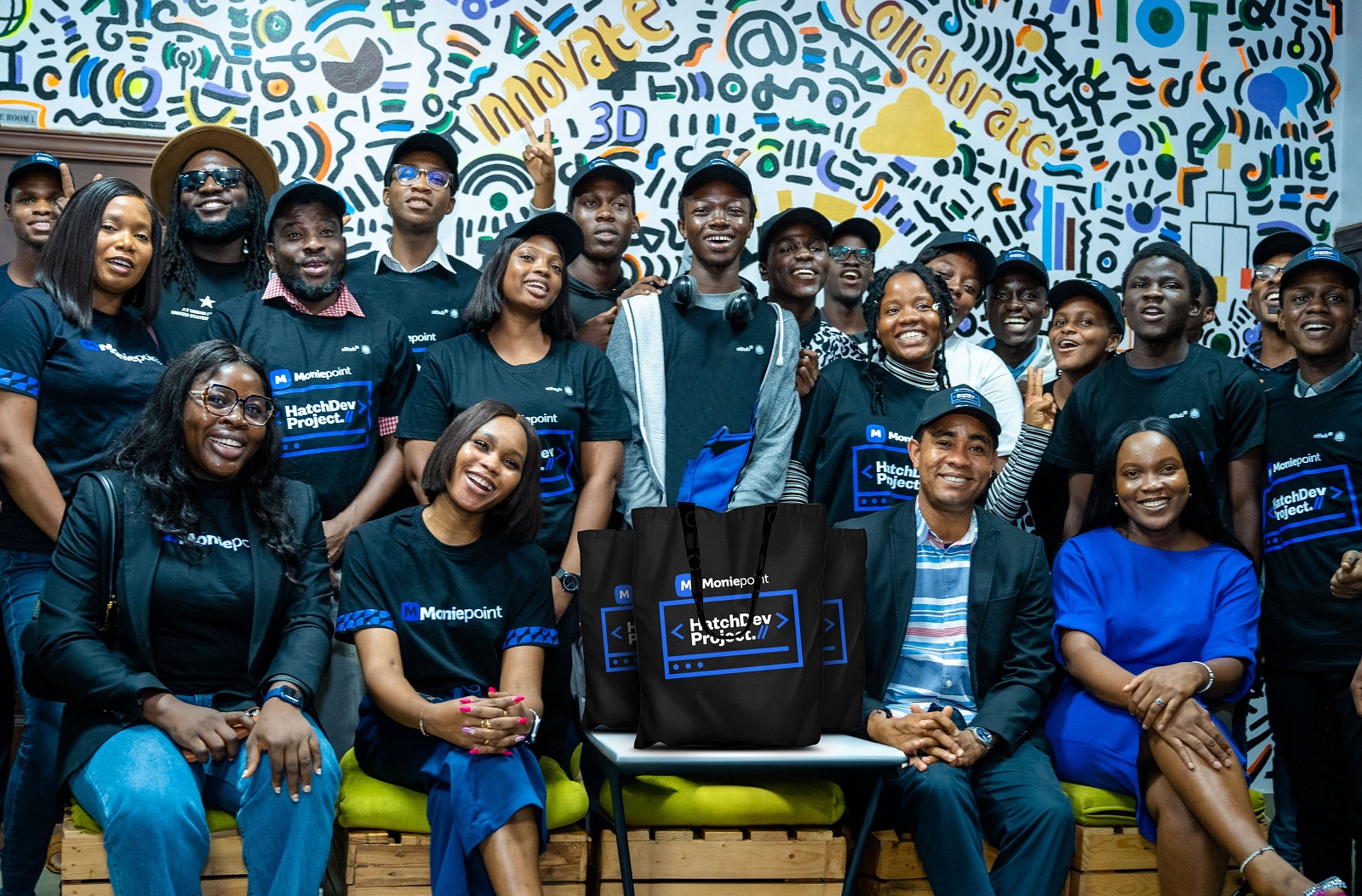
Moniepoint Partners Nithub UNILAG to Train HatchDev Participants

Published

on

Moniepoint HatchDev Participants

By Modupe Gbadeyanka

As part of efforts to meet the target of equipping one million technical talents with the requisite knowledge to excel in the industry, Moniepoint has sponsored the training of the pioneer cohort of the HatchDev programme.

The HatchDev initiative is the brainchild of Nithub University of Lagos, designed to produce hundreds of market-ready software engineers every year.

The scheme, which runs for nine months and started in October 2022, aspires to shape 300 junior software engineers, 100 intelligent systems developers, and 100 IoT/embedded systems engineers.

The first beneficiaries have been trained to be readily absorbed into a market eager for their expertise after the completion of a three-month industry-specific internship.

Speaking on the success of the initiative, the VP of Engineering at Moniepoint, Mr Chukwudum Ekwueme, said, “Nigeria is a booming economy and with the innovative contributions of tech businesses, like Moniepoint, that are solving some of society’s critical issues, it is very gratifying to be a significant part of those giving local talent the training and tools they need to compete on a global stage.

“Also, this initiative aligns perfectly with our vision of empowering the next generation of tech leaders. We believe that by investing in talent development, we can accelerate Nigeria’s growth in the digital economy and contribute to the overall prosperity of our great nation.”

Also commenting, NitHub Director and HatchDev project lead, Mr Victor Odumuyiwa, said, “Nigeria is at a critical inflexion point at the moment as we continue to grow and develop our economy.

“As a new wave of technology companies emerge, and with increased digitalisation in every aspect of life, it’s vital that we have the local talent available here to ensure homegrown businesses can reach their full potential.

“That’s why courses like HatchDev are so valuable – we’re training Nigeria’s top future talent. We’re delighted to be working with Moniepoint to help bring this vision to life.”

Recall that the Minister of Communications, Innovation and Digital Economy, Mr Bosun Tijani, said the government would endeavour to create two million digital jobs.

The digital economy is rapidly expanding in Nigeria, though there is a pressing need for skilled tech talent because, according to estimates, there are only around 115,000 developers in Nigeria.

NItHub envisions a transformative approach to the use and creation of digital technology in Nigeria.

Moniepoint, with its extensive reach and influence, plays a pivotal role in this digital revolution and financial inclusion.

Currently, 1.6 million businesses across Nigeria rely on Moniepoint’s suite of payment, credit, and business management tools to achieve socio-economic growth and stability. The platform facilitates an average monthly transaction value of $12 billion, demonstrating its profound impact on businesses and the economy at large.


Modupe Gbadeyanka is a fast-rising journalist with Business Post Nigeria. Her passion for journalism is amazing. She is willing to learn more with a view to becoming one of the best pen-pushers in Nigeria. Her role models are the duo of CNN's Richard Quest and Christiane Amanpour.

Technology

Our Goal is to Meet Soaring Demand for Connectivity—MTN

Published

on

MTN Nigeria commercial paper sales

By Dipo Olowookere

The Chief Strategy and Innovation Officer for MTN Nigeria, Mr Babalola Oyeleye, has disclosed that the telecommunications company intends to expand its infrastructure to give its customers quality service.

The demand for connectivity in Nigeria is growing, and with a new forecast predicting the Internet of Things (IoT) market to reach $38.7 billion by 2030, stakeholders, especially operators, are already positioning themselves to dominate the space

Government and private sector investments in digital transformation have created an ecosystem that includes system integrators and security specialists. Industries such as utilities and agriculture are leading the charge, adopting IoT to solve localised problems like power theft and low crop yields.

Currently, 4G coverage has reached approximately 80 per cent of Nigeria’s population, with 5G services already in major cities like Lagos, Abuja, Port Harcourt, and Kano. This connectivity backbone is essential for the low-latency communication required by millions of connected devices.

“Reaching the $38.7 billion mark isn’t just about the numbers; it’s about the millions of data points helping Nigerian SMEs and large corporations make smarter decisions every day. Our goal is to ensure the connectivity is there to meet this soaring demand,” Mr Oyeleye noted.

As the ecosystem matures, the focus is shifting toward all-in-one solutions that simplify the user experience. With ongoing investments in NB-IoT (Narrowband IoT) and other low-power connectivity options, the next five years are set to see an explosion in smart city and smart home applications across the country.

Continue Reading

Technology

Refiant AI Raises $5m to Cut AI Energy Use

Published

on

Refiant AI

By Adedapo Adesanya

South African-founded Refiant AI has raised $5 million to slash the energy footprint of artificial intelligence (AI) in a seed round led by VoLo Earth Ventures, a top climate technology fund.

The startup uses nature-inspired algorithms to radically compress AI models, slashing the hardware and energy required to run them. The new fund will be used to scale Refiant’s team – which already includes a former Google Cloud architect, a Cambridge PhD researcher, and an engineer with NASA experience – to build out a platform and to accelerate enterprise partnerships.

According to a statement shared with Business Post, the company is in active conversations with several multinational technology firms exploring how Refiant’s approach could reduce their AI compute costs while maintaining data and energy sovereignty.

“AI’s growing energy footprint is one of the most urgent and underappreciated challenges in the climate space,” said Mr Sid Gutta, the company’s co-founder. “The industry’s default answer is to build more data centres and consume more power. Ours is to make the AI itself dramatically more efficient.”

The company said it has already successfully demonstrated it can compress a 120 billion parameter AI model to run on a standard laptop, reducing energy requirements by over 80 per cent while preserving near-identical quality. It achieved this to run on a MacBook Pro with just 12GB of RAM. The same model would normally require hardware with at least 80GB of memory. The model retained 95-99 per cent of its fidelity, ran alongside a second AI model on the same machine, and the entire process took four hours with no cloud computing required.

For Refiant, its approach will help businesses reduce their carbon footprint and adopt AI to stay competitive. The energy required to process a single AI prompt on standard infrastructure could power roughly 100 equivalent prompts using Refiant’s approach.

The current breakthrough results were attained at the end of last year, and since then, the team have been gearing up to demonstrate successfully exceeding these results with further compression, longer context windows and model traceability.

“The AI industry is spending hundreds of billions scaling infrastructure when the real breakthrough is the ability to do more with radically less,” said Mr Viroshan Naicker, co-Founder and a mathematician with published research in networks and quantum systems. “Nature doesn’t build by brute force. Evolution optimises. We’ve applied that principle to AI – and the results speak for themselves.”

“AI’s biggest constraint isn’t demand – it’s energy,” added Mr Joseph Goodman, Managing Partner, VoLo Earth. “What’s been missing is a fundamentally more efficient way to compute. Refiant’s architecture replaces brute-force scaling with a far more efficient, nature-inspired approach that lowers energy use while increasing capability. That’s the kind of breakthrough needed to make AI sustainable on a global scale.”

Continue Reading

Technology

Google, UpSkill Universe Revamp Hustle Academy to Bring Free AI Skills to Africans

Published

on

Google Hustle Academy

By Adedapo Adesanya

Google and UpSkill Universe, Sub-Saharan Africa’s leading AI and business skills training partner, have announced a major redesign of the Google Hustle Academy programme. For the first time, the free training initiative is open to everyone, not just business owners.

The new curriculum is focused on equipping individuals and entrepreneurs with practical AI skills and comes at a time when small businesses have become the engine of Africa’s economy, creating over 80 per cent of jobs on the continent. To help them grow, the Hustle Academy was launched in 2022, providing bootcamp-style training on business strategy, digital skills, AI, and leadership. The program has since trained over 18,000 SMEs, with many reporting increased revenue and job creation.

Now, as AI reshapes the job market, the program is evolving. The 2026 edition is built for anyone in Sub-Saharan Africa, including employees, students, and job seekers, who want to use AI to advance their careers. To meet the needs of a diverse audience, the new format includes short, 60-minute webinars and more immersive, high-impact bootcamps. These sessions are laser-focused on putting AI to work immediately in areas like digital commerce, marketing, and growth strategy.

Speaking about the academy, Mr Gori Yahaya, Founder & CEO of UpSkill Universe, said, “The 2026 Hustle Academy is designed to close the AI Skills gap with hands-on training that is short, focused, and immediately useful. AI is reshaping how businesses win and how careers are built, right across this continent. We’re excited to renew our partnership, now in its fifth year with Google, combining their global AI leadership with our deep regional AI expertise. The next wave of AI leaders will come from this continent. We are making sure they are ready.”

The Hustle Academy initiative has strengthened digital competitiveness across emerging African economies by enabling SMEs to move beyond AI awareness to practical implementation, positioning them for sustained growth in an increasingly AI-driven business environment.

“We believe that the future of Africa’s digital economy lies in the hands of individuals and entrepreneurs alike. Our new strategy focuses on scaling reach by training individuals in the latest AI-centred tools and techniques,” said a Google representative.

Applications for the 2026 cohort are now open. Interested participants can apply at: https://rsvp.withgoogle.com/events/hustle-academy

Continue Reading

Trending