Technology
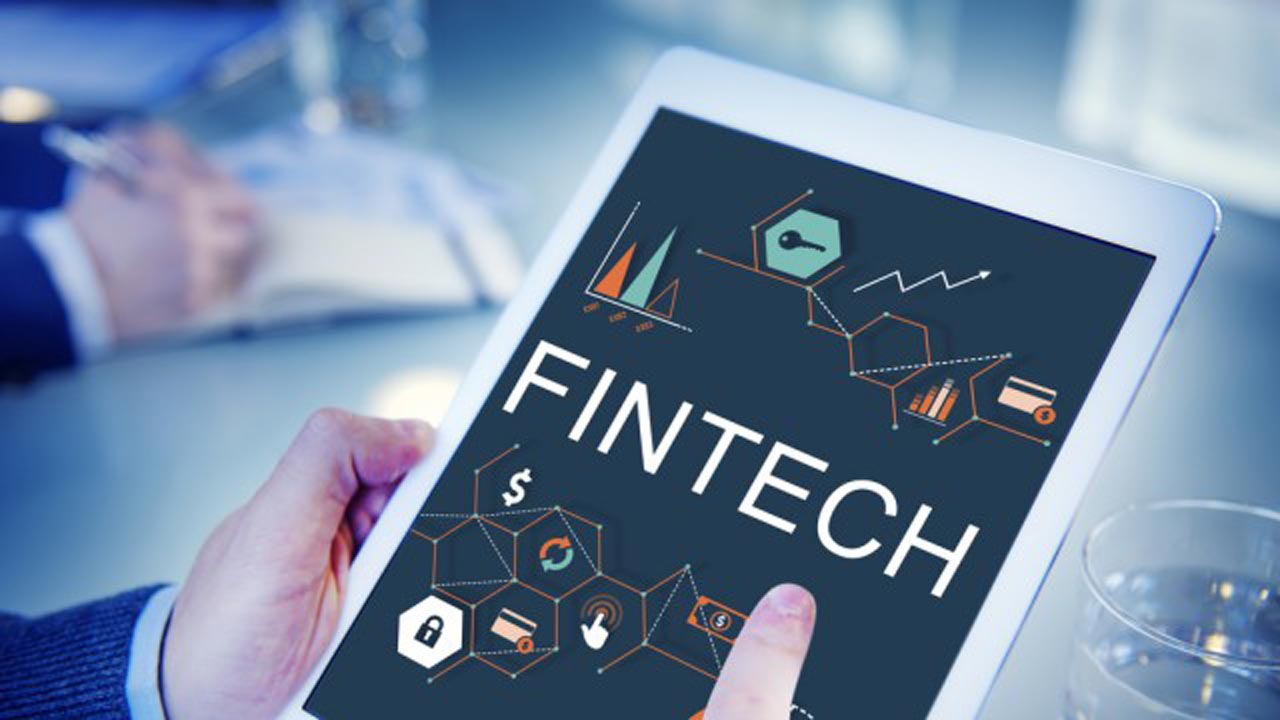
Nigeria’s Fintech Revenues to Record 12% Growth Yearly—McKinsey
By Adedapo Adesanya
Revenues from Nigeria’s financial technology (fintech) sector are expected to grow by 12 per cent per year until 2025 backed by an influx of funding and increasingly supportive regulatory frameworks.
This was disclosed in a report published by McKinsey which claims that Africa’s financial-services market could grow at about 10 per cent per annum, reaching about $230 billion in revenues by 2025.
According to the report, the success of fintech companies in Africa is fueled by several trends, including increasing smartphone ownership, declining internet costs, expanded network coverage, and a young, fast-growing, and rapidly urbanizing population.
The report further noted that the COVID-19 pandemic has accelerated existing trends toward digitalization and created a fertile environment for new technology players, even as it caused significant hardship and disrupted lives and livelihoods across the continent.
“Our analysis shows that fintech players are delivering significant value to their customers. Their transactional solutions can be up to 80 per cent cheaper and interest on savings up to three times higher than those provided by traditional players, while the cost of remittances may be up to six times cheaper.
“Taken together with an influx of funding and increasingly supportive regulatory frameworks, these factors could signify that African fintech markets are at the beginning of a period of exponential growth if, as expected, they follow the trajectory of more mature markets such as Vietnam, Indonesia, and India.”
While the lion’s share of value in the market (approximately 40 per cent of revenues) is currently concentrated in South Africa, which has the most mature banking system in the continent,
On the emerging markets, the report noted that Ghana and francophone West Africa are expected to show the fastest growth, at 15 per cent and 13 per cent per annum, respectively, until 2025.
Nigeria and Egypt follow, each with an expected growth rate of 12 per cent per annum over the same period.
The report concludes that growth opportunity in fintech is likely to be concentrated in 11 key markets: Cameroon, Côte d’Ivoire, Egypt, Ghana, Kenya, Morocco, Nigeria, Senegal, South Africa, Tanzania, and Uganda, which together account for 70 per cent of Africa’s GDP and half of its population.
Technology
Salesforce Unveils AI Fluency Playbook to Prepare Workers for Agentic Enterprise
Today, Salesforce published its AI Fluency Playbook, a practical guide for businesses to prepare their workforce to confidently collaborate with AI to give employees agents and drive business impact at speed and scale.
Why it matters: As companies look to become an Agentic Enterprise, success will depend on their workforce’s ability to harness and apply agentic AI in their daily work. Businesses that build AI-fluent workforces will drive greater growth and position themselves to attract top talent and become the best place to work. And it’s not just businesses that benefit – employees who use AI daily report 64% higher productivity, 58% better focus, and 81% greater job satisfaction.
Go deeper: The AI Fluency Playbook is built from Salesforce’s own experience deploying AI agents as Customer Zero for Agentforce. Today, Salesforce employees are collaborating with agents and 85% say they feel confident using AI tools to drive productivity in their daily work – a 16% increase year over year. The results are clear: In just one year, Agentforce in Slack saved employees over 500,000 hours, Engagement Agent worked over 190,000 leads with the sales team, and Service Agent handled 2+ million support requests for the customer service team.
AI agents are fundamentally redefining the workplace by automating repetitive, mundane tasks and augmenting the creative and strategic potential of every worker. However, simply deploying the technology is not enough; to truly transform daily operations and achieve superior business outcomes, employees must be equipped with the specific knowledge and tools required for seamless human-agent collaboration.
To bridge this gap, organizations can cultivate comprehensive AI fluency through a three-pillared approach: AI Engagement, which focuses on building employee sentiment and cultural confidence; AI Activation, which ensures consistent integration of AI into daily workflows; and AI Expertise, which develops the essential human and technical proficiencies needed to drive successful adoption at scale.
What customers are saying: “We’re focused on the most important skills that are needed for today and for the future,” said Ali Bebo, Chief Human Resources Officer at Pearson. “Today is all about learning agility – human skills like learning, adaptability, communication, and critical thinking are so important for the era of agentic AI.”
Technology
NCC, CBN Implement 30 Seconds Refunds for Failed Airtime, Data Purchases
By Adedapo Adesanya
The Nigerian Communications Commission (NCC) and the Central Bank of Nigeria (CBN) have introduced new rules that will ensure faster refunds for failed airtime and data purchases, following rising consumer complaints over debits without value.
Under the new rules, refunds are expected to be completed within 30 seconds, except where a transaction remains pending, in which case the resolution can take up to 24 hours.
The new framework, contained in a statement issued by NCC’s Head of Public Affairs, Ms Nnenna Ukoha, on Thursday, targets unsuccessful transactions linked to network downtime, system failures and human errors that affect subscribers nationwide.
According to the statement, the guideline was developed after months of joint engagements involving telecom operators, banks, value-added service providers and other industry stakeholders.
The NCC said the framework brings the financial and telecommunications sectors up to speed on how failed transactions are handled and resolved.
“These engagements were prompted by a rising incidence of failed airtime and data purchases, where subscribers were debited without receiving value and experienced delays in resolution.
“The framework represents a unified position by both the telecommunications and financial sectors on addressing such complaints.
“It identifies and tackles the root causes of failed airtime and data transactions, including instances where bank accounts are debited without successful delivery of services,” she said.
Under the framework, Ms Ukoha said mobile network operators and banks are bound by a service level agreement that clearly defines their roles in transaction processing and refunds.
She emphasised that operators are also required to notify customers by SMS on the status of every airtime or data transaction.
The rules also address erroneous recharges to ported lines, incorrect airtime or data purchases, and instances where transactions are made to the wrong phone number.
On her part, the Director of Consumer Affairs at the NCC, Mrs Freda Bruce-Bennett, said the framework also introduces a central monitoring system to improve oversight.
She said the dashboard will be jointly managed by the NCC and the CBN to track failed transactions, refunds and breaches of service timelines in real time.
“We are grateful to all stakeholders, particularly the CBN and its leadership, for their tireless commitment to resolving this issue and arriving at this framework,” she said.
The official said failed top-ups are among the top three complaints received by the commission, adding that implementation of the framework is expected to begin on March 1, subject to final approvals and completion of technical integration by all operators and banks.
Technology
Nigeria, Google in Talks for New Undersea Cable
By Adedapo Adesanya
The Nigerian government is in advanced talks with Google for a new undersea cable to strengthen the country’s digital connectivity and resilience.
The country wants to augment existing undersea links with Europe, said the chief executive of National Information Technology Development Agency (NITDA), Mr Kashifu Inuwa Abdullahi, as per Bloomberg on Tuesday.
Mr Inuwa said this was necessary at this time, calling Nigeria’s current reliance on cables that follow the same path “a single point of failure.”
Google earlier this year said it plans to expand its digital presence significantly in Africa with the development of four new strategic subsea cable connectivity hubs in the north, south, east, and west regions of the continent.
Already, Google is investing $2.1 million to accelerate Nigeria’s artificial intelligence (AI) growth, aiming to create one million digital jobs and bolster the country’s expanding technology economy.
This is aligned with Nigeria’s National AI Strategy, which is expected to play a meaningful role in the nation’s broader digital transformation. Projections indicate that AI could contribute up to $15 billion to Nigeria’s economy by 2030.
The fund will support partnerships with local organisations. To achieve these aims, the funding will support partnerships with local organisations working in digital skills development and cyber security.
The investment further signals global trust in Nigeria’s technology sector and underlines the nation’s role as a leader in Africa’s digital transformation. As new opportunities emerge, Google believes it support is set to help shape Nigeria’s economy and its place on the global technology stage.
-
Feature/OPED6 years agoDavos was Different this year
-
Travel/Tourism9 years ago
Lagos Seals Western Lodge Hotel In Ikorodu
-
Showbiz3 years agoEstranged Lover Releases Videos of Empress Njamah Bathing
-
Banking8 years agoSort Codes of GTBank Branches in Nigeria
-
Economy3 years agoSubsidy Removal: CNG at N130 Per Litre Cheaper Than Petrol—IPMAN
-
Banking3 years agoFirst Bank Announces Planned Downtime
-
Banking3 years agoSort Codes of UBA Branches in Nigeria
-
Sports3 years agoHighest Paid Nigerian Footballer – How Much Do Nigerian Footballers Earn