Connect with us

Technology

Omobayo Azeez Decries Reliance of Telecommunications Sector on Foreign Inputs

Published

on

telecommunications sector omobayo azeez

By Dipo Olowookere

A renowned tech journalist, Mr Omobayo Azeez, has called on stakeholders in the telecommunications sector to urgently take actions that will reduce the reliance on foreign inputs in the industry.

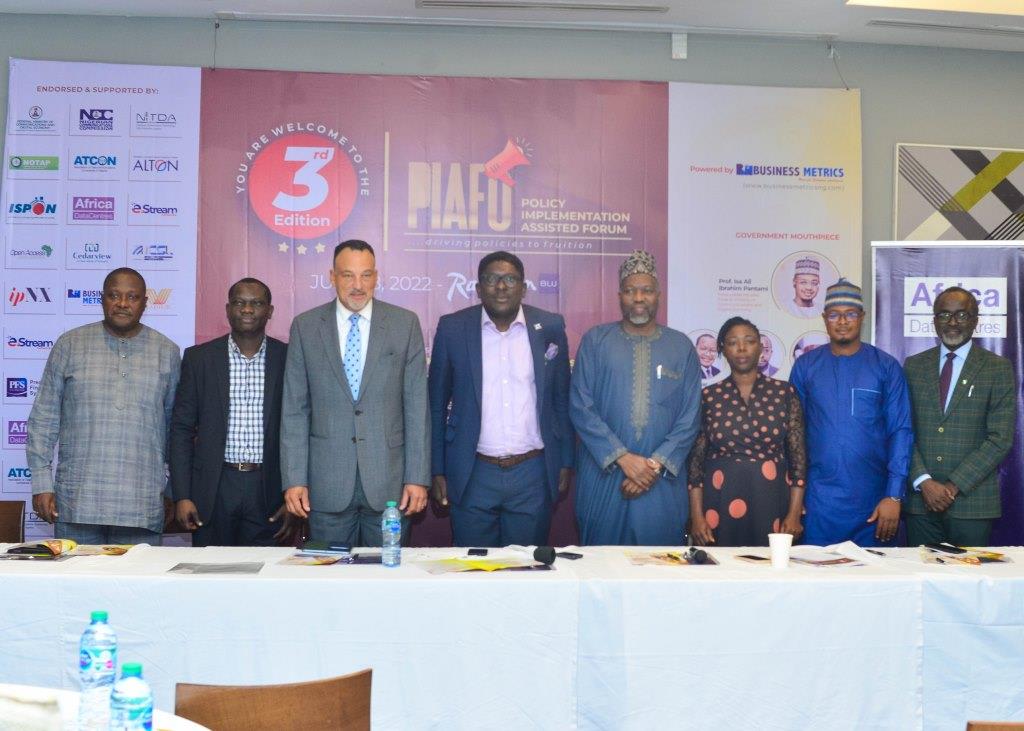
Speaking in Lagos last Thursday at the third edition of the Policy Implementation Assisted Forum (PIAFo), Mr Azeez said this was putting more pressure on the Naira in the foreign exchange (FX) market.

Though he said the telecoms sector has unarguably become one indispensable economic enabler for the country and its people, efforts must be made to use this channel to boost local production and stop the loss of $2.16 billion in capital flights.

“When operators have to depend solely on foreign talents, solutions, equipment and accessories, they will also have to deal with the hassle of accessing forex as one of the major problems.

“As such, operators suffer, customers suffer and even our dear Naira is also at a receiving end – it continues to lose value,” he said at the event themed Establishing Trackable Metrics for Developing Nigeria’s Indigenous Telecoms Sector.

Mr Azeez, who is the Managing Editor of Business Metrics, further stated that, “We realise that with the policy in place, the work has just begun because the effective implementation of a policy is the true measure of its success. We want this policy to come to fruition and create inclusive benefits for individuals, businesses and the economy.”

On his part, the Executive Vice Chairman of the Nigerian Communications Commission (NCC), Professor Umar Danbatta, agreed with Mr Azeez, who is the convener of the forum, noting that the agency has so far identified 72 action points to promote indigenous content in the telecoms sector.

He added that the commission has also brought at least 30 stakeholders to the round table to chart the way for the effective implementation of the National Policy for Promotion of Indigenous Content Policy in the Nigerian Telecommunications Sector (NPPIC) assented to By President Muhammadu Buhari in May 2021.

Represented by Babagana Digima, Head of the Nigeria Office for Promoting the Indigenous Telecoms Sector (NODITS), the EVC stressed that different entities include Ministries, Departments and Agencies (MDAs), Mobile Network Operators (MNOs), SIM card manufacturers, tower and mast manufacturers, and Original Equipment Manufacturers (OEMs).

“At a higher level, the Commission had identified some time-based metrics for NPPIC which it classed into immediate, short term, medium term, and long-term items these include activities such as the creation of NODITS dedicated to guiding the policy; constitution of the local content steering committee; engagement with relevant internal and external stakeholders; and commissioning baseline studies on the level of indigenous content in the Nigerian telecoms industry,” he stated.

He, therefore, called on industry stakeholders, watchdogs and partners such as Business Metrics to create independent metrics that will ensure the achievements of the goals of the NPPIC.”


Dipo Olowookere is a journalist based in Nigeria that has passion for reporting business news stories. At his leisure time, he watches football and supports 3SC of Ibadan. Mr Olowookere can be reached via [email protected]

Technology

19 Startups Pitch Solutions to Investors, Others at Demo Day in Ilorin

Published

on

Ilorin Innovation Hub 19 Emerging Startups

By Modupe Gbadeyanka

Nineteen emerging startups are being showcased at the 2026 Demo Day organised by the Ilorin Innovation Hub in partnership with IHS Nigeria, a part of IHS Holding Limited, also known as IHS Towers.

The participating small firms took part in the hub’s accelerator and incubation programmes. At this event, themed The Convergence, they will pitch their solutions to investors, venture capital funds, corporate partners, and the media.

The platform would be used to help them unlock funding opportunities, foster strategic collaborations, and amplify visibility for these startups that are developing solutions across critical sectors, including agriculture, health-tech, green energy, lifestyle, and digital services.

“We believe innovation and digital technology are powerful drivers of economic growth and sustainable development. This is why we partnered with the Kwara State Government on the Ilorin Innovation Hub.

“It is impressive and very fulfilling to see the diverse portfolio of ideas and solutions showcased today from the hub within a year of the commencement of operations. This speaks to the depth of creativity among Nigerians and what is possible when they are equipped and supported.

“Today’s event makes me proud of our investment in the space and underscores IHS Nigeria’s continued commitment to supporting technology, entrepreneurship, and digital innovation in Nigeria,” the chief executive of IHS Nigeria, Mr Mohamad Darwish, said.

The Managing Director of Ilorin Innovation Hub, Temi Kolawole, also said, “Today, we showcase 19 startups that have shown that when you combine talent with the right support, the results speak for themselves.

“The Ilorin Innovation Hub exists to ensure that geography is never a barrier to building something extraordinary, and this Demo Day is proof that we are on the right track.”

The Ilorin Innovation Hub, a partnership between the Kwara State Government and IHS Nigeria, began operations in February 2025 with programmes managed by Co-creation Hub and Future Africa.

The Demo Day presents an opportunity to take stock and assess how the Ilorin Innovation Hub is helping to nurture and bring to life groundbreaking ideas and solutions supporting economic resilience and addressing real-world societal challenges.

Continue Reading

Technology

Lagos Tightens Cyber Defences to Attract Investment, Protect Businesses

Published

on

Securing Africa’s Digital Future

By Adedapo Adesanya

The Lagos State Government has released a set of cybersecurity guidelines to enhance digital safety for businesses, public institutions, and residents in the state, which is home to thousands of enterprises.

A statement by the State’s Commissioner, Information and Strategy, Mr Gbenga Omotoso, noted that the development represents another decisive step in Lagos’ mission to become a secure and globally competitive digital hub.

The National Information Technology Development Agency (NITDA) estimates that Nigeria loses over $500 million (approximately N250 billion) annually to cybercrime, underscoring the urgency for stronger, coordinated security measures.

Lagos’s rapid evolution into a SMART City heightens vulnerability to cyber threats, Omotosho noted, adding that the newly issued guidelines outline clear, practical, and scalable cybersecurity best practices for small businesses, medium and large enterprises, and Ministries, Departments, and Agencies (MDAs).

They are aligned with key national frameworks, including the Cybercrime Act (2024), the Nigeria Data Protection Act (2023), and the National Cybersecurity Policy and Strategy (2021).

According to the guidelines, these recommendations are not regulatory mandates but tools designed to empower stakeholders with practical, context-specific guidance.

The Lagos State Government reaffirmed its commitment to fostering a secure digital environment that promotes innovation, investment, and public trust.

“The guidelines further strengthen Lagos State’s leadership in advancing digital trust and building a resilient, future-ready digital economy.

“The Government praised the Lagos State Cybersecurity Advisory Council, chaired by Prof. Fene Osakwe, for its strategic leadership and technical expertise in developing the framework.

“The release of these guidelines underscores Lagos State’s unwavering dedication to safeguarding digital assets, enhancing public-private collaboration, and ensuring that every organisation—from sole proprietorships to multinational corporations—can operate confidently in a secure digital environment.

“As the document highlights, A cybersecure Lagos is essential for sustaining its position as one of the most dynamic and globally competitive tech hubs of the 21st century”, the statement added.

The Lagos State Government said it will continue to refine and expand the guidelines to address emerging threats and evolving technologies, ensuring that cybersecurity remains a foundational pillar of the State’s digital transformation.

Continue Reading

Technology

Zoho Nigeria Champions Women’s Digital Empowerment at Guardian Women Festival

Published

on

Kehinde Ogundare Guardian Women Festival

By Modupe Gbadeyanka

The urgent need to bridge the digital gap for female entrepreneurs has again been emphasised by the Country Head of Zoho Nigeria, Mr Kehinde Ogundare.

Speaking at the Guardian Woman Festival held at the Federal Palace Hotel in Lagos recently, Mr Ogundare stressed that technology does not replace the strengths women already bring to business, such as relationship building and community engagement, but instead, it amplifies them, enabling entrepreneurs to reach wider audiences and scale more efficiently.

“The difference is not talent. Not capital. Not ambition. It is digital adoption,” he said during his keynote address titled Give Value, Gain Growth: Women Driving Reciprocal Innovation in the Digital Economy.

“Smart tools create smart businesses. Smart businesses create strong economies. When women entrepreneurs and leaders have access to the right tools, the possibilities for growth are limitless,” he added.

Zoho Nigeria partnered with Guardian Newspapers for the event as part of activities to mark a month-long initiative celebrating women’s contributions to business, governance, and social development while promoting digital empowerment for female entrepreneurs.

The Guardian Women Festival, themed Reciprocity, was to encourage the exchange of value, networks, and digital innovation to strengthen women-led businesses and foster collaboration.

While Nigeria has the highest concentration of women-owned businesses in Africa, fewer than 30 per cent currently use digital tools to manage or grow their operations.

During the festival’s panel session tagged Women in the Business of Digital Innovation, the Sales Manager for Zoho Nigeria, Ms Zubaida Aliyu, highlighted how women are uniquely positioned to create shared value in digital spaces by building platforms that encourage knowledge sharing, mentorship, and collaboration.

She also challenged organisations that continue to view women’s digital inclusion primarily as corporate social responsibility rather than a strategic business priority.

“Tech creates a level playing field,” Ms Aliyu said, noting that digital platforms remove limitations related to location and infrastructure size.

Addressing organisations that overlook the economic value of inclusive digital strategies, she added, “They are leaving money on the table — they need to think of it as a strategy, not charity.”

Through its participation in the Guardian Woman Festival, Zoho reaffirmed its commitment to providing affordable and accessible enterprise-grade technology to businesses of all sizes. By helping women transition from manual effort to digital efficiency, Zoho aims to support entrepreneurs in building scalable enterprises and ensure their sustained success in Africa’s digital economy.

Continue Reading

Trending