
Technology
Stripe Acquires Nigeria’s Paystack for $200m

By Adedapo Adesanya
American financial service platform, Stripe, has acquired Paystack, one of Nigeria’s leading payment service providers.
Paystack provides a quick way to integrate payments services into an online or offline transaction by way of an application programming interface.
According to reports, the arrangement will see Paystack continue its operations independently with its large customer base which includes small businesses, larger corporates, fintechs, educational institutions, and online betting companies.
Although not all terms of the deal were made public, people privy with the discussions noted that it is worth over $200 million. This makes it the biggest startup acquisition out of Nigeria.
This will help expand the company’s footprint around the world and also set it up for a possible IPO in the future.
Speaking in an interview with Tech Crunch, Mr Patrick Collison, Stripe’s co-founder and CEO, said it was an enormous opportunity considering the future prospects of online commerce.
“In absolute numbers, Africa may be smaller right now than other regions, but online commerce will grow about 30 per cent every year. And even with wider global declines, online shoppers are growing twice as fast.
“Stripe thinks on a longer time horizon than others because we are an infrastructure company. We are thinking of what the world will look like in 2040-2050,” he said.
On the part of Paystack, the deal will give the company an ability to build out further in Nigeria and expand to other markets, disclosed its CEO, Mr Shola Akinlade, in an interview.
“Paystack was not for sale when Stripe approached us. For us, it’s about the mission. I’m driven by the mission to accelerate payments on the continent, and I am convinced that Stripe will help us get there faster. It is a very natural move,” Mr Akinlade stated.
Stripe has made a number of investments into startups building technology or businesses in areas, including backing investment in universal checkout service, Fast, and backing the Philippines-based payment platform, PayMongo.
Both companies have a history with Stripe leading an $8 million funding round for Paystack, with others participating including Visa and Tencent in 2018.
Mr Collison said that while acquiring Paystack after investing in it was a big move for the company, people also shouldn’t read too much into it in terms of Stripe’s bigger acquisition policy.
“When we invest in startups, we’re not trying to tie them up with complicated strategic investments. We try to understand the broader ecosystem, and keep our eyes pointed outwards and see where we can help.”
This may mean that it has no plans to acquire other regional companies or other operations simply to expand Stripe’s footprint but how well it operates as in the case of Paystack.
“A lot of companies have been, let’s say, heavily influenced by Stripe but with Paystack, clearly they’ve put a lot of original thinking into how to do things better. There are some details of Stripe that we consider mistakes, but we can see that Paystack gets it, it’s clear from the site and from the product sensibilities, and that has nothing to do with them being in Africa or African.”
Business Post gathered that Stripe and Paystack postponed the original announcement in part because of the current situation of demonstrations against police brutality in Nigeria.







By Modupe Gbadeyanka
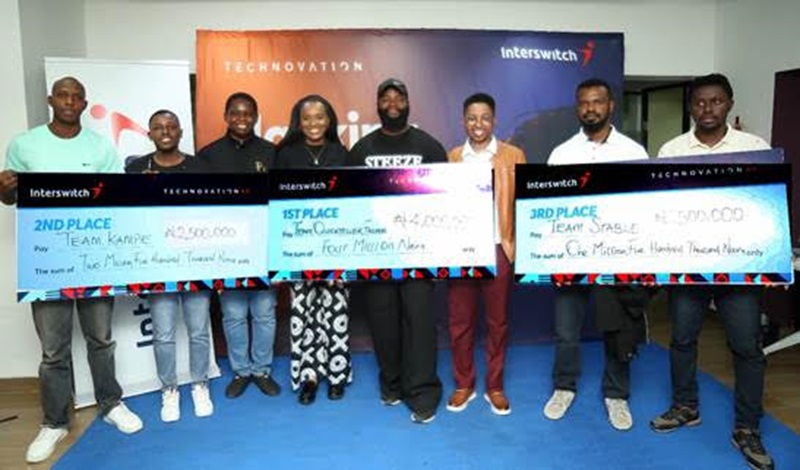
The winners of the Technovation 4.0 Hackathon, themed The Wicked Hackathon, organised by Interswitch, have been given N10 million in cash prizes for their efforts.
At the one-day finale event, which took place on Wednesday, March 4, 2026, at the Interswitch Innovation Lab and Co-Working Space, the money was shared among the top teams whose innovative solutions stood out during the rigorous multiple phases of the competition.
Team Quickteller Fashion emerged as the overall winner, securing the grand prize of N4 million for a solution that impressed judges with its originality, practicality, and strong strategic relevance. Team Kampe claimed second position with N2.5 million, while Team Stable placed third, receiving N1.5 million. Up to N300,000 worth of cash prizes were also awarded to the fourth, fifth and sixth qualifying teams.
For nine months, cross-functional teams from across the organisation collaborated to conceptualise, validate, develop, and refine solutions, moving from raw ideas to minimum viable products (MVPs) with ready-to-market potential and deployment across the business.
The atmosphere at the grand finale reflected that of preparation and anticipation as the top 9 teams presented their innovations through live demonstrations and detailed pitches, fielding questions from a distinguished panel of judges before the top three winners were selected. Each presentation highlighted rigorous validation processes, thoughtful market considerations, and a strong emphasis on measurable impact.
While many of the solutions remain confidential due to their strategic relevance, the diversity and depth of ideas showcased during the hackathon’s final underscored the organisation’s growing culture of intrapreneurship and structured innovation. The projects illustrated how technology-driven thinking can unlock efficiencies, strengthen operational capabilities, and open new pathways for growth across the digital payments and commerce ecosystem.
“Technovation continues to reflect who we are as an organisation, bold, forward-thinking, and deeply committed to building impactful solutions from within. Over the years, we have seen ideas conceived during this programme evolve into meaningful capabilities that strengthen our ecosystem.
“The passion, discipline, and ingenuity demonstrated by our teams this year reinforce our belief in the power of African innovation to solve complex challenges and shape the future of technology on the continent,” the Chief Innovation Officer for Interswitch, Ms Adaobi Okerekeocha, stated.
By Modupe Gbadeyanka
The language support for its AI Search features has been expanded by Google, with the inclusion of Yoruba and Hausa in Nigeria.
This is part of a broader effort to make AI more inclusive across the continent, with support now extending to a total of 13 African languages.
Under the AI Overviews and AI Mode, speakers of both Nigerian languages can utilise AI-powered Search experiences in their mother tongue for quick summaries and conversational exploration.
This means existing AI features in Google Search are now accessible to people like the student in Kano asking a question in Hausa, and the trader in Ibadan seeking advice in Yorùbá.
By addressing language barriers, this update ensures that technology reflects the identity and culture of the people it serves. With this expansion, more people can now use AI Mode to ask complex questions in their preferred language, while exploring the web more deeply and naturally through text or voice.
The 13 languages now supported across Africa include Afrikaans, Akan, Amharic, Hausa, Kinyarwanda, Afaan Oromoo, Somali, Sesotho, Kiswahili, Setswana, Wolof, Yorùbá, and isiZulu.
These languages were chosen based on the vibrant search activity across the continent, ensuring that our AI experiences reach the communities that need them most.
Commenting on the development, the Communications and Public Affairs Manager for Google in West Africa, Taiwo Kola-Ogunlade, said, “Building a truly global Search goes far beyond translation — it requires a nuanced understanding of local information.
“With the advanced multimodal and reasoning capabilities of our custom version of Gemini in Search, we’ve made huge strides in language understanding, so our most advanced AI search capabilities are locally relevant and useful in each new language we support.
“This is about ensuring Nigerians can converse with Search in their mother tongues, making information more helpful for everyone.”
To use AI Overviews and AI Mode in the local language, users must open the Google app on an Android or iOS device, or via the Web. They are required to tap on AI Mode within the Search experience. Thereafter, they can type or speak the question in their preferred language, such as Hausa or Yorùbá, and let the AI guide the journey.
By Adedapo Adesanya
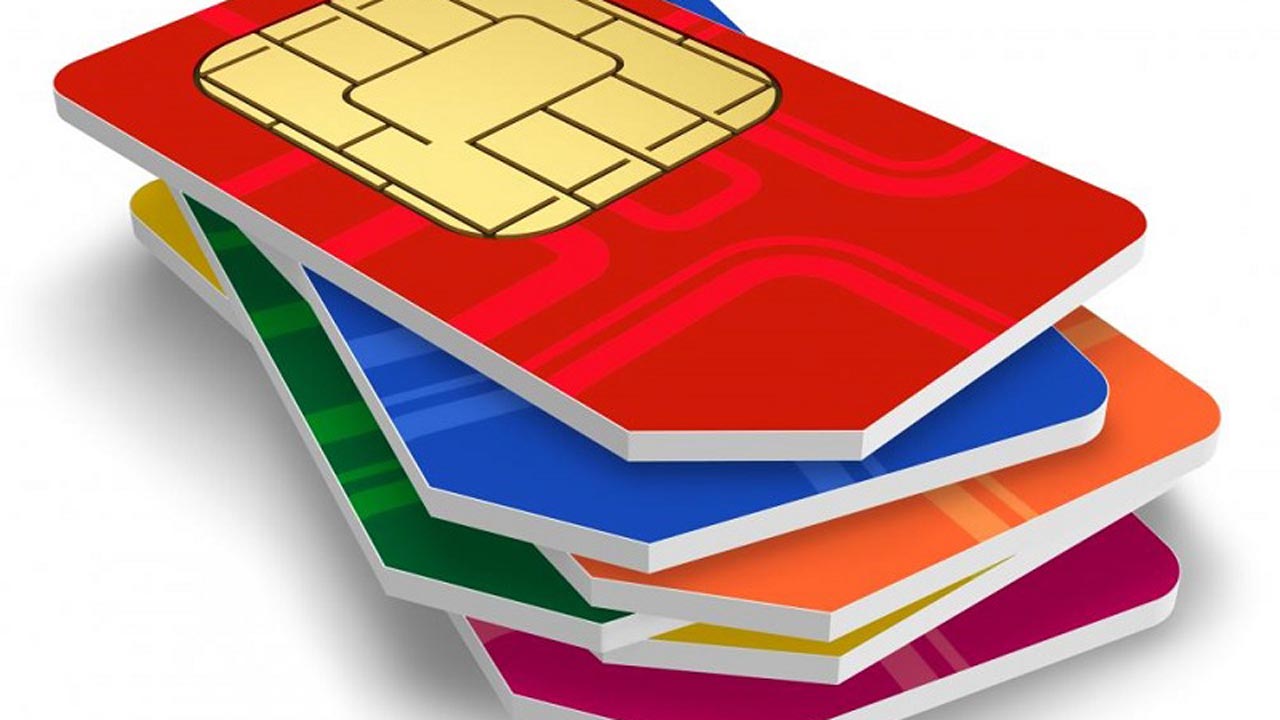
Telecommunications operators in Nigeria will now be required to give subscribers a minimum of 14 days’ notice before deactivating their SIM cards over inactivity or post-paid churn, following a fresh proposal by the Nigerian Communications Commission (NCC).
The proposal is contained in a consultation paper, signed by the Executive Vice Chairman and Chief Executive Officer of the NCC, Mr Aminu Maida, and titled Stakeholders Consultation Process for the Telecoms Identity Risks Management Platform, dated February 26, 2026, and published on the Commission’s website.
Under the proposed amendments to the Quality-of-Service (QoS) Business Rules, the Commission said operators must notify affected subscribers ahead of any planned churn.
“Prior to churning of a post-paid line, the Operator shall send a notification to the affected subscriber through an alternative line or an email on the pending churning of his line,” the document stated.
It added that “this notification shall be sent at least 14 days before the final date for the churn of the number.”
A similar provision was proposed for prepaid subscribers. According to the Commission, operators must equally notify prepaid customers via an alternative line or email at least 14 days before the final churn date.
Currently, under Section 2.3.1 of the QoS Business Rules, a subscriber’s line may be deactivated if it has not been used for six months for a revenue-generating event. If the inactivity persists for another six months, the subscriber risks losing the number entirely, except in cases of proven network-related faults.
The new proposal is part of a broader regulatory review tied to the rollout of the Telecoms Identity Risk Management System (TIRMS), a cross-sector platform designed to curb fraud linked to recycled, swapped and barred mobile numbers.
The NCC explained in the background section of the paper that TIRMS is a secure, regulatory-backed platform that helps prevent fraud stemming from churned, swapped, barred Mobile Station International Subscriber Directory Numbers in Nigeria.
It said this platform will provide a uniform approach for all sectors in relation to the integrity and utilisation of registered MSISDNs on the Nigerian Communications network.
In addition to the 14-day notice requirement, the Commission also proposed that operators must submit details of all churned numbers to TIRMS within seven days of completing the churn process, strengthening oversight and accountability in the system.
The consultation process, which the Commission said is in line with Section 58 of the Nigerian Communications Act 2003, will remain open for 21 days from the date of publication. Stakeholders are expected to submit their comments on or before March 20, 2026.












-
 Feature/OPED6 years ago
Davos was Different this year
-
Travel/Tourism10 years ago
Lagos Seals Western Lodge Hotel In Ikorodu
-

 Showbiz3 years ago
Estranged Lover Releases Videos of Empress Njamah Bathing
-
 Banking8 years ago
Sort Codes of GTBank Branches in Nigeria
-

 Economy3 years ago
Subsidy Removal: CNG at N130 Per Litre Cheaper Than Petrol—IPMAN
-

 Banking3 years ago
Sort Codes of UBA Branches in Nigeria
-

 Banking3 years ago
First Bank Announces Planned Downtime
-

 Sports3 years ago
Highest Paid Nigerian Footballer – How Much Do Nigerian Footballers Earn
2 Comments