Connect with us

Travel/Tourism

AfDB Funds New Airport in Tanzania

Published

on

tanzania airport Dodoma

By Adedapo Adesanya

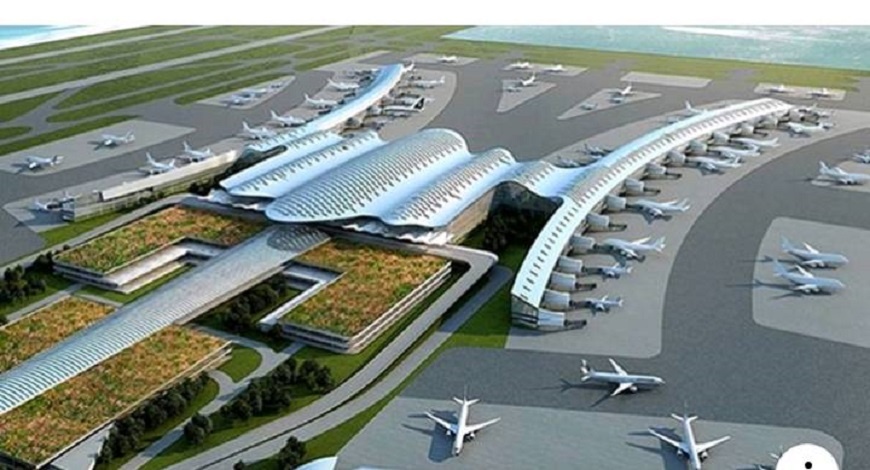
Tanzania has secured $272 million loan from the African Development Bank (AfDB) to build an international airport in its capital city, Dodoma, in order to expand its infrastructure.

The funding consists of $198 million from the AfDB, $23.52 million from the African Development Fund, while the remaining $50 million is being co-financed by China’s Africa Growing Together Fund (AGTF), which is under the management of the AfDB.

According to the AfDB’s Director for Infrastructure and Urban Development, Mr Amadou Oumaru, the airport, coupled with other infrastructure, will help the country unlock many of its potentials to aid national development.

“An expanded air transport network in Dodoma, together with the ongoing high-speed railway construction on the central corridor, are necessary infrastructure investments to help unlock and disperse spatial development in the countryside.

This will strengthen the city’s potential as a strategic growth pole in keeping with Tanzania’ national development aspirations of fostering shared growth for all the regions,” he said.

Expected to be completed by 2024, the modern airport will be built in Msalato, 12 km from the capital city of Dodoma and will include a passenger terminal, runway and related infrastructure.

It was revealed that when completed, it will have a capacity to handle 1 million passengers annually and will have a runway of just over 2km in length.

There are already about 29 airports in Tanzania with the Julius Nyerere International Airport is the international airport of Dar es Salaam, the largest city in Tanzania and with the addition of a new airport, this may be a plus to the country which has sustained a relatively high economic growth.

However, the loan will add to the many already owed by African countries such as Tanzania with the World Bank Group and the International Monetary Fund (IMF)warning that the activities of development banks are adding to heavy debt profiles on the continent which is over $500 million.

There have also been warnings that developing countries should exercise caution with lending from China, saying that funded projects can turn into debt traps that primarily benefit China in the long run.


Adedapo Adesanya is a journalist, polymath, and connoisseur of everything art. When he is not writing, he has his nose buried in one of the many books or articles he has bookmarked or simply listening to good music with a bottle of beer or wine. He supports the greatest club in the world, Manchester United F.C.

Click to comment

Leave a Reply

Your email address will not be published. Required fields are marked *

Travel/Tourism

Passengers to Enjoy Starlink Wi-Fi on Emirates’ Flagship A380

Published

on

Emirates A380 Starlink

By Aduragbemi Omiyale

Air travellers flying through Emirates will enjoy Starlink Wi-Fi onboard after the completion of the installation of the internet service on the company’s flagship A380.

The introduction of Starlink on the A380 builds on Emirates’ ongoing investment into redefining the customer journey, including one of the most ambitious retrofit programmes in aviation history.

The airline operator recently test-run this on a flight to Dubai, and it allowed passengers to enjoy seamless broadband while flying at 40,000 feet.

The Emirates A380 was one of the first commercial aircraft in the world to offer internet to its customers, with first-generation systems offering a total aircraft bandwidth of less than 1 Mbps. The installation and certification were accomplished in Newquay, UK.

With more A380s scheduled for accelerated installation throughout 2026, Emirates customers will soon enjoy a transformative leap in onboard connectivity with the ability to stream, game, browse, and work throughout their journey on personal devices.

The service will be complimentary for all customers, across all cabins, with easy sign-up and access. Future enhancements will include Live TV streaming over Starlink, initially on personal devices and later integrated into seatback screens.

So far, more than 650,000 Emirates customers have already flown on Starlink‑equipped flights, experiencing the benefits of next‑generation onboard connectivity firsthand.

As the world’s largest passenger aircraft, the A380 presents unique engineering challenges and opportunities. This industry-first Starlink configuration is designed to meet the demands of the A380’s ‘double-decker’ layout and high passenger capacity and is capable of delivering more than 2 Gbps of total aircraft bandwidth across the cabin.

Compared with the Emirates Boeing 777, the Emirates A380 features additional wireless access points and a third antenna to deliver an enhanced connectivity experience for its higher passenger capacity. Optimised inter‑deck integration supports a seamless Wi‑Fi experience, with customers able to enjoy high speeds depending on usage and device capability.

Starlink installations will soon begin at Emirates Engineering facilities in Dubai to accelerate deployment across the fleet.

Emirates is committed to bringing the best possible connectivity to its entire fleet at the earliest opportunity, with 25 Boeing 777-300ER aircraft already equipped with Starlink and the first A380 now joining service.

Continue Reading

Travel/Tourism

Nigeria Caps Jet Fuel Prices, Allows Airlines Buy on Credit to Avert Disruptions

Published

on

aviation fuel Jet A1

By Adedapo Adesanya

The Nigerian government is capping jet fuel prices and allowing airlines to get supplies on credit as part of efforts to avert flight ​disruptions caused by soaring fuel costs.

Reuters reported that the Nigerian Midstream and Downstream Petroleum Regulatory Authority (NMDPRA) said in an internal document that aviation fuel should sell for N1,760 to N1,988 ($1.29 to $1.46) per litre in Lagos and N1,809 to ​N2,037 in Abuja, based on benchmarks from April 17 to April 23.

The decision follows ​emergency talks after airlines threatened to go on a strike, warning that jet fuel prices had jumped by more ​than 300 per cent, forcing fare increases and raising the risk of capacity cuts.

The strike was averted after the federal government met with the Airline Operators of Nigeria (AON) and other stakeholders.

President Bola Tinubu last week approved ‌30 per cent relief ⁠on airlines’ debts to aviation agencies and ordered fuel marketers, airlines and regulators to agree on a “fair” fuel price within 72 hours to prevent the sector-wide shutdown that would have impacted the country’s economy.

The talks also agreed to grant airlines a 30-day credit window to pay for fuel and ​tasked the aviation ​ministry with mediating debt ⁠disputes between operators and oil marketers, according to the document.

The NMDPRA also formed a technical committee, which recommended that fuel marketers sell ​directly to airlines within the indicated price range to cut ​costs and ⁠improve supply-chain transparency.

The committee also urged regulators to engage Dangote Petroleum Refinery and Petrochemicals over the increased premiums applied to international benchmarks used to price jet ⁠fuel.

Other recommendations ​include validating airside fuel distributors with adequate infrastructure, ​potentially reducing the number of authorised suppliers at airports, and considering jet fuel for Nigeria’s Crude-for-Naira initiative to ​limit airlines’ foreign exchange exposure. So far, the Crude-for-Naira has only been for upstream operations.

The cost of fuel has generally risen in the last two months due to the escalating war with Iran by the US and Israel, which has triggered one of the most severe energy shocks in decades. Oil prices are currently above $100 per barrel as markets react to escalating tensions and the risk of prolonged disruption.

At the centre of the crisis is the Strait of Hormuz, a chokepoint through which roughly one-fifth of global oil supply flows. With shipping constrained, the effects are cascading across the global economy, raising fuel costs, fueling inflation, and increasing the risk of economic slowdown across many economies. This is forcing airlines to raise fares, curb ⁠growth ​plans and rethink forecasts.

Continue Reading

Travel/Tourism

US to Nigerian Travellers: Visa Overstays Not Good for Fellow Citizens

Published

on

Nigerian Travellers US Visa Overstays

By Adedapo Adesanya

The United States (US) has warned that visa overstays by Nigerian travellers could deny future opportunities for other aspiring applicants.

The United States embassy had earlier in February stated that compliance would help protect visa access for students and business travellers.

In a reminder statement posted on its official X handle on Monday, the US Mission in Nigeria advised that strengthening compliance helps protect visa access for students, business travellers, and families who travel responsibly.

“#Reminder: Visa overstays by Nigerian travellers can affect opportunities for their fellow citizens. Strengthening compliance helps protect access for students, business travellers, and families who travel responsibly. If you are aware of visa fraud, please report it to [email protected] or [email protected],” the statement read.

Last August, the Mission also announced that all non-immigrant visa applicants must now provide details of their social media accounts from the past five years.

In a statement, the embassy said applicants are required to disclose usernames or handles from every platform used within the period when completing the DS-160 visa application form.

“Visa applicants are required to list all social media usernames or handles of every platform they have used from the last 5 years on the DS-160 visa application form. Applicants certify that the information in their visa application is true and correct before they sign and submit,” the statement read.

The mission warned that omitting such information could result in visa denial and render applicants ineligible for future visas.

The DS-160 is the standard online form required for most US non-immigrant visas, including temporary business (B-1), tourism (B-2), student visas (F and M), and work-related categories such as the H-1B.

It insisted the new rules were designed to enhance security, they come amid repeated US criticism of governments accused of clamping down on free speech online.

Continue Reading

Trending