Travel/Tourism
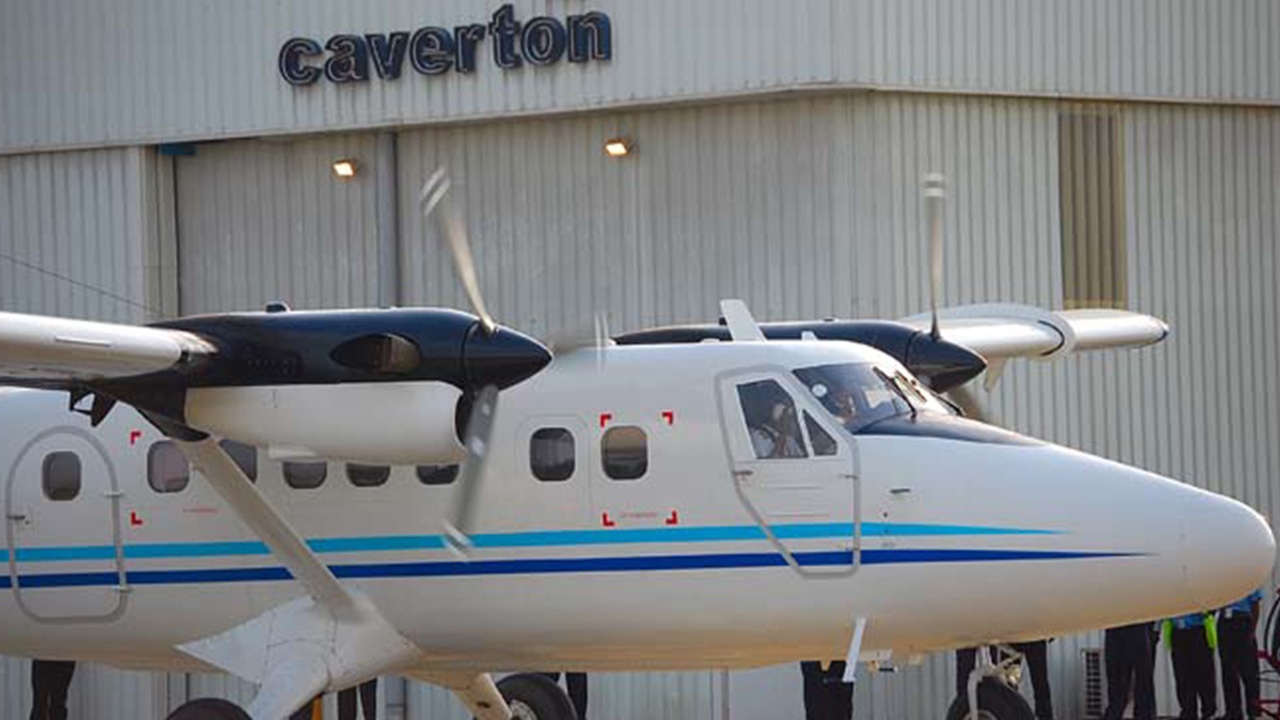
Caverton Eyes Positive Returns for Shareholders
By Dipo Olowookere
Leading provider of marine, aviation and logistics services to local and international oil and gas companies in Nigeria, Caverton Offshore Support Group (COSG) Plc, has said it intends to deliver good yields to its shareholders in the present financial year.
In order to achieve this goal, the company wants to continue to provide the quality of service its clients have become accustomed to over the years.
Chief Executive Officer of Caverton, Mr Bode Makanjuola, expressed confidence that the company, which offered chartered chopper to Vice President Yemi Osinbajo during the campaign for the 2019 general elections, would excite shareholders with a impressive performance.
“As we move into the 3rd quarter of 2019, our commitment is to continue to provide the quality of service our clients have become accustomed to, as well as positive returns for our shareholders,” Mr Makanjuola assured.
In the first half of this year, Caverton achieved a profit before tax of N2.6 billion and an after-tax profit of N1.7 billion. During the period, revenue increased by 19 percent to N16.9 billion from N14.2 billion recorded in the same period of 2018, while the direct operating costs also increased by 15 percent, supporting the earnings per share which also increased by 78 percent when compared with same period in 2018.
A further analysis of the results showed that operating profit, excluding other income, rose to N3.2 billion from N2.7 billion June 2018, while the EBITDA for the period increased to N6.3 billion from N3.6 billion in June 2018.
The EPS grew to 51 kobo from 29 kobo in June 2018, while the profitability ratios gross margin appreciated by 36 percent against 34 percent in June 2018, with the EBITDA margin standing at 37 billion in H1 2019 versus 25 percent in H1 2018, and the net profit margin at 10 percent in contrast to 7 percent in June 2018.
Caverton is one of Nigeria’s leading oil services companies providing solutions for a range of multinational companies across aviation and marine services.
Caverton Marine Limited, one of the fastest growing indigenous shipping companies commenced operations in 1999, while Caverton Helicopters Limited is a helicopter charter, sales and maintenance company established in 2002. Both companies were consolidated to form Caverton Offshore Support Group on June 2, 2008.
The group’s focus and primary business is to provide logistics and environmental support services to oil and gas fields with broader plans to support energy operations along the West African shelf as well as other ancillary support services.
Caverton has a young and growing fleet of vessels and aircraft operating out of nine locations. The company has an impressive oil and gas client base which include Shell, Total, ExxonMobil, NNPC, Aiteo, Aje-Folawiyo, and Chevron, among others.
Travel/Tourism
Airlines Fault Claims of Unpaid NCAA Regulatory Fees
By Adedapo Adesanya
The Airline Operators of Nigeria (AON) has denied owing cost recovery charges to the Nigeria Civil Aviation Authority (NCAA), insisting that all services rendered by the regulator to domestic airline operators are paid for fully in advance on a cash-before-service basis.
In a statement from the airlines’ body, it was emphasised that no domestic airline in Nigeria receives NCAA regulatory services without first making full payment of invoices issued to it by the agency, describing suggestions of the indebtedness for regulatory services as factually inaccurate.
It said that what the NCAA refers to as ‘outstanding charges’ relates solely to the 5 per cent Ticket Sales Charge (TSC), a tax imposed by the NCAA on passengers, which it said is not in consonance with the dictates of international aviation.
The AON then urged the federal government to urgently amend the Civil Aviation Act to empower the NCAA to collect whatever appropriate fees and charges are due it directly from passengers or whoever else, without routing such through the domestic airlines, from June 1, 2026.
It said doing this will relieve domestic airlines of the financial burden of acting as collection agents for the NCAA, since airlines currently bear banking transfer charges and other transaction costs in the process of transmitting funds to the organisation.
The airline body reiterated its position that the NCAA is a regulator, not a revenue-generating agency and that it does not fund any aspect of the airline businesses or render any direct service to passengers.
The AON said every service the agency provides to airline operators is fully paid for in advance before it is rendered.
“The AON notes that several member airlines maintain dedicated accounts, from which the NCAA draws down its monthly remittances, until the force majure caused by the Iran-Israel/USA conflict, which had put a lot of financial pressure on airlines worldwide.
“Notwithstanding this arrangement, the AON had formally appealed to the federal government through the office of the Minister of Aviation and Aerospace Development, to suspend the payment of all statutory charges temporarily, as an interim measure to assist airlines in managing their cash flows during the current period of severe financial stress caused by the increase in the cost of Jet A1.
“As an interim response, President Bola Tinubu graciously granted a 30 per cent concession while waiting for the government’s decision on the other aspects of the AON intervention request.
“While the AON acknowledges and appreciates this gesture, we had appealed for a meeting with Mr President to discuss further reliefs, a request that is yet to be granted,” the AON said.
Speaking further on reports that airlines owe billions in debt to the NCAA, the AON said the 5 per cent Ticket Service Charge in question was introduced over 45 years ago under the Government of General Gowon by the then Federal Civil Aviation Authority (FCAA) and its continued relevance has not been reviewed ever since.
It further stated that domestic airlines, in addition to the 5 per cent TSC, still pay separately ànd directly for services provided by the various industry agencies, including the NCAA itself.
AON said that the 5 per cent TSC is an ad valorem tax applied to an airline’s gross earnings, not profits and that the global aviation industry operates at a profit margin of between 1.5 per cent and 2.5 per cent at best.
“The AON remains committed to constructive engagement with the government and all stakeholders to achieve a growth-oriented sector, designed to enable the accelerated growth of key sectors of the economy and the improvement and sustenance of a healthy quality of life for the citizenry,” it said.
Travel/Tourism
Airline Remittances: NCAA Halts Enforcement of ‘No Pay, No Service’ Policy
By Adedapo Adesanya
The Nigeria Civil Aviation Authority (NCAA) has announced the temporary suspension of its “no pay, no service” directive earlier issued to airlines with outstanding statutory remittances, citing ongoing consultations and prevailing operational challenges in the aviation sector.
In a statement, the authority said the decision followed a review of industry conditions, particularly the rising cost of aviation fuel, which has placed significant financial pressure on domestic carriers and threatens overall sector stability.
However, the NCAA stressed that the suspension does not amount to a waiver, cancellation, or forgiveness of the debts owed by the affected airlines, noting that such decisions fall outside its regulatory mandate.
The agency recalled that President Bola Tinubu had earlier approved a 30 per cent discount on outstanding statutory charges owed by domestic airlines to aviation agencies, as part of broader government efforts to cushion the impact of high Jet A1 fuel costs and stabilise the industry.
According to the NCAA, airlines remain fully responsible for settling their obligations, adding that it would engage operators individually to ensure compliance through structured repayment arrangements that do not disrupt operations.
The regulator also clarified the nature of the 5 per cent Ticket and Cargo Sales Charge, describing it as a statutory levy mandated by the Civil Aviation Act and embedded in the cost of air travel and cargo services.
It explained that the charge is collected by airlines at the point of ticket and cargo sales on behalf of the aviation system and must be remitted accordingly.
The organisation emphasised that the funds do not constitute revenue or profit for the airlines and should not be treated as such.
It further noted that the revenue from these charges is distributed among key aviation institutions, including the regulator itself and other service providers, all of which play vital roles in ensuring safe, efficient, and internationally compliant aviation operations.
It added that the NCAA operates on a cost-recovery basis and does not receive direct funding from the Federal Government for its routine regulatory activities, making timely remittance of statutory charges critical to sustaining its oversight functions.
The suspension of the enforcement directive, it said, is a measured step aimed at maintaining operational stability in the sector while reinforcing the obligation of airlines to remit collected charges.
The NCAA reaffirmed its commitment to balancing regulatory enforcement with industry sustainability, warning that statutory funds already collected must be remitted for their intended purposes.
Travel/Tourism
Emirates Skywards Commences ‘Season of Rewards’ Campaign
By Modupe Gbadeyanka
A new campaign designed to celebrate its passengers across the globe has been launched by Emirates Skywards, a statement from the company confirmed.
The promotion is known as Season of Rewards, and will run from May 21 to August 31, 2026, with beneficiaries getting different rewards for their patronage.
The Skywards Season of Rewards offers more savings with Cash+Miles on Emirates and flydubai, with members unlocking twice the savings, including enhanced Cash+Miles rates across the Emirates and flydubai network when booking flights and extras (excess baggage, lounge access and seat selection. The offer applies across all classes of travel, fare brands and destinations on both airlines. With the limited-time offer, 2,000 Skywards Miles can unlock savings of $30 instead of $15.
In addition, passengers will receive extra tier benefits for travel up until August 31, 2026. Members earn a 20 per cent bonus Tier Miles on every Emirates or flydubai flight, helping members move through the tiers faster. With reduced Tier Miles required during this period, it’s now even easier for members to renew or upgrade their membership status.
Also, they will get 50 per cent bonus Miles with travel partners, including Emirates Skywards Hotels, Marriott Bonvoy, IHG Hotels and Resorts, Jumeirah and more. However, registration is required to participate, and bonus Miles will be credited within 60 days after the end of the offer period.
Further, Skywards members can book their next reward flight and extras with Miles, starting from 4,500 Miles instead of 9,000 Miles during the promo period across all routes, cabins and fares.
“Skywards Season of Rewards reflects our continued commitment to creating even more value for our members worldwide.
“Whether members are planning a family holiday, a Dubai stopover, a weekend escape, or simply looking to maximise rewards across their travel spend – this initiative unlocks more opportunities to earn, save and experience the world with Emirates Skywards,” the DSVP Emirates Skywards, Nejib Ben Khedher, said.
-
Feature/OPED6 years agoDavos was Different this year
-
Travel/Tourism10 years ago
Lagos Seals Western Lodge Hotel In Ikorodu
-
Showbiz3 years agoEstranged Lover Releases Videos of Empress Njamah Bathing
-
Banking8 years agoSort Codes of GTBank Branches in Nigeria
-
Economy3 years agoSubsidy Removal: CNG at N130 Per Litre Cheaper Than Petrol—IPMAN
-
Banking3 years agoSort Codes of UBA Branches in Nigeria
-
Banking3 years agoFirst Bank Announces Planned Downtime
-
Sports3 years agoHighest Paid Nigerian Footballer – How Much Do Nigerian Footballers Earn