Connect with us

Travel/Tourism

FAAN Relocates Headquarters to Lagos to Cut Costs

Published

on

faan

By Aduragbemi Omiyale

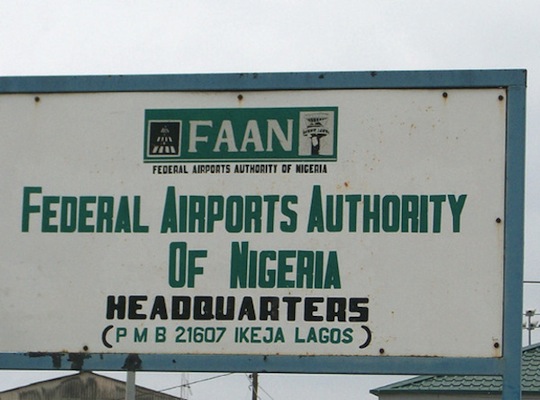
The corporate head office of the Federal Airports Authority of Nigeria (FAAN) has been moved from Abuja to Lagos, where it was in the past, on the directive of the Minister of Aviation and Aerospace Development, Mr Festus Keyamo.

This development was confirmed in a statement on Thursday by the Director of Public Affairs and Consumer Protection of FAAN, Mrs Obiageli Orah.

The agency explained that the decision to move its corporate headquarters to its original base was taken after consultations with the relevant stakeholders.

The statement noted that it was also because the relocation to Abuja was causing a waste of scarce public funds, as the directors and other members of staff of FAAN had no befitting offices to carry out their duties.

“Those affected by the decision to move the headquarters to Abuja have since returned to Lagos as there is no office space for them in Abuja.

“It was ill-advised in the first place to move the headquarters to Abuja when there was no single FAAN building in Abuja to accommodate all of them at once,” a part of the disclosure explained.

“Having returned to Lagos, the authority would be liable to pay them DTA (Duty Tour Allowance) because technically, they are working out-of-station as their official posting is to Abuja. The Minister has decided to stop this waste of public resources and rip-off on the public purse,” it added.

However, FAAN emphasised that “Abuja continues to have full operational offices, and the authority has not scaled down operations in Abuja one bit. It is just the technical decision of where the authority has its corporate headquarters that has been taken without affecting the structure of operations as they are for now in both cities.”

It was disclosed that Mr Keyamo has “rolled out plans to get concessionaires to build befitting offices” for the agency in Lagos and Abuja,” noting that the Minister did not buy the idea of using “scarce resources to rent an office space in Abuja for millions of Naira of public money when in fact more than 60 per cent of its activities are in Lagos, given the huge passenger volume of the Lagos airports.”

FAAN, in the statement, assured Nigerians that it would continue to act in the best interest of the public and the country, stressing that the Minister was committed to making decisions that are in the best interest of the country, especially as they concern public funds, and will not yield to ethnic or sectional sentiments that will derail this commitment.


Click to comment

Leave a Reply

Your email address will not be published. Required fields are marked *

Travel/Tourism

NCAA to Sanction Royal Air Maroc Over Alleged Passenger Rights Violations

Published

on

Royal Air Maroc

By Adedapo Adesanya

The Nigerian Civil Aviation Authority (NCAA) has threatened to impose tougher sanctions on Royal Air Maroc, including pushing for the suspension of its operations in Nigeria, over what it described as persistent violations of consumer protection regulations and poor treatment of Nigerian passengers.

The Director of Public Affairs and Consumer Protection at the NCAA, Mr Michael Achimugu, said the Moroccan carrier had become a repeat offender in cases involving baggage infractions, poor passenger handling, and delayed resolution of customer complaints despite previous regulatory sanctions.

According to him, Royal Air Maroc was sanctioned in 2025 for consumer protection-related infractions, but the airline has failed to significantly improve its service delivery.

He alleged that passengers continue to experience incidents of short-landed baggage without timely notification, inconsistent payment of compensation and prolonged complaint resolution, with many cases only addressed after intervention by the NCAA.

Mr Achimugu also accused the airline of showing disregard for the authority’s regulatory oversight, alleging that invitations from the NCAA were often treated with “a degree of insolence that is unacceptable.”

He alleged that Royal Air Maroc’s Country Manager, Mr Ahmed Boussouf, routinely declined invitations to attend meetings at the NCAA headquarters in Abuja, opting instead to remain in Lagos while delegating representatives without the authority to resolve pending cases or make binding commitments on behalf of the airline.

The NCAA spokesman further alleged that during a recent engagement over the recurring issues, Mr Boussouf responded to the regulator’s concerns by saying, “Whatever you want to do, do.”

While describing regulatory work as “thankless and exhausting,” Mr Achimugu said the authority would not tolerate what he termed “brazen disregard and non-compliance” from any airline operating in Nigeria.

He stressed that international airlines operating in the country are expected to comply with Bilateral Air Service Agreements (BASA) and uphold global standards in passenger service and consumer protection.

“As regulators, we support airlines to remain in business, but that support cannot come at the expense of Nigerian passengers,” he said, adding that those affected by unresolved complaints are paying customers who deserve fair treatment.

Mr Achimugu disclosed that his department would recommend stricter enforcement measures against Royal Air Maroc, including advocating a suspension of the airline’s operations in Nigeria until it demonstrates a firm commitment to improving passenger service.

He also argued that Nigerian travellers often continue to patronise airlines despite poor service, unlike consumers in some other jurisdictions who resort to boycotts, a situation he said has reduced pressure on some operators to improve standards.

“There is nowhere Royal Air Maroc flies that passengers do not have alternatives such as Air Algérie, EgyptAir and Ethiopian Airlines,” he said.

He maintained that the NCAA would enforce the country’s aviation consumer protection regulations “without fear,” insisting that no airline would be allowed to take Nigerian passengers or the regulator for granted.

Continue Reading

Travel/Tourism

H1 2026: Transcorp Hotels Consolidates Growth, Reports N13.7bn PBT

Published

on

Transcorp Hotels

By Modupe Gbadeyanka

The hospitality subsidiary of Transnational Corporation (Transcorp Group), Transcorp Hotels Plc, has posted its unaudited results for the second quarter ended June 30, 2026.

In the results submitted to the Nigerian Exchange (NGX) Limited, it was shown that the performance for the period was driven by disciplined cost management and continued operational excellence despite moderated revenue, with post-tax profit rising by 21 per cent to N10.5 billion from N8.7 billion in the same period of 2025.

However, due to softer market demand in its International Business segment, revenue for the period moderated to N44.4 billion from N46.9 billion in Q2 2025, though Operating Expense Margin improved by 3 percentage points, demonstrating continued operational efficiency and prudent cost management.

These results validate Transcorp Hotels’ resilience and focus on operational excellence, cost efficiency, and customer-centric innovation, reinforcing its leadership in Nigeria’s hospitality sector.

Commenting on the results, the chief executive of Transcorp Hotels, Ms Uzoamaka Oshogwe, said, “Our Q2 2026 performance reflects the resilience of our business and the disciplined execution of our strategy in a dynamic operating environment.

“While market conditions remained challenging, we continued to deliver strong profitability by staying focused on operational excellence, commercial agility, and creating exceptional experiences for our guests.

“We remain committed to strengthening our market leadership, investing strategically in our business, and delivering sustainable long-term value for our shareholders.”

Also, the Chief Finance Officer of Transcorp Hotels, Oluwatobiloba Ojediran, said, “Our disciplined approach to cost management, revenue optimisation, and operational execution delivered a 12 per cent increase in Profit Before Tax to N13.7 billion, alongside a 21 per cent growth in Profit After Tax to N10.5 billion, compared with N8.7 billion in the corresponding period last year.

“These strong financial results reinforce the resilience of our business, provide a solid platform for sustainable growth, and position us to continue investing strategically while delivering long-term value for our shareholders.”

Beyond the numbers, Transcorp Hotels continues to strengthen its portfolio of iconic assets. Transcorp Hilton Abuja remains one of the company’s flagship properties, while Transcorp Centre, one of West Africa’s largest purpose-built event and conference venues, is fast becoming a landmark for business, tourism, and world-class events in Nigeria.

Since its launch, the venue has hosted several landmark gatherings, further cementing its position as a premier venue for high-profile corporate and social gatherings.

Continue Reading

Travel/Tourism

FAAN to Introduce Facial Recognition at Nigerian Airports

Published

on

Lagos airport

By Adedapo Adesanya

The Federal Airports Authority of Nigeria (FAAN) has announced plans to introduce V-Pass, a biometric facial recognition system designed to make passenger processing faster, safer and more seamless across its domestic airports.

According to FAAN, the new technology will allow passengers to verify their identities through facial recognition after a one-time enrolment, reducing reliance on physical identification documents and shortening queues through automated electronic gates.

The authority said the system is expected to enhance airport security while improving the overall travel experience for domestic passengers.

FAAN added that V-Pass has been developed with data privacy at its core and is compliant with the Nigeria Data Protection Regulation (NDPR).

The agency described the initiative as part of its commitment to delivering smarter, technology-driven airport services and said nationwide sensitisation and rollout updates would be announced in due course.

Airports in countries including the United States, the United Kingdom, Singapore and the United Arab Emirates already deploy facial recognition technology for processes such as check-in, security screening, immigration and boarding, so the move also aligns Nigeria’s aviation sector with a growing global trend towards contactless travel.

These systems have been adopted to improve operational efficiency, strengthen security and enhance the overall passenger experience.

For FAAN, the deployment of V-Pass forms part of its broader digital transformation agenda aimed at modernising airport operations and accommodating rising passenger traffic.

Experts say that beyond improving convenience, the authority expects the biometric platform to strengthen identity verification, reduce the risk of impersonation and support more efficient airport security, while maintaining compliance with data protection.

Continue Reading