
Travel/Tourism
Giant Strides of Heritage Bank in Nigeria’s Tourism Sector

By Dipo Olowookere
The enormous richness and diversity of Nigeria’s culture has always been considered as strong reason why tourism should be a primary foreign exchange earner for the country. From east to west; from north down to south, the country is naturally endowed with rich tourist sites.
Nigeria’s art and cultural heritage are woven from threads of history and diversity, legend and conquest. Nigeria is a vast country with a population of about 170 million people covering about 923,768 sq.km of landmass, located wholly within the tropics.
The country, aptly described as the ‘Giant of Africa’ and the Heart of Africa, is richly endowed with ecological and cultural resources, which are of universal recognition. The richness and diversity of the Nigeria culture is a manifestation of the socio-cultural differences of the over 250 ethnic groups that inhabit the land for ages.
However, the big question is, how much of these opportunities in its art and culture have been fully developed to attract tourists (locally and internationally) as well as earn revenue.
Expected to be one of the growing and high earning sector in the country, the industry was accorded priority status in 1990 when the National Tourism Policy was launched. The main thrust of government policy on tourism was to generate foreign exchange earnings, create employment opportunities, promote rural enterprises and national integration, among other things. Also, it is ideally positioned to contribute to seize the opportunities stemming from urbanization.
Given the plethora of opportunities provided by tourism, it is surprising that the industry has not received adequate attention in the developing countries where most of the natural tourist sites are domiciled, especially in Nigeria. An incredible tour through the history of tourism in Nigeria over the last 50 years of its existence shows that not much has been accomplished and important challenges remain.
As at 2016, direct contribution of Travel & Tourism to GDP was N1,861.4 billion (1.7% of GDP) but this was forecast to rise by 1.1% to NGN1,881.1 billion in 2017.
But the figures presented in the WTTC 2017 report are proof that not so much contribution from the sector has reflected on the economy.
In the last 10 months, no significant direct contribution from Travel & Tourism to the country’s GDP. For instance, its contribution to the whole economy GDP remains at 1.7%, same as it was in 2016. A review of tourism’s impact on the country’s GDP in the last 10 years (2007 – 2017) shows that its impact was at all-time high in 2008, having contributed 2.4% to the GDP. Since 2008, its impact has been fluctuating between 1.8% and 1.5%.
However, more must be done to market Nigeria’s massive and profitable industry. This is because the country is yet to tap its full potentials.
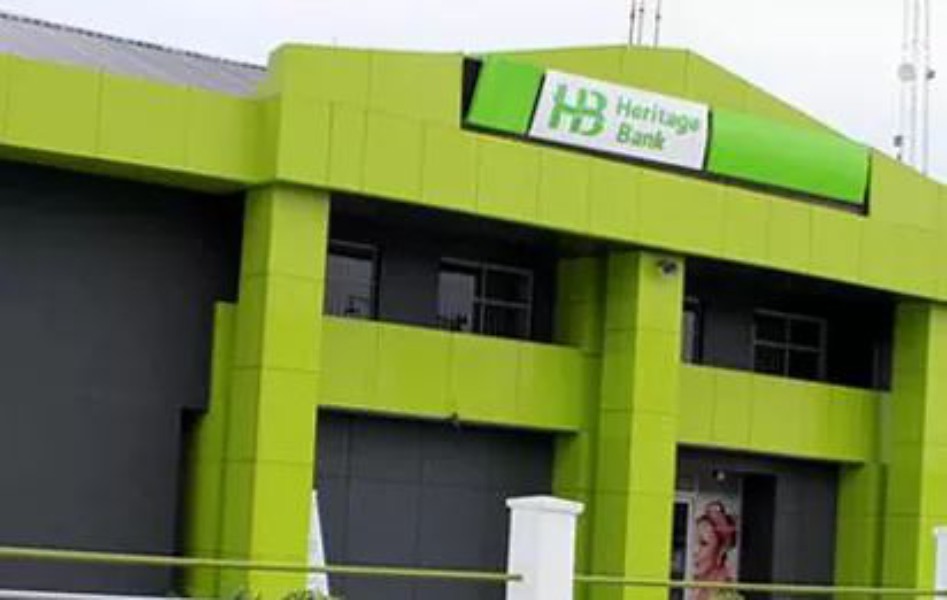
With this development, Heritage Bank, through its strategic partnerships with government and private organisations, has continued to make efforts to transforming Nigeria into a tourism sector destination in Africa and position it as lever of Nigeria’s economic growth and development.
For the bank’s giant stride of support to tourism, Federal Government commended Heritage Bank for its commitment to the development and growth of the creative industry.
Minister of Information and Culture, Alhaji Lai Mohammed, gave the commendation at a two-day Creative Nigeria Summit.
The bank, aimed at boosting Nigeria’s tourism via creative arts industry supported the sponsorship of exhibition at the National Museum Benin, at the Exhibition Gallery of National Museum Benin by the National Commission for Museums and Monuments (NCMM), in collaboration with the Edo State Government, and the Smithsonian Institute, United States of America.
Also, Heritage Bank Plc partnered with the organizers of the International Festival of Contemporary Dance (IFCOD) to host the second edition of One Language, a musical production of intrigue, dance and drama.
Most prominent of its partnership and supports is the annual Calabar Carnival and festival, tagged “Africa’s Biggest Street Party,” was created as part of the vision of making Cross River State the number one tourist destination for Nigerians and other tourists across the world.
Since its debut in 2004 by a former governor of the state, Donald Duke, the theme of the yearly event has continued to change. The theme of the recently concluded 2017 edition was “migration and climate change.”
The theme was chosen against the backdrop that Africa has always known migration and it has been the home of many cultures for many centuries.
From the Trans-Atlantic Slave Trade era, colonization and neo-colonialism, the African continent which used to be home to many foreigners, has now become a land of opportunities.
Presently, the world recognizes it as the new frontier, not to be exploited for the benefits of others but to be cultivated on its own. It is against this backdrop that the board of the carnival commission adopted the theme migration in a bid to bring people together beyond the realm of tribal and religious conflict to show case Africa’s talent and several opportunities.
This theme resonates with the greenhouse effect which is the corporate identity of Heritage Bank, Nigeria’s most innovative banking services provider, a development which encourages it to partner with Segaull Band, one of the five bands that participated in the carnival.
The Acting MD/CEO of Heritage Bank, Jude Monye, says the theme of the carnival this year is migration and climate change and heritage have to do with green, green- house effect and sustainability, protection and human development.
“As far as this is concerned, the bank will continue to support initiatives that have to do with sustainability,” adding that migration is a depletion of human resources, depletion of values and depletion of human capital.
“We are here as an institution to help to facilitate and to create awareness that the grass is not greener on the other side, we can develop ourselves, we can build our nation, we can build our continent and sustain it if we do the right things like planting trees, keeping our environment clean, disposing our wastes properly and living a good life,” Mr Monye said.
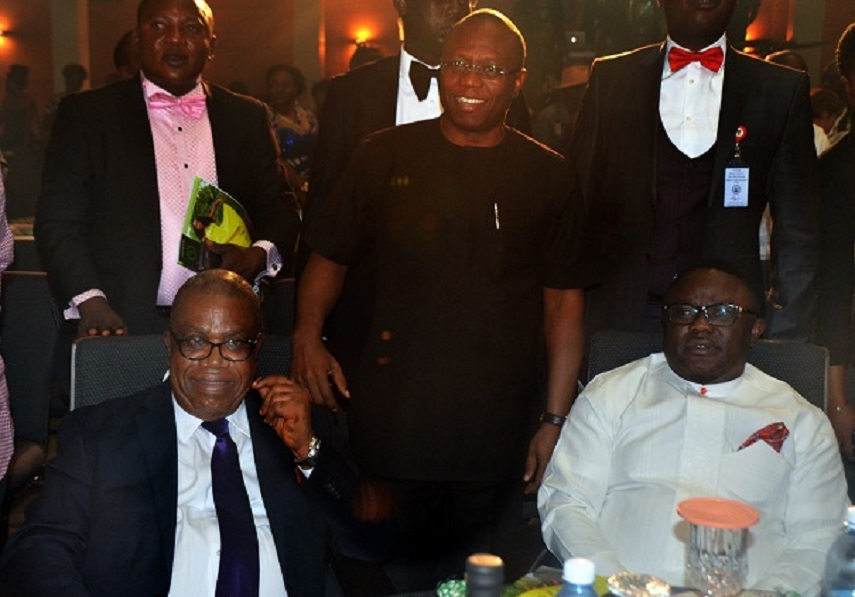
Mr Monye was accompanied by a team from the bank which included Mr Godwin Ukwat, Regional Head, South South; Mr Archibong Etim, Team Lead Commercial, Calabar; Mrs Queen Essien, Team Lead, SME; Mrs Obo Offiong, Experience Centre Manager, Calabar, Mrs Rita Ihunna, Team Member, Commercial, Head office, Lagos and Mr Blaise Udunze, Media Relations Officer.
During the event, the Cross-River State Governor, Mr Ben Ayade, tasked the bands to interpret the theme, ‘Migration’ for the youths to see the need to remain in Africa and develop the continent.
The Seagull Band is one of the carnival bands registered in 2005 for the Cross-River State annual Christmas festival. It is the most stylish and coordinated body with the main objective of promoting and sustaining the tourism and hospitality industry and enhance the status of the under privilege through charity. The band displays the African culture through aesthetics, talents and innovation, paraded yearly during the carnival.
The Seagull Band is identified by its eye catching distinctive colour – red and maintains defined hierarchical structure. It is the band that recognises and celebrates Nigerians and other artistes, movie stars and beauty queens. The band is under the dynamic and charismatic leadership of the vibrant and distinguished Senator (Princess) Florence Ita-Giwa.
Ita- Giwa was the wife of late Dele Giwa, a journalist killed by a parcel bomb during the military regime of General Ibrahim Babangida. Since the death of her husband, Ita-Giwa has been a vibrant activist and a fighter for the people of Bakassi Peninsula. She’s also a former senator who represented Cross River State Southern District at the National Assembly and a former Legislative Adviser to late Nigerian President Musa Yar’adua.
Speaking on the theme of the carnival, Senator (Princess) Ita-Giwa said the relevance of theme to recent and trending ignoble migrant journey and the attendant menace was no less efficacious as it has brought the subtlety and complexities that characterize the infamous movement of people from less attractive zone to a more attractive one.
She said the 2017 Seagull Band interpretation takes a prismatic view of the forms of migration and causal factors of human migration.
“The epicentre of these interpretations is the two major forms of migration- the 18th century infamous/involuntary yet monumental slave trade and the modern day voluntary slavery/ trafficking of vulnerable persons.
“The tumultuous whirlwind and rippling effect of these forms of migration is brought to the fore,” she said, adding that, “international conflict and war as causes of migration also form part of the outlay.”
The Segaull Band presentation which was set in a typical African setting was logically captured in the following sections: Domestic settlement, arrival of European traders, the slave trade (the capture, torture and resistance), transformation, legacy, human trafficking (sex workers, Libya to Europe, the returnees, natural/environmental disasters, development, self-actualization and dignity restored (Home sweet home)
The five bands: Segaull, Masta Blasta, Passion 4, Bayside and Freedom mustered at Millennium Park along the 12 kilometres Carnival route so that spectators will see at least three performing bands within four hours. The bands arrived at the U.J Esuene stadium early in the morning.
Besides the carnival, there was also the Miss Africa Calabar Beauty Pageant 2017 which was won by Miss Botswana, Gaseangwe Balopi, 21.
Balopi emerged the 2017 African queen at the second edition of the pageant which was a keenly contested event after a fourth round of appearances in different attires by 25 contestants.
She took home $35,000 and a Ford Edge Sport Utility Vehicle as her star prize.
Miss Rwanda, Fiona Naringwa and Miss Luyolo Mngonyama of South Africa were first and second runners-up. Naringwa took home $10,000 and Mngonyama $5,000.
The new queen promised to use her crown to create awareness on the dangers of illegal migration by youths across Africa while the former Miss Africa, Neurite Mendes from Angola, urged the new African queen to use her office to end illegal migration by some Africans to European countries.
Governor Ben Ayade stated that the theme of the event `Climate Change and Migration’ was chosen to create awareness on the need to protect the environment and caution youths against illegal migration.
Mr Ayade noted that the event afforded the African continent the opportunity to choose another beauty queen that will use her beauty to create awareness on the need for Africans to see themselves as one.
“Migration and Climate Change have become burning and global issues today. Our gathering here today is to choose another African queen that will use her office to create awareness on the theme. Blackness is now a perception, beauty and character in the eyes of the people. The Miss Africa pageant is meant to tell the true story of Africa to the world,” Ayade said.
According to him, “how can a continent like Africa that is blessed with abundant natural and human resources be poor? Africans are intellectually sound. We are not gathered here to pick the most beautiful woman, but rather, we want to pick the true African woman who can use her beauty to change Africa. For us to tell the true African story, we need a face that is appealing. Our theme for this year should caution our youths about the tedious journey through the Mediterranean Sea and Sahara Desert to Europe in search of greener pasture.”
We commend the initiative of Heritage Bank for supporting efforts to create awareness about the negative effects of migration and climate change and enjoin other corporate organisations to lend their voices as well as in a bid to sustain advocacy against migration and climate change in the overall interest of the African continent as well as restoration of the dignity of the African man and the black race.






The manner in which international travel and digital entertainment intersect has experienced a massive transformation in the current year. As the volume of international travel continues to rise to unprecedented levels, the technological potential to access a 1xbet giriş from any point in the world has become the benchmark by which the efficacy of a given system or network should be judged. In 2026, more than 65% of international travel hubs have completely integrated standalone 5G connectivity, providing the environment that is required to enable high-stakes sports viewing. This means that regardless of the position that the sports aficionado finds themselves in, at the top of a mountain or at the coast, the nature of the information that flows will remain the same. The modern-day traveler expects nothing but the best, and that includes the manner in which they will be able to engage with the digital hobbies that they have been able to cultivate during the course of the year.
The way in which the experience is felt has also been improved through the efficiency of the software that is used to power the mobile experience. If the user has opted to install the 1xbet apk file on the 2026 flagship device, the user is able to experience the new “Travel-Adaptive” coding that reduces the background data usage by 30% when traveling internationally. This is an important aspect of the experience because the user may find themselves in transit for an extended period of time without the ability to plug in and charge the device. As the statistics show for the first half of the year, the user of the mobile The application is able to experience a 25% reduction in data usage when traveling compared to the user who makes use of the mobile web browser in order to experience the sports entertainment the user has grown accustomed to. It is a more relaxed experience where the main aspect is the thrill of the game.
The Role of Mobile Betting in Modern Tourism
It should be noted that the modern betting process concerning sports is considered to be one of the most effective ways to get entertained during a long flight or when staying at the airport. Mobile betting is considered to be a unique opportunity for a tourist not just to view a sporting event, but also to become an active participant of that sporting event that is taking place on the other side of the world. Thanks to the speed of modern applications, it is possible for a tourist to react immediately to the changes in the score and adjust the predictions accordingly during an excursion or when staying by the pool. Such an event is considered to be an adventure in bright colors.
Apart from the entertainment that such modern platforms offer, they also present a great number of analytical data that allows the tourist to get engaged in the process. One of the main purposes of such tourism is to get satisfaction from the accuracy of one’s prediction, as well as competition. Such platforms pay great attention to the safety issues, reminding the tourist that “betting should be an additional positive experience of your trip.”
Network Benchmarks for the Connected Traveler
The sports enthusiast who is always on the go would find that the line which separates an enjoyable experience from an unenjoyable experience of sports betting is measured in mere milliseconds. In fact, the world average of mobile latency for tourist destinations has been reduced to mere 16ms in 2026, which is an important consideration for sports enthusiasts who enjoy sports betting for games such as tennis and basketball.
The table below shows the current standards for mobile network performance for the most prominent tourist destinations around the world:
| Network Metric | Global Average 2026 | Satisfaction Rate | Primary Use Case |
| Download Speed | 195.6 Mbps | 88 percent | High-definition streaming |
| Signal Latency (5G) | 16 ms | 92 percent | Real-time Live updates |
| Roaming Cost | 1.15 USD / GB | 74 percent | Continuous background sync |
| App Load Time | 1.8 seconds | 85 percent | Rapid market entry |
| Connection Stability | 99.8 percent | 91 percent | Uninterrupted viewing |
As per the latest research findings on the subject by the research company named Statista, it has been identified that the need for high-speed mobile data for the tourists is rising by an increase of 40%. This is mainly because the tourist would like to experience a form of ‘multi-layered’ entertainment. The definition of ‘multi-layered’ implies that the sports enthusiast would like to view a live streaming event, access his or her social media account, and place a friendly bet on the event simultaneously. Therefore, as long as this infrastructure is in place, this would thrive.
The Evolution of Mobile Betting as Travel Leisure
In the year 2026, mobile betting for sports would be considered a fun way of spicing up the entire travel experience. This is because it would be able to provide a new dimension to a sporting event that an individual is witnessing while traveling in a pub or a train. It would be able to provide individuals with a way of having a personal stake in a world event. Thus, the hours that an individual spends in a train or an airport would be able to pass quickly with a fun way of gamification of sports viewing.
In the year 2026, modern mobile betting has turned out to be a full-fledged way of socializing for travelers. This is because many individuals use the co-watching features of the application and group betting features of the application in order to compete with their friends back home or connect with other sports fans of the sport that they are watching while visiting pubs around the world. It is because it would be able to provide individuals with a new dimension of traveling. It is no longer just about traveling to a new destination; it is about becoming part of a new world community where talking about the probabilities of winning or forward performance of a team is considered to be the universal language of communication. It is no longer just about betting; it is about getting the rhythm of the world of sports wherever an individual is located—from the cozy European roads to the futuristic cities of Asia.
Popular Mobile Sports Activities for People on the Move
Individuals who travel in 2026 have managed to come up with their own ways of having fun through sports without missing out on their sightseeing targets. There has been a new trend of “micro-betting,” which refers to betting on a game that will happen in the near future.
The following is a list that points out the best mobile sports-related activities for traveling individuals for the current year:
- Predicting the total points scored in one quarter of the basketball game while in short transit stops.
- Tracking the sports player that is most likely to score the next goal in the football game while in a cafe.
- Determining the total number of games in one set in the tennis game while in downtime at a resort.
- Viewing the percentage of ball possession for a particular team through the use of graphical overlays.
- Predicting the exact number of free throws scored in a game while in downtime at a hotel.
The activities will be perfect for the downtime in the traveling schedule as they will provide the individual with a dose of excitement without making the individual glued to his/her screens for hours. This way, the individual will be able to appreciate the digital world as well as the beauty of the world he/she is in.
Security and Responsible Habits Abroad
However, with the introduction of mobile transactions during travel, the factor of security has been regarded as a major factor. In fact, in the current scenario, 94% of the total mobile sports platforms provide multi-factor biometric authentication. This means that the security of your account is ensured even when you are accessing the internet through a public source of internet connectivity, such as Wi-Fi. Moreover, the majority of the platforms provide “Smart Limits” that are location and time zone-based. In this way, an individual can develop a habit when they are traveling. All of this has been done in a way that the overall experience remains a positive one. This is because betting is something that an individual chooses for his or her entertainment.
The innovations in the field of technology, such as the introduction of technology through eSIM, allow an individual to remain connected. This means that an individual does not face “bill shock” when they are using roaming.

By Aduragbemi Omiyale
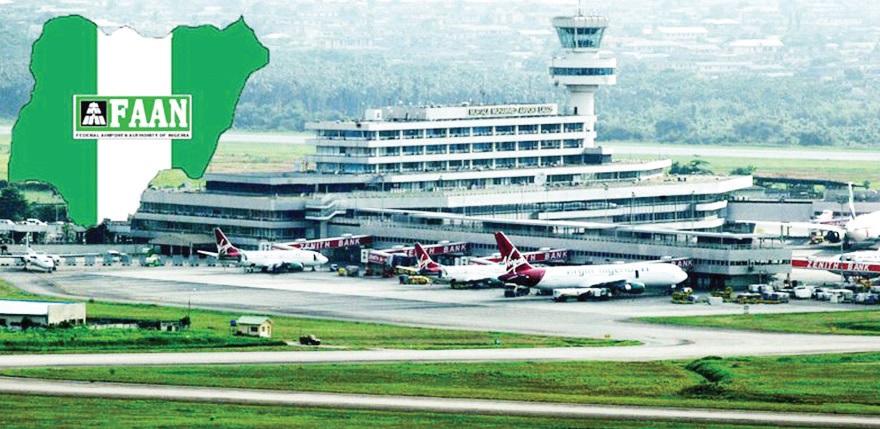
The federal government has directed the Federal Airports Authority of Nigeria (FAAN) to adopt a hybrid payment system that accommodates both cash and card payments at all airport access gates with effect from Friday, March 13, 2026.
This system is to be used until the introduction of a fully automated or electronic system at all access gates at the airports in order to fully and eventually eliminate cash payments.
In a statement on Tuesday, the Minister of Aviation and Aerospace Development, Mr Festus Keyamo, disclosed that these decisions were reached after reviewing the initial implementation and the operational challenges observed.
FAAN had earlier commenced an electronic payment system last week, but it was suspended by President Bola Tinubu due to the traffic gridlock it created.
Yesterday, the Aviation Minister met with officials of FAAN and senior officials of the Ministry, and it was agreed to engage concessionaires for the introduction of a fully automated or electronic system.
Mr Keyamo, in the statement signed by his Special Adviser on Media and Communications, Mr Tunde Moshood, said motorists who already possess FAAN Go Cashless Cards may continue to use them until further notice.
It was also resolved that other electronic payment options, including POS terminals and other approved digital channels, will also remain available, while members of the public and road users were encouraged to obtain and use the FAAN Go Cashless Card as the organisation continues to enhance and fully optimise the cashless payment system.
By Aduragbemi Omiyale
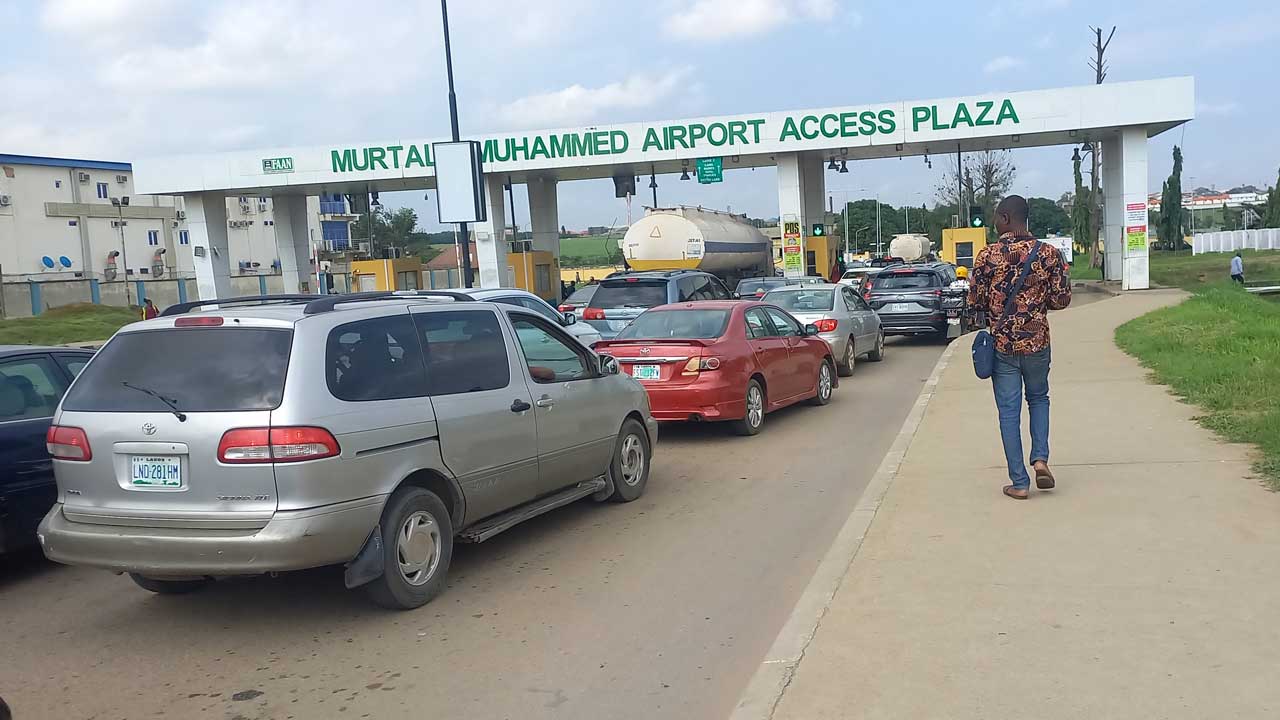
The cashless airport toll gate payment system introduced by the Federal Airports Authority of Nigeria (FAAN) has been suspended by President Bola Tinubu.
At the Federal Executive Council (FEC) meeting held on Wednesday in Abuja, Mr Tinubu directed the agency to immediately return to the status quo, pending the development of a more efficient system.
The Minister of Aviation and Aerospace Development, Mr Festus Keyamo, who announced the suspension after the FEC meeting today, said the action followed gridlock that trailed the new system, which caused passengers to miss their flights.
FAAN had commenced the cashless payment system for airport toll gates across the country in a bid to block revenue leakages and adopt an electronic payment system instead of cash.
But this policy caused traffic gridlock at several airports, especially those in Lagos and Abuja.
“Mr President was very concerned about the welfare of Nigerians and the fact that most Nigerians were losing their flights, missing their flights.
“So, Mr President, out of empathy, directed today that we should suspend the present system because it creates a lot of gridlock, and Nigerians are suffering as a result of it,” Mr Keyamo informed newsmen.
“The major reason why Mr President took this decision is to eliminate the present gridlock that we are experiencing, especially at both the Lagos and Abuja toll gates leading to the airport.
“That’s the major reason, not that the President is happy with the cash system,” he added.
The Minister further said the President directed stakeholders to “go back and, if possible, even engage the private sector to ensure that we establish an electronic system by which we can collect these revenues for the federal government at the gates, to the extent that it will not create the gridlock that we are having right now.”
“We are going to do a hybrid system whereby we can collect cash temporarily and, of course, use the cards that they have collected temporarily for now,” Mr Keyamo added.










-
 Feature/OPED6 years ago
Davos was Different this year
-
Travel/Tourism10 years ago
Lagos Seals Western Lodge Hotel In Ikorodu
-

 Showbiz3 years ago
Estranged Lover Releases Videos of Empress Njamah Bathing
-
 Banking8 years ago
Sort Codes of GTBank Branches in Nigeria
-

 Economy3 years ago
Subsidy Removal: CNG at N130 Per Litre Cheaper Than Petrol—IPMAN
-

 Banking3 years ago
Sort Codes of UBA Branches in Nigeria
-

 Banking3 years ago
First Bank Announces Planned Downtime
-

 Sports3 years ago
Highest Paid Nigerian Footballer – How Much Do Nigerian Footballers Earn