Connect with us

Travel/Tourism

Local Airline Operators to Suspend Flights Over Rising OPEX

Published

on

air peace airline

By Aduragbemi Omiyale

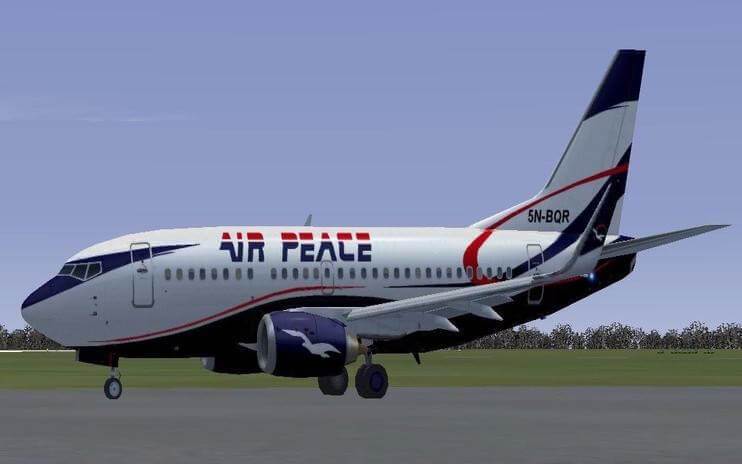
From Monday, May 9, 2022, air travellers in Nigeria will not be able to fly to their destinations within the country through any of the airlines as operators have threatened to suspend flights.

The local airline operators claimed they are struggling to remain afloat and the price of a litre of aviation fuel has reached N700 from N190, noting that this has added to the high operating expenses (OPEX).

As a result of the strain on their finances, they have decided to stop operations from next Monday until something is done by those in authority.

“Airline Operators of Nigeria (AON) hereby wishes to regrettably inform the general public that member airlines will discontinue operations nationwide with effect from Monday, May 9, 2022, until further notice,” a statement signed by all the airline operators in the country dated Thursday disclosed.

They have advised the travelling public who intend to fly to make alternative arrangements to avoid being stranded at the country’s airports.

According to them, they have been enduring harsh conditions to put smiles on the faces of Nigeria because of “patriotism,” by “subsidizing their services to our highly esteemed Nigerian flying public in the last four months despite the steady and astronomical hike in the price of JetA1 and other operating costs.”

“Over time, aviation fuel price (JetA1) has risen from N190 per litre to N700 currently. No airline in the world can absorb this kind of sudden shock from such an astronomical rise over a short period. While aviation fuel worldwide is said to cost about 40% of an airline’s operating cost globally, the present hike has shut up Nigeria’s operating cost to about 95 per cent.

“In the face of this, airlines have engaged the Federal Government, the National Assembly, NNPC and Oil Marketers with the view to bringing the cost of JetA1 down which has currently made the unit cost per seat for a one hour flight in Nigeria today to an average of N120,000. The latter cannot be fully passed to passengers who are already experiencing a lot of difficulties,” they added.

This is not the first time local airline operators have threatened to stop operations as a result of rising operating expenses.


Click to comment

Leave a Reply

Your email address will not be published. Required fields are marked *

Travel/Tourism

Honeywell Group Acquires 14.12% Stake in Ikeja Hotel

Published

on

Ikeja Hotel

By Aduragbemi Omiyale

About 14.12 per cent stake in Ikeja Hotel Plc has been acquired by Honeywell Group Limited, a notice on the Nigerian Exchange (NGX) Limited has revealed.

Honeywell Group took up the part of the hospitality firm through one of its affiliates known as HGL Real Estate Limited.

Ikeja Hotel, in the disclosure filed with the NGX on July 2, 2026, said the stake comprised 305,323,525 units of its equities.

“Ikeja Hotel hereby notifies the Nigerian Exchange Limited and the general public that it has received notification from HGL Real Estate Limited, an affiliate of Honeywell Group Limited, that it has acquired 305,323,525 units of Ikeja Hotel Plc’s shares, representing 14.12 per cent shareholding in the company,” the notice stated.

Ikeja Hotel is one of Nigeria’s leading hospitality investment and hotel management companies with premium hospitality assets.

It operates two leading hospitality organisations in Lagos, the Sheraton Lagos Hotel and Balmoral Convention Centre.

Continue Reading

Travel/Tourism

Lagos Shuts Down 10 Hotels, Restaurants for Environmental Violations

Published

on

LASEPA seals hotels restaurants

By Aduragbemi Omiyale

About 10 hospitality establishments, including hotels and restaurants, were sealed on Wednesday by officials of the Lagos State Environmental Protection Agency (LASEPA).

The affected businesses are located in different locations in the Alimosho Local Government Area of the metropolis, Business Post learned from a statement from the agency.

It was stated that they were sealed by LASEPA for persistent violations of environmental regulations despite repeated warnings, abatement notices, and several opportunities to comply with the agency’s directives.

According to the notice, the enforcement exercise was carried out in line with the directives of the Lagos State government to ensure strict compliance with environmental laws and to safeguard public health.

The affected facilities were said to have breached various environmental regulations, including noise pollution, air pollution, unlawful discharge of untreated effluent, obstruction of official duties, among others.

LASEPA closed the premises of Granduer Meridian at Obasa Akiniyi Street, Oluwaga, Ipaja for non-compliance with the agency’s directives; Lasola (Spazio Bar), located on Ipaja Road, Fatolu Bus Stop, Ipaja, was sealed for noise pollution and non-compliance with directives; Millennium Restaurant, located at Gate Bus Stop, Ipaja, Ayobo, was shut down for non-compliance with directives; O2 Exquisite Suites & Tower on Jimoh Akinremi Street, Jimoh Bus Stop, Akowonjo, was sealed for non-compliance with directives; and Chirozz Hotel & Suites, located on Samuel Street, Akowonjo, by Vulcanizer Bus Stop, Egbeda, was closed for noise pollution and non-compliance with directives.

In addition, House 7 Hotel, located at Remi Akande Street, Egbeda, was sealed for non-compliance with LASEPA’s directives; House 48 on Isiba Oluwo Street, Egbeda, was sealed for non-compliance with directives; Exclusive Hotel, located at Ishan Kimishe, Akesan Bus Stop, was shut down by non-compliance with directives; Sabola Ventures Limited, Iocated at Km 11, LASU–Isheri Road, Igando, was shut down for operating without evidence of an Effluent Treatment Plant (ETP), and discharging untreated effluent into public drains; and City Int’l Motel, located at Chief Olu-Adegbite Street, off Oladun Street, Council Bus Stop, Idimu, was sealed for non-compliance with directives.

Continue Reading

Travel/Tourism

Emirates Deploys Boeing 777-300ERSF

Published

on

Boeing 777-300ERSF

By Modupe Gbadeyanka

Emirates has become the first airline cargo carrier to deploy the Boeing 777-300ERSF passenger-to-freighter converted aircraft.

The aircraft (A6-EBK) will enter commercial service with a flight from Hong Kong to Dubai carrying over 100 tonnes of cargo, a statement from the airline operator stated.

The converted Emirates Boeing 777-300ERSF offers 100 tonnes of payload capacity and 811 m³ of cargo volume, representing a 25 per cent increase in cargo volume over the Boeing 777-F production freighter.

At 47 pallet positions, the converted aircraft also accommodates 10 additional pallet positions when compared with the Boeing 777-F production freighter, making it ideal for transporting volumetric cargo such as e-commerce goods, which currently constitute around 20 per cent of global air cargo tonnage with further growth projected in the next few years.

The converted Boeing 777-300ERSF is the sixth new freighter, following five Boeing 777-F production freighters, to join Emirates SkyCargo’s fleet since March 2026.

As part of its ambitious expansion strategy, Emirates SkyCargo will also be taking delivery of five additional Boeing 777-F aircraft as well as one additional converted Boeing 777-300ERSF by December 2026.

Emirates SkyCargo will also be introducing three additional converted Boeing 777-ERSFs into its fleet in 2027.

“The induction of the first converted Emirates Boeing 777-300ERSF into operational service represents the next step in the expansion of our fleet and operational agility.

“We are optimising our fleet assets by converting older Boeing 777-300ER passenger aircraft to meet the growing demand for air cargo capacity to transport goods rapidly across the world,” Emirates SkyCargo’s Divisional Senior Vice President, Badr Abbas, commented.

“Combined with our growing fleet of Boeing 777-F production freighters, we have already been able to scale our global freighter network from just over 40 destinations in February this year to 62 destinations currently and growing.

“We are providing our global customers with scalable cargo capacity and ultimate flexibility and connectivity when moving cargo to and through our hub in Dubai,” Abbas added.

Continue Reading