Connect with us

World

AfDB Probe: Nigeria, Ex-African Leaders Back Adesina

Published

on

AfDB World Bank

By Adedapo Adesanya

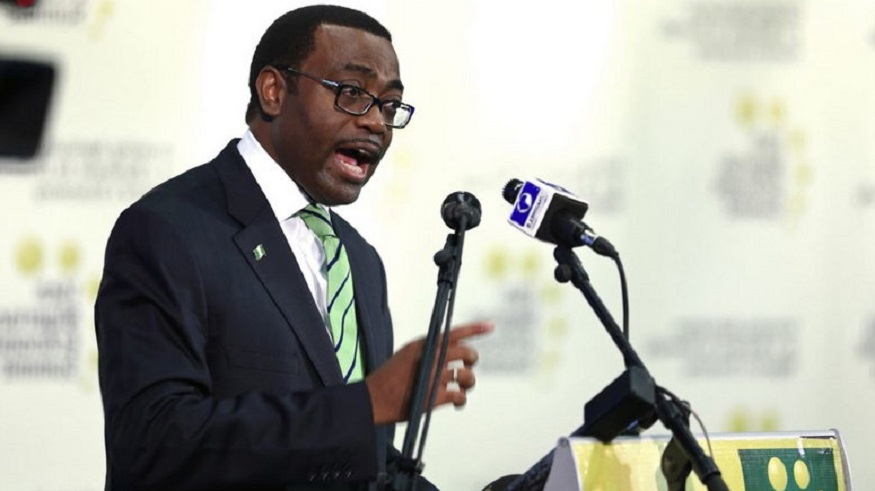
The Nigerian government has rallied support for the President of the African Development Bank (AfDB), Mr Akinwumi Adesina, in light of recent challenges facing his leadership.

This was contained in a letter by the Minister of Finance, Budget and National planning, Mrs Zainab Ahmed, urging the board of the AfDB to ignore calls for an independent investigation of Mr Adesina.

Mrs Ahmed called on chairman of the AfDB board of governors, Mrs Kaba Niale, to follow laid down processes to protect and preserve the bank heritage.

She said:  “The call for an independent investigation of the president is outside of the laid down rules, procedures and governing system of the bank and its articles as it relates to the code of conduct on ethics for the president.”

In a petition by a group of whistleblowers, Mr Adesina was accused of 20 breaches of the bank’s code of conduct, including unethical conduct, private gain, an impediment to efficiency, preferential treatment, and involvement in political activities.

Mr Adesina in his response, maintained that he was innocent of all allegations of fraud leveled against him. He added that he believes a just, transparent and fair process would prove his innocence.

In addition, a coalition of 15 former African leaders jointly issued a caution note to the Board of Governors of the African Development Bank (AfDB) over the controversy surrounding the investigation.

Titled Leadership of the African Development Bank: A Need for Caution, the concerned African leaders said the continent was facing an unprecedented challenge with the COVID-19 and all hands must be on deck to tackle the pandemic saying the AfDB, under the leadership of Mr Adesina, has been doing a remarkable job in steering the organisation, making it highly impactful and visible.

The former African leaders, who jointly signed the caution notice sent to the AfDB Board of Governors include Liberia’s Mrs Ellen Sirleaf Johnson; Ghana’s Mr John Kufuor; Nigeria’s Olusegun Obasanjo and Goodluck Jonathan; Mr Boni Yayi (Benin Republic); Mr Hailemariam Desalegn (Ethiopia); Mrs Joyce Banda (Malawi); Mr Joaquim Chissano (Mozambique); Mr Tandja Mamadou (Niger Republic); Mr Tunisia’s Mohamed Marzouki (Tunisia); Mrs Ameenah Gurib-Fakin of Mauritius; Mr Rupiah Banda of Zambia; Mr Kgalema Motlanthe of South Africa and Mr Jakaya Kikwete of Tanzania.


Adedapo Adesanya is a journalist, polymath, and connoisseur of everything art. When he is not writing, he has his nose buried in one of the many books or articles he has bookmarked or simply listening to good music with a bottle of beer or wine. He supports the greatest club in the world, Manchester United F.C.

Click to comment

Leave a Reply

Your email address will not be published. Required fields are marked *

World

CANAL+ Eyes MultiChoice Turnaround as Stocks Debut on JSE

Published

on

CANAL+ JSE

By Adedapo Adesanya

CANAL+ has expressed confidence in its ability to turn around the fortunes of struggling broadcaster MultiChoice as it marks a milestone by becoming the first French company listed on the Johannesburg Stock Exchange (JSE).

The secondary listing of CANAL+ signals strong international confidence in South Africa’s capital markets and reinforces the JSE’s role as a conduit between global capital and African growth opportunities, it said in a statement.

CANAL+ enhances the JSE’s sectoral diversity and provides local investors with direct, rand-denominated exposure to a globally diversified media and entertainment business with a significant African footprint. CANAL+ listed on the London Stock Exchange in December 2024.

The group’s listing on the JSE aligns with its long-term strategy to expand its presence in high-growth markets, particularly in sub-Saharan Africa, where rising connectivity, a young and growing population (expected to increase by 800 million by 2050), strong GDP growth (4.5 per cent growth expected between 2026 and 2030) and accelerating demand for content and connectivity continue to drive sector growth.

The JSE listing will increase CANAL+ liquidity and enable African investors to benefit from CANAL+ growth.

According to Mr Maxime Saada, CEO of CANAL+ said, “Joining the Johannesburg Stock Exchange is a statement of our ambition and illustrates our belief in Africa’s future and its creative industry.

“We are proud to become the first French company ever to list in Johannesburg and the only global media and entertainment company listed on the exchange.

“Following our listing on the London Stock Exchange 18 months ago, this dual listing reinforces our ambition to be a bridge between Europe and Africa and anchors our dual-continental approach, consolidating our unique position in the global media and entertainment industry,” he said.

He noted that CANAL+ serves more than 40 million subscribers and generates €9bn in annual revenue.

“Africa will be our growth engine for years to come, and we are dedicated to creating value on the continent and sharing it with our African partners, investors and the creative community. By welcoming African investors, we deepen our roots, diversify our investor base and lay the foundation for the next phase of our growth.”

Commenting on the listing, Ms Valdene Reddy, Group CEO of the JSE, said, “We are proud to welcome CANAL+ to the JSE and to mark the first listing of a French company on our exchange.

Continue Reading

World

AfDB President Sees More African Nations Regaining Investment-Grade Ratings

Published

on

Sidi Ould Tah

By Adedapo Adesanya

The President of the African Development Bank (AfDB), Mr Sidi Ould Tah, says more African countries are likely to regain or achieve investment-grade credit ratings by next year as reforms begin to deliver results and economic growth accelerates.

Several African sovereigns have already been upgraded in recent months, including Nigeria. However, Nigeria is not yet near investment-grade status.

In May, S&P Global Ratings upgraded Nigeria’s sovereign credit ratings to ‘B’ with a stable outlook, citing structural reforms under President Bola Tinubu and key drivers like higher oil production and improved fiscal revenue.

The country is still five notches from investment-grade. Under S&P’s rating scale, the progression follows— B → B+ → BB- → BB → BB+ → BBB- (investment grade).

S&P raised Morocco to investment grade last year and increased South Africa by one level to BB in November. Ghana, Zambia, the Ivory Coast and Kenya have also benefited from positive rating action linked to fiscal, debt and economic reforms.

“We’re quite confident that the continent will continue to grow very strongly and that African countries will be better rated in the coming years,” Mr Ould Tah said in an interview with Bloomberg.

“We’ve seen Morocco receive investment grade during the last few months, and we expect other countries by next year to get toward that,” he added.

The outlook reflects improving fiscal positions and reforms implemented across countries on the continent, even as the conflict in the Middle East threatens to slow economic growth and raise costs for energy-importing nations. Better credit ratings can help countries borrow at lower rates and fund development projects.

The AfDB projects the continent’s gross domestic product expansion will accelerate to 4.4 per cent next year, if the conflict in the Middle East does not extend for a longer period. It expects the continent to slow to 4.2 per cent this year.

The war in Iran has benefited oil producers such as Nigeria, Angola and Gabon, while exerting pressure on the fiscal positions of net energy importers such as South Africa, Kenya, Ghana and Senegal.

Mr Ould Tah said the bank is ready to support countries facing budget constraints and high debt burdens due to the impact of the Iran crisis, including increasing credit lines to them.

“The board of directors of the bank will examine in the coming days how the bank can increase the volume of resources it will provide to its member countries in this specific situation,” he said.

Continue Reading

World

State Duma Reviews Africa’s Food Security

Published

on

State Duma

By Kestér Kenn Klomegâh

Within the framework of the Expert Council on Africa at Russia’s State Duma, the lower chamber of parliamentarians, during its annual round-table conference, held in late May 2026, focused concretely on food security in Africa.

Under the chairmanship of Deputy Speaker of the State Duma, Alexander Babakov, the council’s round-table session on Russian-African cooperation in the field of ensuring food security, introduction of closed cycle technologies in agricultural and bioeconomy projects, was held in the State Duma.

Opening the meeting, Alexander Babakov noted the importance of continuing cooperation with African countries already in the new convocation of the State Duma, to which elections will be held in September 2026. “I am sure that right from the beginning of the work of the new convocation, the theme of cooperation between Russia and African countries will work as an example for circulation and use in other areas,” he said.

Member of the Committee on the Development of the Far East and the Arctic, deputy chairman of the Expert Council on Africa, Nikolai Novichkov, in his speech stressed the importance of a gradual transition to trade with African high-tech countries. “Our African partners are interested in producing and processing food locally, including earning a living on it,” the parliamentarian stated.

Director of the Department of Partnership with Africa at the Russian Foreign Ministry, Tatiana Dovgalenko, drew attention to the continued importance of the humanitarian component of Russian-African cooperation, which, despite efforts, “unforeseen, including and along the lines of specialised UN agencies, the number of hungry people in the world, according to experts, has been growing over the past few years.” According to Dovgalenko, the food crisis is localised in about 10 countries, four of which are in Africa.

As first deputy chairman of the Committee on International Affairs, Alexei Chepa noted, the food crisis and a number of other serious threats on the African continent are today exacerbated by a complex international situation, with the United States and Israel versus Iran causing rising energy prices worldwide. “This has also reflected on the cost of fertilisers that needed to be purchased previously. Even if prices fall in a few months, the yield still won’t. And there will be problems in Africa. At the same time, we understand that population growth in the coming years will be at Africa’s expense,” Chepa underlined in his contribution at the meeting.

Alexei Chepa also mentioned the special role of security enhancement in Africa, including in countering extremism and terrorism.

As part of the continuation of the work of the roundtable to promote cooperation with African countries in ensuring food security, the introduction of closed-loop technologies in agricultural and bioeconomics projects was discussed. As a traditional procedure, some recommendations are addressed to the Government of the Russian Federation.

In addition to representatives of the State Duma, diplomats, scientists, experts from related fields, representatives of the Government of the Russian Federation and the business community took part in the round-table discussion.

Continue Reading

Trending