
World
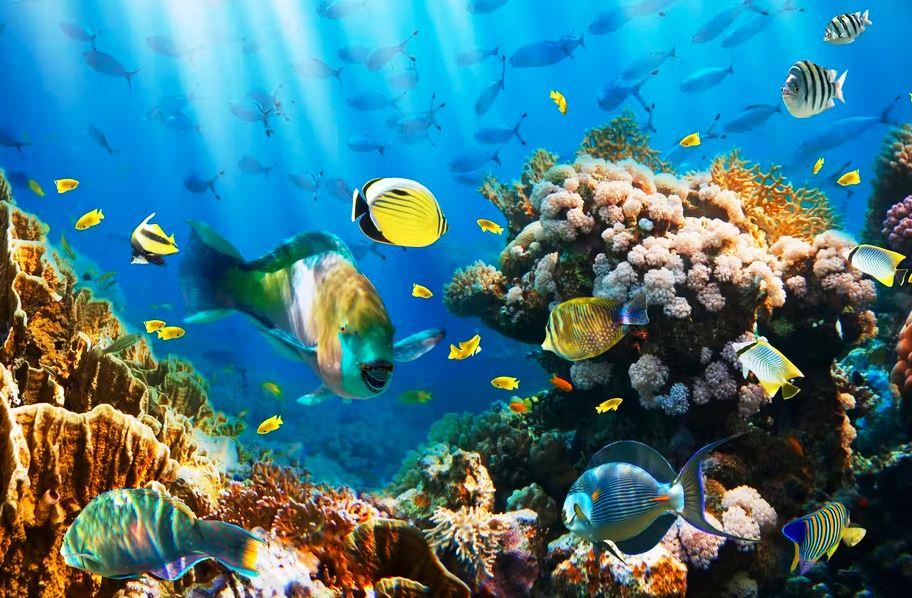
Africa Vows to Protect, Develop Ocean Resources

By Kestér Kenn Klomegâh
The UN Ocean Conference (UNOC) co-organized by Portugal and Kenya from 27 June to 01 July 2022 in Lisbon, Portugal was a landmark ocean event for regrouping decision-makers, innovators, private sector actors and stakeholders towards the implementation of the SDG Goal 14 and Aspiration 1.6 of Africa’s Agenda 2063, both related to the management of the Oceans, Seas and Marine Resources for Sustainable Development.
According to reports, the week-long conference brought together some 6,500 participants and was opened by the Secretary-General of the United Nations António Guterres. The Secretary-General of the United Nations (UNSG or SG) is the Chief Administrative Officer of the United Nations and Head of the United Nations Secretariat. There were, among others, high-powered African representatives.
In his speech, António Guterres warned that unless nations overcome short-term territorial and resource interests the state of the oceans will continue to deteriorate. Secretary-General described “the artificial dichotomy” between jobs and healthy oceans as one of the main challenges and asked for strong political leadership, new partnerships and concrete steps.
On behalf of Moussa Faki Mahamat, Chairperson of the African Union (AU) Commission, Josefa Leonel Correia Sacko, Commissioner for Agriculture, Rural Development, Blue Economy and Sustainable Environment (ARBE) at the African Union (AU) Commission headed the AU delegation to the United Nations Ocean Conference 2022 (UNOC). He was accompanied by Amb Fatima Kyari Mohammed, Permanent Observer of the African Union to the United Nations in New York (USA); Harsen Nyambe Nyambe, Director of Sustainable Environment and Blue Economy; and Dr Bernice Mclean, Head of Blue Economy at AUDA-NEPAD in South-Africa, Representative from REC, and other staff of the African Union Commission.
President of Kenya, Uhuru Kenyatta, and the President of Portugal, Marcelo Rebelo de Sousa, were elected by acclamation as the Presidents of the conference with statements delivered by each President accordingly.
On the margins of the UNOC, the meeting of the Committee of African Heads of State and Government on Climate Change (CAHOSCC) was also held, during which the African Union Commission delivered a strong signal on Africa’s readiness to protect and sustainably develop its ocean resources.
The AUC delegation to the conference showcased steps for promoting Africa’s blue economy and sending a strong signal on Africa’s readiness to protect and sustainably develop its ocean resources as well as its contribution to the global conversation on oceans by focusing on unlocking Africa’s potential for innovative, knowledge-based and high-revenue sectors while fostering sustainability and private sector activity, which further places emphasis on the integration of women, youth and Africa’s scientific community within the blue economy.
In addition, the AUC co-organized various side events including two major Africa-focused events: the first event co-organized with IOC-UNESCO on ‘Accelerating innovation, science and technology, and promoting the involvement of women and youth in Africa’s oceans and seas in the context of the ocean decade’ was held on 29th June. It touched on the need to address cultural norms and stereotypes on the one hand and address the resource gap on the other and strengthen women and youth’s participation in the blue economy.
The second event focused on “Shaping a sustainable Blue Economy in Africa” co-organized with AUDA-NEPAD, was held on 30th June and emphasized Africa’s vast amount of marine resources which are highly significant to global ecosystem services and need to be managed adequately for the benefits of the citizens.
The AUC also co-sponsored the following side events during three consecutive days: (i) ‘Blue innovation for multifunctional marine spatial planning’, together with the Stockholm Environment Institute and the Government of Sweden and Kenya on 28th June. It emphasized the importance of ensuring that Africa has access to and ownership of ocean data and ensure the need for Africa to develop its own Marine Spatial Planning that will aid to address data gaps;
(ii) ‘Fostering international and regional cooperation in support of the sustainable development of the blue economy in LDCs, LLDCs and SIDS’, together with the International Seabed Authority, on 29th June;
(iii) ‘Advancing women empowerment and leadership in marine scientific research to support inclusive sustainable ocean governance’, together with the International Seabed Authority on 30th June.
In addition, the AUC delivered a statement during the plenary, emphasizing the crucial role that the African continent must play in the global oceans agenda, considering the vast marine resources that it exerts sovereignty over.
With women and youth on board, the AUC indicates its readiness to protect and develop ocean resources. “Women and Youth represent Africa’s most underutilized assets, so the African Union Commission is committed to identifying ways to promote their integration fully in the conversation on blue wealth,” AU Commissioner Josepha Sacko told the gathering.
Sacko informed that the AUC is in the process of implementing the blue economy, in various sectors, highlighting that “…we need to enhance traditional ocean-based sectors like fisheries and tourism so that they contribute to the livelihoods of coastal communities that rely on them. But, at the same time, Africa needs to move to a knowledge-based model of developing ocean science and ocean-based technologies. We have the ideas, vision, and ambition to do so.”
Further at the plenary session, the Group of African States emphasized that Africa is determined to sustainably harness the vast potential of its maritime domain and accelerate economic transformation and opportunities provided by the oceans. To realize sustainable ocean-based development, the African Group stresses the need to promote collective efforts to address inherent financial and infrastructure gaps preventing the realization of the full potential of African marine resources.
The African Group further emphasized that oceans are a common heritage to mankind, including the African landlocked States. Achieving Sustainable Development Goal 14 (life below water) and conservation of ocean and marine ecosystems will require bold and ambitious partnership, mobilization of significant financial resources, access to technologies and innovations, capacity-building and effective governance arrangements.
Furthermore, the delegation along with the key partners including the RECs, NGOs, WIMAfrica, Fisheries and Aquaculture Associations participated in various other side events and engaged with innovators, policymakers and stakeholders on a range of issues including conservation, sustainable ocean economies and capacity building, as well as institutional and policy making and implementation, NGO’s and research and civil society organizations, legal instruments.
On 1st July, the side event organized by the Republic of Mauritius ‘Science Consideration for Protection of Marine Ecosystems in Chagos Archipelago’ which aimed at advocating the complete decolonization of the Chagos archipelago. It was an opportunity seized by the Office of the Legal Counsel of the African Union to reiterate its unconditional support to the Government of Mauritius until the completion of decolonization of Chagos is achieved and enjoyed by the Citizens of Mauritius in accordance with well-established principles of international law and the pertinent decisions and Resolutions of Organization of African Unity (OAU)/African Union (AU) and United Nations.
The United Nations attempts at addressing ways by which the private sector provides practical solutions to address the problems such as by improving energy efficiency, and waste management and introducing market-based tools to shift investment, subsidy and production; making it necessary to mobilize actions for the conservation and sustainable use of the oceans, seas and marine resources by establishing the United Nations Ocean Conference.


By Kestér Kenn Klomegâh
The United States-Israeli war in the Islamic Republic of Iran is shattering Africa’s economic landscape and leaving emotional devastation. Europe is fractured, but completely. France has taken the initiative to create a platform in Nairobi, the capital of Kenya, located in East Africa. More than 2,500 corporate executives from across the continent, spanning 55 African countries, would take up the challenge during a two-day in-depth discussion on the existential threat of the Middle East conflict. Participating business leaders’ engagement over geopolitics, finding new paths to massive new investment, would be the central theme, while expressing commitment to forge new mechanisms for economic cooperation between Africa and France. The high-ranking guests from regional economic blocs are expected to join, teaming up to share practical thoughts and build awareness beyond the current Middle East conflicts and their impact on Europe and Africa.
The common goal: new perspectives on innovation, new business directions in the context of geopolitical threats. Based on Africa’s untapped natural resources and human capital, communicating clearly with business executives and political leaders, high-ranking speakers plan to dissect and design the future. Strengthening Africa’s and France’s economic cooperation forms the irreversible target and will ultimately be incorporated into the conference declaration. Cautious reflection indicated that the relationship between Africa and France is still pragmatic, as both agreed to renew and thoroughly review the existing economic potentials at the two-day conference in Nairobi.
Experts and Conference coordinators told this article’s author that the French government and business circles involved in trade and economic cooperation with African countries were invited to participate, lay out their comprehensive business architecture. Africa and France will focus on the developing manufacturing and extractive industries, setting up special economic zones, energy and transport infrastructure, digitalisation, and the agro-industrial complex—education and training in the sphere of entrepreneurship.
France has already worked out a financial mechanism to support joint business across Africa, while Africa’s financial institutions pledge their commitment, plan corporate strategies and support for joint investments in the localisation of production chains in Africa, which covers both agricultural and mineral processing.
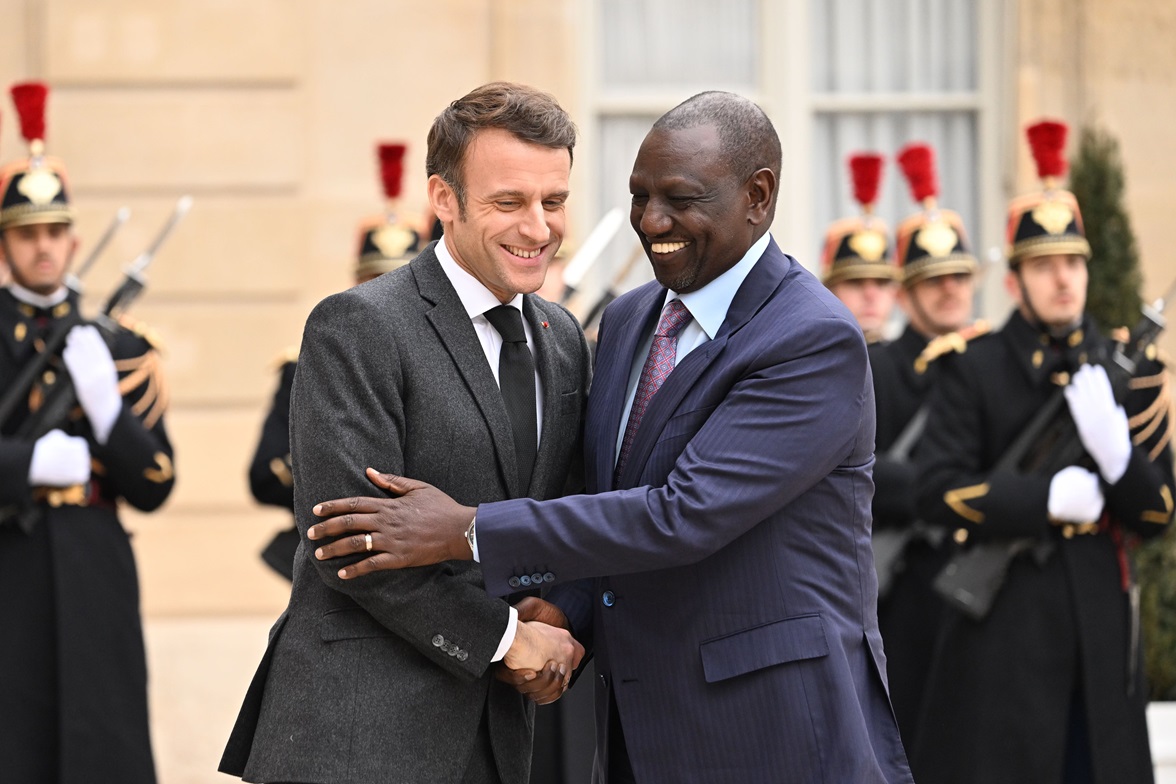
President William Ruto and French President Emmanuel Macron both acknowledged that the strategic pathway should focus on unlocking Africa’s potential, driving sustainable industrialisation, and targeting economic growth across Africa. Harnessing the untapped resources and utilising the huge human resources is France’s priority in consolidating the current bilateral engagement and collaboration.
In a statement, President Ruto underlined tthat he summit reflects a shared commitment to strengthening bilateral ties and deepening multilateral cooperation to advance global goals. The agenda will focus on key areas, including reform of the international financial architecture, energy transition, green industrialisation, the blue economy and connectivity, artificial intelligence, sustainable agriculture, and health. It will spotlight the role of young entrepreneurs, civil society, and international organisations in shaping solutions to pressing global and regional challenges. The May summit is described as part of the renewal of relations between France and Africa, emphasising genuine partnerships and shared progress.
The agenda will focus on key areas, including reform of the international financial architecture, energy transition, green industrialisation, the blue economy and connectivity, artificial intelligence, sustainable agriculture, and health.
In addition to the May summit by France, the European Union countries are increasingly strong economic partners for many African countries. It therefore beholds African leaders and business people to necessarily explore available possibilities and windows that have been opened. The EU has unveiled €300 billion ($340 billion) alternative to China’s Belt and Road initiative — an investment programme the bloc claims will create links, not dependencies.
In an official document, it said the European Commission is examining:
– Support AfCFTA implementation and the green transition;
– Improve trade and investment climate between the EU and Africa;
– Reinforce high-level public-private dialogue;
– Enhance long-term dialogue structures between the EU and African Business Associations;
– Unlock new business and investment opportunities, including in the areas of manufacturing and agro processing, as well as regional and continental value chains development.
It is further included in the joint communication of the European Commission (EC) entitled “Toward a Comprehensive Strategy with Africa”, which sets forth what the EU plans with Africa. The Joint EU-Africa Strategy takes into cognisance the most common interests such as climate change, global security and the achievement of the United Nations Sustainable Development Goals (SDGs).
Just as China, India and the United States, so also France, and other European countries are exploring emerging opportunities offered by the African Continental Free Trade Area (AfCFTA), which provides a unique and valuable access to an integrated African market of 1.5 billion people. In practical reality, it aims at creating a continental market for goods and services, with free movement of business people and investments in Africa.
Looking ahead, France intends to capitalise on Africa’s most transformative economic sectors and make strategic moves by collaborating, as a mutual partnership remains dynamic and adaptable. Despite growing geopolitical tensions, France’s approach and its long-standing ties still offer an alternative partnership model that many African leaders find very appealing.
The challenge for the future will be to ensure these ties evolve in ways that serve Africa’s development needs, while navigating the increasingly complex global politics. As Africa is indiscriminately open for business, on May 11-12, 2026, African and French Heads of State and Government meet together to chart a new path for innovation, growth, and cooperation. Kenya will hold this investment summit for France to position Africa as a key partner in global innovation and economic development while strengthening bilateral ties with France and advancing Africa’s collective agenda on the international stage.

By Kestér Kenn Klomegâh
In an increasingly struggle for Russia’s influence in Africa, including political, economic and humanitarian spheres, Foreign Minister Sergey Lavrov started 2026 with a pack of invitations for African foreign ministers, strategically as part of preliminary preparations for the next Russia-Africa summit. Armed with Russia’s policy intentions in Africa (Strategic Action Plan 2023-2026), Lavrov interacted with the same group of foreign ministers in December 2025, in Cairo, the capital of Egypt.
In pursuit of strengthening ‘political dialogue’ which features prominently, Lavrov’s high-ranking guests since the beginning of this year included the Minister of Foreign Affairs of Burkina Faso, Karamoko Traore, with whom several bilateral documents were signed in February. In the same month, Tanzania’s Minister of Foreign Affairs and East African Cooperation, Mahmoud Thabit Kombo, visited with a special focus on expanding cooperation in trade, economic, and investment spheres.
On January 14, the Minister of International Relations and Trade of the Republic of Namibia, Selma Ashipala-Musavyi, went on a working visit to Russia, held comprehensive discussions raising bilateral relations. Ashipala-Musavyi, who serves as Co-Chair of the Intergovernmental Russian-Namibian Commission on Trade and Economic Cooperation, was received by Deputy Prime Minister of the Russian Federation and Plenipotentiary Presidential Envoy to the Far Eastern Federal District Yury Trutnev, who heads the Russian side of the IGC. The conversation focused primarily on the substantive content of the 11th IGC meeting in Windhoek.
Firstly, Russia is one of the world’s largest grain producers. And developing the port infrastructure of the Far East and the Arctic is a potential window for supplies to African countries. Secondly, with the application of state support measures, private investors are creating new large-scale fertiliser production plants. One such enterprise is the Nakhodka Mineral Fertiliser Plant in Primorye Territory, which is scheduled to reach its design capacity in 2027.
“Namibia has rich marine resources and a strategic location. Russia has the fleet, technology and experience. Together, we could maximise catch levels and expand processing. At the same time, Russian companies strive for responsible fishing, paying close attention to marine ecology and the reproduction of key fish stocks,” Zapryagayev said at the business forum that was held in mid-March, as part of the 11th meeting of the Russian-Namibian intergovernmental commission on trade and economic cooperation.
Updated Russia-Kenya’s Experiences
On March 16, Foreign Minister Lavrov held talks with the Prime Cabinet Secretary and Cabinet Secretary for Foreign and Diaspora Affairs of the Republic of Kenya, Mudavadi, who was in Moscow on a working visit on March 15-18. There were detailed discussions on the current state and prospects for Russia–Kenya relations, while both parties outlined practical steps to strengthen political dialogue, and determine pathways for expanding mutually beneficial partnership in trade and the broad economic areas.
An engaged exchange of views resulted in signing a multitude of documents, updated policy interest in Russia’s experience in developing painstaking initiative projects in Kenya. It was described as being in the framework context of Russian foreign policy. In a speech boosting relations, Lavrov, with unrestrained rhetoric, underlined sectors such as energy, including nuclear, telecommunications, geological prospecting, mineral resources mining and high technologies, including space exploration, as promising areas.
Lavrov foresaw Russia’s delay in cooperating with Kenya and suggested speeding up preparations of the agreement on the establishment of a bilateral commission on economic cooperation, an instrument through which to implement economic projects. “We agreed today to expedite the work carried out for rather a long time thus far on preparation of the intergovernmental agreement for the establishment of the Russian-Kenyan commission for economic cooperation,” the minister said.
The visit of Kenya’s foreign minister to Moscow gives a new impetus to the political dialogue between the two parties and makes it possible to outline the path for further deepening of trade and economic relations, agreeing on further conscious efforts in the promising area of bilateral cooperation, at least, as a summary result after Lavrov’s talks with his Kenyan counterpart, Mudavadi.
For now, prospects remain on the table, as Russia shows readiness to offer partnership at a qualitatively new level with Kenya, so also with many African countries. The demand for Russian university education is high in the East African nation. Besides education and training, both Kenyan and Russian officials highly recognise the great potential for increasing trade and economic cooperation, which has not been realised yet. Plans to establish an intergovernmental commission to deal with these matters were announced during Lavrov’s visit to Kenya in 2023. The issue was brought up once again at a meeting between Georgy Karasin, the chairman of the Russian Federation Council’s Committee on Foreign Affairs, and Kathuri Murungi, the Deputy Speaker of Kenya’s Senate.
Notably, the Africa Centre for the Study of Russia (ACSOR), aimed at strengthening scientific, cultural and political ties between Russia and Kenya, opened at the University of Nairobi on February 25, according to local Russian media reports. Western-trained dominates African politics. Russia has under-leveraged its Russian-trained African professionals and specialists, compared to the extent to which the United States and China support theirs in employment structures.
Far ahead of the arrival of the Kenya delegation, Dr. Peter Mutuku Mathuki, Ambassador Extraordinary and Plenipotentiary of the Republic of Kenya in the Russian Federation, told this article author that Russia’s multifaceted cooperation with Kenya has, steadily, taken on a new dimension, emphasizing the two countries look forward to concluding trade agreements under negotiation, which will open up more economic opportunities both at public and private sector levels. Kenya’s priority in the Russian Federation is to implement the objectives of our foreign policy hinged on deepening the Kenya-Russia bilateral relations across the board. However, Kenya’s economic presence in the Russian Federation is currently minimal, as manifested by a limited range of export products to the market in the Russian Federation.
Incredible Lessons from Summits
Nonetheless, before the 2019 summit, trade volume between Russia and Kenya was $397 million in 2018, compared to $625 million in 2023 and $638 million in 2024. Russia still has an opportunity to leverage the untapped potential in the continent to drive sustainable development. Investors can benefit from the diverse government incentives existing across Africa. As Africa is indiscriminately open for business, so in May 2026, Kenya will hold an investment summit for France, to position Africa as a key partner in global innovation and economic development while strengthening bilateral ties with France and advancing Africa’s collective agenda on the international stage.
Today, Russia’s engagement is largely noticeable in politics, while there is little impact on Africa’s economy, except reaping huge revenues from military and weaponry sales to African countries in persistent and endless conflicts, and raising exports of agricultural products such as grains to the continent. In addition, African leaders are excited about the emotional solidarity and harbour nostalgic Soviet-style romanticism. Over the years, African leaders’ negotiations have been one-sided, only considering Russia’s investment in Africa. Thus, until today, Africa’s economic presence is extremely low in the Russian Federation.
Policy experts and academic researchers review the current Russia-Africa relations, portraying it as a threat to Africa’s sovereignty or an opportunity to exploit resources. In the French-Speaking African countries, Russia’s agreements seek uninterrupted access to natural resources in exchange for military cooperation, maintaining security and even providing security guards to African leaders, such as in the Central African Republic (CAR). Since 2017, when Russia operated in CAR, it has hardly undertaken any infrastructure projects or invested in any productive sectors in that country, headed by Faustin-Archange Touadéra.
Russia to Study Africa’s Investment Landscape
Perhaps, and precisely, the Director of the Institute for African Studies of the Russian Academy of Sciences, Professor Irina Abramova, described Russia’s connectivity with Africa explicitly, in her interview with local media African Initiative in February, first pointing to the historical fact that after the collapse of the Soviet era, Russia slammed the door on Africa. She further argued that Russia’s policy is currently full of symbolism, highly-toned rhetoric and little action on implementing agreements signed with several African countries. For now, Africa opens up the broadest economic opportunities for any external player—primarily the Chinese, followed by Indians, and now players from the Arab Gulf region, who picked up this “baton” and are strategically active on the continent.
That, however, simply means Russia has to study the investment landscape. But, constantly referring to reasons such as the lack of money is an ineffective way to deal with Africa, according to Professor Abramova. She suggested to ministry officials to “discard reciting administrative rules and regulations; make way for flexibility. And finally, the most important thing is coordination.”
But in reality, if Russia had built a normal new financial mechanism, it would not have cared. In practical terms, Russia has little foresight. Russia, simply, lacks interconnectedness with Africa and with Africans. That is, elements of psychology and elements of faith are involved. And this is an absolutely new phenomenon that is spreading across the entire world.
For approximately 15 years, Professor Abramova has reiterated that Africa must be approached in a comprehensive and coordinated way. Coordination is the most important thing. First and foremost, it is people, because personnel decide everything. Africans’ attitude towards Russia is, generally, very positive. This is genuinely felt when travelling a great deal around Africa.
Focus on Security over Development
According to researched academic reports, Russia’s weak economic presence in Africa has become research topic in educational institutions, with the Federal Committee on Economic Policy, Association of Economic Cooperation with African States (AECAS) established under the auspices of the Secretariat of the Russia-Africa Partnership Forum (RAPF) and the Coordinating Committee on Economic Cooperation with Africa, pointing to conditions of pressure from sanctions imposed by United States. Finding excuses to cover policy weaknesses. This sole reason has prominently featured in official reports since the start of the Russia-Ukraine crisis in late February 2022. With renewed rising interests in Africa, experts also cited Russia’s weak structures in establishing effective ways of entry into the huge continent full of opportunities.
Russia has only 1% of its direct investment, due to limited financial resources, a lack of investment mechanisms, and severe competition from Chinese and Western investors. Russia focuses on arms and the export of grains to generate revenue for its budget. While Russia has forgotten billions, over 30 years ago, in Soviet-era debts to foster goodwill, this often links to new arms deals, which do not absolutely build diversified, sustainable economic integration in Africa.
Against the backdrop of intensifying relations with Africa, the percentage of collective influence (politics, economy and social, combined) varies: China holds 65%, the US – 53%, the EU – 49%, India – 38% and Russia – 29%. Trade with Africa also varies largely: China has now offered zero-tariff treatment to 52 African countries, and its trade has already reached $348 billion in 2025. India has $58 billion, and the United States has extended its AGOA agreement with Africa. Russia has nothing; at least the trade preferences that were promised over the years have remained meaningless for Africa.
A Few Significant Steps Forward
In this analysis, Russia and Africa have historically come a long way. One significant step forward is to seriously prioritise its policy architecture and turn over a new page in the history of mutually beneficial cooperation, with special attention on the development of corporate business, technology and agro-industrial complex. It has placed concrete emphasis on the importance of the active participation of Russian companies in the implementation of infrastructure projects on the African continent. Building modern distribution centres, developing port complexes and organising joint logistics solutions will be key areas of cooperation.
These ambitious steps will allow us to strengthen Russia’s ultimate position on the market, further outlining practical measures to boost dialogue in economic, trade and other fields, and to establish stable economic relations with African countries. Together, Russia will be able to realise the potential of both regions and ensure the prosperity of Africa and its people.
For multilateralism, and what Foreign Minister Lavrov has frequently mentioned, in the framework of multipolar architecture, Africa has to, without discrimination, interact and hold regular meetings with any external states it seriously considers important for its development. In practical terms, Russia has to demonstrate its preparedness to engage Africa. One fact is clear—Africa, as of today, remains a critical arena for key global powers, balancing the great-power competition and rivalry. African leaders are prepared for this so long as these players truly have adequate funds to invest, not just political rhetoric and a show of symbolism. In a continental context, that is broadly referred to as Africa’s Agenda 2063.
World
Online African Women Conference: From Adaptation in Russia to Issues of Health and Spirituality
By Kestér Kenn Klomegâh
Women, generally, are fighting for their own empowerment in society. Gender equality dominates their activities, flexing their feminine muscles for higher positions, with men, in diverse professional aspects, including politics and entrepreneurial spheres of activity.
Such consistent struggle was backed by a collective declaration, worldwide observing March 8 as International Women’s Day. Until today, March 8 commemorates women’s fight for equality and liberation along with the women’s rights movement. In addition, the March 8 celebration focuses on issues such as gender equality, reproductive rights, and violence and abuse against women.
On the eve of March 8, the Cameroonian Diaspora (Diaspocam) and the “African Business Club” together with Russian women’s organisations, held a special online conference under the theme: “How to Succeed as a Woman in Russia”, which brought together over a hundred participants from different regions, including Africa.
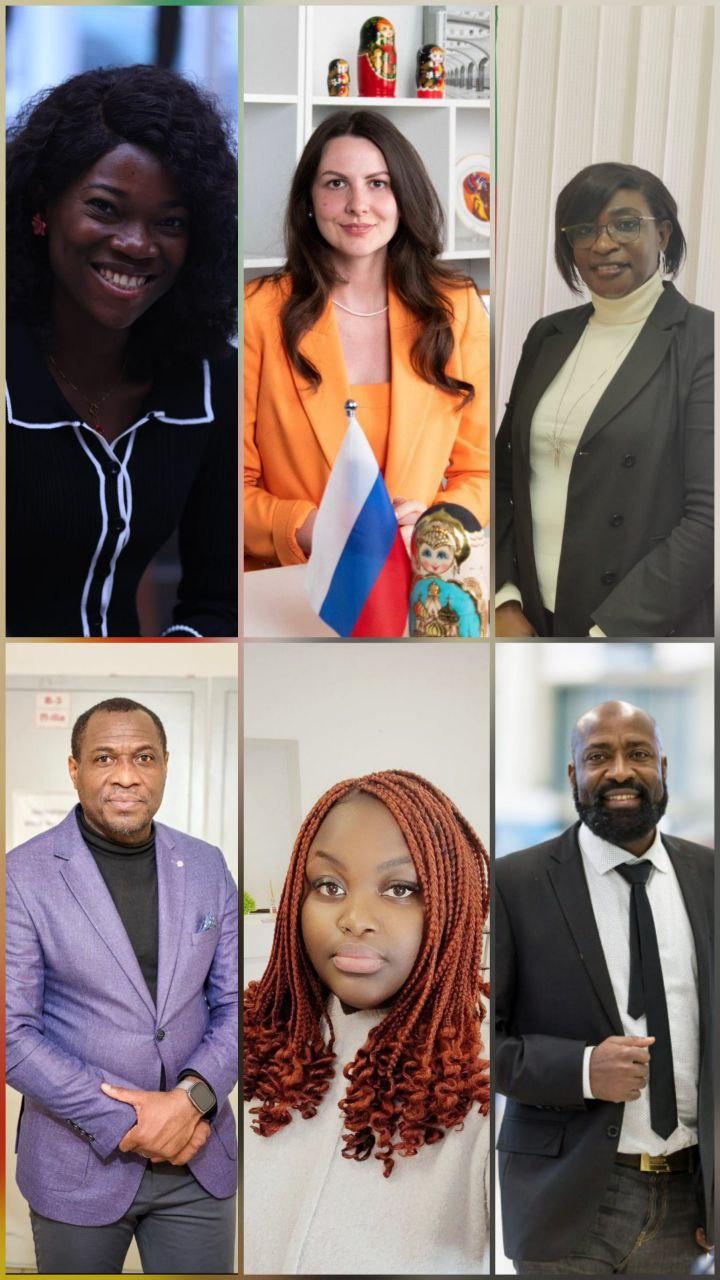
The discussion was dedicated to the challenges of adaptation, career prospects, health, and spiritual security of a fast-growing number of young African women living in the Russian Federation. The conference was moderated by Louis Gouend, a specialist in business communications between Russia and Africa, President of the African Business Club, and an expert of the Council of Russia-Africa Cooperation under the State Duma, lower chamber of Russian legislators.
Louis Gouend congratulated the women participants while extending to them good health, wisdom, and new achievements. The main goal of the conference was to create a space of trust and exchange views on the full spectrum of women’s multidisciplinary approach to questions.
On adaptation and legislation: Alina Andrukh, Director of the International Department, spoke on the topic “Global Adaptation of Foreign Citizens in Russia.” She thoroughly examined educational trajectories for women, employment opportunities, and new legislative realities that foreign women need to consider when building a career in the Russian Federation.
The speaker further placed special emphasis on how to avoid getting into trouble, complying with Russian laws, and protecting one’s rights.
Health Without Barriers and Support Centres: One of the most anticipated speeches was given by Ekaterina Glok, a midwife by profession. In her presentation on “The Health of an African Woman in Russia,” she touched upon the delicate topics of reproductive and sexual health. The expert gave practical advice on how to overcome the language barrier and shyness when visiting a gynaecologist, and explained the specifics of the Russian healthcare system for foreign patients.
Ekaterina, however, reminded the women of the importance of regular medical check-ups: visiting a doctor, at least, once a year is necessary even in the absence of complaints. She informed the participants about the existence of support centres for women and single mothers, where they can turn to in difficult life situations. Additionally, the speaker announced her upcoming working missions in the Republic of Cameroon, planned for May 2026, and gave many practical tips on maintaining women’s health.
Social and Cultural Challenges – Warning About Dangers: An important block of questions concerning safety and conscious motherhood was highlighted by Mme Zima épouse Ndong Toung Celestine Charlotte, Cultural Advisor at the Embassy of Cameroon. She had a frank conversation, warning the girls about scammers and dishonest individuals offering attractive working conditions, behind which often lie indecent earnings and dangerous situations.
The Advisor reminded that for those who came to Russia to study, education should remain their main priority. She urged lady students to be vigilant, not to give in to dubious offers, and to postpone questions of pregnancy and starting a family to a later period, after completing their studies. She touched upon the legal and moral aspects of unwanted pregnancy, calling on the girls to engage in conscious life planning.
Economic Independence and Earning Opportunities: Luciana Tchami, a member of the executive bureau of Diaspocam, a non-profit social organisation, presented a report on “Women’s Capabilities: Professions and Part-Time Jobs for Young Women in Russia.” She gave examples of successful strategies for earning money and building a career within the conditions of the Russian labour market that are accessible to foreign students and young professionals.
The speaker detailed specific areas of work: young women can take short-term training courses and work in beauty salons (manicure, pedicure); many cafes and restaurants offer convenient part-time jobs. Luciana also mentioned specialised websites with attractive conditions for job seekers and opportunities for remote work: becoming a freelancer and helping with tasks online, for online stores, and in other areas.
Spiritual Support: A Reminder of a Woman’s Value. The conference concluded with Pastor Gustave Mbeng, responsible for charity at Diaspocam. His prayer-speech was dedicated to women’s rights and spiritual awakening. As a pastor, Mbeng reminded the participants that woman is the last and most ideal creation of God, perfect in all parameters of the universe. He emphasised that women are more beautiful and harmonious than men, and urged the girls to take care of themselves and not to distance themselves from God, so that there would be fewer difficulties and questions in life.
Pastor Gustave further paid special attention to the theme of preserving life. He took a stand against abortion, reminding that every child is a creation of God, and in the eyes of the Almighty, there is no such concept as abortion. If pregnancy does occur, it is important to preserve the child’s life and trust in God’s providence.
Technical organisation, moderation, translation and coordination of the conference were provided by Iness Zengue Abeng, President of the Association of International Students “Russia-Africa,” and Belle-Grâce Euphrasie, Dean, who acted as interpreter during the online event.
Conclusion and Future Plans: At the end, Louis Gouend extended gratitude to all participants, speakers, and presenters for the warm and trusting atmosphere.
The conference was held in an open dialogue format on the”Yandex Telemost” platform, which allowed women from different parts of Russia to ask questions live and receive moral support. Following the meeting, the organisers decided to hold such an online gathering, including organising a series of meetings not only for women but also for foreigners living in Russia.
The topics of future conferences will aim at education, open discussions, and debate on issues important for Africans in the Russian Federation: knowing one’s rights, being able to avoid unpleasant situations, behaving correctly in difficult life circumstances, and preserving cultural and spiritual identity.
Until now, prejudice and reactionary attitudes have denied full-fledged civic rights to millions of women, who are considered as workers, mothers, family partners, and citizens worldwide. Nevertheless, International Women’s Day, with its chequered history, is a public holiday in several countries. The United Nations observes the holiday in connection with a particular issue, campaign, or theme in women’s rights across the world.







-
 Feature/OPED6 years ago
Davos was Different this year
-
Travel/Tourism10 years ago
Lagos Seals Western Lodge Hotel In Ikorodu
-

 Showbiz3 years ago
Estranged Lover Releases Videos of Empress Njamah Bathing
-
 Banking8 years ago
Sort Codes of GTBank Branches in Nigeria
-

 Economy3 years ago
Subsidy Removal: CNG at N130 Per Litre Cheaper Than Petrol—IPMAN
-

 Banking3 years ago
Sort Codes of UBA Branches in Nigeria
-

 Banking3 years ago
First Bank Announces Planned Downtime
-

 Sports3 years ago
Highest Paid Nigerian Footballer – How Much Do Nigerian Footballers Earn