World
Amid Russia-Ukraine Crisis, Trans-Saharan Gas Pipeline Offers Hope for Europe
By Kestér Kenn Klomegâh
Europe is still looking for reliable alternative sources of energy especially gas, as its energy relations fell nosedive with Russia. It has been exploring energy sources from the Asian region down to Africa. But while African energy sources exist, it largely lacks the infrastructure to transport it up to Europe. And transporting gas would have to go across borders which requires some kind of regulations and clearance agreements between the African countries.
The Trans-Saharan gas pipeline (also known as the NIGAL pipeline and Trans-African gas pipeline) was first proposed back in the 1970s. The inter-governmental agreement on the pipeline was signed by the Energy Ministers of Nigeria, Niger and Algeria on 3 July 2009 in Abuja. It has not materialized, among many factors, due to lack of finance and multiple complicated government bureaucracy. But Europe’s demand is pushing for fixing some solutions and resolving obstacles to realize this project.
Nigerian authorities said that Russia’s Gazprom has negotiated with Nigeria about its possible participation in the project. Experts described this interest as a business strategic step to gatekeep and control the flow of gas from Africa into Europe. Russia would be interested in tactically delaying the project. Its aim is to be the leading supplier, and any other competitors must be placed under tight monitoring and control.
Charles Robertson, Global Chief Economist at Renaissance Capital, questioned in an email discussion how Russia can heavily invest in Africa’s energy sector, especially in the exploration and production of oil and gas to be exported to Europe.
“Russia or Kazakh oil competes with Libyan, Angolan or Nigerian oil. Russia or Kazakh gas competes with Algerian or Egyptian gas. Russia can supply food – but that’s mainly needed by north Africa,” he wrote, and concluded: “By forging strong cooperation, the European Union (EU) has more of the industrial machinery that Africa might need to industrialize, although Chinese machinery may be more appropriate for the technical level of industry in Africa.”
Russian companies have exited mega-projects in Zimbabwe, and also went out from Botswana, Cameroon and Sierra Leone. Russians were not chosen after the project bidding process in Mozambique. There are, therefore, other reliable potential foreign corporate investors such as Indian company GAIL, France’s Total S.A., Italy’s Eni SpA and Royal Dutch Shell have expressed interest in participating in the project.
Differences exist though. According to the Algerian Energy Minister Chakib Khelil – “only partners that can bring something to the project, not just money, should be there. On the other side, Energy Ministers of Algeria and Nigeria have said that “if things go well, there will be no need to bring international oil companies into the project” and “if the need for partnership in the project arises, not every partner will be welcome on board on the project.”
Mahamane Sani Mahamadou, Minister of Petroleum for the Republic of Niger; Mohamed Arkab, Minister of Energy and Mines, Algeria, and Chief Timipre Sylva, Minister of State for Petroleum Resources of Nigeria as well as the Director Generals of National Oil Companies (NOCs) of the three African countries held thorough discussions on the implementation of the multi-billion Trans-Saharan Gas Pipeline (TSGP) in June 2022, in Abuja, capital of the Federal Republic of Nigeria.
According to reports, a Steering Committee made up of the three Ministers and Director Generals of the NOCs, established during the two-day meeting, will be responsible for updating the feasibility study for TSGP and will meet at the end of July 2022 in Algiers to discuss how to progress with the TSGP project.
The Ministry of Petroleum of Niger commends all parties for this significant step, viewing both the establishment of the taskforce and roadmap as key drivers towards making the TSGP a reality. With energy poverty increasing across the African continent due to limited investments in energy projects, delays in exploration, production and infrastructure rollout, the Covid-19 pandemic and global energy transition-related policies, the TSGP project will bring in a new era of energy reliability for Africa.
With the 4,128 km pipeline running from Warri in Nigeria to Hassi R’Mel in Algeria via Niger, the pipeline will not only create a direct connection between Nigeria and Algeria’s gas fields to European markets but will bring significant benefits to Niger.
With over 34 billion cubic meters of gas, Niger, in its own rights, also has the potential to become a gas exporter, and with Europe expanding energy ties with Africa, the TSGP project will mark a new era of improved regional cooperation in Africa, enhancing gas monetization and exports while scaling up Niger-exports to Europe via Algeria.
Meanwhile, with the pipeline making headway, opportunities for the country to increase domestic gas utilization on the back of new reserves from Niger and Nigeria have arisen. With Niger seeking to improve electricity access and ensure energy affordability through increased exploitation of gas, the TSGP initiative will be a game-changer.
The pipeline will enable up to 30 billion cubic meters of natural gas to be traded yearly enhancing regional and international energy trade, enabling Niger to expand the role of natural gas in its energy mix and address energy poverty.
The efforts of Afreximbank for the creation of an African Energy Bank is a huge testimony of how Africa can enhance cooperation and leverage domestic solutions to optimize its oil and gas market, notes Sebastian Wagner, Executive Chair of the Germany Africa Business Forum. “What we want to see is African financiers rallying towards supporting the rollout of TSGP. Increased oil and gas exploration, production and assets development is what will bring Africa out of energy poverty by 2030,” Wagner acknowledged in comments.
With gas emerging as the energy of the future, the $13 billion TSGP projects could lead to socioeconomic growth by unlocking massive investments across the energy sector. It will simultaneously help create jobs in various industries including energy, petrochemicals and manufacturing whilst optimizing energy production and positioning Africa as a global energy hub.
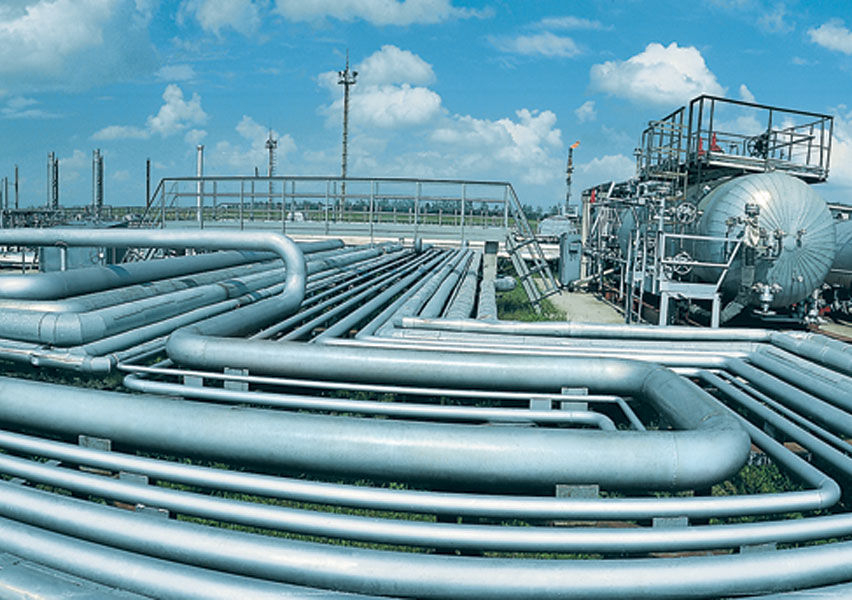
The pipeline will start in the Warri region in Nigeria and run north through Niger to Hassi R’Mel in Algeria. In Hassi R’Mel the pipeline will connect to the existing Trans-Mediterranean, Maghreb–Europe, Medgaz and Galsi pipelines.
These supply Europe from the gas transmission hubs at El Kala and Beni Saf on Algeria’s Mediterranean coast. The length of the pipeline would be 4,128 kilometres (2,565 mi): 1,037 kilometres (644 miles) in Nigeria, 841 kilometres (523 miles) in Niger, and 2,310 kilometres (1,440 miles) in Algeria.
Reports say the pipeline is to be built and operated in partnership between the NNPC and Sonatrach. The company would include the Republic of Niger. Initially, NNPC and Sonatrach would hold a total of 90% of the shares, while Niger would hold 10%.
The annual capacity of the pipeline, previously estimated at US$10 billion, would be up to 30 billion cubic meters of natural gas. The pipeline was originally expected to be operational by 2015. In the year 2019, the project is still in the prospecting phase. Now, it is unknown what next as there are also safety concerns about the project itself and the future practical operations.
Nigeria, Niger and Algeria are among the least secured areas in the region because of various active terrorist movements that destabilize all technical processes and construction of gas pipelines across Africa. However, the Trans-Saharan gas pipeline is still seen as an opportunity to diversify the gas supplies to the European Union.
World
Accelerating Intra-Africa Trade and Sustainable Development
By Kestér Kenn Klomegâh
Africa stands at the cusp of a transformative digital revolution. With the expansion of mobile connectivity, internet penetration, digital platforms, and financial technology, the continent’s digital economy is poised to become a significant driver of sustainable development, intra-Africa trade, job creation, and economic inclusion.
The African Union’s Agenda 2063, particularly Aspiration 1 (a prosperous Africa based on inclusive growth and sustainable development), highlights the importance of leveraging technology and innovation. The implementation of the African Continental Free Trade Area (AfCFTA) has opened a new chapter in market integration, creating opportunities to unlock the full potential of the digital economy across all sectors.
Despite remarkable progress, challenges persist. These include limited digital infrastructure, disparities in digital literacy, fragmented regulatory frameworks, inadequate access to financing for tech-based enterprises, and gender gaps in digital participation. Moreover, Africa must assert its digital sovereignty, build local data ecosystems, and secure cyber-infrastructure to thrive in a rapidly changing global digital landscape.
Against this backdrop, the 16th African Union Private Sector Forum provides a timely platform to explore and shape actionable strategies for harnessing Africa’s digital economy to accelerate intra-Africa trade and sustainable development.
The 16th High-Level AU Private Sector forum is set to take place in Djibouti, from the 14 to 16 December 2025, under the theme “Harnessing Africa’s Digital Economy and Innovation for Accelerating Intra-Africa Trade and Sustainable Development”
The three-day Forum will feature high-level plenaries, expert panels, breakout sessions, and networking opportunities. Each day will spotlight a core pillar of Africa’s digital transformation journey.
Day 1: Digital Economy and Trade Integration in Africa
Focus: Leveraging digital platforms and technologies to enhance trade integration and competitiveness under AfCFTA.
Day 2: Innovation, Fintech, and the Future of African Economies
Focus: Driving economic inclusion through fintech, innovation ecosystems, and youth entrepreneurship.
Day 3: Building Policy, Regulatory Frameworks, and Partnerships for Digital Growth
Focus: Creating an enabling environment for digital innovation and infrastructure through effective policy, governance, and partnerships.
To foster strategic dialogue and action-oriented collaboration among key stakeholders in Africa’s digital ecosystem, with the goal of leveraging digital economy and innovation to boost intra-Africa trade, accelerate economic transformation, and support inclusive, sustainable development.
* Promote Digital Trade: Identify mechanisms and policy actions to enable seamless cross-border digital commerce and integration under AfCFTA.
* Foster Innovation and Fintech: Advance inclusive fintech ecosystems and support innovation-driven entrepreneurship, especially among youth and women.
* Policy and Regulatory Harmonization: Build consensus on regional and continental digital regulatory frameworks to foster trust, security, and interoperability.
* Encourage Investment and Public-Private Partnerships: Strengthen collaboration between governments, private sector, and development partners to invest in digital infrastructure, R&D, and skills development.
* Advance Digital Inclusion and Sustainability: Ensure that digital transformation contributes to environmental sustainability and the empowerment of marginalized communities.
The AU Private Sector Forum has held several forums, with key recommendations. These recommendations provide valuable insights into the challenges and opportunities facing the African private sector and offer guidance for policymakers on how to support its growth and development.
World
Russia’s Lukoil Losses Strategic Influence Across Africa
By Kestér Kenn Klomegâh
Lukoil, Russia’s energy giant, has seriously lost its grounds across Africa, due to United States sanctions. Sanctions have complicated the company’s potential continuity in operating its largest oil field projects, grappling its investment particularly in Republic of Ghana, Democratic Republic of Congo, and Federal Republic of Nigeria.
Reports indicated the sanctions are further dismantling most of Lukoil’s operations, causing significant staff layoffs in its offices worldwide. For instance, Lukoil’s significant upstream operations in the Middle East include a 75% stake in Iraq’s West Qurna 2 oilfield and a 60% stake in Iraq’s Block 10 development. In Egypt, the company holds stakes in various oilfields alongside local partners.
Lukoil has until December 13, 2025, to negotiate the sale of most of its international assets, including those in Asia, Africa and Latin America. It has already terminated several important agreements that were signed with international partners due to difficulties in circumventing the sanctions.
Reports said calculated efforts to diversify exploration business relations is turning extremely complex, and current at the cross-roads, Lukoil will have to ultimately give up existing contracts and agreements it had signed with external countries.
Lukoil’s website reports also pointed to reasons for abandoning oil and gas exploration and drilling project that it began in Sierra Leone. According to those reports, Lukoil could withdraw from almost all of the projects in West Africa.
In addition to geopolitical sanctions, technical and geographical hitches, Lukoil noted on its website, an additional obstacles that “the African leadership and government policies always pose serious problems to operations in the region.” Similarly, the Kremlin-controlled Rosneft abandoned its interest in the southern Africa oil pipeline construction, negatively impacted on Angola, Mozambique, South Africa and Zimbabwe.
United States sanctions has hit Lukoil, one of the Russia’s biggest oil companies, like many other Russian companies, that has had a long history shuttling forth and back with declaration of business intentions or mere interests in tapping into oil and gas resources in Africa.
World
Putin Launches RT India Broadcasting
By Kestér Kenn Klomegâh
In New Delhi, President Vladimir Putin, alongside Editor-in-Chief of Russia Today, Margarita Simonyan, took part in the launch ceremony of the RT India TV channel. The TV channel will operate from a new studio complex in New Delhi, marking a new dimension in the bilateral media sphere.
Editor-in-Chief of Russia Today, Margarita Simonyan, indicated that the collaboration, naturally, points to India’s hospitality, affirming that this endeavour was not only worthwhile but long overdue.
Vladimir Putin, officially, launching the TV studio, also emphasized that the Russia Today channel in India, RT India, grants millions of Indian citizens clearer, more direct access into insights about contemporary Russia – the realities, aspirations, and perspectives. He reiterated the existing traditional friendship, and the ties between the Indian and Russian peoples go much deeper into the past; which rests on a solid historical foundation. And at the core of relationship lies mutual interest.
Russia Today is a source of truthful and reliable information, focused on serving the interests of its viewers and listeners. Its main mission is merely to promote Russia, its culture, and its positions on domestic and international issues. Above all, Russia Today strives to convey truthful information about the country and about what is happening in the world. This is the absolute value of Russia Today.
-
Feature/OPED6 years agoDavos was Different this year
-
Travel/Tourism9 years ago
Lagos Seals Western Lodge Hotel In Ikorodu
-
Showbiz3 years agoEstranged Lover Releases Videos of Empress Njamah Bathing
-
Banking7 years agoSort Codes of GTBank Branches in Nigeria
-
Economy3 years agoSubsidy Removal: CNG at N130 Per Litre Cheaper Than Petrol—IPMAN
-
Banking3 years agoFirst Bank Announces Planned Downtime
-
Banking3 years agoSort Codes of UBA Branches in Nigeria
-
Sports3 years agoHighest Paid Nigerian Footballer – How Much Do Nigerian Footballers Earn