World
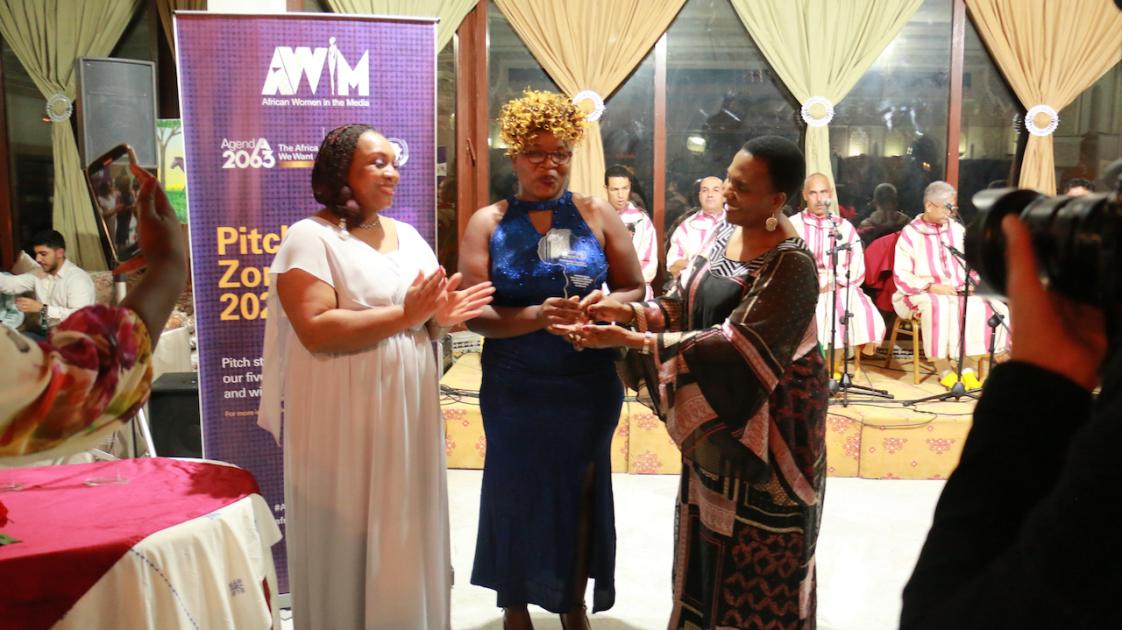
Female Winners of the African Union’s Agenda 2063 Media Awards
By Kestér Kenn Klomegâh
Every year during the annual African Women in Media (AWiM) conference, five female journalists are given the opportunity to pitch their story ideas according to certain categories fixed by the African Union. The African Union is a continental organization comprising 55 African countries.
The pitch for the categories includes (i) Africa’s Digital transformation Strategy – Positioning Africa for the 4th Industrial Revolution (related to Agenda 2063 Programme for Infrastructure Development in Africa) and (ii) Rebranding Africa – Changing Narratives and perceptions (related to Agenda 2063, Aspiration 7).
The female journalists selected as the finalists were announced on the 9th of December at the AWiM conference held in Fes, Morocco. They showcased their motivation and creativity, and winners were awarded cash grants of $3000 each to support the production of in-depth and evidence-based stories that reflect the progress and impact of the implementation of Agenda 2063 on the continent under each thematic area. The stories are produced in at least two languages of the African Union.
Meet the Winners- Agenda 2063 Pitch Zone Awards 2022
Ms Marie-Therese Nanlong (Nigeria) was selected the winner in the category on the AU Theme of the Year 2022 – The Year of Nutrition “Strengthening resilience in nutrition and food security on the African continent: Strengthening agro-food systems, health and social protection systems for the acceleration of human, social and economic capital development.”
Ms Nanlong’s series of stories will delve into how to scale actions that address the challenges of food scarcity and malnutrition and how regional and continental trade offers exponential potential for the continent to meet the food demands of every African citizen.
Ms Elizabeth Angira (Kenya) won in the category of Promoting efforts towards the Economic and Financial Inclusion of African Women (Agenda 2063 Aspiration 6, AU Gender Equality and women’s Empowerment Strategy (GEWE); the Protocol to the African Charter on Human and Peoples’ Rights on the Rights of Women in Africa (Maputo Protocol), and the AU Constitutive Act.
Ms Angira’s series of stories will advocate for the rights of women and break the culture of harmful practices that continues to hamper the full realization of those rights. She will also interrogate the implementation of policies and laws that safeguard those rights.
Ms Melody Chikono (Zimbabwe) was selected as the winner in the category of Promoting the Rights of Children in Africa (Agenda 2063 Aspiration 6, African Charter on the Rights and Welfare of Children). Ms Chikono’s series of stories will amplify the voices of children in advocating for their rights. The series will also show the significance of promoting the rights of children for the continent to prepare its future, from which it can harness the demographic dividend.
The African Union, through the Information and Communication Directorate, has been supporting the media in various initiatives such as promulgating policies that protect access to information, safety and welfare of journalists; and with capacity-building initiatives to ensure the African narrative and stories are told correctly by the continent’s people and in their own words. This is in line with the African Union’s vision of African development that is driven by African people.
While announcing the winners on behalf of Ms Leslie Richer, African Union’s Director of Information and Communication, Wynne Musabayana, Head of Communication, restated the commitment of the African Union that is driven by the desire to ensure that the media engage with Africa’s development from a position of knowledge about the different key issues.
She explained, “with the funding received, each winner will have sufficient means to produce relevant, evidence-based and timely content in their chosen format: content that digs deep into the issues to answer the famous five W’s and one H of journalism.”
It has long been proven that information is key to development. It allows citizens to make informed decisions, share experiences and learn lessons from each other. Journalists, being the intermediary that provides information in both ways between institutions and their publics, are therefore key stakeholders in the development process.
She concluded, “we are encouraged by the presence of so many professional women journalists who are determined to make their mark in telling the many stories of success, challenges, and mitigation measures, as well as the concrete plans for a brighter future, that are made by our heads of state and government and other policy and decision-makers, with the participation of the African public.”
Dr Yemisi Akinbobola, Co-founder & CEO of African Women in Media, restated the vision of the Pitch Zone since its inception in 2017 as a platform to create opportunities for women journalists to produce the kind of stories that will give them the level of visibility they need for their career development.
“Our partnership with the African Union since 2019 in achieving this means that the winners get continental exposure and are at the same time contributing to the broader objective of changing the narrative of Africa. Our research shows that allocation of resources and roles in newsrooms are often gendered, and we hope the Pitch Zone Awards continues to do its part in bridging this gap,” she said.
The African Union aims to accelerate the process of integration in order to play its rightful role in the global economy while addressing multifaceted social, economic and political problems inside Africa. In order to ensure the realization of its objectives, it has been collaborating within the strategic framework of its Agenda 2063.
World
AFC Backs Future Africa, Lightrock in $100m Tech VC Funding Bet
By Adedapo Adesanya
Infrastructure solutions provider, Africa Finance Corporation (AFC), has committed parts of a $100 million investment to fund managers—Future Africa and Lightrock Africa—to boost African tech venture backing.
The commitment to Lightrock Africa Fund II and Future Africa Fund III is the first tranche of a broader deployment, AFC noted.
The corporation added that it is actively evaluating a pipeline of additional Africa-focused funds spanning a range of strategies and stages, with further commitments expected in the near term.
This is part of its efforts to plug a persistent gap in long-term institutional capital on the continent, which constrains the development and scaling of high-potential technology businesses across the continent, especially with a drop in foreign investments.
“Through this commitment, AFC will deploy catalytic capital in leading Africa-focused technology Funds and, in particular, African-owned fund managers,” it said in a statement on Monday.
AFC aims to address the underrepresentation of local capital in venture funding by catalysing greater participation from African institutional investors and deepening local ownership within the ecosystem.
Despite some success stories on the continent, local institutional capital remains significantly underrepresented across many fund cap tables, with the majority of venture funding continuing to flow from international sources.
AFC’s commitment is designed to shift that dynamic, according to Mr Samaila Zubairu, its chief executive.
“Across the continent, young Africans are not waiting for the digital economy to arrive; they are seizing the moment — adopting technology, creating markets and solving real economic problems faster than infrastructure has kept pace. That is the investment signal.
“AFC’s $100 million Africa-focused Technology Fund will accelerate the convergence of growing demand, rapid technology adoption, youthful demographics and the enabling infrastructure we are building.
“Digital infrastructure is now as fundamental to Africa’s transformation as roads, rail, ports and power — enabling productivity, payments, logistics, services, data and cross-border trade, while creating jobs and industrial scale.”
Mr Pal Erik Sjatil, Managing Partner & CEO, Lightrock, said: “We are delighted to welcome Africa Finance Corporation as an anchor investor in Lightrock Africa II, deepening a strong partnership shaped by our collaboration on high-impact investments across Africa, including Moniepoint, Lula, and M-KOPA.
“With aligned capital, a long-term perspective, and a shared focus on value creation, we are well positioned to support exceptional management teams and scale category-leading businesses that deliver attractive financial returns alongside measurable environmental and social outcomes,” he added.
Adding his input, Mr Iyin Aboyeji, Founding Partner, Future Africa, said: “By investing in AI-native skills, financing productive tools such as phones and laptops, and expanding energy, connectivity and compute infrastructure, we can convert Africa’s greatest asset — its people — into critical participants in the new global economy. AFC’s US$100 million commitment is the anchor this moment demands.
“As our first multilateral development bank partner, AFC is sending a clear signal that digital is as fundamental to Africa’s transformation as agriculture, manufacturing and physical infrastructure. We trust that other development finance institutions, insurers, reinsurers and pension funds will follow AFC’s lead.”
World
Africa ‘Reawakening’ In Emerging Multipolar World
By Kestér Kenn Klomegâh
In this interview, Gustavo de Carvalho, Programme Head (Acting): African Governance and Diplomacy, South African Institute of International Affairs (SAIIA), discusses at length aspects of Africa’s developments in the context of shifting geopolitics, its relationships with external countries, and expected roles in the emerging multipolar world. Gustavo de Carvalho further underscores key issues related to transparency in agreements, financing initiatives, and current development priorities that are shaping Africa’s future. Here are the interview excerpts:
Is Africa undergoing the “second political re-awakening” and how would you explain Africans’ perceptions and attitudes toward the emerging multipolar world?
We should be careful not to overstate novelty. African states exercised real agency during the Cold War, too, from Bandung to the Non-Aligned Movement. What has actually shifted is the structure of the international system around the continent. The unipolar moment has faded, the menu of partners has widened, and a generation of policymakers under fifty operates without the inhibitions of either the Cold War or the immediate post-Cold War period. African publics, however, are more pragmatic than multipolar rhetoric assumes. Afrobarometer’s surveys across more than thirty countries consistently show citizens evaluating external partners on tangible outcomes such as infrastructure, jobs and security, rather than on civilisational narratives. China is generally associated with positive economic influence, the United States retains the strongest pull as a development model, and Russia, despite a louder political profile, registers a smaller and more geographically concentrated footprint. Multipolarity is not a destination Africans are arriving at. It is a working environment that creates more options and more risks at once.
Do you think it is appropriate to use the term “neo-colonialism” referring to activities of foreign players in Africa? By the way, who are the neo-colonisers in your view?
The term has analytical value when used carefully, and loses it when deployed selectively against whichever power one wishes to embarrass. Nkrumah’s 1965 formulation was precise: political independence accompanied by continued external control over economic and political life. The honest test is whether contemporary patterns reproduce that asymmetry, irrespective of the capital from which they originate. The structural picture is well documented. Africa still exports primary commodities and imports manufactured goods. Intra-African trade hovers around fifteen per cent of total trade, well below Asian or European levels. African sovereigns pay a measurable risk premium on debt that exceeds what fundamentals alone justify. Applied consistently, the lens directs attention to opaque resource-for-infrastructure contracts, security-for-mineral bargains, debt agreements with confidentiality clauses, and aid architectures that bypass African institutions. That description fits legacy French commercial arrangements in francophone Africa, Chinese mining concessions in the DRC, Russian-linked gold extraction in the Central African Republic and Sudan, Gulf-backed port and farmland deals along the Red Sea, and Western corporate practices that have not always met the standards their governments preach. Naming a single neo-coloniser tells us more about the speaker’s politics than about the structure.
How would you interpret the current engagement of foreign players in Africa? Do you also think there is geopolitical competition and rivalry among them?
Competition is real and intensifying, and the proliferation of Africa-plus-one summits is the clearest indicator. Russia has held two summits, in Sochi in 2019 and St Petersburg in 2023. The EU, Turkey, Japan, India, the United States, South Korea, Saudi Arabia and the UAE all host their own variants. Trade figures give a more honest sense of weight than diplomatic theatre. China-Africa trade reached around 280 billion dollars in 2023, United States-Africa trade sits in the 60 to 70 billion range, and Russia-Africa trade is roughly 24 billion, heavily concentrated in grain, fertiliser and arms. Describing the continent as a chessboard, however, understates how African states themselves are shaping these dynamics, sometimes through skilful diversification and sometimes through security bargains that entail longer-term costs. The Sahel illustrates the latter starkly. Between 2020 and 2023, Mali, Burkina Faso and Niger expelled French forces, downgraded their relationships with ECOWAS and the UN stabilisation mission, and welcomed Russian security contractors. ACLED data shows civilian fatalities from political violence rising rather than falling across the same period. Substituting providers without strengthening domestic institutions does not produce sovereignty. It changes the terms of dependence.
Do you think much depends on African leaders and their people (African solutions to African problems) to work toward long-term, sustainable development?
The principle is correct, and it is regularly weaponised in two unhelpful directions. External actors invoke it to justify withdrawing from responsibilities they continue to hold, particularly over financial flows and arms transfers that pass through their own jurisdictions. Some African leaders invoke it to deflect legitimate scrutiny of governance failings, repression or corruption. Genuine African agency requires more than rhetoric. The AU’s operating budget remains modest in absolute terms, and external partners still cover a significant share of programmatic activities, which shapes what gets funded. The African Standby Force, conceived in 2003, remains only partially operational more than two decades on. The African Continental Free Trade Area, in force since 2021, has rolled out more slowly than drafters hoped because the political will to lower national barriers lags the speeches. Long-term development depends on African leaders financing more of their own security and development priorities, on publics holding them accountable, and on a clearer-eyed view of what foreign forces can deliver. Whether the actors are Russian-linked contractors in the Sahel and Central African Republic, Western counter-terrorism deployments, or others, external security providers tend to address symptoms while leaving the political and economic drivers of insecurity intact.
Often described as a continent with huge, untapped natural resources and large human capital (1.5 billion), what then specifically do African leaders expect from Europe, China, Russia and the United States?
Expectations differ across the three relationships, and that differentiation is itself a marker of agency. From China, leaders expect infrastructure financing, sustained commodity demand, and a partnership that does not condition itself on domestic governance reforms. FOCAC commitments have delivered visible results in ports, railways and power generation, though Beijing itself has shifted toward smaller, more selective lending since around 2018. From Russia, expectations are narrower because the economic footprint is. Moscow’s offer is political backing in multilateral forums, arms transfers, grain and fertiliser supply, civilian nuclear cooperation in a handful of cases, and security partnerships, including those involving private military formations. The record of those security arrangements in the Central African Republic, Mali, Sudan and Mozambique deserves a sober assessment on its own terms, because the human and political costs are documented and uneven. From the United States, leaders look for market access through instruments such as AGOA, whose post-2025 future has generated significant uncertainty, alongside private capital, technology partnerships and a posture that treats the continent as more than a counter-terrorism theatre. The priorities across all three relationships are essentially the same: transparency in the terms of agreements, arrangements that preserve future policy space, and partnerships that build domestic productive capacity rather than substitute for it. The continent’s leverage in this multipolar moment is real, but it is not permanent. It will be squandered if used to rotate among external dependencies rather than reduce them.
World
Africa Startup Deals Activity Rebound, Funding Lags at $110m in April 2026
By Adedapo Adesanya
Africa’s startup ecosystem showed tentative signs of recovery in April 2026, with deal activity picking up after a subdued March, though funding volumes remained weak by recent standards, Business Post gathered from the latest data by Africa: The Big Deal.
In the review month, a total of 32 startups across the continent announced funding rounds of at least $100,000, raising a combined $110 million through a mix of equity, debt and grant deals, excluding exits. The figure represents a notable rebound from the 22 deals recorded in March, suggesting renewed investor engagement after a slow start to the second quarter.
However, the recovery in deal count did not translate into stronger capital inflows. April’s $110 million total marks the lowest monthly funding volume since March 2025, when startups raised $52 million, and falls significantly short of the previous 12-month average of $275 million per month.
The data highlights a growing divergence between investor activity and cheque sizes, with more deals being completed but at smaller ticket values.
The data showed that, despite this, looking at the numbers on a month-to-month basis does not tell the whole story of venture funding cycles as a broader 12-month rolling view presents a more stable picture of Africa’s startup ecosystem.
Based on this, over the 12 months to April 2026 (May 2025–April 2026), startups across the continent raised a total of $3.1 billion, excluding exits – largely in line with the range observed since August 2025. The figure has hovered around $3.1 billion, with only marginal deviations of about $90 million, indicating relative stability despite recent monthly dips.
A closer breakdown shows that equity financing accounted for $1.7 billion of the total, while debt funding contributed $1.4 billion, alongside approximately $30 million in grants. This composition underscores the growing role of debt in sustaining overall funding levels.
The data suggests that while headline monthly figures may point to short-term weakness, the broader funding environment remains resilient, supported in large part by continued activity in debt financing, even as equity investments show signs of moderation.
The report said if April’s total amount was lower than March’s overall, it was higher on equity: $74 million came as equity and $36 million as debt, while March had been overwhelmingly debt-led ($55 million equity, $96 million debt).
In the review month, the deals announced include Egyptian fintech Lucky raising a $23 million Series B, while Gozem ($15.2 million debt) and Victory Farms ($15 milliomn debt) did most of the heavy lifting on the debt side. Ethiopia-based electric mobility start-up Dodai announced $13m ($8m Series A + $5m debt).
April also saw two exits as Nigeria’s Bread Africa was acquired by SMC DAO as consolidation continues in the country’s digital asset sector, and Egypt’s waste recycling start-up Cyclex was acquired by Saudi-Egyptian investment firm Edafa Venture.
Year-to-Date (January to April), startups on the continent have raised a total of $708 million across 124 deals of at least $100,000, excluding exits. The funding mix was almost evenly split, with $364 million in equity (51.4 per cent) and $340 million in debt (48.0 per cent), alongside a small contribution from grants (0.6 per cent). This is an early sign that funding startups is taking a different shape compared to what the ecosystem witnessed in 2025.
For instance, in the first four months of last year, startups raised a higher $813 million across a significantly larger 180 deals. More notably, last year’s funding was heavily skewed toward equity, which accounted for $652 million (80.1 per cent) compared to just $138 million in debt (16.9 per cent).
The year-on-year comparison points to two clear trends: a contraction in deal activity as evidenced by a 31 per cent drop, and a 13 per cent decline in total funding. At the same time, the composition of capital has shifted meaningfully, with debt now playing a much larger role in sustaining funding volumes.
-
Feature/OPED6 years agoDavos was Different this year
-
Travel/Tourism10 years ago
Lagos Seals Western Lodge Hotel In Ikorodu
-
Showbiz3 years agoEstranged Lover Releases Videos of Empress Njamah Bathing
-
Banking8 years agoSort Codes of GTBank Branches in Nigeria
-
Economy3 years agoSubsidy Removal: CNG at N130 Per Litre Cheaper Than Petrol—IPMAN
-
Banking3 years agoSort Codes of UBA Branches in Nigeria
-
Banking3 years agoFirst Bank Announces Planned Downtime
-
Sports3 years agoHighest Paid Nigerian Footballer – How Much Do Nigerian Footballers Earn