Connect with us

World

Jailed Binance Founder Zhao to Regain Freedom September 29

Published

on

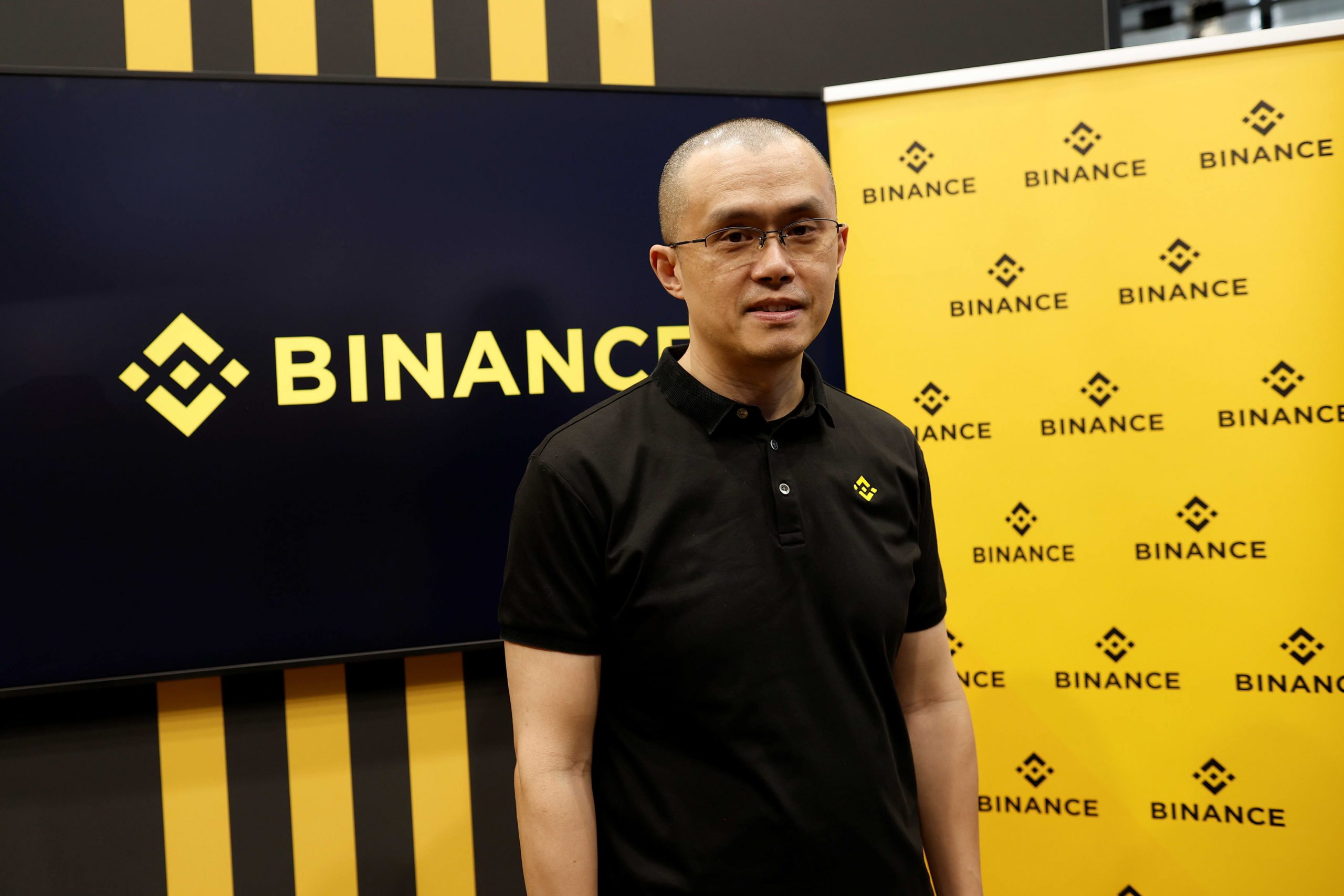
Binance founder

By Adedapo Adesanya

Jailed co-founder of Binance, Mr Changpeng Zhao, known as CZ, is set to be released from a US prison on September 29.

This is according to the US Federal Bureau of Prisons website.

Mr Zhao is currently serving a four-month sentence and was recently transferred to the Long Beach Residential Reentry Management (RRM) facility in central California.

Mr Zhao had in November 2023 alongside Binance pleaded guilty to breaking US federal laws.

The allegations included Mr Zhao’s failure to implement an effective anti-money laundering program, as required by the Bank Secrecy Act.

It was also alleged that Binance had processed transactions linked to unlawful activities, including those between US citizens and individuals in sanctioned regions like Iran.

As part of the settlement, Binance was ordered to pay $4.3 billion in fines, while Mr Zhao personally agreed to pay $50 million.

The businessman also stepped down as Binance’s CEO but retains an estimated 90 per cent ownership in the company.

Regardless of this, Binance still continues to face issues, including in Nigeria and the US.

The US Securities and Exchange Commission (SEC) recently filed an amended complaint against the exchange, reiterating its accusation that the exchange violated federal securities law.

The SEC claimed that Binance plays a key role in the crypto market by republishing and amplifying information from issuers and promoters. The filing also alleged that Binance promotes digital assets it lists and trades by sharing details on asset development, trading volumes, and price information.

Furthermore, the financial regulator reaffirmed its stance that Binance’s token (BNB) was offered and sold as a security.

It also highlighted the expectation among customers, employees, and investors that BNB would increase in value due to efforts by issuers and promoters.

This comes despite a previous court decision dismissing charges related to the secondary sale of BNB by third parties.

In Nigeria, the Economic and Financial Crimes Commission (EFCC), the country’s anti-graft agency accused Binance of money laundering and tax evasion in its charges.

It also stated that the exchange played a key role in the devaluation of Nigeria’s local currency after it facilitated over $26 billion in illegal cross-border transfers.

The country also detained two executives, Mr Tigran Gambaryan and Nardeem Anjarwalla, after honouring an invitation by the Nigerian government seven months ago.  Mr Anjarwalla later escaped custody in June using a second passport.

Binance has since delisted the Naira from its support but the platform is still very much active in Nigeria as most Nigerians use it as a wallet to house their assets and also trade.


Adedapo Adesanya is a journalist, polymath, and connoisseur of everything art. When he is not writing, he has his nose buried in one of the many books or articles he has bookmarked or simply listening to good music with a bottle of beer or wine. He supports the greatest club in the world, Manchester United F.C.

World

Putin Launches RT India Broadcasting

Published

on

RT India Broadcasting

By Kestér Kenn Klomegâh

In New Delhi, President Vladimir Putin, alongside Editor-in-Chief of Russia Today, Margarita Simonyan, took part in the launch ceremony of the RT India TV channel. The TV channel will operate from a new studio complex in New Delhi, marking a new dimension in the bilateral media sphere.

Editor-in-Chief of Russia Today, Margarita Simonyan, indicated that the collaboration, naturally, points to India’s hospitality, affirming that this endeavour was not only worthwhile but long overdue.

Vladimir Putin, officially, launching the TV studio, also emphasized that the Russia Today channel in India, RT India, grants millions of Indian citizens clearer, more direct access into insights about contemporary Russia – the realities, aspirations, and perspectives. He reiterated the existing traditional friendship, and the ties between the Indian and Russian peoples go much deeper into the past; which rests on a solid historical foundation. And at the core of relationship lies mutual interest.

Russia Today is a source of truthful and reliable information, focused on serving the interests of its viewers and listeners. Its main mission is merely to promote Russia, its culture, and its positions on domestic and international issues. Above all, Russia Today strives to convey truthful information about the country and about what is happening in the world. This is the absolute value of Russia Today.

Continue Reading

World

Ease in Benin Republic as Attempt to Oust President Talon Fails

Published

on

Benin Republic map

By Adedapo Adesanya

The government of Benin Republic says its armed forces has foiled a coup attempt on President Patrice Talon by a group of soldiers , who claimed on national television to have seized power on Sunday.

At least eight soldiers, holding weapons, went on state television on Sunday morning to announce that a military committee led by Colonel Tigri Pascal had taken over and was dissolving national institutions, suspending the constitution and closing air, land and maritime borders.

According to their statement, Lieutenant-Colonel Tigri Pascal will be leading a military transition council.

Some hours after, the Interior Minister, Mr Alassane Seidou, said the country’s armed forces had thwarted the attempted coup and called for calm.

“Therefore, the government urges the population to go about their business as usual,” he said.

According to reports, 14 people had been arrested in connection with the foiled attempt to stop democracy in the country.

Foreign Minister, Mr Olushegun Adjadi Bakari, had earlier told Reuters that “a small group” of soldiers had attempted to overthrow the government but that forces loyal to President Talon were working to restore order.

He said the coup plotters had only managed to take control of state television, which was cut after the soldiers read out their statement. It resumed broadcasting shortly afterwards, allowing the interior minister to read his statement saying the coup bid had been foiled.

The Economic Commission of West African States (ECOWAS) and the African Union (AU) condemned the coup attempt.

Benin experienced several military coups and coup attempts in the first decades of independence from France in 1960. But there has not been a power grab by force in the country since it held multi-party elections in 1991.

Coups have become common place in Africa since 2020: Mali, Guinea, Sudan, Burkina Faso, Niger, Gabon, Madagascar, and recently Guinea-Bissau have seen military takeover in the recent times. This has raised alarms about possibilities in other African states.

Continue Reading

World

Russian-Nigerian Economic Diplomacy: Ajeokuta Symbolises Russia’s Remarkable Achievement in Nigeria

Published

on

Ajaokuta Steel Plant, Nigeria

By Kestér Kenn Klomegâh

Over the past two decades, Russia’s economic influence in Africa—and specifically in Nigeria—has been limited, largely due to a lack of structured financial support from Russian policy banks and state-backed investment mechanisms. While Russian companies have demonstrated readiness to invest and compete with global players, they consistently cite insufficient government financial guarantees as a key constraint.

Unlike China, India, Japan, and the United States—which have provided billions in concessionary loans and credit lines to support African infrastructure, agriculture, manufacturing, and SMEs—Russia has struggled to translate diplomatic goodwill into substantial economic projects. For example, Nigeria’s trade with Russia accounts for barely 1% of total trade volume, while China and the U.S. dominate at over 15% and 10% respectively in the last decade. This disparity highlights the challenges Russia faces in converting agreements into actionable investment.

Lessons from Nigeria’s Past

The limited impact of Russian economic diplomacy echoes Nigeria’s own history of unfulfilled agreements during former President Olusegun Obasanjo’s administration. Over the past 20 years, ambitious energy, transport, and industrial initiatives signed with foreign partners—including Russia—often stalled or produced minimal results. In many cases, projects were approved in principle, but funding shortfalls, bureaucratic hurdles, and weak follow-through left them unimplemented. Nothing monumental emerged from these agreements, underscoring the importance of financial backing and sustained commitment.

China as a Model

Policy experts point to China’s systematic approach to African investments as a blueprint for Russia. Chinese state policy banks underwrite projects, de-risk investments, and provide finance often secured by African sovereign guarantees. This approach has enabled Chinese companies to execute large-scale infrastructure efficiently, expanding their presence across sectors while simultaneously investing in human capital.

Egyptian Professor Mohamed Chtatou at the International University of Rabat and Mohammed V University in Rabat, Morocco, argues: “Russia could replicate such mechanisms to ensure companies operate with financial backing and risk mitigation, rather than relying solely on bilateral agreements or political connections.”

Russia’s Current Footprint in Africa

Russia’s economic engagement in Africa is heavily tied to natural resources and military equipment. In Zimbabwe, platinum rights and diamond projects were exchanged for fuel or fighter jets. Nearly half of Russian arms exports to Africa are concentrated in countries like Nigeria, Zimbabwe, and Mozambique. Large-scale initiatives, such as the planned $10 billion nuclear plant in Zambia, have stalled due to a lack of Russian financial commitment, despite completed feasibility studies. Similar delays have affected nuclear projects in South Africa, Rwanda, and Egypt.

Federation Council Chairperson Valentina Matviyenko and Senator Igor Morozov have emphasized parliamentary diplomacy and the creation of new financial instruments, such as investment funds under the Russian Export Center, to provide structured support for businesses and enhance trade cooperation. These measures are designed to address historical gaps in financing and ensure that agreements lead to tangible outcomes.

Opportunities and Challenges

Analysts highlight a fundamental challenge: Russia’s limited incentives in Africa. While China invests to secure resources and export markets, Russia lacks comparable commercial drivers. Russian companies possess technological and industrial capabilities, but without sufficient financial support, large-scale projects remain aspirational rather than executable.

The historic Russia-Africa Summits in Sochi and in St. Petersburg explicitly indicate a renewed push to deepen engagement, particularly in the economic sectors. President Vladimir Putin has set a goal to raise Russia-Africa trade from $20 billion to $40 billion over the next few years. However, compared to Asian, European, and American investors, Russia still lags significantly. UNCTAD data shows that the top investors in Africa are the Netherlands, France, the UK, the United States, and China—countries that combine capital support with strategic deployment.

In Nigeria, agreements with Russian firms over energy and industrial projects have yielded little measurable progress. Over 20 years, major deals signed during Obasanjo’s administration and renewed under subsequent governments often stalled at the financing stage. The lesson is clear: political agreements alone are insufficient without structured investment and follow-through.

Strategic Recommendations

For Russia to expand its economic influence in Africa, analysts recommend:

  1. Structured financial support: Establishing state-backed credit lines, policy bank guarantees, and investment funds to reduce project risks.
  2. Incentive realignment: Identifying sectors where Russian expertise aligns with African needs, including energy, industrial technology, and infrastructure.
  3. Sustained implementation: Turning signed agreements into tangible projects with clear timelines and milestones, avoiding the pitfalls of unfulfilled past agreements.

With proper financial backing, Russia can leverage its technological capabilities to diversify beyond arms sales and resource-linked deals, enhancing trade, industrial, and technological cooperation across Africa.

Conclusion

Russia’s Africa strategy remains a work in progress. Nigeria’s experience with decades of agreements that failed to materialize underscores the importance of structured financial commitments and persistent follow-through. Without these, Russia risks remaining a peripheral player (virtual investor) while Arab States such as UAE, China, the United States, and other global powers consolidate their presence.

The potential is evident: Africa is a fast-growing market with vast natural resources, infrastructure needs, and a young, ambitious population. Russia’s challenge—and opportunity—is to match diplomatic efforts with financial strategy, turning political ties into lasting economic influence.

Continue Reading

Trending