

World
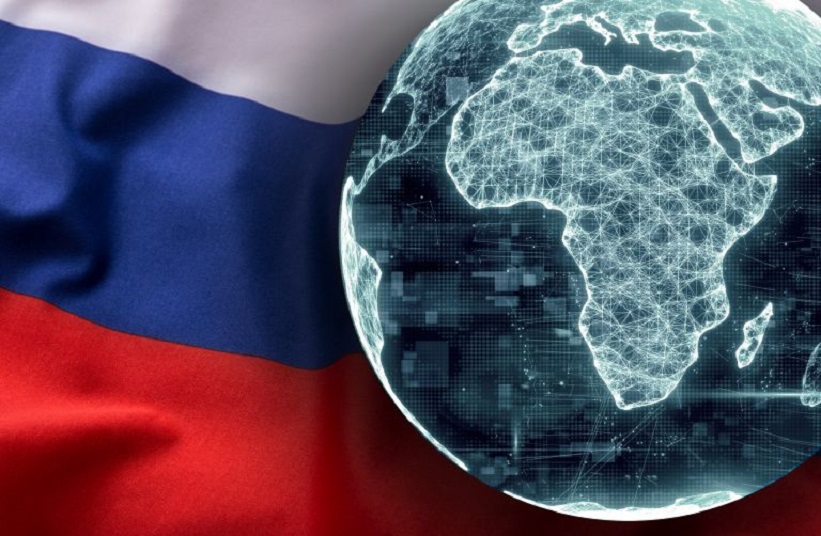
Moscow Brings Africa Closer With Trade Partnerships

By Kestér Kenn Klomegâh
For the past couple of years, Russia has noticeably been shifting toward trade, while intensifying the dynamics of ‘soft power’ within the framework of its foreign policy with Africa. In many ways, the expanded cultural programs, including art and sports, education exchanges aimed at enhancing people-to-people connections, have increasingly defined the narratives of building goodwill and forging a closer friendship, that’s a powerful pivot to establishing trade and widening economic cooperation.
That current dimension of Russia’s public diplomacy has, in practical terms, ushered in a new wave of confidence, creating the necessary conditions for raising bilateral. But critically, while that strategic approach reflects a certain self-awareness, the emphasis should be played on reviewing the rules and regulations, and further addressing the existing roadblocks and obstacles. These roadblocks have consistently been featuring in discussions, for instance the two Russia-Africa summits held in Sochi and St. Petersburg, and in various meetings and conferences.
One of the latest, Russian senators, academicians, researchers and policy experts gathered to discuss the export of non-commodities to Africa during an interactive webinar, organized by Federation Council of Russia, Chamber of Commerce and Industry of Russia, and Business Russia Association. According to the organizers, the meeting was to identify funding for exports, to concretize proposals for increasing exports to Africa and to facilitate amendments to the Russian legislation if necessary to support promoting exports to African market.
Senator Igor Morozov, a member of the Federation Council Committee on Economic Policy, also the Chairman of the Coordinating Committee on Economic Cooperation with Africa, during the videoconference meeting themed: “Improving State Support for Export in African Countries” categorically stated that these are still many questions that have to be thoroughly addressed, including the issues of developing a system of state support for Russian enterprises exporting products to the African market, as well as the participation of Russian regions in the development of exports to African countries.
The meeting was attended by Deputy Chairman of the Federation Council Committee on Economic Policy, Konstantin Dolgov; member of the Federation Council Committee on Constitutional Legislation and State Construction, Alexey Pushkov; representatives of the Ministry of Industry and Trade of the Russian Federation; the Ministry of Economic Development of the Russian Federation; the Ministry of Finance of the Russian Federation; the Russian Union of Industrialists and Entrepreneurs; scientific organizations and expert community.
Senator Igor Morozov noted that in conditions of sanctions pressure, new markets, new partners and allies are important for Russia. “This predetermines the return of Russia to Africa, makes this direction a priority both from the point of view of geopolitical influence, and in the trade and economic context. It is important for us to expand and improve competitive government support instruments for business. It is obvious that over the thirty years Russia left Africa. There are foreign players such as China, India, the United States and the European Union that have significantly increased their investment opportunities.”
Morozov, however, suggested creating a new structure within the Russian Export Center – an investment fund, which he explained further that “Such a fund could evaluate and accumulate concessions as a tangible asset for the Russian raw materials and innovation business.”
Konstantin Dolgov touched upon the topic of using political ties with African countries to build up economic and investment cooperation. He also pointed out the need to connect Russian regions, to maximize their export potential.
Alexey Pushkov noted that with the right strategy, such a large state as Russia has a chance to take strong positions in interaction, in particular, economic, with other continents, including Africa. “The competition will certainly grow,” the Senator said, noting that the situation is constantly changing.
Representative from the Russian Export Center (REC), Veronika Nikishina, informed the gathering about Russian projects that are being implemented or planned in the African market, including the supply of passenger cars to Egypt, wheat supplies, as well as REC business missions, participation in exporters’ exhibitions.
REC offers a wide range of financial and non-financial support tools to benefit the Russian exporters explore the foreign markets and build capacity in the global trade. Generally, the African market is of particular interest to potential Russian exporters, and negotiations with government, trade agencies and business community to allow establishing effective ways of entry to the huge continental market. With an estimated population of 1.3 billion, Africa constitutes a huge consumer market for all kinds of products and a wide range of services.
According to her, since July 2020, the REC began to practice online business missions, which in the absence of physical contacts, allows continuing communications, maintaining current exports and looking for new niches.
According to Professor Irina Abramova, Director of the Institute for African Studies under the Russian Academy of Sciences, financial instruments are the main issue of Russian interaction with the continent. She touched upon such topics as Russian investments in African countries, the prospects for establishing direct contacts on the supply of agricultural products with African countries.
In our assessment, there are currently so many structures, supported with huge financial grants, dealing with Africa. The Ministry of Foreign Affairs has created the Secretariat for Russia-Africa Partnership Forum. The Secretariat further established an Association for Economic Cooperation with African States. The Russian Chamber of Commerce and Industry has also restructured its Coordinating Committee for Economic Cooperation with African States that was established as far back in 2009.
According to historical documents, the Coordinating Committee for Economic Cooperation with African States was created on the initiative of the Chamber of Commerce and Industry of the Russian Federation and Vnesheconombank with the support of the Federation Council and the State Duma of the Federal Assembly of the Russian Federation. It has had support from the Ministry of Foreign Affairs, the Ministry of Economy and Trade, the Ministry of Natural Resources, as well as the Ministry of Higher Education and Science.
After the first Russia-Africa summit in the Black Sea city Sochi in October 2019, Russia and Africa have resolved to move from mere intentions to concrete actions in raising the current bilateral trade and investment to appreciably higher levels in the coming years. Indeed, Russia now has all the structures are fixed, and summit declaration that set the focused directions, for the necessary take-off to Africa.
“There is a lot of interesting and demanding work ahead, and perhaps, there is a need to pay attention to the experience of China, which provides its enterprises with state guarantees and subsidies, thus ensuring the ability of companies to work on a systematic and long-term basis,” Foreign Minister Sergey Lavrov explicitly said.
According to Lavrov, the Russian Foreign Ministry would continue to provide all-round support for initiatives aimed at strengthening relations between Russia and Africa. “Our African friends have spoken up for closer interaction with Russia and would welcome our companies on their markets. But much depends on the reciprocity of Russian businesses and their readiness to show initiative and ingenuity, as well as to offer quality goods and services,” he stressed.
Amid these years of European and Western sanctions, Moscow is looking for both allies and an opportunity to boost trade and investment in Africa. Currently, Russia’s trade with Africa is less than half that of France with the continent, and 10 times less than that of China. Asian countries are doing brisk business with Africa.
In terms of arms sales, Russia leads the pack in Africa, and Moscow still has a long way to catch-up with many other foreign players there. In 2024, Russia’s trade with African countries grew more than 17 percent and exceeded $25 billion. At the Sochi summit, Russian President Vladimir Putin said he would like to bring the aggregate trade figure, over the next few years at least, to $40 billion.


