Connect with us

World

Nairobi’s Climate Summit Seeks External Funding Amid Geopolitical Challenges

Published

on

Climate Summit

By Kestér Kenn Klomegâh

The historic gathering on Climate Change inside Africa clearly portrays efforts at spearheading towards finding sustainable solutions to existing challenges. But African leaders are still standing at a crossroads as they try hard to balance their geopolitical positions, this time with raising the needed funds for controlling the effects of climate change in Africa.

The majority of these African leaders consistently barked at Westerners and Europeans for their excessive control, and frequent interference in their internal affairs and shouted over aspects of democracy, human rights and hegemony, and yet looked forward to their invaluable investment in the economy.

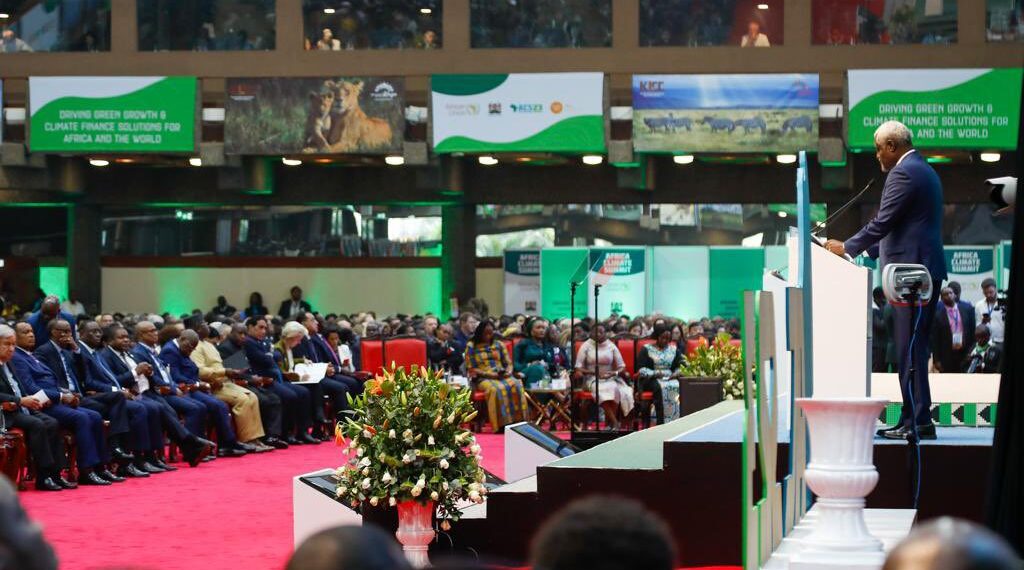
This summit held under the theme, “Africa Climate Summit 2023: Driving Green Growth & Climate Finance Solutions for Africa and the World” attracted a host of African and external guests, and including representatives of civil society and non-state organizations. The governmental leaders met for three days while the entire week was dedicated to the current situation and potential solutions.

With high optimism, the first summit held in Nairobi, Kenya, in early September was primarily to review and systematize possible options African nations have to finance climate change, and on the other way, nature and its inherent resources in the continent. Kenyan President Wiliam Ruto made the summit’s aim very clear in his speech – to discuss how to fund the challenges posed by climate change.

Ruto further envisioned a “future where Africa finally steps into the stage as an economic and industrial power, an effective and positive actor on a global arena” and unreservedly boasted the availability of the young population, to take advantage of the vast renewable potential and natural resources.

Ruto’s narratives at the conference dealt with the fact that Africa is acutely vulnerable to the growing impacts of climate change and consequently made a strategic call for accelerating funding in Africa. At the end of the summit, the narratives appealing to the international community to help achieve that goal by easing the continent’s crushing debt burden and reforming the global financial system to unblock investment were finally incorporated into the final declaration.

Prior to the declaration, it was broadly noted that Africa had an “unparalleled opportunity” to benefit from the fight against global warming but needed massive investment to unlock its potential as Nairobi hosts a landmark climate summit focusing on the continent. “The overarching theme… is the unparalleled opportunity that climate action represents for Africa,” Ruto said in his opening address, while further stressing for trillions of dollars from the international community to unblock financing for Africa.

It is always puzzling, that Africa has all the resources. Africa needs external funds. African leaders have savings in foreign banks. Yet, Africa is poor to the bone marrow, complaints of the dearth of finance, and despite the abundance of natural resources in the continent. In order to rebuild confidence, African Union Commission head, Moussa Faki Mahamat, was straight to the point in his demand – wielding his French tongue and some tiredness or frustration – on behalf of the 54-member states, that the international investment must be “massively scaled up to enable commitments to be turned into actions across the continent of Africa.”

While demanding sweeping changes to the global financial system, Moussa Mahamat also announced that the summit would become a regular event and be held every two years.

Among most of the speakers, Eritrean President Isaias Afwerki’s remarks seemingly carried different weighty significance. “Climate change poses, by all accounts, one of the most pressing challenges of our times. Its impact in Africa will be immensely aggravated; compounded as it is by a host of other major hurdles,” he said.

“The policies we articulate, and implementation mechanisms we map out, at the individual national level will not provide the primary panacea to this global challenge,” noted Afwerki, but added that, in this context, Africa can tap and incorporate the numerous scientific measures undertaken by global players in the field to bolster its purposeful mitigation measures.

While concluding his talk at the gathering, he reminded the necessity for Africa to mobilize its own resources rather than extend hands for handouts that may aggravate the existing situation by inviting interference and corrupt practices, Mobilizing inside resources will enable and motivate creativity at the level of the continent.

Isaias Afwerki urged everyone to not be attracted by the billions that are being promised by so-called donors. Rather, better to mobilize resources and get away from this dependency that will definitely compromise everything at the level of the continent.

Despite potential internal and external hurdles to scaling up funds, one report co-authored by Executive Secretary at the UN Economic Commission for Africa, Vera Songwe, concluded that multilateral development banks’ climate finance must triple within five years, from US$60 bln to US$180 bln, to help developing economies globally cope with global warming. Annual climate finance flows in Africa stand at only US$30 billion at the moment, however.

Another report released by Oxfam, for instance, said the devastating drought that has gripped Ethiopia, Kenya and Somalia — which scientists say has been made more severe by climate change — as well as floods in South Sudan, have caused losses of between US$15 billion and US$30 billion in the two years to 2022, or around two to four per cent of the region’s GDP.

It is estimated that between 2021 and 2023, the four countries lost about US$7.4 billion in livestock alone. “Millions of already struggling people saw their animals die and lost their ability to grow, sell or eat nutritious food, plunging them into even greater poverty and hunger,” the report said.

There are so many reports detailing various aspects of climate change, specifically with regard to Africa. The International Monetary Fund (IMF) also estimates that 34 of 59 developing economies most vulnerable to climate change, many of which are in Africa, are also at a high risk of fiscal crises.

The summit has raised approximately $23 billion in funding pledges. There are daunting challenges for the continent where hundreds of millions lack access to electricity. The oil-rich United Arab Emirates (UAE), in complete recognition of Africa’s potential, offered the financial pledge of $4.5 billion as it competes to get hold of Africa. United States’ climate envoy John Kerry also announced $30 million in new funding to accelerate climate-resilient food security across the continent.

United Nations Secretary-General, Antonio Guterres, at the African Climate Summit, pointed to an injustice burning at the heart of the climate crisis. And its flame is scorching hopes and possibilities in Africa. This continent accounts for less than four per cent of global emissions. Yet it suffers some of the worst effects of rising global temperatures: Extreme heat, ferocious floods, and tens of thousands dead from devastating droughts. The blow inflicted on development is all around with growing hunger and displacement. Shattered infrastructure. Systems stretched to the limit.

All these above are aggravated by climate chaos, not by Africans’ making. It is still possible to avoid the worst effects of climate change. But only with a quantum leap in climate action. The people of Africa – and people everywhere – need action to respond to deadly climate extremes.

Notwithstanding all that he mentioned above, Antonio Guterres explained that reaching these targets requires climate justice. Developed countries must present a clear and credible roadmap to double adaptation finance by 2025 as a first step towards devoting, at least, half of all climate finance to adaptation.

Referring to multinational development banks and other foreign financiers, Antonio Guterres added in his speech: “They must keep their promise to provide $100 billion a year to developing countries for climate support. Every person on earth must be covered by an early warning system by 2027 – by implementing the Action Plan we launched last year.”

“Six out of every 10 Africans currently lack access to these systems. The Early Warning for All Africa Action Plan launched yesterday under the leadership of the African Union will be critical to addressing this need. More broadly, we need a course correction in the global financial system so that it supports accelerated climate action in the context of sustainable development. We can’t achieve one without the other,” according to the Secretary General of the United Nations.

It, therefore, means re-capitalizing and changing the business model of Multilateral Development Banks. This could make it possible to leverage private finance at affordable rates to support developing nations to build sustainable economies. The global financial system must be reformed to be an ally of developing nations as they turbocharge a just and equitable green transition that leaves no one behind, especially those in Africa.

But then, and but the point here is that African leaders must get down to their tasks. Interestingly, Africa produces and trades in critical minerals. Africa must be sustainable, transparent and just across every link of the supply chain, with maximum added value produced across Africa. So we are saying that African leadership must strive to generate innovative green economies anchored in renewable power.

Without hyperbolic geopolitical slogans, now is the time to bring together African states with the developed world, financial institutions and technology companies to create a true African Renewable Energy Alliance. With adequate access to financial resources at a reasonable cost and technological support, renewables could dramatically boost economies, grow new industries, create jobs and drive development – including by reaching the over 600 million Africans living without access to power.

Nevertheless, African leaders and the attendees, demand from external nations to honour long-standing climate pledges for poorer nations. Analysts in their several news reports also acknowledged that the summit unity generated momentum for making this demand. But consensus is still challenging across the diverse continent of 1.4 billion people, the 54 African leaders and the African Union and within the context of geopolitical situations around the world.


Click to comment

Leave a Reply

Your email address will not be published. Required fields are marked *

World

SCRYPT Expands Stablecoin Settlement Infrastructure to East Africa

Published

on

SCRYPT stablecoin

By Aduragbemi Omiyale

Accessing the US Dollar in the East Africa region has now been made easier with the expansion of the stablecoin settlement infrastructure of SCRYPT.

This development enables banks, payment providers and corporate treasury teams to move value into and out of the continent in real time.

Businesses paying international suppliers frequently have to convert local currency into USD before purchasing stablecoins for settlement, incurring FX conversions and spreads before any payment is made.

But SCRYPT is eliminating this intermediate conversion by enabling direct settlement corridors for local African currencies into stablecoins.

This development allows businesses to move from local currency to stablecoin settlement in a single licensed transaction, without first sourcing rationed bank dollars, as stablecoins are increasingly becoming settlement infrastructure rather than an investment product.

The expansion adds settlement support across four African currencies: the Kenyan shilling (KES), Tanzanian shilling (TZS), Rwandan franc (RWF) and Ugandan shilling (UGX). Each corridor is delivered through the same full-stack infrastructure our clients already use for trading, custody and treasury operations.

Speaking on this, the chief executive of SCRYPT, Norman Wooding, said, “Across Africa, stablecoin adoption is driven by economic need, not speculation.

“Businesses here are not chasing yield; they are trying to pay suppliers and manage treasury without losing margin to a banking system that rations dollars. Licensed, fair-rate dollar access is the clearest proof of what this infrastructure is for.”

Also commenting, the Managing Director of Markets & Trading at SCRYPT, Mr Gabriel Titopoulos, said, “Until now, reaching stablecoins from local African currencies meant buying scarce dollars and incurring several layers of conversion costs.

“SCRYPT removes this friction. Firms and payment providers can now settle straight from local currencies through live corridors, with local partners.”

Continue Reading

World

African Graduates Association Promoting Multifaceted Initiatives With Russian Educational Institutions

Published

on

Francois Ngan Professor Vladimir Filippov African Graduates Association

By Kestér Kenn Klomegâh

In preparations for the third Russia-Africa Summit, scheduled for late October 2026, Dr Francois Ngan, deputy chairman of the Union of Associations of African Graduates of Soviet and Russian Universities, during an official working visit, has held a consultative meeting with Professor Vladimir Filippov, the President of the Russian University of Peoples’ Friendship (RUDN), and former Minister of Higher Education of Russia, Chairman of the National Commission for Accreditation of Higher Education.

RUDN is an educational institution established in 1960, primarily to provide higher education to Third World students. It has now become a popular multidisciplinary spot for many students, especially from developing countries. The university offers various academic programmes and has research infrastructure that comprises laboratories and interdisciplinary centres. The university is named after the former Congolese leader, Patrice Lumumba.

Dr Francois Ngan and Professor Filippov discussed the importance of the Graduates Association as a continental platform dedicated to strengthening unity, cooperation, and promoting shared progress among African graduates who studied in the former Soviet Union and in the Russian Federation. They also reviewed multifaceted initiatives that could bring together alumni associations from across Africa, whose members obtained education and professional training, and cultural experiences in Soviet and Russian institutions of higher learning.

Professor Filippov expressed optimism in addressing emerging challenges as a result of shifting geopolitical changes, emphasised strategic cooperation in the educational sphere with Africa, in general, and with the Republic of Cameroon, in particular, and further about the integration of African students during their studies in the Russian Federation.

The meeting also touched on academic and scientific work, the possibility of rewriting a scientific thesis, and the official organisation of transferring versions translated into six languages ​​for the library of RUDN. Significant questions relating to Russia’s educational opportunities, collaborations and partnerships involving African countries were thoroughly discussed.

The Union of Associations of African Graduates of Soviet and Russian Universities was created under one continental umbrella to promote friendship, for professional networking, to engage in cultural exchange, and with particular emphasis on forging strategic cooperation between Africa and Russia.

Continue Reading

World

Russia to Support Industrial Growth, Technological Advancement and Supply Chain Resilience across Africa

Published

on

Russia Supply Chain Africa

By Kestér Kenn Klomegâh

With the heightening of geopolitical rivalry and competition, a new Russia-Africa working group has emerged as a significant institutional mechanism and plans to focus on facilitating and monitoring strategic investments, industrialisation, and infrastructural development—the Strategic Action Plan 2023-2026—that was outlined during the second Russia-Africa summit, in St.Petersburg, the second largest city in the Russian Federation.

While substantial progress has, largely, lagged on the multidimensional economic front with Africa primarily due to its internal difficulties and the complexity of relations with its former Soviet neighbours, Russian officials believe there still remains huge untapped potential in strengthening bilateral cooperation. As planned, President Vladimir Putin has already signed an executive order that directs Moscow to host the forthcoming third Russia-Africa summit in October 2026.

On June 30, a regular meeting of the Business Council on Africa was held under the chairmanship of the head of the Russian Foreign Ministry. It was dedicated to issues of trade, economic and investment cooperation with Africa. The group discussed the current state and prospects for the implementation of policy initiatives with an emphasis on assisting the countries of the continent, strengthening their economic, energy, technological and food sovereignty, as well as training specialists for Africa.

Foreign Minister Sergey Lavrov has reiterated that Russia-Africa relations primarily depend on an understanding of the importance of collective action based on the principles of equality, mutual respect and resolving common tasks. In the past few years, Russia-Africa cooperation has been noticeably strengthening. “We are deepening political dialogues, developing bilateral contacts with African countries, promoting cordial cooperation between ministries and departments, and expanding humanitarian exchanges. We are also continuing the structural diversification of trade partnerships and economic dimensions.”

“Next on the agenda is the launch of diplomatic missions in The Gambia, Liberia, Togo, and the Union of the Comoros,” Lavrov said at a meeting of the Business Council under the Russian foreign minister. Lavrov noted that Russian embassies began operating in three other African countries in 2025: Niger, Sierra Leone, and South Sudan. A new Department for Partnership with Africa was also established. According to the top diplomat, “expanding Russia’s diplomatic presence on the continent contributes to developing relations.”

There are already 45 Russian embassies operating in Africa. The Russian foreign minister noted that Moscow is quickly rebuilding its presence in African countries, which sharply declined during the collapse of the Soviet Union. “There will be literally four or five countries left where we still need to establish full-fledged embassies, and then, we will have 100 per cent coverage of the entire African continent with our diplomatic presence,” Lavrov emphasised.

After the first summit in October 2019, the Foreign Ministry also created the Secretariat of the Russia-Africa Partnership Forum. Its main tasks include controlling the roadmap to Africa’s multidimensional cooperation and guiding potential Russian investors to the continent. This also underscored the priority and post-Soviet solidarity Russia currently attaches to its policy towards Africa, within the growing framework of the emerging new architecture of multipolarity in the Global South.

In an interview in June 2026, the director of the Department of Partnership with Africa at the Foreign Ministry, Tatyana Dovgalenko, shared a few insights in the lead-up to the third summit. Furthermore, Dovgalenko explained that Russia would move away from security to concentrate more on economic issues, especially to team up with African colleagues to streamline mechanisms for implementing projects that will ensure food security and agriculture, and help Africa in installing processing facilities to support its self-sufficiency. She also emphasised energy and vital infrastructures, and the third direction was to simultaneously work more coherently with sub-regional organisations.

Over the past few years, bilateral relations have been increasing. There are positive dynamics in trade turnover, estimated at $30 billion. Steps are being taken to build payment systems, preferably in national currencies, while Russia looks to open four more diplomatic offices, bringing the total to 48 across Africa. Russia is currently training 37,000 African students, but only approximately 1/3 on state scholarships in Russia’s educational institutions. “We are ready to share valuable experiences of building a sovereign development model with African partners to achieve self-reliant economic growth based on their own resources and capabilities. Russia aims at creating processing capabilities and localising production, and provides access to advanced technological solutions,” underlined Dovgalenko in her interview with New Eastern Outlook.

For African countries that have endured difficult decades on the path to political independence, it is now important to take full control over the untapped resources, direct income and revenue toward stimulating the national economic sector, rather than paying for the well-being of the Western “golden billion” during this changing geopolitical era, according to Dovgalenko.

According to reports, the forthcoming Russia-Africa summit will have an economic agenda, including the digital economy, technology, artificial intelligence, healthcare, investment, and settlements in global trade. Of course, the agenda will also cover Africa’s political aspects. But if African friends bring along any specific ideas, Russia will give them serious attention. In addition, with continuity and consistency, pay increased attention to expanding ties with Africa’s regional integration associations.

Going forward, the focus will be on translating strong trade relations into deeper investment partnerships, fostering technology collaboration, strengthening industrial linkages and contributing towards the shared objectives set by the leadership of both African countries and Russia. At the third summit, the above-mentioned specific initiatives will be further designed. In this regard, the key document, the new action plan for the next three-year period (2027-2029), is intended to reflect dynamic realities in the future relations of Russia and Africa

Continue Reading