World
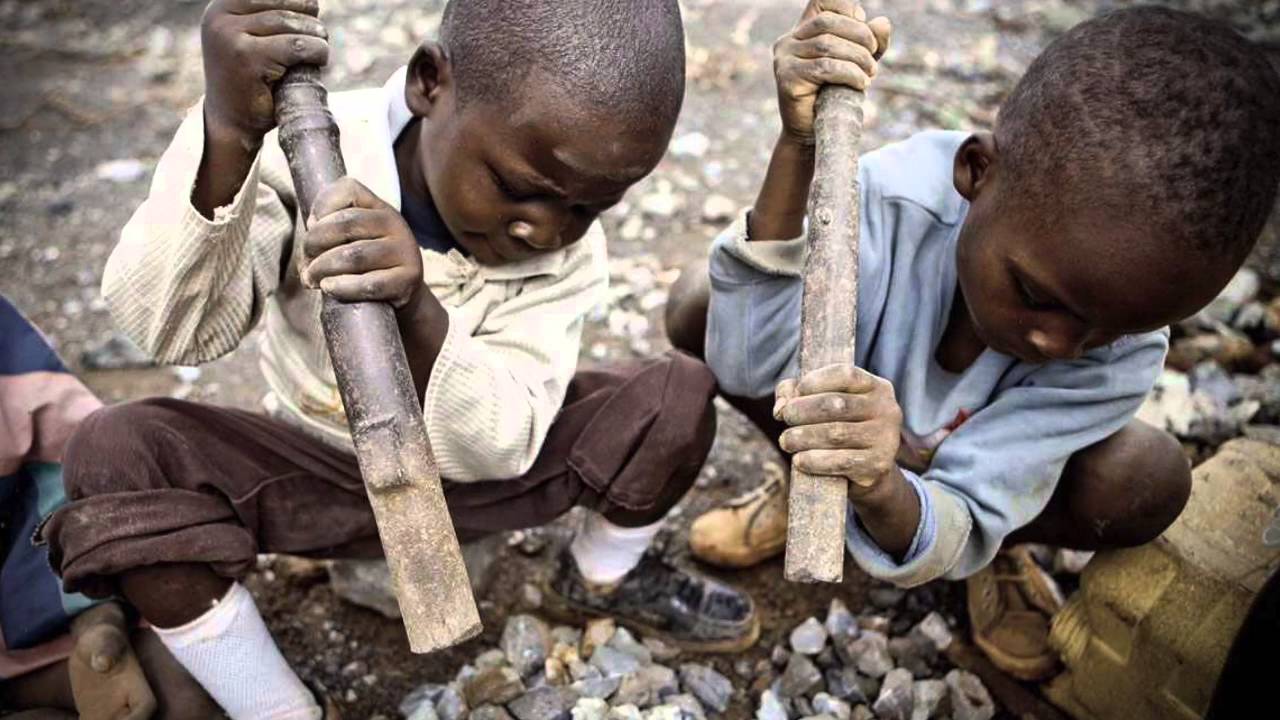
Nigeria, Others Discuss Child Labour in Artisanal and Small-scale Gold Mines
Experts and global actors from Africa, Asia and South America gathered in Manila to address child labour and poor working conditions in artisanal and small-scale gold mines (ASGM).
The first-ever Inter-regional Knowledge-Sharing Forum on Child Labour and Working Conditions in ASGM of the International Labour Organization (ILO) served as a platform for dialogue.
Governments, employers’ and workers’ organizations, international non-government organizations, civil society organizations, miners’ groups and their communities, and ASGM supply chain actors joined the forum.
Countries represented were Colombia, Congo, Cote d’ Ivoire, France, Ghana, Guyana, Indonesia, Italy, Mali, Mongolia, Nigeria, Philippines, Thailand, Switzerland, United Kingdom and the United States.
“Jobs in artisanal and small-scale gold mines are often linked to poor working conditions, with limited rights and access to social protection, without a voice and freedom to join unions.
Miners risk their safety and health even without stable income to lift their families out of poverty. Of great concern are children working in these mines, which is one of the worst forms of child labour,” said Khalid Hassan, Director of the ILO Country Office for the Philippines.
ILO estimates in 2011 revealed that 19,000 children work in 45 artisanal and small-scale gold mines in the Philippines. Children can be found inside mining tunnels or on surface collecting gold and hauling sacks of ore or smelting gold.
The sector is associated with many labour issues such as hazardous working conditions that have led to work-related injuries, diseases and deaths. Child labour is also present in different mining stages. Evidence from various ILO surveys and research studies show that mining is by far the most hazardous sector for children with respect to fatal injuries.
“We should continue to zero-in on families as they need to know the risks involved in sending their children away for work. Child labour is not the solution to the households’ economic problems, rather, it creates long-term problems. This forum is a step forward to be more responsive and to provide us with the necessary tools to address child labour and other labour issues in ASGM,” said Secretary Silvestre Bello III of the Department of Labor and Employment (DOLE).
The 3-day forum held on May 28 to 30, 2019 in Manila provided a venue to exchange knowledge, technologies, practices and challenges to put forward concrete solutions to address child labour and poor working conditions. The forum also looked at the impact of the sector on people and the environment.
“We are well aware of negative impacts of ASGM on people and the environment. Most of the operations in the sector continue to work without permits and mining practices are not covered by government regulation. This is mainly the reason why two of the worst issues in the mining sector – child labour and working conditions – are common in ASGM,” said Secretary Roy Cimatu of the Department of Environment and Natural Resources (DENR).
Implemented under the ILO CARING Gold Mining Project (Convening Actors to Reduce child labour and Improve working conditions in ASGM), which is funded by the United States Department of Labor (USDOL) , the forum linked issues of child labour and working conditions to decent work and compliance with Fundamental Principles and Rights at Work for workers, families and communities in the sector.
“The United States is proud to support these efforts through the US Department of Labor. The 3-year programme aims to reduce child labour and address working conditions in the sector in Ghana and the Philippines. This is one part of a broader effort by the United States to support human and labour rights in the Philippines, and beyond,” said US Ambassador to the Philippines Sung Yong Kim.
Although there are various global organizations working on ASGM issues, concerns on child labour and other labour-related issues could be better coordinated, especially at the local level. Knowledge and action to eradicate child labour also need to be expanded in line with relevant international labour standards.
The International Training Center (ITC) of the ILO organized the forum, with support of the USDOL, Organization for Economic Cooperation and Development (OECD), the United Nations Environment Programme (UNEP), Alliance for Responsible Mining (ARM), DOLE, DENR, and BanToxics, and other partners.
World
UK Set for Seventh Prime Minister in 10 Years as Keir Starmer Resigns
By Adedapo Adesanya
The United Kingdom will get its seventh Prime Minister in 10 years as Mr Keir Starmer announced his resignation on Monday.
The Minister said he is stepping down as leader of the governing Labour Party and will leave office within weeks, scarcely two years after being elected in a landslide.
Mr Starmer says he will remain caretaker prime minister until a new Labour leader is chosen by the party.
Mr Starmer made the announcement after facing growing pressure to hand over to a new leader who can try to revive the government’s flagging fortunes.
He led Labour to a landslide election victory in July 2024, but since then, his popularity and that of the party have plummeted.
His departure was triggered by the victory of Mr Andy Burnham in a special election last week. The popular ex-mayor of Greater Manchester planned to challenge the existing PM for the Labour leadership.
Mr Starmer made the announcement outside the prime minister’s 10 Downing St. residence with a brief statement on Monday.
“The question my party is asking now is whether I am best placed to lead us into the next general election,” Mr Starmer said. “I have heard the answer of my parliamentary party to that question, and I accept that answer with good grace.
Mr Starmer is the sixth prime minister in a decade to stand outside 10 Downing Street and announce a premature departure.
It comes the day before Britain marks the 10th anniversary of its vote to leave the European Union, a decision that still affects the country’s economy and politics.
Over the past decade, 10 Downing Street has had six occupants, including Mr David Cameron, who left office in 2016 after the Brexit referendum and was succeeded by Ms Theresa May. She was followed by Mr Boris Johnson, whose tenure covered Brexit and the COVID-19 pandemic. After Mr Johnson came Ms Liz Truss, whose 49-day premiership was the shortest in British history. Mr Rishi Sunak then took office before being succeeded by Mr Starmer, the outgoing occupant of Number 10.
World
AXIAN Energy Secures $60m for Expansion Across Africa
By Aduragbemi Omiyale
A financing facility of up to $60 million has been secured by AXIAN Energy, the energy division of the AXIAN Group.
The funding package was provided by MCB, one of the leading financial institutions in the Indian Ocean region.
It comprises a $40 million revolving credit facility with a three-year tenor and extension option, and $20 million in unfunded instruments, providing AXIAN Energy with enhanced financial flexibility, enabling the company to rapidly mobilise resources and seize development opportunities across its target markets.
The energy firm is expected to use the capital to deliver large-scale energy infrastructure projects across Africa.
Over the past two years, AXIAN Energy has significantly accelerated its growth by expanding its renewable energy project pipeline, with solar projects currently under development in Senegal, Benin, Zambia, Côte d’Ivoire, Madagascar, and Burkina Faso.
Building on this momentum, AXIAN Energy now operates a portfolio comprising 350 MW of installed renewable energy capacity, supported by 77 MWh of energy storage capacity, positioning the AXIAN Group as a major contributor to Africa’s energy transition.
The chief executive of AXIAN Energy, Mr Benjamin Memmi, said, “This transaction marks a key milestone in AXIAN Energy’s growth trajectory. It provides us with the financial capacity to sustain the momentum we have built over the past two years, further strengthening our renewable energy portfolio and expanding our presence across new African markets.”
Also commenting, the Global Head of Structured Finance at MCB, Mr Mathieu Delteil, said, “We are proud to support AXIAN Energy in structuring this facility, reaffirming our commitment to enabling transformative projects across Africa.
“By leveraging our sector expertise and deep understanding of regional markets, we have delivered a tailored financing solution that aligns with AXIAN’s long-term renewable energy ambitions.
“This partnership highlights our role as a strategic financial partner, mobilising capital towards investments that drive sustainable growth and accelerate the energy transition across the continent.”
The financing agreement between the two organisations strengthens their long-standing relationship because it is driven by a shared commitment to supporting infrastructure development and economic growth across Africa.
World
S&P Restores Afreximbank to Investment-Grade Status After 12 Years
By Adedapo Adesanya
Credit ratings agency, S&P Global Ratings, has restored the African Export-Import Bank (Afreximbank) to investment grade, nearly 12 years after its last assessment, citing the entity’s countercyclical lending record and strong shareholder support.
The BBB+ rating with a stable outlook is one notch above Moody’s Baa2 and comes months after Afreximbank severed ties with Fitch Ratings.
The lender accused the agency of misjudging its mission, following a downgrade to junk status amid disagreements over the bank’s role in debt restructurings for Ghana and Zambia. Fitch subsequently withdrew its ratings entirely and flagged governance concerns.
S&P said in a statement on Thursday that Afreximbank’s record as a countercyclical lender and its substantial shareholder support served as rationale for its rating. Credit ratings often guide the costs of capital for a borrower.
The lender’s total assets, S&P noted, had expanded to $42.3 billion by the end of 2025, up from $7.1 billion in 2015.
S&P said it did not incorporate preferred creditor status into its assessment because Afreximbank provides almost 80 per cent of its loans to private-sector entities.
However, it acknowledged that Afreximbank, alongside other institutions, had experienced prolonged payment arrears in recent years, notably following the defaults and debt restructurings in Ghana and Zambia.
S&P noted that Afreximbank said in December that it had come to an agreement with Ghana on its $750 million loan, but that the lender had not announced a resolution with Zambia.
The agency warned that further sovereign restructurings could weigh on Afreximbank’s asset quality.
S&P’s assessment described Afreximbank’s governance and management as “adequate”, saying the inclusion of two independent directors and the African Development Bank (AfDB) as a permanent board member provided institutional oversight.
It noted that while increasing participation of private-sector investors through Class D shares could influence the bank’s risk appetite, Class A shareholders retained veto rights over big institutional changes, balancing potential risk.
-
Feature/OPED6 years agoDavos was Different this year
-
Travel/Tourism10 years ago
Lagos Seals Western Lodge Hotel In Ikorodu
-
Showbiz3 years agoEstranged Lover Releases Videos of Empress Njamah Bathing
-
Banking8 years agoSort Codes of GTBank Branches in Nigeria
-
Economy3 years agoSubsidy Removal: CNG at N130 Per Litre Cheaper Than Petrol—IPMAN
-
Banking3 years agoSort Codes of UBA Branches in Nigeria
-
Banking3 years agoFirst Bank Announces Planned Downtime
-
Sports3 years agoHighest Paid Nigerian Footballer – How Much Do Nigerian Footballers Earn


Pingback: Buried alive: The horrifying story of Kogi’s underage miners - African Angle
Pingback: Buried alive: The horrifying story of Kogi’s underage miners – African Angle
Pingback: Death beneath the earth: How coal mining is swallowing Kogi’s children alive - The Times of Abuja
Pingback: Death Beneath the Earth: How Coal Mining is Swallowing Kogi’s Innocent Children Alive - The Intercept