
World
Online African Women Conference: From Adaptation in Russia to Issues of Health and Spirituality

By Kestér Kenn Klomegâh
Women, generally, are fighting for their own empowerment in society. Gender equality dominates their activities, flexing their feminine muscles for higher positions, with men, in diverse professional aspects, including politics and entrepreneurial spheres of activity.
Such consistent struggle was backed by a collective declaration, worldwide observing March 8 as International Women’s Day. Until today, March 8 commemorates women’s fight for equality and liberation along with the women’s rights movement. In addition, the March 8 celebration focuses on issues such as gender equality, reproductive rights, and violence and abuse against women.
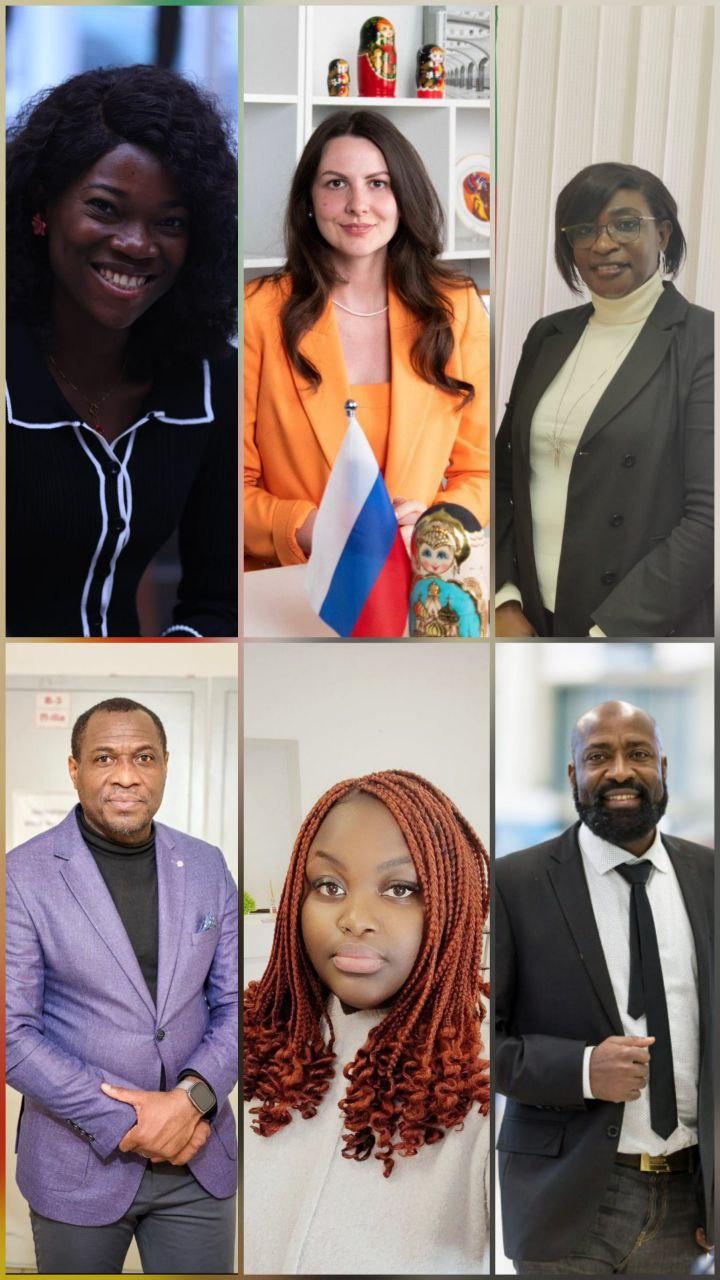
On the eve of March 8, the Cameroonian Diaspora (Diaspocam) and the “African Business Club” together with Russian women’s organisations, held a special online conference under the theme: “How to Succeed as a Woman in Russia”, which brought together over a hundred participants from different regions, including Africa.
The discussion was dedicated to the challenges of adaptation, career prospects, health, and spiritual security of a fast-growing number of young African women living in the Russian Federation. The conference was moderated by Louis Gouend, a specialist in business communications between Russia and Africa, President of the African Business Club, and an expert of the Council of Russia-Africa Cooperation under the State Duma, lower chamber of Russian legislators.
Louis Gouend congratulated the women participants while extending to them good health, wisdom, and new achievements. The main goal of the conference was to create a space of trust and exchange views on the full spectrum of women’s multidisciplinary approach to questions.
On adaptation and legislation: Alina Andrukh, Director of the International Department, spoke on the topic “Global Adaptation of Foreign Citizens in Russia.” She thoroughly examined educational trajectories for women, employment opportunities, and new legislative realities that foreign women need to consider when building a career in the Russian Federation.
The speaker further placed special emphasis on how to avoid getting into trouble, complying with Russian laws, and protecting one’s rights.
Health Without Barriers and Support Centres: One of the most anticipated speeches was given by Ekaterina Glok, a midwife by profession. In her presentation on “The Health of an African Woman in Russia,” she touched upon the delicate topics of reproductive and sexual health. The expert gave practical advice on how to overcome the language barrier and shyness when visiting a gynaecologist, and explained the specifics of the Russian healthcare system for foreign patients.
Ekaterina, however, reminded the women of the importance of regular medical check-ups: visiting a doctor, at least, once a year is necessary even in the absence of complaints. She informed the participants about the existence of support centres for women and single mothers, where they can turn to in difficult life situations. Additionally, the speaker announced her upcoming working missions in the Republic of Cameroon, planned for May 2026, and gave many practical tips on maintaining women’s health.
Social and Cultural Challenges – Warning About Dangers: An important block of questions concerning safety and conscious motherhood was highlighted by Mme Zima épouse Ndong Toung Celestine Charlotte, Cultural Advisor at the Embassy of Cameroon. She had a frank conversation, warning the girls about scammers and dishonest individuals offering attractive working conditions, behind which often lie indecent earnings and dangerous situations.
The Advisor reminded that for those who came to Russia to study, education should remain their main priority. She urged lady students to be vigilant, not to give in to dubious offers, and to postpone questions of pregnancy and starting a family to a later period, after completing their studies. She touched upon the legal and moral aspects of unwanted pregnancy, calling on the girls to engage in conscious life planning.
Economic Independence and Earning Opportunities: Luciana Tchami, a member of the executive bureau of Diaspocam, a non-profit social organisation, presented a report on “Women’s Capabilities: Professions and Part-Time Jobs for Young Women in Russia.” She gave examples of successful strategies for earning money and building a career within the conditions of the Russian labour market that are accessible to foreign students and young professionals.
The speaker detailed specific areas of work: young women can take short-term training courses and work in beauty salons (manicure, pedicure); many cafes and restaurants offer convenient part-time jobs. Luciana also mentioned specialised websites with attractive conditions for job seekers and opportunities for remote work: becoming a freelancer and helping with tasks online, for online stores, and in other areas.
Spiritual Support: A Reminder of a Woman’s Value. The conference concluded with Pastor Gustave Mbeng, responsible for charity at Diaspocam. His prayer-speech was dedicated to women’s rights and spiritual awakening. As a pastor, Mbeng reminded the participants that woman is the last and most ideal creation of God, perfect in all parameters of the universe. He emphasised that women are more beautiful and harmonious than men, and urged the girls to take care of themselves and not to distance themselves from God, so that there would be fewer difficulties and questions in life.
Pastor Gustave further paid special attention to the theme of preserving life. He took a stand against abortion, reminding that every child is a creation of God, and in the eyes of the Almighty, there is no such concept as abortion. If pregnancy does occur, it is important to preserve the child’s life and trust in God’s providence.
Technical organisation, moderation, translation and coordination of the conference were provided by Iness Zengue Abeng, President of the Association of International Students “Russia-Africa,” and Belle-Grâce Euphrasie, Dean, who acted as interpreter during the online event.
Conclusion and Future Plans: At the end, Louis Gouend extended gratitude to all participants, speakers, and presenters for the warm and trusting atmosphere.
The conference was held in an open dialogue format on the”Yandex Telemost” platform, which allowed women from different parts of Russia to ask questions live and receive moral support. Following the meeting, the organisers decided to hold such an online gathering, including organising a series of meetings not only for women but also for foreigners living in Russia.
The topics of future conferences will aim at education, open discussions, and debate on issues important for Africans in the Russian Federation: knowing one’s rights, being able to avoid unpleasant situations, behaving correctly in difficult life circumstances, and preserving cultural and spiritual identity.
Until now, prejudice and reactionary attitudes have denied full-fledged civic rights to millions of women, who are considered as workers, mothers, family partners, and citizens worldwide. Nevertheless, International Women’s Day, with its chequered history, is a public holiday in several countries. The United Nations observes the holiday in connection with a particular issue, campaign, or theme in women’s rights across the world.








By Kestér Kenn Klomegâh
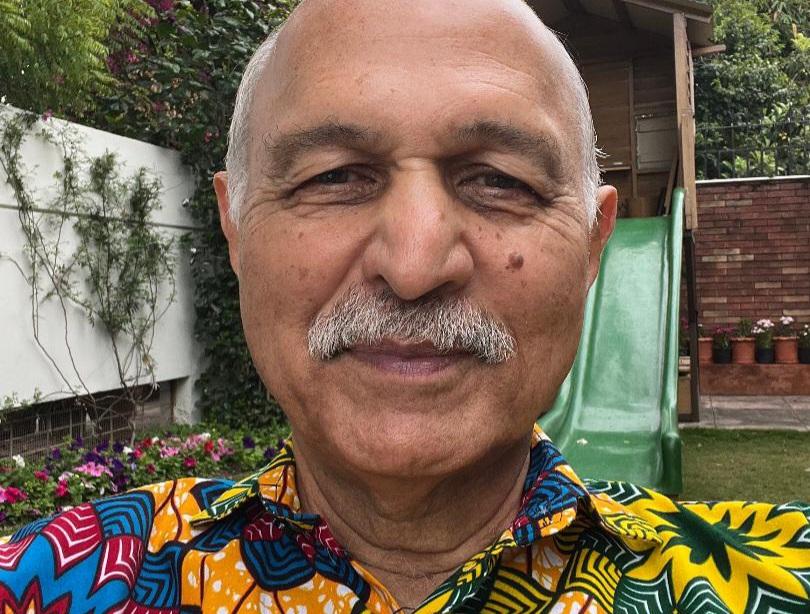
In an interview, Senator Mushahid Hussain, President of Pakistan-Africa Institute for Development and Research (PAIDR), explicitly offers a few important insights into the US-Israeli war on Iran and its implications for BRICS+ and Africa. Here are the interview excerpts:
What’s your interpretation of the US-Israel war on Iran, in the context of developments in the Middle East region?
The US-Israel illegal and unwarranted war on Iran was spearheaded by [Benjamin] Netanyahu (Prime Minister of Israel) and actively supported by [Donald] Trump (President of USA) as a Joint Operation with three fundamental goals: a) decimate the Islamic Revolutionary Regime; b) reshape the Middle East as part of Zionism’s ‘Greater Israel’ Project; c) preclude any possibility of establishing a Palestinian State with Jerusalem as its capital.
What is your assessment of Iran’s joining BRICS+ in 2025, China’s and Russia’s roles as members of this association, in this US-Israel war with Iran?
China and Russia have played, by and large, a low-key diplomatic role in supporting Iran but without any active political initiatives. BRICS is divided from within, as India is keen to curry favour with the USA and avoids close association with BRICS since the time that Trump attacked BRICS last year. But China & Russia are clear political beneficiaries of the war as American prestige is at an all-time low, having got entangled in an unwinnable war, resulting in weakening of the US ‘sole superpower’ image.
As an Asian expert, how would you characterise Africa’s reactions? And do you think that reactions were objectively authentic, basing perspectives broadly on Arab and Middle East contributions to Africa’s development?
Africa’s reactions to the war are primarily through the prism of the Global South, viewing Iran as resisting American-Israeli hegemonic designs, as, for example, manifested in two examples: South Africa’s rejection of American pressures to wean South Africa away from its support for Iran. Plus, Somalia joined Pakistan and China in supporting the Russian resolution in the UN Security Council seeking an immediate ceasefire and negotiations to halt the War, despite strident Western/US opposition to the Russian resolution.

By Adedapo Adesanya
The Director-General (DG) of the World Trade Organisation (WTO), Mrs Ngozi Okonjo-Iweala, has said the global trading system is experiencing the worst disruptions in the past 80 years.
The trade body chief warned about the consequences as the WTO ministerial conference opened Thursday in Cameroon.
“The world order and the multilateral system we know has irrevocably changed,” she said, adding: “We cannot deny the scale of the problems confronting the world today.”
The organisation’s 166 members appear deeply divided as trade ministers gather in the Cameroonian capital for the WTO’s top conference, amid global economic turmoil linked to the Middle East war.
Over four days in Yaounde, WTO members will try to revitalise an institution weakened by geopolitical tensions, stalled negotiations, and rising protectionism — against the backdrop of the war in the Middle East, which poses a serious threat to international trade.
“The scale of the problems confronting the world today, even before the conflict in the Gulf, destabilised trade in energy, fertiliser and food,” Mrs Okonjo-Iweala said.
“National governments and international institutions alike have been struggling to navigate rising geopolitical tensions, intensifying climate pressures, and rapid technological change.
“Accompanying these shifts has been an increasingly loud questioning of multilateralism,” she added.
Mrs Okonjo-Iweala said these disruptions were just one symptom of broader upheavals shaking the international order created after World War II to prevent a repeat of the disasters of the first half of the 20th century.
“It feels appropriate that at the moment when the world is in turmoil with conflict in the Middle East, Sudan, Ukraine, and elsewhere, at this time of great disruption and uncertainty, we have gathered in Africa to discuss the road ahead for the global trading system,” she said.
“Africa is the continent of the future.”
WTO ministerial conferences are typically held every two years. The current edition in Yaounde is the second to be held in Africa, after Nairobi (Kenya) in 2015.
By Kestér Kenn Klomegâh
The United States-Israeli war in the Islamic Republic of Iran is shattering Africa’s economic landscape and leaving emotional devastation. Europe is fractured, but completely. France has taken the initiative to create a platform in Nairobi, the capital of Kenya, located in East Africa. More than 2,500 corporate executives from across the continent, spanning 55 African countries, would take up the challenge during a two-day in-depth discussion on the existential threat of the Middle East conflict. Participating business leaders’ engagement over geopolitics, finding new paths to massive new investment, would be the central theme, while expressing commitment to forge new mechanisms for economic cooperation between Africa and France. The high-ranking guests from regional economic blocs are expected to join, teaming up to share practical thoughts and build awareness beyond the current Middle East conflicts and their impact on Europe and Africa.
The common goal: new perspectives on innovation, new business directions in the context of geopolitical threats. Based on Africa’s untapped natural resources and human capital, communicating clearly with business executives and political leaders, high-ranking speakers plan to dissect and design the future. Strengthening Africa’s and France’s economic cooperation forms the irreversible target and will ultimately be incorporated into the conference declaration. Cautious reflection indicated that the relationship between Africa and France is still pragmatic, as both agreed to renew and thoroughly review the existing economic potentials at the two-day conference in Nairobi.
Experts and Conference coordinators told this article’s author that the French government and business circles involved in trade and economic cooperation with African countries were invited to participate, lay out their comprehensive business architecture. Africa and France will focus on the developing manufacturing and extractive industries, setting up special economic zones, energy and transport infrastructure, digitalisation, and the agro-industrial complex—education and training in the sphere of entrepreneurship.
France has already worked out a financial mechanism to support joint business across Africa, while Africa’s financial institutions pledge their commitment, plan corporate strategies and support for joint investments in the localisation of production chains in Africa, which covers both agricultural and mineral processing.
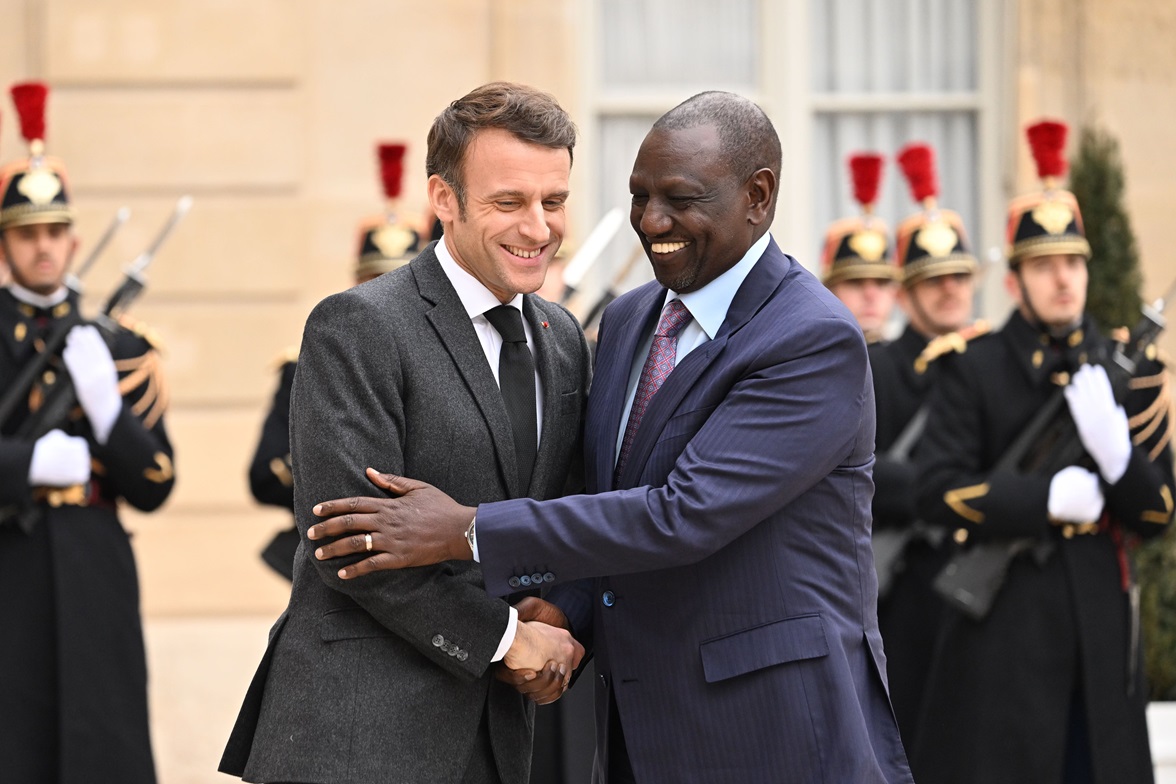
President William Ruto and French President Emmanuel Macron both acknowledged that the strategic pathway should focus on unlocking Africa’s potential, driving sustainable industrialisation, and targeting economic growth across Africa. Harnessing the untapped resources and utilising the huge human resources is France’s priority in consolidating the current bilateral engagement and collaboration.
In a statement, President Ruto underlined tthat he summit reflects a shared commitment to strengthening bilateral ties and deepening multilateral cooperation to advance global goals. The agenda will focus on key areas, including reform of the international financial architecture, energy transition, green industrialisation, the blue economy and connectivity, artificial intelligence, sustainable agriculture, and health. It will spotlight the role of young entrepreneurs, civil society, and international organisations in shaping solutions to pressing global and regional challenges. The May summit is described as part of the renewal of relations between France and Africa, emphasising genuine partnerships and shared progress.
The agenda will focus on key areas, including reform of the international financial architecture, energy transition, green industrialisation, the blue economy and connectivity, artificial intelligence, sustainable agriculture, and health.
In addition to the May summit by France, the European Union countries are increasingly strong economic partners for many African countries. It therefore beholds African leaders and business people to necessarily explore available possibilities and windows that have been opened. The EU has unveiled €300 billion ($340 billion) alternative to China’s Belt and Road initiative — an investment programme the bloc claims will create links, not dependencies.
In an official document, it said the European Commission is examining:
– Support AfCFTA implementation and the green transition;
– Improve trade and investment climate between the EU and Africa;
– Reinforce high-level public-private dialogue;
– Enhance long-term dialogue structures between the EU and African Business Associations;
– Unlock new business and investment opportunities, including in the areas of manufacturing and agro processing, as well as regional and continental value chains development.
It is further included in the joint communication of the European Commission (EC) entitled “Toward a Comprehensive Strategy with Africa”, which sets forth what the EU plans with Africa. The Joint EU-Africa Strategy takes into cognisance the most common interests such as climate change, global security and the achievement of the United Nations Sustainable Development Goals (SDGs).
Just as China, India and the United States, so also France, and other European countries are exploring emerging opportunities offered by the African Continental Free Trade Area (AfCFTA), which provides a unique and valuable access to an integrated African market of 1.5 billion people. In practical reality, it aims at creating a continental market for goods and services, with free movement of business people and investments in Africa.
Looking ahead, France intends to capitalise on Africa’s most transformative economic sectors and make strategic moves by collaborating, as a mutual partnership remains dynamic and adaptable. Despite growing geopolitical tensions, France’s approach and its long-standing ties still offer an alternative partnership model that many African leaders find very appealing.
The challenge for the future will be to ensure these ties evolve in ways that serve Africa’s development needs, while navigating the increasingly complex global politics. As Africa is indiscriminately open for business, on May 11-12, 2026, African and French Heads of State and Government meet together to chart a new path for innovation, growth, and cooperation. Kenya will hold this investment summit for France to position Africa as a key partner in global innovation and economic development while strengthening bilateral ties with France and advancing Africa’s collective agenda on the international stage.




-
 Feature/OPED6 years ago
Davos was Different this year
-
Travel/Tourism10 years ago
Lagos Seals Western Lodge Hotel In Ikorodu
-

 Showbiz3 years ago
Estranged Lover Releases Videos of Empress Njamah Bathing
-
 Banking8 years ago
Sort Codes of GTBank Branches in Nigeria
-

 Economy3 years ago
Subsidy Removal: CNG at N130 Per Litre Cheaper Than Petrol—IPMAN
-

 Banking3 years ago
Sort Codes of UBA Branches in Nigeria
-

 Banking3 years ago
First Bank Announces Planned Downtime
-

 Sports3 years ago
Highest Paid Nigerian Footballer – How Much Do Nigerian Footballers Earn