
World
Russia–Africa: Thousand Prospects for Energy Cooperation

By Kestér Kenn Klomegâh
The African continent is one of the fastest-growing energy markets in the world. This is due to the growing economic and demographic potential of African countries, as well as the efforts of many of them to combat climate change. Despite having passed through a long period of tumultuous post-colonial era, Africa’s efforts to ensure effective energy cooperation with leading global powers has not been an easy journey down the years. Until today, more than half of the estimated 1.4 billion still have no access to electric power for domestic utilization while industries continue suffering from frequent power outrages (interruptions), thus adversely affecting the level of industrial production across Africa.
Several summits, conferences and whatever have offered Africa the lee-way to network for potential external collaborations and tackle its ultimate energy deficits. Some energy experts still believe that African leaders have faced multiple obstacles in resolving the energy question on the continent. These obstacles include the outright inability to prioritise the energy sector and redirect funds in securing energy both for domestic and industrial use. Some experts also say African countries lack the adequate funds needed for energy, while the style of approach grossly differs from one country to the other depending on objective assessments of existing concrete conditions across Africa.
Russian President Vladimir Putin at the plenary session of the Russian Energy Week international forum, on 11th October 2023, spoke at a considerable length, briefly touched on Africa. Putin stressed the readiness to support Africa with its steps in ensuring energy security on the continent. His arguments were based on the logical comprehensive Russia-Africa energy cooperation and also referred to the fourth power unit at the El Dabaa NPP in Egypt which is being built ahead of schedule.
This is Russia’s illustrative flagship project on the African continent, but it is not only limited to the construction of the facility. Russia is seriously cooperating with Egyptian specialists to develop the nuclear energy industry in that North African country from scratch, which includes training personnel, providing maintenance support and so on. In other words, Russia is supporting Egypt to embark on the path to sovereign energy development.
This integrated and systemic approach is one of Rosatom’s main competitive advantages, not to mention its traditionally high safety and reliability standards. In reiterating its energy status, Russia is fully independent in terms of technology, both at the construction stage and during the maintenance of nuclear power plants. “At the same time, we are not against the participation of companies from third countries in the construction of nuclear power plants that we have designed,” explained Putin at the plenary session. It was the sixth Russian Energy Week (REW) held under the theme ‘The New Reality of Global Energy: Building the Future’ and gathered over 4,000 participants from more than 60 countries, including government representatives, executives of major energy companies and organisations, scientists and experts.
The main objective was to critically assess the trends of and prospects for global energy, exchange opinions on the challenges the global fuel and energy sector faces and, further discuss how to ensure the long-term stability of the global energy markets. With Moscow as the host, the REW placed emphasis on the global economy within the context of transitioning to the multipolar model with several growth centres, and the importance of each country defined by how it responds in the framework of the irreversible geopolitical processes, and how efficiently it can defend its economic, industrial, technological and energy sovereignty, readjust investment, trade and cooperation ties.
Of course, there are other options, as part of the energy mix, available such as hydroelectric and solar power. China and India are offering Africa solar power to augment the existing energy supply in the continent. Russia’s RusHydro, with a hyperbolic interest in Africa, has been involved in designing and building more than 350 facilities in 54 countries around the world. Today, the company supplies its technological solutions to 17 countries, including countries in Africa, the Middle East, Central Asia and Latin America, boosting technology transfer and providing engineering support for the entire service life of its plants, which is 50–70 years. That is, the company enters into long-term contracts, which help to establish strong ties not only between companies but also between countries.
Nevertheless, Africa holds breath for Russia’s nuclear power technology. The State Energy Corporation popularly known as Rosatom has bilateral agreements with nearly 20 African countries. The engineering, procurement and construction contract for the El Dabaa NPP was signed at the end of 2016. The project calls for building four 1,200 MW generating units with VVER-1200 reactors. But the agreement signed with Egypt dated back to November 2015, and Rosatom practically started to build the third unit at El Dabaa in May 2023. The construction of all four units at the El Dabaa Nuclear Power Plant (NPP), requires financing of up to US$30 billion (the Russian loan of US$25 billion covers 85% of the costs and Egypt would finance the rest) and is expected to be completed by 2028-2029. Under the agreement, Egypt is to start payments on the loan, which is provided at 3% per annum, from October 2029.
A project on such a scale is unique for Egypt, so the partners have adopted a meticulous approach to establishing their mutual obligations. Monitoring and research show that other African countries wishing to adopt Russian nuclear technology grossly lack finance, while in the interim Rosatom offers support for the training of specialists in educational institutions in the Russian Federation.
Without much doubt, Russia has, long ago, expressed the desire to build an energy base to overcome energy shortages and deep-seated deficits across Africa. The partnership between Russia and African countries has gained additional momentum and is reaching a whole new level. With South Africa, the agreement for the large-scale nuclear power plant (NPP) development was initially signed during the International Atomic Energy Agency General (IAEAG) Conference in Vienna between Russia’s Rosatom State Atomic Energy Corporation director general Sergey Kiriyenko and South Africa’s Energy Minister Tina Joemat-Pettersson.
The construction of the nuclear plants has had a chequered history. Due to the opaque nature of the deal signed with Russia, South Africa has not achieved the expected success with its nuclear project under Jacob Zuma. For the last twenty years, South Africa has not been able to make investments in new power plants, which has resulted in a severe power crunch. Generally, power outrages, with frequent crippling blackouts, still present a huge and real constraint to industrial growth in South Africa.
Knox Msebenzi, Managing Director of the Nuclear Industry Association of South Africa (NIASA), a body committed to promoting the highest standards in the development and application of nuclear technology, in discussing the impact of challenges on the country’s economy and a way out of the power generation difficulties, recommended that South Africa pursue an energy mix that includes coal, wind, hydro-power, nuclear and renewables going forward.
There are no silver bullets when it comes to energy sources generally across Africa. Criticisms of nuclear relating to costs and project management (long delays with huge projects) are being addressed with Small Modular Reactors. Nuclear power will not come online today as it takes time to implement, but countries do not plan for now but for the future.
Perhaps, the most important way forward is for African countries to with Small Modular Reactors. Certainly, there are attributes of resorting to these SMRs. The International Atomic Energy Agency (IAEA) simply describes Small Modular Reactors as advanced nuclear reactors that have a power capacity of up to 300 MW(e) per unit, which is about one-third of the generating capacity of traditional nuclear power reactors.
SMRs, which can produce a large amount of low-carbon electricity, are: Small – physically a fraction of the size of a conventional nuclear power reactor.
Modular – making it possible for systems and components to be factory-assembled and transported as a unit to a location for installation.
Reactors – harnessing nuclear fission to generate heat to produce energy.
Many of the benefits of SMRs are inherently linked to the nature of their design – small and modular. Given their smaller footprint, SMRs can be sited in locations not suitable for larger nuclear power plants. One of the challenges to accelerating access to energy is infrastructure – limited grid coverage in rural areas – and the costs of grid connection for rural electrification.
Efforts to achieve the target of universal access to energy, SDG 7, have made visible progress; however, gaps are still prevalent, mainly concentrated in remote and rural regions. As global efforts seek to implement clean and innovative solutions, the increased use of renewable energy coupled with the introduction of SMRs has the potential to fill such gaps, says the International Atomic Energy Agency (IAEA).
At the last Russian Energy Week, Burkina Faso and Mali (both landlocked French-speaking West African countries) became the latest to be added to the long list, as both signed Memorandum of Understanding (MoUs) with Rosatom. As one of the least electrified countries in the world, Burkina Faso and Mali signed the declaration of intent with Russia’s Rosatom to construct nuclear power plants, a strategy to achieve 95% electricity access for urban areas and 50% for rural areas by 2030.
The deal, which of course involves a lengthy process including providing suitable site and infrastructure for the project, has enjoyed worldwide media publicity. The agreement was, however, a culmination of talks with the Burkinabe military ruler Capt. Ibrahim Traore had with President Putin on 29th July 2023 in Moscow, during the Russia-Africa Summit. A similar agreement was signed with Mali, like Burkina Faso, on the same occasion when both outlined its immense energy needs and geostrategic position in the region, to foster energy collaboration.
Without much doubt, Mali and Burkina Faso appreciate support from Russia. President Vladimir Putin met with Interim President of Burkina Faso Ibrahim Traore at the Constantine Palace in St. Petersburg on 29 July 2023, both agreed to strengthen the partnership. Burkina Faso treats Russia with sympathy and interest. In December 2022, the Prime Minister of the interim government made a working visit to Russia. Talks between defence ministries were held in June as it is now conducting a special military operation there.
“In this context of building bilateral relationships, we certainly need to generate more energy – this is an important item on the agenda. If possible, we would like to have a small nuclear power plant for electricity generation in the country. We have a strategic location – we are in the very centre of West Africa. This whole region is short of energy. it would be able to generate energy for the entire subregion,” Burkina Faso Ibrahim Traore told Putin during their bilateral talks. (Kremlin, July 29, 2023)
Russian Energy Week reports that “Russian state nuclear corporation Rosatom has signed a memorandum of understanding with Burkina Faso and another with Mali on cooperation in the field of the use of nuclear energy for peaceful purposes. The agreements were signed on 13th October in Moscow on the sidelines of the 6th Russian Energy Week Forum.”
This collaboration is a testament to the commitment to driving innovation within the nuclear energy sector in Africa. By taking this step, it emphasizes the importance of dispelling old stigmas surrounding nuclear energy and applauds proactive efforts to explore innovative nuclear technologies. It further shows Russia’s inroads in West Africa are a welcome sign that Africa too will be benefiting from multipolarity in the coming years. Burkina Faso is one of the least electrified countries globally, with only about 20% of the population having access to electricity, according to the International Energy Atomic Agency. National electrification for Mali is slightly higher with about 30% to 35%.
According to reports compiled by Russian Ministry of Foreign Affairs, Russia has also signed for such construction of nuclear plants with several African countries but has yet to begin implementing its side of the agreements. These include agreements with Algeria (2014), Ghana (2015), Ethiopia (2019), Republic of Congo (2019), Nigeria (2012, 2016), Rwanda (2018), South Africa (2004), Sudan (2017), Tunisia (2016), Uganda (2019) and Zambia (2016). Memoranda of Understanding (MoUs) were signed with Kenya in 2016 and Morocco in 2017.
Bloomberg reported back in 2018 that Russia has signed agreements with Nigeria to build and operate a nuclear power plant in the oil-rich West African nation that has a deficit of reliable power and faces security challenges from Islamist militants in the far northeast.
Feasibility studies for the plant and research centre construction will include site screening, capacity, financing, and time frames of the projects, state-owned Russian nuclear company Rosatom said in an emailed statement to Bloomberg. That report said several African nations signed intergovernmental agreements on cooperation in the field of the peaceful usage of nuclear technologies. Nigeria in 2015 was in talks with Rosatom to build as many as four nuclear power plants costing about US$20 billion, the Nigeria Atomic Energy Commission said at the time.
Nigeria, Africa’s most populous nation, distributes an average of 4,500 megawatts of electricity. Half the output of the Egbin power plant, the nation’s biggest, is lost because of inadequate transmission infrastructure, its chief officer said. Rosatom was seeking to build nuclear power plants in other countries on the continent including South Africa.
Reports from the first summit in 2019 indicated that Russia and Ethiopia have signed an intergovernmental framework agreement on cooperation in the field of peaceful uses of atomic energy. It was reported that the document was signed on the sidelines of the Russia-Africa Economic Forum by Rosatom Director General Alexei Likhachev on behalf of Russia, and by Ethiopia’s Minister of Innovation and Technology Getahun Mecuria Kuma, on behalf of Ethiopia.
Rosatom is the company behind the Centre of Nuclear Science and Technology (CNST) under construction in Chongwe, Zambia, under the 2018 engineering, procurement and construction contract signed in 2018 between the Zambian government and Rosatom. These areas include: fine tuning the projects for the construction of the Center for Nuclear Science and Technology (CNST) and Nuclear Power Plant (NPP) on the territory of the Republic of Ethiopia, developing nuclear infrastructure by international recommendations; applying nuclear and radiation safety regulations; implementing fundamental and applied research for peaceful uses of nuclear technologies; producing and using radioisotopes in various industries, healthcare and agriculture; cooperating in the field of radiation technologies and nuclear medicine applications and education, training and retraining of specialists for the nuclear industry.
The Intergovernmental agreement creates a legal framework for establishing cooperation between Russia and Ethiopia in a wide range of areas. In explicit remarks, Alexei Likhachev noted: “We are glad to provide Ethiopia with access to more than 70 years of experience in the peaceful use of nuclear technologies in Russia and hope that the cooperation will contribute to the sustainable development of Ethiopia and improve the quality of life of the nation.”
Cheikh Niane, Permanent Secretary for Energy, Secretary General of the Ministry of Petroleum and Energies, Senegal and NJ Ayuk, Executive Chairman of the African Energy Chamber, both have argued seriously that African states have strong potential to construct plants by 2030. Algeria, Morocco, and Nigeria could also operate research reactors after having expressed interest in the nuclear plants. Kenya and Sudan have worked with the IAEA and supplier countries such as Russia and China. (African Energy Chamber, October 8, 2023)
“We encourage these states to continue the good work, and for others to accelerate their talks with the IAEA. Even a single SMR can power an entire city for decades, and scaling them will only grow easier. Nuclear remains a safe, clean, and reliable long-term investment – and our strongest weapon against our rising population’s demand for energy,” underscored Cheikh Niane, Permanent Secretary for Energy, Secretary General of the Ministry of Petroleum and Energies, from the Republic of Senegal in West Africa.
Countries like Ethiopia, Kenya, Niger, Rwanda, Senegal, Uganda, Tanzania and Zambia are currently working with IAEA which is supporting them as Embarking Countries in Establishing National Infrastructure for Research Reactors program and this is progressing well considering the milestones approach of the IAEA.
The second Russia-Africa Summit took place in the Russian city of St. Petersburg from July 27-28. The summit saw participants sign several multilateral and bilateral accords. The accords are geared towards increasing cooperation at the highest level and promoting constructive dialogue within the framework of existing international, regional, multilateral and bilateral Russian-African mechanisms on a wide range of strategic, political and economic issues of mutual interest.
Despite the presence of Russian companies including Lukoil. Rosneft, and Gazprom in Africa, NJ Ayuk says African oil producers are still disappointed at the slow pace of Russian investment in the energy industries. “There needs to be stronger cooperation between Africa and Russia to fight energy poverty and climate change. Africans want to get married, Russians just want to date, so we need to watch this dating game,” NJ Ayuk, Executive Chairman of the African Energy Chamber-AEC said.
Quite apart from that, a Senior Presidential Advisor from the Republic of Ghana, Yaw Osafo-Maafo, has also underscored the imperative of making nuclear energy affordable to catalyse its widespread adoption as the continent continues its exploration of nuclear energy as a means to meet the burgeoning energy demands and secure a long-term energy future.
According to his interpretation, nuclear energy offers a dependable and sustainable power source, which is pivotal for driving economic growth and enhancing the standard of living for the population across Africa. But the point closely relates the importance how to adopt the latest cost-alternative technology, the keenness of using nuclear energy and making efforts to minimize its associated financial risks by being wary of things like predatory financing and unscrupulous suppliers.
Many policy researchers and analysts have written and reasonably argued about Russia’s financial capabilities and inconsistent approach (ref: Situation Analytical Report 2021) in implementing bilateral policy projects in Africa. Contrary to negative views held previously, a lot more important issues have received high attention since the first (October 2019) and the second (July 2023) African leader’s summits.
On the other side of the arguments in favour of Russia, Ryan Collyer, the Regional Vice-President of Rosatom for Sub-Saharan Africa, explains that energy (construction and repair of power generation facilities as well as in peaceful nuclear energy and the use of renewable energy sources) is an important area of the economic cooperation between Russia and Africa. That Russia can play a key role in the construction of nuclear power plants in African countries, as three African countries are currently mining uranium in industrial quantities – Namibia, Niger and South Africa.
In particular, Ryan Collyer further explained that a nuclear power program is a complex undertaking that requires meticulous planning, preparation, and investment in time, institutions, and human resources. The development of such a program does not happen overnight and can take several years to implement. There are various scenarios for energy development and prospects for the use of eco-friendly and sustainable energy sources.
According to his explanation, another critical question is the cost. Most of the funds are needed during the construction period. Building a large-scale nuclear reactor takes thousands of workers, massive amounts of steel and concrete, thousands of components, and several systems to provide electricity, cooling, ventilation, information, control and communication.
More often, Africa is always described as endowed with enormous resources, and yet poor, in terms of infrastructure and industrialization. Half the population still live in abject poverty, without access to energy to drive simple rural industries and for domestic use. These should be blamed on the system of governance. Besides, there are fundamental rhetorical questions here. What public policies are African countries adopting to ensure sustainable energy development? How do the activities of Russian companies fit into this context? What challenges are there along this path? What financial support measures can be provided for projects?
Quite recently, Eng. Mohamed Hamel, Secretary General of the Gas Exporting Countries Forum, also noted that energy drives progress across all sectors of society. From powering industries that bolster economies to providing the means for essential services such as healthcare, education, and clean water, reliable energy sources are paramount. For Africa, blessed with a young demographic and abundant natural resources, yet plagued by energy poverty, socio-economic development is an overriding priority. With 40% of the continent’s population without access to reliable electricity, the energy needs are staggering to support the increasing population from 1.4 billion today, estimated to rise to 2.5 billion in 2050. (Weekly African Executive, October 23 – 27, 2023)
NJ Ayuk, Executive Chairman of the African Energy Chamber, shared the same views with Eng. Mohamed Hamel, Secretary General of the Gas Exporting Countries Forum, and in addition stressed that “The development of energy cooperation within the framework of international relations is extremely relevant today. The realization of full-fledged interaction in the energy field largely depends on the parties involved. The African Energy Chamber is a reputable institution capable of ensuring quality dialogue when discussing energy issues from Africa’s perspectives.”
The South African-based African Energy Chamber will provide mutual consulting, information, and expert support. One area of cooperation will involve promoting existing partnerships and exploring new long-term collaborations between representatives of the business communities of both parties to attract investment in African and Russian energy projects. Noticeably, it has already been maintaining a dialogue in investment and identifying sources of finance for energy projects. Soon Africa will have its own Energy Bank.
Deputy Prime Minister of the Russian Federation, Alexander Novak, said in comments with strategic interaction with like-minded people, one does not need to waste time trying to find a common language. Thus, special attention could be paid to the prospects for energy cooperation between Russia and African countries, as well as Russia and China. But, do China and Russia have the main keys to Africa’s low-energy existence, the digital transformation of energy and the introduction of modern energy solutions, especially at this time of global development?
An improved practical Russia-Africa collaboration could ensure that energy development is accelerated and in pursuit of making energy poverty history in Africa by 2030. With this targeted year, every resource available on the continent needs to be maximized. Russia could drive long-term energy investment and know-how into these resources to a considerable degree to alleviate energy poverty and further ensure the continent benefits from its natural resource wealth. Factors such as inadequate funding and energy-producing infrastructure are slowing down growth in the sector. At the same time, there is that broad perception that Russia shares its best practices with Africa to navigate through these decades-long challenges and utilize its untapped energy security opportunities across the continent.
Judging from the above discussion, it could be concluded that substantial investment in energy infrastructure development is required to realise Africa’s economic potential and attain acceptable industrial growth. With the current rapid geopolitical changes, Africa is on the rise, drawing unprecedented focus from global players which points to the fundamental fact that it is an exciting time for the continent. Therefore it is paramount to address its renewable energy supplies, particularly solar energy as they are vital ingredients for further continental growth. This is an extremely important factor for the African Continental Free Trade Area (AfCFTA) which aims at expanding intra-African trade and is expected to strengthen the size of Africa’s economy to US$29 trillion by 2050.
As a result of an incredible transformation and significant contributions, Africa’s geopolitical weight in the world is growing now. Despite the existing challenges and multiple difficulties facing the African energy sector, many foreign companies are flexing their tentacles there in Africa, exhibiting confident readiness to ensure energy security, laying the long-term foundations for the development of the economy, industry, agriculture, transport and infrastructure, and for improving the quality of life for the estimated 1.4 billion people in Africa, which falls within achieving the 7th UN Sustainable Development Goals.









By Kestér Kenn Klomegâh
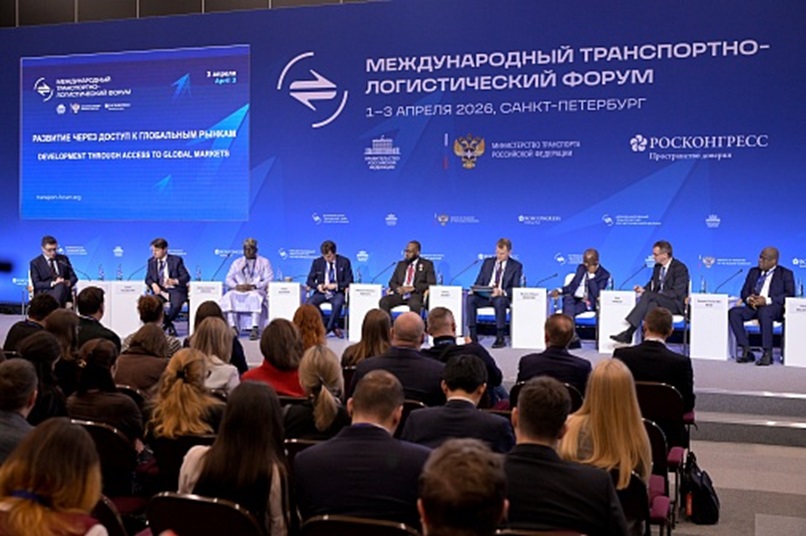
At the plenary session under the theme “Development Through Access to Global Markets” organised during the first International Transport and Logistics Forum held in St. Petersburg, both Russian and African speakers have acknowledged, in their high-quality presentations, the importance of fostering understanding of transport innovations, shifting investment and the possibility of addressing current infrastructure challenges for economic growth.
In promoting comprehensive cooperation in the transport and logistics sphere, Deputy Minister of Transport of the Russian Federation, Dmitry Zverev, stressed that the African continent is one of the fastest-growing regions of the world, demonstrating an average GDP growth rate of 4.5% per year.
According to expert projections, by 2050, Africa’s population will reach 2.5 billion people. To ensure logistical links, it is necessary to build a clear and understandable dialogue with partners, working simultaneously at two levels: at the level of governments, through intergovernmental agreements, and at the level of co-business partnerships. Russian transport corridors guarantee the stability of supplies. Today, there are issues of food security, fertiliser supply and formation of new chains, and other emerging geopolitical challenges facing Africa.
As the guest/main speaker, Zverev explained that Russian companies such as FESCO, RZD, GLONASS and Avtodor are actively involved in this process. This is a unique experience sharing technology and infrastructure solutions in significant volumes. “And frankly, that’s an important image distinction of Russia: we’re not just exporting or selling something – we’re offering technologies and cooperation. Together with technologies, we provide training and prepare national personnel who will work on their transport infrastructure in the future,” asserted Zverev.
Minister of Energy and Infrastructure of the United Arab Emirates, Suhail Mohammed Al Mazrouei, spoke of his country’s decision to invest significant money in the development of its railway infrastructure, with work already underway to connect to Oman by rail and open up new opportunities for freight transportation to Africa and Asia.
“We continue to invest in the development of our country’s logistics network and alternative routes. Russia is an important exporter of raw materials, and development in its regions will contribute to economic growth across the globe. Central Asia is also emerging as a key player, and we are investing in the region’s infrastructure and connecting China to the global economy through Russia and the Middle East,” he said.
Minister Delegate for Maritime Economy of the Ministry of Maritime Economy, Fisheries, and Coastal Protection of the Togolese Republic, Kokou Edem Tengue, spoke of the importance of understanding the African perspective on changing maritime routes as the situation around the Suez Canal and the Strait of Hormuz creates new opportunities for West Africa.
The Port of Lomé, the largest container port in Sub-Saharan Africa, handles approximately 30 million tonnes of goods annually, and its importance for the region is difficult to overstate. “We are actively working with Mali, Burkina Faso, and Niger; the Port of Lomé is a key logistics hub for the landlocked nations of the Sahel,” he said. “It should be noted that Africa relies on chemical fertilisers and grain produced in Russia. We believe that the Port of Lomé could be a part of new sea routes between Africa and Russia.”
In his speech, Minister of Transport of the United Republic of Tanzania, Makame Mnyaa Mbarawa, reported on the active modernisation of the Dar es Salaam port. Previously, the depth of the water was 9–12 meters; now it has increased to 12–15 meters. An increase in the number of operators operating in the port is planned. Thanks to these measures, cargo turnover increased significantly, and ship handling times decreased from 10 days to 2–3. This is an important achievement, after all, speed is a key factor for investors.
However, the port cannot function in isolation; it needs modern rail infrastructure. Tanzania’s government is leading the construction of a new railway to Kigoma, and then into Burundi and south, creating a reliable transportation artery. Dar es Salaam will become a gateway to Burundi, Rwanda, Malawi and Zambia, which depend on cargo flow through this port. Therefore, the development of the port and associated railway is of strategic importance in the region.
“In parallel, the modernisation of the TAZARA railway is going on – a historic artery that requires an upgrade. The private sector is actively involved in this work. After revitalisation, this line will become a key link between Dar es Salaam port and Zambia, he stated. The Government of Tanzania will make every effort to implement these projects and will work closely with the private sector. We invite Russian companies – both state and private – to participate in logistics projects and port infrastructure modernisation.”
As far as road safety in Niger is concerned, the country is facing various challenges that require finding ways to improve the situation, according to the Speaker from Niger, Abdurakhaman Amadou. Within the framework of the discussion, he also noted that an important step was to upgrade the car park and road network. As Niger has no access to the sea, the emphasis is on road traffic to ensure the country’s supply.
“We have access to the port of Lome in the Togolese Republic, which remains neutral towards us. However, the Caton port is closed for us, which created serious difficulties as 80% of our exports and imports passed through it. Recently, the situation has started to improve due to the construction of a railway by Nigeria, which will provide us with access to its ports,” Abdurakhaman informed.
In addition, diplomatic relations with Algeria have been restored after a long hiatus, which opens an exit to the Mediterranean. The conference of Islamic states confirmed the intention to build a grand railway linking Dakar and Djibouti across the entire continent from west to east. This railway will partially pass through Niger, which will be an important step in the development of the region’s transportation infrastructure.
President Vladimir Putin, in a message to participants, organisers, and attendees of the International Transport and Logistics Forum, says that Russia is ready to share its experience through joint science and technology programmes and, of course, by training specialists able to ensure the development of transport and logistics in the 21st century, using a new technological foundation. The Transport and Logistics forum was held for the first time on April 1-3 in St. Petersburg, the second-largest city in the Russian Federation.
By Kestér Kenn Klomegâh
The Arab Republic of Egypt, a country spanning the northeast corner of Africa and the southwest corner of Asia, has a highly strategic location and attracts multifaceted interests of foreign players. For decades, Russia has established diplomatic relations with Egypt and has consistently sustained diverse ties with this country. It is no secret that Russia’s lust for the region is primarily due to the strategic importance of the Mediterranean Sea for investment and economic cooperation with the Maghreb region.
Determined to strengthen, particularly, economic cooperation, Russian President Vladimir Putin has maintained regular contacts with his colleague, President of Egypt, Abdel Fattah el-Sisi, mostly discussing both bilateral cooperation and broader regional developments. The current world’s geopolitical development, for instance, the United States-Israeli war on Iran in the Middle East, constitutes one theme both leaders frequently review, attempting to find long-term solutions.
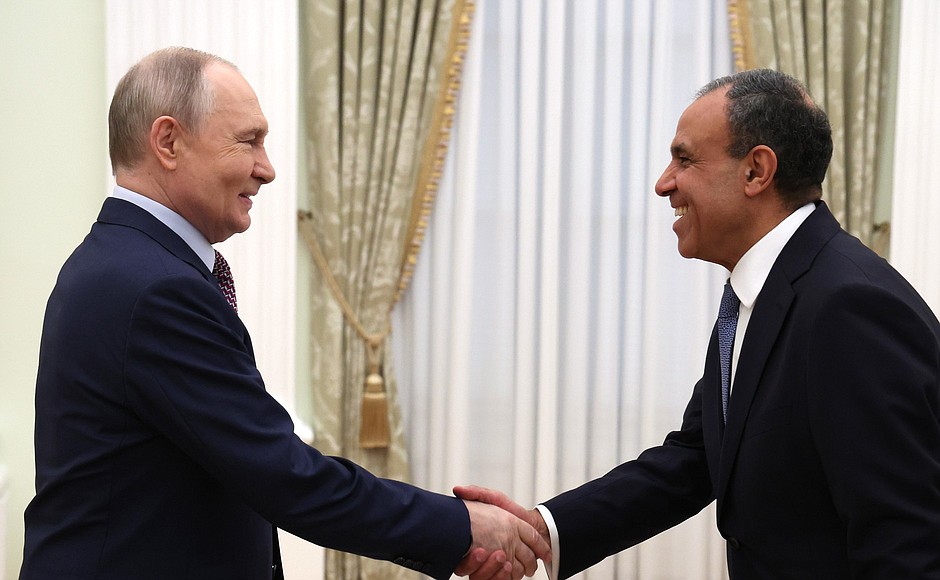
On April 2, Putin met with the Minister of Foreign Affairs, Emigration, and Egyptian Expatriates of the Arab Republic of Egypt, Badr Abdelatty, in the Kremlin – the seat of Russia’s presidency. In attendance during the official talks on the Russian side were Foreign Minister Sergei Lavrov and Presidential Aide Yury Ushakov, while Egypt was represented by Ambassador Extraordinary and Plenipotentiary to the Russian Federation Hamdy Shaaban. Ultimately, there is no need to overstate the importance of this meeting.
Russia’s footprints are expanding in Egypt, highlighting the growing industrial investment and the strengthening of bilateral manufacturing ties by undertaking projects to ensure energy security. At the same time, maintaining regular dialogue remains very important for both leaders.
Putin, speaking with the three-member delegation in the Kremlin, underlined the fact that there are many promising initiatives underway, many of which are already being implemented. He has previously spoken in detail about the construction of a nuclear power plant and the construction of an industrial zone, and over ten major Russian companies have expressed interest in participating in this project.
Nuclear Plants in El-Dabaa, Egypt
The construction of nuclear plants in the city of El-Dabaa, about 320 kilometres northwest of Cairo, the capital of Egypt. It is the first nuclear power plant in Egypt, and will have four VVER-1200 reactors, making Egypt the only country in the region to have a Generation III+ reactor. On November 19, 2015, Egypt and Russia signed an initial agreement, under which Russia agreed to build and finance Egypt’s first nuclear power plant. These are now being carried out, not as a charity project, but with a loan of $28 billion. According to reports, Russia will finance 85% as a state loan of $25 billion, and Egypt will provide the remaining 15% in the form of instalments. The Russian loan has a repayment period of 22 years, with an annual interest rate of 3%.
At the meeting, Putin also raised the construction of an industrial zone in Egypt. There are many appealing and related opportunities in this, regarding having an industrial zone to be located on the banks of the Suez Canal. The industrial zone is also entering a new phase, as Russian auto-manufacturing enterprises are advancing distinctive plans to expand local vehicle production, reinforcing the country’s role as a regional manufacturing hub. The move reflects broader economic linkages between Russia and Africa, particularly in industrial development and supply chain integration.
Conveying Greetings and Reviewing the Middle East Situation
Naturally, the situation in the region remains a shared concern, according to Putin, and further hope that the ongoing conflict will be promptly resolved. “As you know, President Trump also addressed this issue yesterday. Let me reiterate that we are prepared to make every effort to help stabilise the situation and, as they say in such cases, return it to normal,” he stressed during the meeting. In this context, it is particularly important to know Egypt’s assessment as a key country in the Middle East.
Putin reminded the delegation of another Russia-Africa summit, which is planned for October 2026. With high hopes that Egypt will be represented by a strong, high-level delegation. Should the Egyptian President’s schedule allow, he would, of course, ahead of the summit, be very pleased to welcome him to Moscow. Jointly chaired by Vladimir Putin and Abdel Fattah el-Sisi, the first Russia-Africa summit, an important acute phase of the developments with Africa, under the motto of ‘For Peace, Security and Development’, was held for the first time in October 2019, in Sochi, a city located on the Black Sea coast. The idea to hold a Russia-Africa forum was initiated by President Putin at the BRICS (Brazil, Russia, India, China and South Africa) summit in Johannesburg in July 2018.
The head of the Egyptian Foreign Ministry, as traditionally expected, conveyed greetings from President El-Sisi to the Russian president and handed over a written message. President el-Sisi places great value on all aspects of the bilateral cooperation, and is extremely grateful for constructive collaboration on the El Dabaa Nuclear Power Plant, which represents a key milestone in the partnership. Despite the challenges, it is evident that the project is moving forward and will be completed by 2028.
In summary, as Egypt and Russia are reliable and time-tested partners, Putin plans to promote strategic projects, particularly in trade, economics, energy, and food security. With over 107 million inhabitants, Egypt is the most populous country in the Arab world, the third-most populous country in Africa, and the 15th-most populous in the world.

By Kestér Kenn Klomegâh
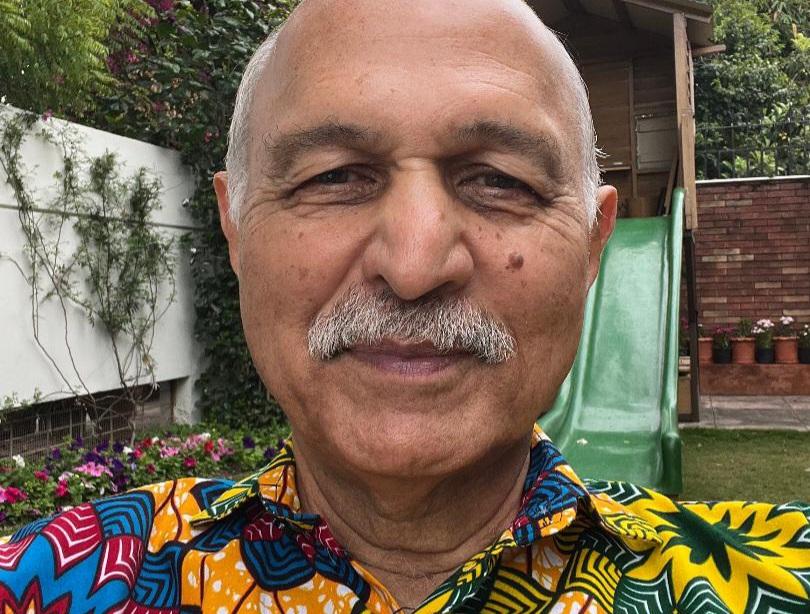
In an interview, Senator Mushahid Hussain, President of Pakistan-Africa Institute for Development and Research (PAIDR), explicitly offers a few important insights into the US-Israeli war on Iran and its implications for BRICS+ and Africa. Here are the interview excerpts:
What’s your interpretation of the US-Israel war on Iran, in the context of developments in the Middle East region?
The US-Israel illegal and unwarranted war on Iran was spearheaded by [Benjamin] Netanyahu (Prime Minister of Israel) and actively supported by [Donald] Trump (President of USA) as a Joint Operation with three fundamental goals: a) decimate the Islamic Revolutionary Regime; b) reshape the Middle East as part of Zionism’s ‘Greater Israel’ Project; c) preclude any possibility of establishing a Palestinian State with Jerusalem as its capital.
What is your assessment of Iran’s joining BRICS+ in 2025, China’s and Russia’s roles as members of this association, in this US-Israel war with Iran?
China and Russia have played, by and large, a low-key diplomatic role in supporting Iran but without any active political initiatives. BRICS is divided from within, as India is keen to curry favour with the USA and avoids close association with BRICS since the time that Trump attacked BRICS last year. But China & Russia are clear political beneficiaries of the war as American prestige is at an all-time low, having got entangled in an unwinnable war, resulting in weakening of the US ‘sole superpower’ image.
As an Asian expert, how would you characterise Africa’s reactions? And do you think that reactions were objectively authentic, basing perspectives broadly on Arab and Middle East contributions to Africa’s development?
Africa’s reactions to the war are primarily through the prism of the Global South, viewing Iran as resisting American-Israeli hegemonic designs, as, for example, manifested in two examples: South Africa’s rejection of American pressures to wean South Africa away from its support for Iran. Plus, Somalia joined Pakistan and China in supporting the Russian resolution in the UN Security Council seeking an immediate ceasefire and negotiations to halt the War, despite strident Western/US opposition to the Russian resolution.
-
 Feature/OPED6 years ago
Davos was Different this year
-
Travel/Tourism10 years ago
Lagos Seals Western Lodge Hotel In Ikorodu
-

 Showbiz3 years ago
Estranged Lover Releases Videos of Empress Njamah Bathing
-
 Banking8 years ago
Sort Codes of GTBank Branches in Nigeria
-

 Economy3 years ago
Subsidy Removal: CNG at N130 Per Litre Cheaper Than Petrol—IPMAN
-

 Banking3 years ago
Sort Codes of UBA Branches in Nigeria
-

 Banking3 years ago
First Bank Announces Planned Downtime
-

 Sports3 years ago
Highest Paid Nigerian Footballer – How Much Do Nigerian Footballers Earn