World
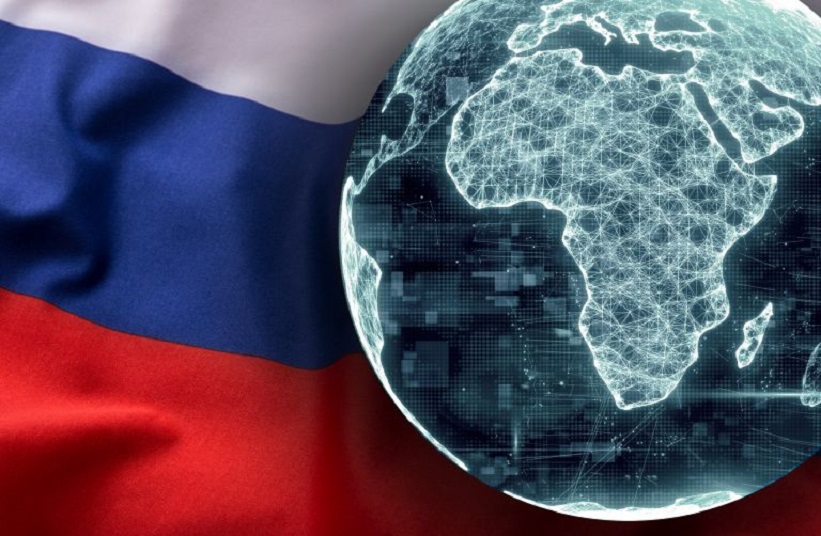
Russia and Africa: Who is Courting Whom?
By Kestér Kenn Klomegâh
The South African Institute of International Affairs has put into circulation its latest policy report on Russia-African relations. In the introductory chapter, Steven Gruzd, Samuel Ramani and Cayley Clifford – have summarized various aspects of the developments between between Russia and Africa over the past few years and finally questioned the impact of Russia’s policy on Africa.
According to Steven Gruzd, Samuel Ramani and Cayley Clifford, this special far-reaching policy report includes academic research from leading Russian, African and international scholars. It addresses the dimensions of Russian power projection in Africa, new frontiers of Russian influence and provides a roadmap towards understanding how Russia is perceived in Africa.
It highlights narratives about anti-colonialism and describes how these sources of solidarity are transmitted by Russian elites to their African public. For seeking long-term influence, Russian elites have oftentimes used elements of anti-colonialism as part of the current policy to control the perceptions of Africans and primarily as new tactics for power projection in Africa.
The reports delved into the historical fact that after the collapse of the Soviet era, already more than three decades, Russia is resurgent in Africa. While Russia has been struggling to make inroads into Africa these years, the only symbolic event was the first Russia-Africa Summit held in Sochi, which fêted heads of state from 43 African countries and showcased Moscow’s great power ambitions.
Moscow has signed bilateral agreements to participate in various economic directions with many African countries. It has also signed military-technical agreements with over 20 African countries and has secured lucrative mining and nuclear energy contracts on the continent. Russia exports more arms to Africa than the United States, France and China combined. It uses private military contractors.
While it has made thousands of promises and signed bilateral agreements, Russia is largely invisible in economic sectors, keeps a remote distance from participating in building critical infrastructures and investing in industrial spheres. Moscow simply builds relations on illusions and lacks the capacity and overwhelming power to realize its policy goals in Africa. During critical times of coronavirus pandemic, Moscow terribly failed to supply 300 million Sputnik V vaccines through the African Union.
Russia’s expanding influence in Africa are compelling, but a closer examination further reveals a murkier picture. Despite Putin’s lofty trade targets, Russia’s trade with Africa stands at just $20 billion, which is lower than that of India or Turkey.
The report authors said that the renewed attention by Russia to Africa presents both risks and opportunities for the continent, especially in this changing geopolitical situation. But the key question arises: Who is courting whom?
The report points to the fact that African countries have engaged with Russia in a ‘business-as-usual fashion’ and have either refrained from condemning Russia’s aggression or from expressing explicit solidarity with Ukraine. Nevertheless, over half of all African states sided with the West in condemning Russia’s aggression against Ukraine in UN General Assembly votes in March and October 2022.
Russia’s major breakthroughs on the continent are confined to its support for fragile states, such as Mali, or autocracies, such as Cameroon, as major regional powers are reluctant to convert rhetorical cooperation into multidimensional partnerships.
The authors further wrote that “Russia’s growing assertiveness in Africa is a driver of instability and that its approach to governance encourages pernicious practices, such as kleptocracy and autocracy promotion, and the dearth of scholarship on Moscow’s post-1991 activities in Africa is striking.”
Records further show that Russia indeed kept a low profile for two decades after the Soviet collapse. One particularly problematic assumption is that Russia’s resurgence in Africa is a relatively recent phenomenon, which took hold at the tail end of Putin’s second term from 2004 to 2008 and accelerated after Russia-West relations soured over the 2014 Ukraine crisis and Russia’s annexation of Crimea.
Now Russia’s main tactics to expand its influence, such as debt forgiveness, arms contracts to fragile states and resistance to US unilateralism, come from its transition-era playbook and are not simply throwbacks to its Soviet-era superpower status. These continuities and forces that have shaped them are largely ignored in Western accounts and deserve granular attention.
In addition, Russia has used social media, state media and ‘political technologists’ to create distorted narratives of Russian largesse and to erode public support for Western involvement in Africa. At times, image triumphs over reality, as Russian narratives are more appealing than its actions. It is clear that Moscow’s approach to Africa is customised and is not a mere extrapolation from Putin’s global approach to foreign policy.
Moreover, the limited amplification of African voices causes sub-Saharan Africa to be viewed as a passive pawn of Russian power projection and neglects the perspectives of African civil society and the historical legacies that drive elites to court the Kremlin. Africa’s agency is thus discounted and diminished.
On the other hand, Russian public diplomacy in Africa explores the targeted use of historical ties, existing anti-Western narratives, state-centric approach and educational programmes to enhance Moscow’s ‘soft power’ on the continent.
In Southern Africa, a pattern of ‘differentiated courtship’ emerges clearly. By bridging Southern and Eastern Africa, its tactics include debt-for-development, nuclear energy, military and paramilitary cooperation, disinformation campaigns and election interference and sponsorship of political parties.
Further in the Horn of Africa, Russia’s tactics for influence projections span from participating in anti-piracy missions to vaccine diplomacy.
The war in Ukraine has elevated the level of scrutiny of Russia’s actions both in Europe and elsewhere in the world, including in Africa. Undeniably, Moscow is wooing African elites to serve its interests, African states are trying to play off Moscow, Washington, Brussels and Beijing for maximum advantage. While many complexities and nuances still remain in the entire relationships, it necessary not to over-generalize the unique features in the bilateral ties.
In the context of a multipolar geopolitical order, Russia’s image of cooperation could be seen as highly enticing, but it is also based on illusions. Better still, Russia’s posture is a clash between illusions and reality. “Russia, it appears, is a neo-colonial power dressed in anti-colonial clothes,” says the report.
Simply put, Moscow’s strategic incapability, inconsistency and dominating opaque relations are adversely affecting sustainable developments in Africa. Thus far, Russia looks more like a ‘virtual great power’ than a genuine challenger to European, American and Chinese influence.
The second Russia-Africa Summit – if it indeed goes ahead in July 2023 – will provide an ideal opportunity to reflect on progress since the inaugural gathering in 2019, and attempt to separate bluster from the concrete facts on the ground. But, ‘who is courting whom’ in the current relations between Africa and Russia.
World
Africa Takes Centre Stage as Addis Ababa Hosts the World Public Summit
By Kestér Kenn Klomegâh
For the first time in its history, the World Public Summit will be held on the African continent. On 29–30 July 2026, Addis Ababa, the capital of Ethiopia, will host the World Public Summit. Africa — “A New World: Africa in Shaping a Shared Future.”
The Summit is organised by the World Peoples Assembly in cooperation with African partner organisations. It will bring together leaders of public diplomacy, representatives of international intergovernmental and non-governmental organisations, academics, experts, representatives of the education and cultural sectors, youth leaders, socially responsible businesses, media professionals, and civil society institutions from across Africa and other regions of the world.
The World Public Summit. Africa continues the work initiated during the First World Public Assembly “A New World of Conscious Unity,” held in Moscow in September 2025, and serves as one of the key milestones in preparation for the Second World Public Assembly “A New World: Values That Unite,” which will take place in Moscow on 18–19 September 2026.
Today, Africa is emerging as one of the principal centres of global development. Rapid demographic growth, expanding entrepreneurship, strengthening regional integration, rich cultural heritage, and the growing role of civil society institutions make the continent an increasingly important contributor to the future architecture of international cooperation.
The Summit will focus on issues of genuine sovereignty and sustainable development, public diplomacy, preservation of cultural and historical heritage, international cooperation in education and science, youth engagement, innovation-driven development, creative industries, and the formation of new partnerships among countries and peoples.
The main business programme of the Summit will take place on 30 July 2026 at the headquarters of the United Nations Economic Commission for Africa (UNECA) in Addis Ababa. Holding the Summit at UNECA highlights its pan-African dimension and creates opportunities for broad international dialogue on humanitarian cooperation and public diplomacy.
The programme will include plenary sessions, strategic dialogues, and expert panels dedicated to values-based development, education, culture, youth leadership, innovation, and international cooperation.
Participation has already been confirmed by Professor Saidou Madougou, Director of the Department of Education, Science, Technology and Innovation of the African Union; Rita Bissoonauth, Director of the UNESCO Liaison Office to the African Union and UNECA in Addis Ababa; Zuzana Schwidrowski, Director of the Macroeconomics, Finance and Governance Division of UNECA, as well as ministers, leaders of public organisations, and representatives of the business community from a number of African countries.
On the same day, the ADWA Victory Memorial Museum—Ethiopia’s national memorial complex dedicated to the Victory of Adwa and an important centre for preserving the historical memory of the Ethiopian people—will host the award ceremony of the regional stage of the V International Competition “Leader of Public Diplomacy”, followed by a large-scale cultural programme.
One of the key outcomes of the Summit will be the adoption of the African Communiqué, reflecting proposals and recommendations aimed at strengthening humanitarian, educational, cultural, and public cooperation between African countries and other regions of the world.
The outcomes, initiatives, and recommendations were developed during the World Public Summit. Africa will be presented at the Second World Public Assembly “A New World: Values That Unite”, to be held in Moscow on 18–19 September 2026.
According to Andrey Belyaninov, General Secretary of the World Peoples Assembly, “the Addis Ababa Summit is an important step toward building a new world founded on mutual respect, cultural diversity, dialogue and sustainable development.”
World
UK Set for Seventh Prime Minister in 10 Years as Keir Starmer Resigns
By Adedapo Adesanya
The United Kingdom will get its seventh Prime Minister in 10 years as Mr Keir Starmer announced his resignation on Monday.
The Minister said he is stepping down as leader of the governing Labour Party and will leave office within weeks, scarcely two years after being elected in a landslide.
Mr Starmer says he will remain caretaker prime minister until a new Labour leader is chosen by the party.
Mr Starmer made the announcement after facing growing pressure to hand over to a new leader who can try to revive the government’s flagging fortunes.
He led Labour to a landslide election victory in July 2024, but since then, his popularity and that of the party have plummeted.
His departure was triggered by the victory of Mr Andy Burnham in a special election last week. The popular ex-mayor of Greater Manchester planned to challenge the existing PM for the Labour leadership.
Mr Starmer made the announcement outside the prime minister’s 10 Downing St. residence with a brief statement on Monday.
“The question my party is asking now is whether I am best placed to lead us into the next general election,” Mr Starmer said. “I have heard the answer of my parliamentary party to that question, and I accept that answer with good grace.
Mr Starmer is the sixth prime minister in a decade to stand outside 10 Downing Street and announce a premature departure.
It comes the day before Britain marks the 10th anniversary of its vote to leave the European Union, a decision that still affects the country’s economy and politics.
Over the past decade, 10 Downing Street has had six occupants, including Mr David Cameron, who left office in 2016 after the Brexit referendum and was succeeded by Ms Theresa May. She was followed by Mr Boris Johnson, whose tenure covered Brexit and the COVID-19 pandemic. After Mr Johnson came Ms Liz Truss, whose 49-day premiership was the shortest in British history. Mr Rishi Sunak then took office before being succeeded by Mr Starmer, the outgoing occupant of Number 10.
World
AXIAN Energy Secures $60m for Expansion Across Africa
By Aduragbemi Omiyale
A financing facility of up to $60 million has been secured by AXIAN Energy, the energy division of the AXIAN Group.
The funding package was provided by MCB, one of the leading financial institutions in the Indian Ocean region.
It comprises a $40 million revolving credit facility with a three-year tenor and extension option, and $20 million in unfunded instruments, providing AXIAN Energy with enhanced financial flexibility, enabling the company to rapidly mobilise resources and seize development opportunities across its target markets.
The energy firm is expected to use the capital to deliver large-scale energy infrastructure projects across Africa.
Over the past two years, AXIAN Energy has significantly accelerated its growth by expanding its renewable energy project pipeline, with solar projects currently under development in Senegal, Benin, Zambia, Côte d’Ivoire, Madagascar, and Burkina Faso.
Building on this momentum, AXIAN Energy now operates a portfolio comprising 350 MW of installed renewable energy capacity, supported by 77 MWh of energy storage capacity, positioning the AXIAN Group as a major contributor to Africa’s energy transition.
The chief executive of AXIAN Energy, Mr Benjamin Memmi, said, “This transaction marks a key milestone in AXIAN Energy’s growth trajectory. It provides us with the financial capacity to sustain the momentum we have built over the past two years, further strengthening our renewable energy portfolio and expanding our presence across new African markets.”
Also commenting, the Global Head of Structured Finance at MCB, Mr Mathieu Delteil, said, “We are proud to support AXIAN Energy in structuring this facility, reaffirming our commitment to enabling transformative projects across Africa.
“By leveraging our sector expertise and deep understanding of regional markets, we have delivered a tailored financing solution that aligns with AXIAN’s long-term renewable energy ambitions.
“This partnership highlights our role as a strategic financial partner, mobilising capital towards investments that drive sustainable growth and accelerate the energy transition across the continent.”
The financing agreement between the two organisations strengthens their long-standing relationship because it is driven by a shared commitment to supporting infrastructure development and economic growth across Africa.
-
Feature/OPED6 years agoDavos was Different this year
-
Travel/Tourism10 years ago
Lagos Seals Western Lodge Hotel In Ikorodu
-
Showbiz3 years agoEstranged Lover Releases Videos of Empress Njamah Bathing
-
Banking8 years agoSort Codes of GTBank Branches in Nigeria
-
Economy3 years agoSubsidy Removal: CNG at N130 Per Litre Cheaper Than Petrol—IPMAN
-
Banking3 years agoSort Codes of UBA Branches in Nigeria
-
Banking3 years agoFirst Bank Announces Planned Downtime
-
Sports3 years agoHighest Paid Nigerian Footballer – How Much Do Nigerian Footballers Earn