Connect with us

World

Southern African Leaders Discuss Macroeconomic Stability, Security, Others

Published

on

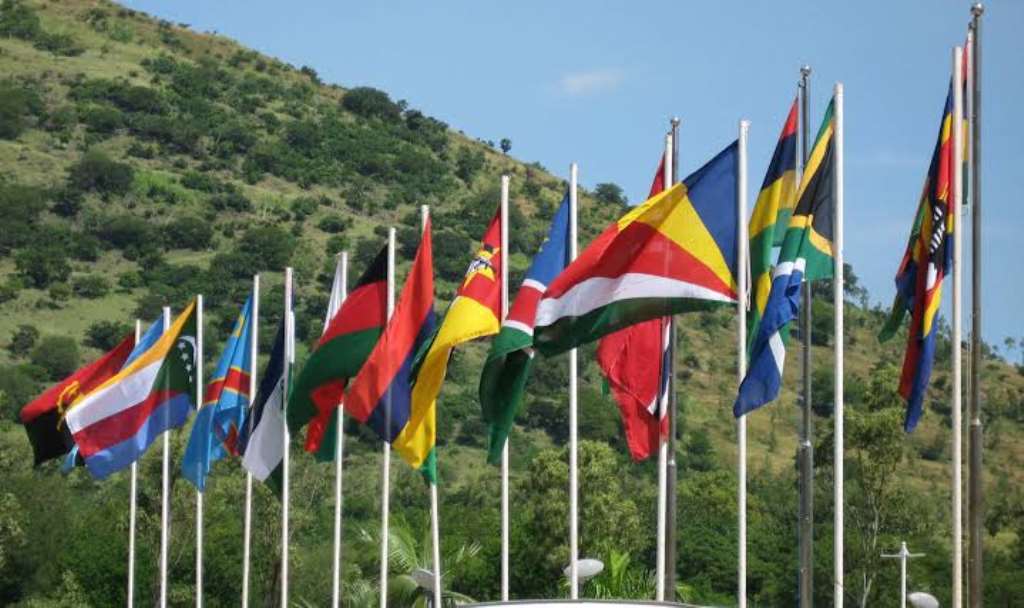
Southern African leaders

By Kester Kenn Klomegah

Regional integration, security, macroeconomic stability and others formed the major issues discussed when Southern African leaders met in late June in Maputo, Mozambique.

They were in the country for the extraordinary summit of Heads of State and Government organised by the Southern African Development Community (SADC).

The event was primarily called to review progress made in the implementation of the theme of the 40th SADC Summit; SADC: 40 Years Building Peace and Security, and Promoting Development and Resilience in the Face of Global Challenges, which was earlier endorsed by the SADC Summit in August 2020.

The first SADC Business Forum featured prominently as part of the comprehensive agenda, and other significant issues discussed included regional integration, cooperation and development.

The topic that got special attention was regional security and its possible impact on business and investment climate, with a particular focus on Mozambique and from broader perspectives, as a whole in southern Africa.

Under the Chairperson of SADC and the Extraordinary Summit, President of the Republic of Mozambique, Filipe Jacinto Nyusi together with 15 leaders from Southern Africa, finally, after several months of go-forth and back negotiations agreed to form a regional Standby Military Force.

The sources of funding for the force made up of a contingency fund and contributions from the Member-States that participate in the force, which should contribute between themselves with $7 million (€5.8 million).

While multiple barriers including high tariffs, customs rules and pitfalls on border-crossing with stocks still remain and hamper regional economic integration, Mozambican President Filipe Nyusi, in a speech, reaffirmed commitment to turn SADC into an example of regional integration, taking into account its geostrategic position and the existing energy potential.

Mozambican leader, during the Public-Private Dialogue and Business Forum, urged speeding up the ratification of protocols essential to economic integration.

The establishment of a customs union that evolves into a single market and monetary union is still a huge challenge. It delays the process of ratifying protocols on regional trade. The imbalances that characterize each of the states, such as great differences in macroeconomic stability, uneven levels of industrialization, lack of complementarity in the structure and production base and inefficiencies in the value chain.

Comparing all regional economic blocs in Africa, SADC seems unique but it is critical to fast-track reforms for a better business environment and macroeconomic stability, which are indispensable for attracting foreign investment to the regional bloc. Thus, the SADC Business Forum was, purposely held to bring together initiatives and projects, and match synergies to create opportunities.

Agostinho Vuma, the President of the Confederation of Economic Associations of Mozambique (CTA), has acknowledged, over the years, that tariff and non-tariff barriers are an obstruction to economic integration in southern Africa. There are so many challenges, such as the prevalence of tariff and non-tariff barriers, that stand as roadblocks to regional integration, according to Agostinho Vuma.

On the other hand, low production capacity and prohibitive interest rates imposed by banks weaken economic development and regional integration.

Some reforms are practically needed, that are conducive to the strengthening of private sector companies in southern Africa and that could drive the rapid integration of the region’s economies in a future free trade area, and that could attract foreign investors to strategic sectors in the region, he explained taking his turn at the podium.

The SADC Business Forum also debated the socio-economic impact of COVID-19 and post-pandemic recovery strategies, infrastructure and regional corridor development. Industrialization focused on improving the balance of trade within the countries of the region, the role of the energy and mineral resources sectors and the participation of national business in megaprojects were discussed.

Domestication of the SADC Industrialization Strategy with a Focus on Improving the Trade Balance. The session, moderated by Ciyong Zou, UNIDO Program Director, drew many participants who reviewed the processes on the integration and popularization of the strategy by the private sector.

Infrastructure: Development of SADC Regional Corridors. The participants here reviewed regional transport corridors that support the trade and regional integration agenda and further focused on interventions needed to form structures and attract investments.

In order to make entrepreneurship an asset in the collective structure of the region, the discussion panels share, reflect and promote the existing regional dynamics and good practices, with a global impact on the ecosystem and initiatives for the development of entrepreneurship.

Energy, Mineral Resources and the Local Content Value Chain; Agribusiness: promoting and linking regional reference value chains; Entrepreneurship in SADC: Ecosystem and Development; Socio-economic impact of COVID-19 in the region and recovery strategies. The participants looked at the challenges imposed by the Covid-19 pandemic, and what needs to be done as recovery pathways in the strategic regional sector.

Zimbabwe, through ZimTrade, show-cased its trade and investment opportunities. It related to the realization of its foreign policy objectives, particularly the development and integration agenda, according to Zimbabwe Chronicle.

The SADC region, with a market of 350 million consumers, seeks to leverage the existing potential, to raise trade and investment within the region, and within Africa and to the outside world.

Statistics on various economic areas are difficult to obtain. But the SADC Secretariat in an email told this research writer that in 2018, SACD’s total exports amounted to $154 billion and the total imports were $149 billion.

The SADC comprises 16 states: Mozambique, Angola, South Africa, Botswana, Zimbabwe, Eswatini, Democratic Republic of Congo, Lesotho, Madagascar, Malawi, Mauritius, Namibia, Seychelles, Tanzania, Zambia and Comoros.

Within its framework, the bloc collectively seeks to promote sustainable and equitable economic growth and socio-economic development, forge deeper cooperation and integration, to ensure good governance and durable peace and security, so that the region emerges as a competitive and effective player in the southern region, in Africa and the world.


Click to comment

Leave a Reply

Your email address will not be published. Required fields are marked *

World

Africa Takes Centre Stage as Addis Ababa Hosts the World Public Summit

Published

on

Addis Ababa World Public Summit

By Kestér Kenn Klomegâh

For the first time in its history, the World Public Summit will be held on the African continent. On 29–30 July 2026, Addis Ababa, the capital of Ethiopia, will host the World Public Summit. Africa — “A New World: Africa in Shaping a Shared Future.”

The Summit is organised by the World Peoples Assembly in cooperation with African partner organisations. It will bring together leaders of public diplomacy, representatives of international intergovernmental and non-governmental organisations, academics, experts, representatives of the education and cultural sectors, youth leaders, socially responsible businesses, media professionals, and civil society institutions from across Africa and other regions of the world.

The World Public Summit. Africa continues the work initiated during the First World Public Assembly “A New World of Conscious Unity,” held in Moscow in September 2025, and serves as one of the key milestones in preparation for the Second World Public Assembly “A New World: Values That Unite,” which will take place in Moscow on 18–19 September 2026.

Today, Africa is emerging as one of the principal centres of global development. Rapid demographic growth, expanding entrepreneurship, strengthening regional integration, rich cultural heritage, and the growing role of civil society institutions make the continent an increasingly important contributor to the future architecture of international cooperation.

The Summit will focus on issues of genuine sovereignty and sustainable development, public diplomacy, preservation of cultural and historical heritage, international cooperation in education and science, youth engagement, innovation-driven development, creative industries, and the formation of new partnerships among countries and peoples.

The main business programme of the Summit will take place on 30 July 2026 at the headquarters of the United Nations Economic Commission for Africa (UNECA) in Addis Ababa. Holding the Summit at UNECA highlights its pan-African dimension and creates opportunities for broad international dialogue on humanitarian cooperation and public diplomacy.

The programme will include plenary sessions, strategic dialogues, and expert panels dedicated to values-based development, education, culture, youth leadership, innovation, and international cooperation.

Participation has already been confirmed by Professor Saidou Madougou, Director of the Department of Education, Science, Technology and Innovation of the African Union; Rita Bissoonauth, Director of the UNESCO Liaison Office to the African Union and UNECA in Addis Ababa; Zuzana Schwidrowski, Director of the Macroeconomics, Finance and Governance Division of UNECA, as well as ministers, leaders of public organisations, and representatives of the business community from a number of African countries.

On the same day, the ADWA Victory Memorial Museum—Ethiopia’s national memorial complex dedicated to the Victory of Adwa and an important centre for preserving the historical memory of the Ethiopian people—will host the award ceremony of the regional stage of the V International Competition “Leader of Public Diplomacy”, followed by a large-scale cultural programme.

One of the key outcomes of the Summit will be the adoption of the African Communiqué, reflecting proposals and recommendations aimed at strengthening humanitarian, educational, cultural, and public cooperation between African countries and other regions of the world.

The outcomes, initiatives, and recommendations were developed during the World Public Summit. Africa will be presented at the Second World Public Assembly “A New World: Values That Unite”, to be held in Moscow on 18–19 September 2026.

According to Andrey Belyaninov, General Secretary of the World Peoples Assembly, “the Addis Ababa Summit is an important step toward building a new world founded on mutual respect, cultural diversity, dialogue and sustainable development.”

Continue Reading

World

UK Set for Seventh Prime Minister in 10 Years as Keir Starmer Resigns

Published

on

Keir Starmer

By Adedapo Adesanya

The United Kingdom will get its seventh Prime Minister in 10 years as Mr Keir Starmer announced his resignation on Monday.

The Minister said he is stepping down as leader of the governing Labour Party and will leave office within weeks, scarcely two years after being elected in a landslide.

Mr Starmer says he will remain caretaker prime minister until a new Labour leader is chosen by the party.

Mr Starmer made the announcement after facing growing pressure to hand over to a new leader who can try to revive the government’s flagging fortunes.

He led Labour to a landslide election victory in July 2024, but since then, his popularity and that of the party have plummeted.

His departure was triggered by the victory of Mr Andy Burnham in a special election last week. The popular ex-mayor of Greater Manchester planned to challenge the existing PM for the Labour leadership.

Mr Starmer made the announcement outside the prime minister’s 10 Downing St. residence with a brief statement on Monday.

“The question my party is asking now is whether I am best placed to lead us into the next general election,” Mr Starmer said. “I have heard the answer of my parliamentary party to that question, and I accept that answer with good grace.

Mr Starmer is the sixth prime minister in a decade to stand outside 10 Downing Street and announce a premature departure.

It comes the day before Britain marks the 10th anniversary of its vote to leave the European Union, a decision that still affects the country’s economy and politics.

Over the past decade, 10 Downing Street has had six occupants, including Mr David Cameron, who left office in 2016 after the Brexit referendum and was succeeded by Ms Theresa May. She was followed by Mr Boris Johnson, whose tenure covered Brexit and the COVID-19 pandemic. After Mr Johnson came Ms Liz Truss, whose 49-day premiership was the shortest in British history. Mr Rishi Sunak then took office before being succeeded by Mr Starmer, the outgoing occupant of Number 10.

Continue Reading

World

AXIAN Energy Secures $60m for Expansion Across Africa

Published

on

axian energy

By Aduragbemi Omiyale

A financing facility of up to $60 million has been secured by AXIAN Energy, the energy division of the AXIAN Group.

The funding package was provided by MCB, one of the leading financial institutions in the Indian Ocean region.

It comprises a $40 million revolving credit facility with a three-year tenor and extension option, and $20 million in unfunded instruments, providing AXIAN Energy with enhanced financial flexibility, enabling the company to rapidly mobilise resources and seize development opportunities across its target markets.

The energy firm is expected to use the capital to deliver large-scale energy infrastructure projects across Africa.

Over the past two years, AXIAN Energy has significantly accelerated its growth by expanding its renewable energy project pipeline, with solar projects currently under development in Senegal, Benin, Zambia, Côte d’Ivoire, Madagascar, and Burkina Faso.

Building on this momentum, AXIAN Energy now operates a portfolio comprising 350 MW of installed renewable energy capacity, supported by 77 MWh of energy storage capacity, positioning the AXIAN Group as a major contributor to Africa’s energy transition.

The chief executive of AXIAN Energy, Mr Benjamin Memmi, said, “This transaction marks a key milestone in AXIAN Energy’s growth trajectory. It provides us with the financial capacity to sustain the momentum we have built over the past two years, further strengthening our renewable energy portfolio and expanding our presence across new African markets.”

Also commenting, the Global Head of Structured Finance at MCB, Mr Mathieu Delteil, said, “We are proud to support AXIAN Energy in structuring this facility, reaffirming our commitment to enabling transformative projects across Africa.

“By leveraging our sector expertise and deep understanding of regional markets, we have delivered a tailored financing solution that aligns with AXIAN’s long-term renewable energy ambitions.

“This partnership highlights our role as a strategic financial partner, mobilising capital towards investments that drive sustainable growth and accelerate the energy transition across the continent.”

The financing agreement between the two organisations strengthens their long-standing relationship because it is driven by a shared commitment to supporting infrastructure development and economic growth across Africa.

Continue Reading

Trending