World
Zimbabwe Woos More Russian Investors to Develop Economy
By Kester Kenn Klomegah
Zimbabwe, among a few African countries, featured prominently at this year’s edition of the Russian International Industrial and Trade Fair during the first week of July in Ekaterinburg, a city in the Urals region about 1,700 kilometres from Moscow.
About 76 per cent of exhibitors are top managers of Russian and foreign companies, heads of regions and representatives of federal authorities.
Widely referred to as INNOPROM, it is the main industrial, trade and export platform organized annually in Russia. Due to COVID-19, about 90 countries participated in the trade fair held under the theme Flexible Manufacturing in Ekaterinburg, according to INNOPROM official website.
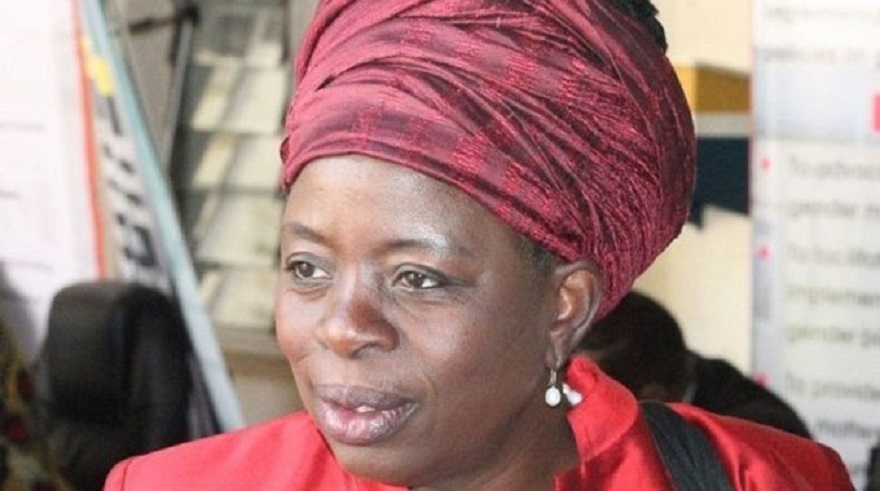
Industry and Commerce Minister, Dr Sekai Nzenza, headed a sizeable business delegation, including officials from the Confederation of Zimbabwe Industries (CZI), Zimbabwe Investment Development Agency (ZIDA), Zimtrade, the CEO Roundtable, the Zimbabwe National Chamber of Commerce (ZNCC) and the Industrial Development Corporation of Zimbabwe (IDCZ).
Zimbabwe and Russia have an overwhelmingly close diplomatic relationship. Russia has been stepping up economic investment in Zimbabwe. Based on that friendship, Nzenza was invited by Russia’s Minister of Industry and Trade Denis Manturov who was also the fair’s main guest.
Nzenza’s office told Business Weekly that Zimbabwe had fruitful engagements with Russian companies that have expressed interest in the value addition of minerals such as tungsten, lithium and iron.
Russian firms are also keen to explore opportunities in agro-processing, phosphate, fertilizer and medical equipment as well as partnering local institutions in research and development.
There is scope for technology transfer from Russia to help retooling of local companies. Given the distance between the two countries, the perishability of fresh produce has been identified as a major impediment for growing exports to Russia, but the two countries have agreed to “work on that logistical challenge.”
Zimbabwe is currently exporting oranges to Russia and there is potential to increase exports of commodities such as garlic, ginger, macadamia, avocado, frozen fruits and vegetables as well as blueberries. Follow up meetings were held between business organizations in both countries.
She similarly told The Herald newspaper that the main focus participating at INNOPROM “is pushing Zimbabwe is open for business agenda and we are quite encouraged to participate at the fair.”
Russian companies are keen to invest in Zimbabwe’s various industries as the two countries further explore areas of economic cooperation. “The main focus is pushing Zimbabwe is open for business agenda we are quite encouraged to participate at the fair – an opportunity to meet potential Russian investors,” said Nzenza.
As Zimbabwean Ambassador to the Russian Federation, Brigadier General Mike Nicholas Sango, noted in an exclusive interview with me, Russia and Zimbabwe have put in place structures and mechanisms for sustainable economic cooperation. Although Russia’s economy is under pressure from illegal sanctions and the depressed global economic environment, it is committed to assist Zimbabwe’s economic recovery.
He highlighted his government’s key priorities and expectations from Russia as follows:
Agriculture Support: Agriculture is the economic mainstay and provides 15% of GDP. Water harnessing through dam construction, irrigation mechanization, and agricultural machinery are key areas.
Infrastructure Development: Although the country has a fairly well-developed infrastructure, the road and rail infrastructure needs refurbishment and expansion to take trade volumes for the country as well as its neighbours to the north.
Mining: Zimbabwe is endowed with abundant unexploited resources.
Manufacturing: Zimbabwe’s manufacturing sector has been hit hard by illegal economic sanctions. Most industries have outdated and expensive to run machinery. They are in dire need of retooling, refurbishment and funding.
Tourism: Zimbabwe hosts one of the wonders of the world, Victoria Falls. Investment in infrastructure development in the hotels would complement the opening by larger airports to accommodate larger body aircraft.
President Mnangagwa’s administration adopted Zimbabwe is open for business policy meant to woo investors to help revive the economy. In 2019, President Mnangagwa met his Russian counterpart Vladimir Putin where the two leaders agreed to deepen economic cooperation between the two countries. Russia is one of the major sources of the country’s foreign direct investment, particularly in the mining sector.
Zimbabwe is a landlocked country located in Southeast Africa, between the Zambezi and Limpopo Rivers, bordered by South Africa to the south, Botswana to the south-west, Zambia to the north, and Mozambique to the east. The capital and largest city is Harare.
With an approximate population of 14.5 million, Zimbabwe is endowed with rich and extensive natural resources. It is one of the 16 countries, with a collective responsibility to promote socio-economic cooperation, within the Southern African Development Community (SADC) created in 1980.
World
Germany Acquires Equity Stake in ATIDI to Strengthen Economic Partnership With Africa
By Aduragbemi Omiyale
About $32 million has been put into the African Trade and Investment Development Insurance (ATIDI) by Germany through KfW Development Bank.
This funding package allows the European nation to become a D2-class shareholder of ATIDI, a status dedicated to Export Credit Agencies and Non-African Public Entities.
Of this amount, $18.4 million is funded from BMZ budget resources, with the remaining $13.6 million coming from KfW’s own resources. As such, it will assume the obligations and benefits related to its new shareholding status, including representation in ATIDI Governance and decision-making structures, and equally participating towards improving German trade and investments in Africa in alignment with the G20 Compact with Africa (CwA 2.0).
KfW’s subscription in ATIDI is the culmination of a dynamic partnership between the two organisations.
On behalf of the German Federal Ministry of Economic Cooperation and Development (BMZ), KfW has supported several countries’ membership in ATIDI with over $100 million in financing, thus strengthening the organisation’s capital base and expanding its ability to mitigate risk and mobilise private investment across African markets.
The new equity participation adds a direct shareholding to this long‑standing cooperation.
KfW is the 13th Institutional shareholder in Africa’s premier development insurer, further strengthening the organisation’s capital base and its capacity to support trade and investment across the continent.
At the official signing of the subscription agreement in Nairobi, Kenya, a member of the executive board of KfW, Ms Christiane Laibach, said, “Our membership is executed on behalf of the Federal Republic of Germany. It is only the latest culmination of a successful cooperation that has enabled the ATIDI membership of several African states and has created innovative insurance solutions to attract foreign investment on the continent.”
The chief executive of ATIDI, Mr Manuel Moses, said, “This milestone is iconic in many ways. First, it elevates our already dynamic bond with KfW and creates more opportunities for German investors looking to engage in Africa. It is also a recognition of ATIDI’s earned status as Africa’s top development insurer and the acknowledgement of the soundness of our business. Last, it underscores the power of partnerships in a global context increasingly marked by volatility and uncertainty. ATIDI will spare no effort to make this partnership a successful one.”
Established in 1948, KfW is Germany’s state-owned promotional and development bank and a key implementing partner of BMZ in international financial cooperation. Its shareholding in ATIDI is expected to stimulate up to $500 million in trade and investment between German companies and African markets.
Over the past 25 years, ATIDI has grown to become Africa’s premier provider of development insurance and one of its highest-rated financial organisations. It leverages its partnerships with leading multilaterals and regional bodies, including the African Union, the World Bank Group, COMESA, the European Investment Bank (EIB), and the Norwegian Agency for Development Cooperation (NORAD), to offer innovative credit and investment insurance products that foster sustainable and transformational growth across the continent.
World
Essent Slashes Contact Centre Technology Costs by 50%
By Modupe Gbadeyanka
The Netherlands’ largest energy provider, Essent, has cut the technology costs of its contact centre infrastructure by half.
The organisation, which serves 2.5 million customers, recorded zero critical incidents post-migration and improved agent workplace satisfaction by 36 per cent.
The migration was delivered in partnership with AI-first customer experience transformation specialists, Sabio Group, and was completed in under 12 weeks for an operation spanning over 1,000 agents across two locations.
Agents were forced to juggle multiple disconnected screens simultaneously — a workflow that was as inefficient as it was stressful.
“Our agents were constantly working with different screens — multiple chat instances open at once, multiple agent desktop instances. It was messy, and in some cases, quite stressful,” SAFe Product Manager for Customer Interaction, Omnichannel and Digital Transformation at Essent, Michiel Kouijzer, stated.
“A lot of colleagues were saying I was mad for even suggesting this approach. It kind of feels like a victory on a personal level that it did work out. You just have to be a little ambitious — and have the right expert partner who can make it work,” Kouijzer added.
With stable cloud infrastructure now firmly in place, Essent is turning its attention to the capabilities that were impossible in its legacy environment: AI-powered call summarisation, agentic customer self-service, and next-generation workforce optimisation.
Rather than a reckless ‘big bang’ cutover that could have affected service to millions of households, Sabio engineered a phased migration strategy — beginning with Essent’s SME segment to validate technical readiness before scaling to the full enterprise operation.
“This project showcases Sabio’s unique position in the contact centre technology landscape. We’re not just moving Essent to the cloud — we’re establishing a foundation for continuous improvement in their customer experience delivery,” the Country Manager for Sabio Group Benelux, Wouter Bakker, commented.
World
Africa: A New Market for Russian Business
By Kestér Kenn Klomegâh
On April 11, the presentation of the book “Africa: a new market for Russian business” took place, which aroused lively diverse interests among business representatives, entrepreneurs and employees of federal structures of Russia. The event was dedicated to discussing the prospects of Russian companies entering the African market and became a platform for the exchange of views and experiences.
Participating guests, packed in the small hall, included:
– representatives of business circles,
– entrepreneurs interested in new directions of development,
– employees of federal agencies curating foreign economic activity.
The presentation was held in a constructive and friendly atmosphere. The author of the book, Serge Fokas Odunlami, detailed the key ideas and conclusions presented in the publication. Particular attention was paid to the practical aspects of operating in the African market, as well as the analysis of opportunities and risks for Russian companies.
During the lively discussion, participants asked questions, shared their experiences and made suggestions for developing cooperation with African countries. This format allowed not only to get acquainted with the content of the book, but also to discuss topical issues of expanding business relations.
Meaning of the book: The publication, “Africa: a new market for Russian business” offers readers not only analytical, but also practical recommendations on investment and market trends, and how to enter the African market. The book will be a useful tool for those considering Africa as a promising destination for investment and business development.
The presentation of the book became a significant event for the Russian business community interested in expanding cooperation with Africa. Serge Fokas Odunlami introduced the participants to the new edition, which is a comprehensive business guide that gives an impetus for dialogue and implementation of joint entrepreneurial projects and corporate initiatives across Africa.
-
Feature/OPED6 years agoDavos was Different this year
-
Travel/Tourism10 years ago
Lagos Seals Western Lodge Hotel In Ikorodu
-
Showbiz3 years agoEstranged Lover Releases Videos of Empress Njamah Bathing
-
Banking8 years agoSort Codes of GTBank Branches in Nigeria
-
Economy3 years agoSubsidy Removal: CNG at N130 Per Litre Cheaper Than Petrol—IPMAN
-
Banking3 years agoSort Codes of UBA Branches in Nigeria
-
Banking3 years agoFirst Bank Announces Planned Downtime
-
Sports3 years agoHighest Paid Nigerian Footballer – How Much Do Nigerian Footballers Earn