

Banking
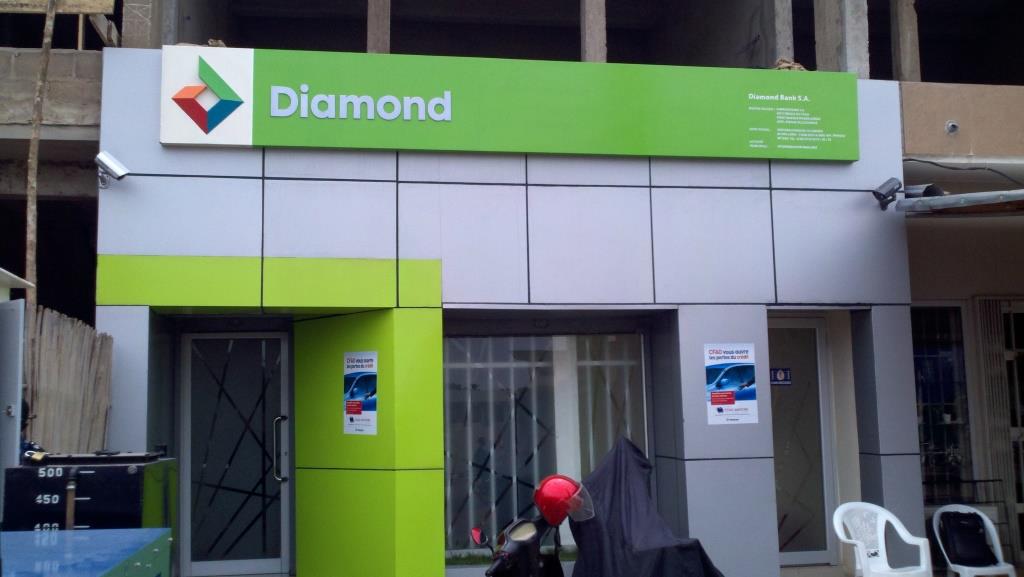
Diamond Bank, Access Bank Merger and the Big Obstacle

By Dipo Olowookere
One news item that has dominated the capital market space in Nigeria at the moment is the merger between Diamond Bank and Access Bank.
The merger between both parties was confirmed yesterday after initial denials by both banks, while the deal is expected to be finalised before the end of June 30, 2019.
It is important to note that both financial institutions are trading their equities on the floor of the Nigerian Stock Exchange (NSE).
In a release on Monday by Diamond Bank, its board said, “Based on the agreement reached by the boards of the two financial institutions, Diamond Bank shareholders will receive a consideration of N3.13 per share, comprising of N1.00 per share in cash and the allotment of 2 new Access Bank ordinary shares for every 7 Diamond Bank ordinary shares held as at the Implementation Date.
“The offer represents a premium of 260 percent to the closing market price of N0.87 per share of Diamond Bank on the Nigerian Stock Exchange as of December 13, 2018, the date of the final binding offer.”
This deal, according to the Chief Executive Officer of Diamond Bank, Mr Uzoma Dozie, “will create one of Africa’s leading financial institutions.”
Mr Dozie said, “There is clear strategic rationale for the proposed merger and strong complementarities between the two institutions,” noting that, “While Diamond Bank has pioneered Nigeria’s largest technology-led retail banking platform, Access Bank is one of Nigeria’s leading full-service commercial banks.”
He further said, “The board of Diamond Bank believes that the proposed combination of the two operations provides an exciting prospect for all stakeholders in both businesses and will create a financial institution with the scale, strength and expertise to capitalise on the significant opportunities in Nigeria and sub-Saharan Africa more broadly.”
For the CEO of Access Bank, Mr Herbert Wigwe, “Access Bank has a strong track record of acquisition and integration and has a clear growth strategy.
“Access Bank and Diamond Bank have complementary operations and similar values, and a merger with Diamond Bank, with its leadership in digital and mobile-led retail banking, could accelerate our strategy as a significant corporate and retail bank in Nigeria and a Pan-African financial services champion.
“Access Bank has a strong financial profile with attractive returns and a robust capital position with 20.1 percent CAR as at September 30, 2018.
“We believe that this platform, together with the two banks’ shared focus on innovation, financial inclusion and sustainability, can bring benefits to Access Bank and Diamond Bank customers, staff and shareholders.”
While the Central Bank of Nigeria (CBN) is believed to have midwifed this transaction, both shareholders of Access Bank and Diamond Bank will still have to approve the merger, which some have described as acquisition in reality.
However, Business Post analysts are of the view that shareholders of Diamond Bank will want to create a big obstacle to this merger, especially Carlyle Group, an American equity firm, which in 2014 became the leading individual shareholder in the bank with the acquisition of 17.7 percent of the company’s shares. At that time, the US-based company acquired 4.16 billion shares of Diamond Bank at N5.80k each.
While some minority shareholders may not reject the offering because of what Access Bank is putting forward, Carlyle Group, which has been speculated to have called for the resignation of Mr Dozie, may become the biggest hurdle to cross in making the merger see the light of the day.
As it has been reported in some sections of the media, the Pascal Dozie family, founder of Diamond Bank, had allegedly first obtained a loan from GTBank Plc, which was later allegedly taken over by Access Bank Plc.
The loan was said to have been used to chase foreign investors out of the bank, especially, Actis, in 2014, which allegedly sold their shares to the Dozie family at N7.50k per unit, receiving over $125 million from the deal.
Business Post gathered from a statement released then that the Dozie family, through Kunoch Holdings, had acquired the 14.8 percent stake of Actis DB Holdings Limited in Diamond Bank. Actis had invested heavily in Diamond Bank in 2007, when it bought the bank’s shares.
With the above, it is anticipated that Carlyle Group might feel cheated in the Access Bank/Diamond Bank deal and might want to fight back by frustrating it, especially when it has been speculated that the Dozie family are favouring Access Bank to take over Diamond Bank allegedly as pay back for the loan they allegedly obtained some year ago to pursue Actis out of the company.
Also from a leaked letter purportedly written by a former Chairman of Diamond Bank, Mr Seyi Bickerstheth, which was later leaked to the media, Carlyle Group has not been in support of this transaction and the leadership of Mr Dozie.
Mr Bickerstheth, who resigned from the bank over a month ago alongside three other non-executive directors, claimed Carlyle Group had wanted a situation where fresh capital would be injected into Diamond Bank for recapitalisation instead of handing over the bank to Access Bank on a platter of gold.
According to letter, the group had insisted that for the cash injection to happen, Mr Dozie will first have to relinquish his position as the CEO.
“After several discussions, the CEO, of the bank who is also a representative of the second largest shareholder Kunoch Ltd, agreed to resign effective January 3, 2019 but would not tender his letter to confirm his verbal notification.
“In response, the representative of CSSAF DBN Holdings therefore at the board meeting held on October 18, 2018 put forward a motion for the removal of the CEO with immediate effect. This was despite continuous negotiations and attempts by members of the board, to provide an amicable solution to this impending shareholder fight and reaching several tentative agreements, which were frustrated by both parties.
“Nonetheless due to technical reasons and reluctance of board members regarding an immediate removal of the CEO, the vote for the removal of the CEO was postponed, pending legal clarifications, which could not be provided by the Company Secretary,” the letter had said.
It had said further that, “The CEO, at the October 18 2018 meeting, had a financial adviser appointed by the executive management without reference to the board to present to the board various strategic options for recapitalization either through an internal rights issue or possible merger with other Tier 1 banks.
“While the board stated that this was to have been presented to the board capital raising committee, it allowed the presentation to be made. The presentation, though based on 2017 financials was still very high level and, was well received by the board and the board directed that the recommendation be passed on to the capital raising committee of the bank to evaluate this along with all other options being considered – new injection of capital by the shareholders, merger with a local bank or position to partner with an international bank not currently operating in Nigeria
“On Friday October 19, 2018, due to the lack of clarity on the motion for immediate removal of the CEO, the representative of CSSAF DBN Holdings informed board members that as a majority shareholder CSSAF DBN Holdings would call for an Extraordinary General Meeting to remove the CEO since the board had not voted on the matter.
“The 4 NEDs then decided that it was becoming a shareholder fight, which they felt could have been averted either by the CEO tendering a letter indicating his resignation effective January 3, 2019 or by CSSAF DBN Holdings accepting to give the Board the responsibility of ensuring the issue is resolved amicably. Purely on this basis, the 4 NEDs wrote to resign their appointments immediately by emails to the Company Secretary to allow the 2 shareholders resolve the impasse.”
If you desire to read the full letter, kindly click HERE For now, what observers are not sure of is if Carlyle Group will approve the merger between Diamond Bank and Access Bank or would want to first force Access Bank to settle their over N20 billion loss before giving the deal its nod.




By Modupe Gbadeyanka
First Bank of Nigeria has been directed to pay one of its staff members, Mr Joseph Simeon Akor, a total of N5.2 million for wrongfully terminating his employment.
This order was given by Justice Zaynab Mohammed Bashir of the Port Harcourt Judicial Division of the National Industrial Court, Business Post learned.
The judge held that the claimant successfully established that the lender breached the terms of his employment by failing to comply with the disciplinary procedure contained in its Staff Employee Handbook after commencing investigations into allegations of misconduct and by paying him less than the prescribed half of his basic salary during suspension.
The court found that although the bank retained the contractual right to terminate the employment, the action was wrongful for failing to comply with its own contractual obligations and disciplinary framework.
Justice Bashir further held that, having elected to terminate Mr Akor’s employment on the ground that his services were no longer required rather than dismissing him for misconduct, First Bank of Nigeria could not rely on alleged misconduct to deny him the financial entitlements accruing during his suspension.
In delivering the judgment, the judge ordered the financial institution to pay N3.2 million as the balance of the claimant’s salaries and allowances withheld during his suspension, and N2 million as general damages for the breach of the terms of his employment.
From the facts, Mr Akor informed the court that he was employed by First Bank of Nigeria in May 2005 and rose to the position of Deputy Manager before his employment was terminated in December 2018 following allegations of misconduct.
He argued that the allegation was never substantiated. Yet, he was suspended, paid only about N31,000 monthly instead of half of the basic salary prescribed by the Bank’s Staff Employee Handbook, and eventually had his employment terminated. In contrast, the investigation into the allegation was still ongoing.
He further maintained that First Bank of Nigeria breached the provisions of its Staff Employee Handbook by failing to conclude investigations before terminating his employment and by withholding part of his salaries, allowances and other benefits during his suspension despite the allegation not being established.
In defence, First Bank contended that Mr Akor was accorded a fair hearing through disciplinary proceedings, that his employment was lawfully terminated because his services were no longer required, and that he was not entitled to the unpaid balance of his suspended salary, having left the bank’s employment while still on suspension.
The company further claimed that the reason stated in the termination letter that the services of Mr Akor were no longer required was sufficient in law and that the court could not import any other reason into the letter.
In opposition, Mr Akor’s counsel, O. G. Tony Ogidi, submitted that First Bank failed to comply with its disciplinary procedure under the Staff Employee Handbook, terminated the employment of his client before the conclusion of investigations, and failed to justify the termination in accordance with the provisions of the Handbook.
The counsel further argued that the termination letter merely stated that the services of Mr Akor were no longer required without assigning any reason and maintained that the bank acted contrary to the provisions of its Staff Employee Handbook by paying Mr Akor substantially less than half of his basic salary during his suspension.

By Aduragbemi Omiyale
Flutterwave has secured a strategic investment from Circle Ventures to expand its USDC payments and settlement infrastructure across Africa.
This funding support aligns with Flutterwave’s mission to modernise cross-border money movement on the continent, allowing merchants to collect locally and settle in USDC, reducing delays and costs while enabling near-instant settlement beyond traditional banking hours.
“This support from Circle Ventures is about backing the rails that will power the next era of global money movement from Africa.
“Stablecoins like USDC are no longer an experiment; they are becoming core financial infrastructure. By embedding USDC settlement into our current payments infrastructure, we are building a system that lets businesses move money at the speed of the internet.
“This fundamentally changes how payments from Africa connect to the world, and it positions Flutterwave as the default stablecoin gateway for the continent,” the chief executive of Flutterwave, Mr Olugbenga ‘GB’ Agboola, stated.
Business Post gathered that Flutterwave attracted this investment after its participation in the launch of Circle Payments Network in 2025.
At the core of this investment is Flutterwave’s strategy to position stablecoins as critical financial infrastructure to provide reliable and fast settlements in Africa.
Global stablecoin circulation currently exceeds $300 billion, with Africa emerging as one of the fastest-growing regions for its adoption.
By expanding its platform into a multi-rail payment system that includes fiat, cards, bank transfers and stablecoins, Flutterwave is enabling businesses to choose the fastest, cheapest and most reliable settlement option for their needs.
By Aduragbemi Omiyale
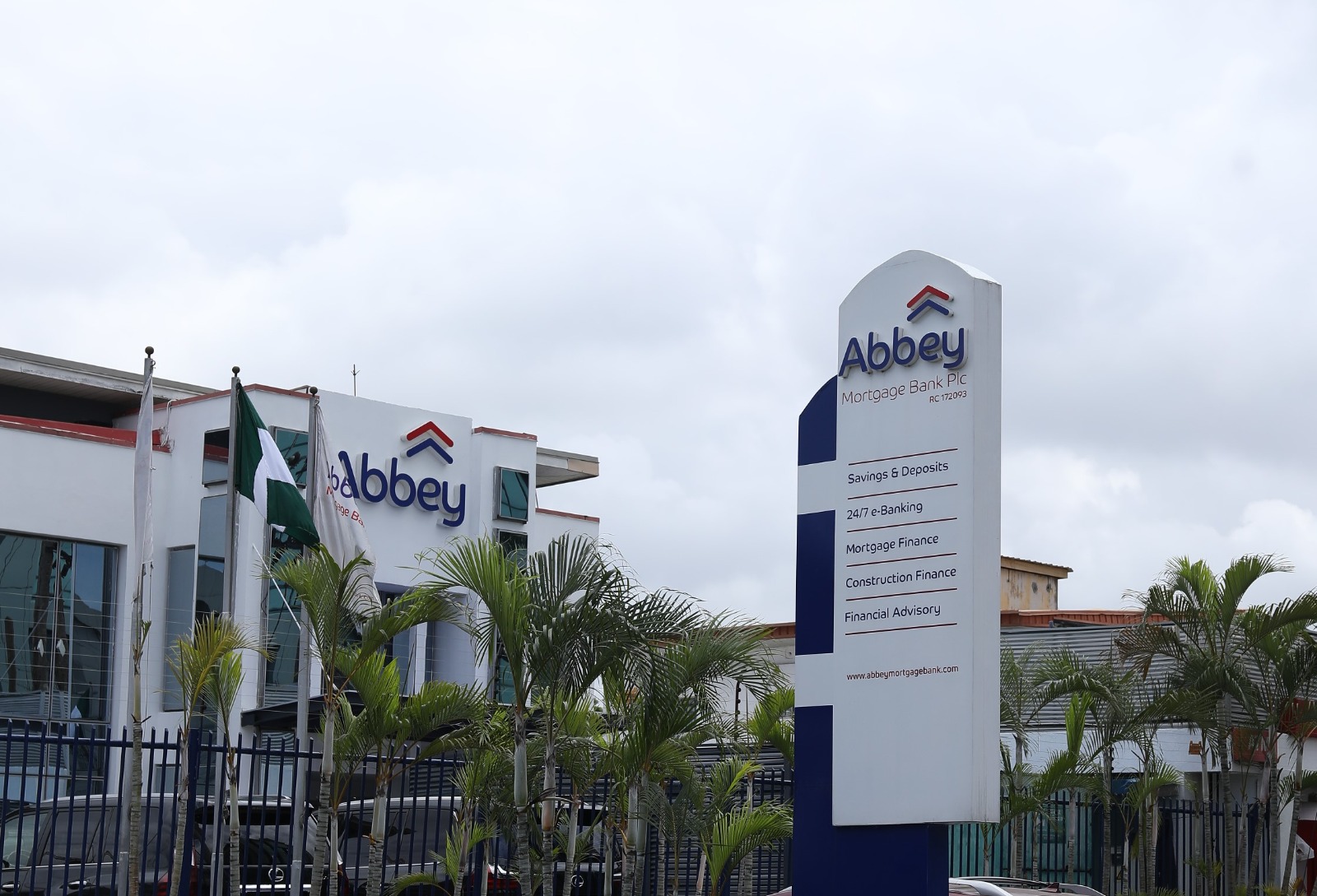
Foremost Nigerian real estate lending institution, Abbey Mortgage Bank Plc, has rebranded to Abbey Bank Plc.
This is to reflect its new status as a full-fledged financial institution as against its previous status as a bank for only the real estate sector.
The company, which trades its securities on the Nigerian Exchange (NGX) Limited, informed the investing community of its transformation.
This was in line with the approval granted by shareholders to the board of the organisation to change the name at an Extraordinary General Meeting (EGM) in January 2025.
The NGX Regulation Limited last week confirmed the name change via a circular signed by Bonaventure Onwuji on behalf of its Head of Issuer Regulation Department.
“Trading license holders and the investing public are hereby notified that the change of name of Abbey Mortgage Bank Plc to Abbey Bank Plc has been implemented by Nigerian Exchange Limited.
“This is in line with the approval obtained from the shareholders of the bank at its Extraordinary General Meeting held on January 24, 2025, and the receipt of a new certificate of incorporation from the Corporate Affairs Commission (CAC).
“Please note that the company’s trading symbol has also been changed from ABBEYBDS to ABBEYBANK,” the notice read.

-
 Feature/OPED6 years ago
Davos was Different this year
-
Travel/Tourism10 years ago
Lagos Seals Western Lodge Hotel In Ikorodu
-

 Showbiz4 years ago
Estranged Lover Releases Videos of Empress Njamah Bathing
-
 Banking8 years ago
Sort Codes of GTBank Branches in Nigeria
-

 Economy3 years ago
Subsidy Removal: CNG at N130 Per Litre Cheaper Than Petrol—IPMAN
-

 Banking4 years ago
Sort Codes of UBA Branches in Nigeria
-

 Banking3 years ago
First Bank Announces Planned Downtime
-

 Sports3 years ago
Highest Paid Nigerian Footballer – How Much Do Nigerian Footballers Earn