Economy
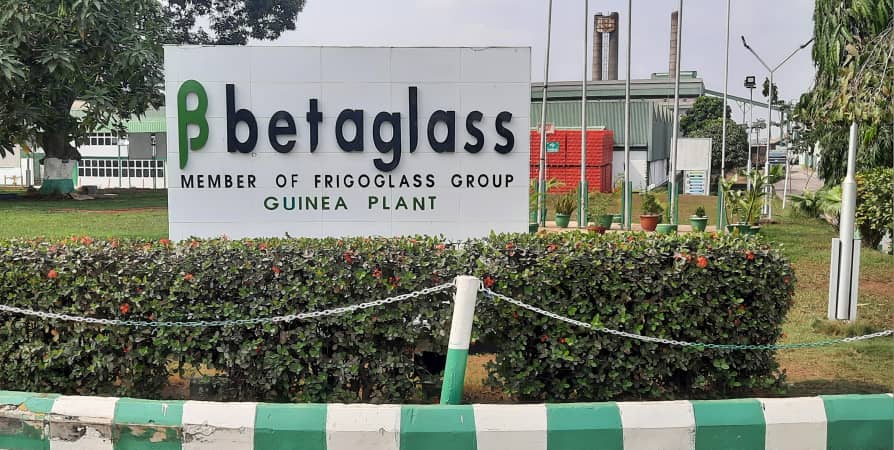
SEC Okays Emerald Holdco’s Takeover of N6.94bn Beta Glass Minority Shares
By Aduragbemi Omiyale
Emerald Holdco has been authorised by the Securities and Exchange Commission (SEC) to proceed with its mandatory takeover offer (MTO) of shares of Beta Glass Plc worth N6.94 billion held by minority investors.
In a notice to the Nigerian Exchange (NGX) Limited, it was disclosed that the MTO involves 11,741,509 ordinary shares of Beta Glass at a unit price of N590.94.
Shareholders of the company are required to fill out the MTO form for the exercise, which opened on Tuesday, July 7, 2026, and is expected to close at 5:00 pm on Tuesday, August 4, 2026.
Business Post reports that Emerald Holdco recently completed the acquisition of 100 per cent of the shares of Emerald Nigeria Intermediate Holdings B.V. (formerly Frigoinvest Nigeria Holding B.V), which owns 76.03 per cent of Packaging Industries Nigeria Limited (formerly Frigoglass Industries (Nigeria) Limited) from the Frigoglass Group.
As part of this transaction, Emerald Holdco has assumed indirect ownership of 331,260,999 ordinary shares in the company, previously held by Frigoglass Group, which represent approximately 55.22 per cent of the issued share capital of the organisation.
In accordance with the Nigerian Takeover Rules, Emerald Holdco is required to make a takeover offer to all other shareholders of Beta Glass. It is permitted to make an offer for all or a portion of the shares held by the other shareholders of the firm.
Following this requirement, Emerald Holdco sought and obtained approval from its board and shareholders to launch a takeover offer to all qualifying shareholders for the acquisition of up to 11,741,509 ordinary shares, representing 1.96 per cent of the total issued and fully paid-up share capital of Beta Glass.
The board and shareholders granted this approval on February 5, 2026, and March 3, 2026, respectively.
Economy
NASD Index Crashes 6.11% as FrieslandCampina Shares Tumble
By Adedapo Adesanya
A plunge in the share price of FrieslandCampina Wamco Nigeria Plc purged the NASD Over-the-Counter (OTC) Securities Exchange by 6.11 per cent on Tuesday, July 7.
The milk producer, famed for brands like Peak Milk and Three Crowns, was the sole price loser during the session, shedding N12.41 to end at N139.41 per unit compared with the previous day’s N151.82 per unit.
As a result, the market capitalisation of the alternative stock market went down by N155.40 billion to close at N2.387 trillion, in contrast to Monday’s closing value of N2.543 trillion, and the NASD Security Index (NSI) fell by 258.90 points to close at 3,978.07 points compared with the preceding session’s 4,236.97 points.
Business Post reports that NASD Plc was the only price gainer for the day, gaining 80 Kobo to close at N34.10 per share versus N33.30 per share.
Yesterday, the value of securities surged by 98.3 per cent to N15.9 million from the preceding session’s N2.8 million, the volume of securities increased by 183.6 per cent to 323,780 units from 114.175 million units, and the number of deals grew by 61.1 per cent to 29 deals from 18 deals.
At the close of business, Great Nigeria Insurance (GNI) Plc remained the most traded security by value on a year-to-date basis, with 3.4 billion units valued at N8.4 billion, followed by Infrastructure Credit Guarantee (Infracredit) Plc with 2.3 billion units worth N6.5 billion, and CSCS Plc with 70.7 million units exchanged for N4.9 billion.
GNI Plc also ended the session as the most traded stock by volume on a year-to-date basis, with 3.4 billion units sold for N8.4 billion, followed by Infracredit Plc with 2.3 billion units transacted for N6.5 billion, and Resourcery Plc with 1.1 billion units traded for N415.7 million.
Economy
Naira Falls to N1,375/$1 at Official Market, N1,395/$1 at Parallel Market
By Adedapo Adesanya
The Naira weakened by N7.48 or 0.55 per cent against the United States Dollar in the Nigerian Autonomous Foreign Exchange Market (NAFEX) on Tuesday, July 7, to N1,375.75/$1, in contrast to the previous day’s N1,368.27/$1.
Equally, the local currency fell against the Pound Sterling in the same official FX market yesterday by N14.66 to trade at N1,841.57/£1 versus Monday’s closing price of N1,826.91/£1, and against the Euro, it depreciated by N10.61 to close at N1,573.30/€1 compared with the preceding session’s N1,562.69/€1.
In the parallel market, the Nigerian currency lost N5 against the US Dollar during the trading day to settle at N1,395/$1 compared with the previous day’s N1,390/$1, and at the GTBank forex desk, it remained unchanged at N1,831/$1.
Liquidity fluctuations amidst sustained FX inflows from foreign portfolio investors, exporters, non-bank corporates and other sources weakened the Naira despite rising external reserves. Updated data showed that gross external reserves increased to $ 51.525 billion from $51.549 billion.
Daily interbank FX turnover stood at $54.180 million across 70 deals, from $70.430 million.
The Central Bank of Nigeria (CBN) signalled its intention in the first half of the year to slow the Naira rally and avoid capital flight by purchasing US Dollars from the market.
As for the cryptocurrency market, benchmarked tokens dipped following renewed strikes on Iran by the US after an attack on commercial ships in the Strait of Hormuz. The US Central Command forces said it began launching a series of powerful strikes against Iran to impose high costs for targeting and attacking commercial shipping crewed by innocent civilians in an international waterway.
The latest exchange of fire will test the fragile ceasefire as Iran struck back by targeting US bases in Bahrain and Kuwait. The renewed attacks in the Middle East have doused the flames of the recent rally, with markets losing $50 billion over the past 12 hours.
Cardano (ADA) fell by 5.8 per cent to $0.1695, Solana (SOL) dropped 3.4 per cent to sell at $78.24, Ripple (XRP) depreciated by 3.3 per cent to $1.08, Dogecoin (DOGE) declined by 3.2 per cent to $0.0724, and Binance Coin (BNB) slid by 1.9 per cent to $567.58.
Further, Ethereum (ETH) went down by 1.1 per cent to $1,751.40, Bitcoin (BTC) lost 0.8 per cent to quote at $62,538.88, and TRON (TRX) decreased by 0.4 per cent to $0.3289, while the US Dollar Tether (USDT) and the US Dollar Coin (USDC) traded flat at $1.00 each.
Economy
FG Backs NNPC’s Move to Revamp Refineries
By Adedapo Adesanya
The federal government has expressed support and commitment to the new efforts by the Nigerian National Petroleum Company (NNPC) Limited to rehabilitate the nation’s refineries.
The state oil company recently signed a Memorandum of Understanding (MoU) with two Chinese companies, Sanjiang Chemical Company Limited and Xinganchen (Fuzhou) Industrial Park Operation and Management Co. Limited, for collaboration through a potential Technical Equity Partnership in support of the completion and operation of the Port Harcourt and Warri Refineries.
The Minister of State for Petroleum Resources (Oil), Mr Heineken Lokpobiri, spoke at the official opening of the 2026 Nigeria Oil and Gas (NOG) Energy Week on Tuesday in Abuja.
“I was excited recently when I saw NNPC Bayo going to Warri with partners who are coming to help Nigeria rehabilitate the refineries in Warri and Port Harcourt.
“That is the right way to go. As for me, as Minister who is the chairman of the steering committee of refineries rehabilitation, I told Bayo you have my fullest support. You may not see me going to those refineries, but I am with you in spirit,” he said.
The minister also disclosed ongoing efforts to address one of the biggest complaints of investors in Nigeria’s oil and gas industry, announcing plans to streamline over 270 taxes, levies and regulatory charges blamed for driving up the cost of doing business and undermining investments.
The move came as indigenous oil producers warned that the multiplicity of charges has become a major threat to project viability and could force operators to abandon assets if left unchecked.
Mr Lokpobiri stated that the government had commissioned PricewaterhouseCoopers (PwC), in collaboration with the Nigerian Upstream Petroleum Regulatory Commission (NUPRC), to undertake a global benchmarking of Nigeria’s fiscal charges against those of competing oil-producing countries.
According to him, the exercise was part of efforts by the Tinubu administration to make Nigeria’s petroleum industry globally competitive and attract fresh investments.
“We have commissioned PwC to do a global benchmarking. Nigeria is committed to being globally competitive, so let us benchmark our fees and rates against other jurisdictions,” he said.
Mr Lokpobiri explained that operators currently contend with about 270 different taxes, fees and regulatory charges, many of which yield little revenue but create huge administrative bottlenecks.
“Sometimes when you hear that we have about 270 taxes, some of them are just a few cents. Instead of making companies process about 270 invoices, why don’t we aggregate them? The report will soon be ready, and I believe it will solve that problem once and for all.”
The minister said the initiative forms part of broader reforms aimed at improving the ease of doing business, noting that the government had consistently responded to concerns raised by industry stakeholders.
Also speaking at the event, the Minister of State, Petroleum Resources (Gas), Mr Ekperikpe Ekpo, reiterated that Nigeria was open for business, saying sweeping reforms, fiscal incentives and major infrastructure projects were positioning the country as a globally competitive destination for gas investment.
Mr Ekpo said the federal government was transforming Nigeria from a nation that merely possesses vast gas reserves into one powered by gas to drive industrialisation, energy security and economic growth.
“Our message to the global investment community is unified and resolute: Nigeria is open for business, and we have established a stable, competitive and highly predictable investment environment.”
Mr Ekpo noted that Nigeria’s 215 trillion cubic feet of proven gas reserves, the largest in Africa, would be leveraged not only for exports but also to power domestic industries, fertiliser and petrochemical plants, transportation and clean cooking initiatives under the government’s Decade of Gas programme.
He highlighted ongoing strategic infrastructure projects, including the Ajaokuta-Kaduna-Kano (AKK) and OB3 gas pipelines, as well as new gas processing facilities aimed at expanding domestic supply, reducing gas flaring and increasing the availability of liquefied petroleum gas (LPG).
The minister also reaffirmed the government’s commitment to expanding Nigeria’s liquefied natural gas export capacity through the NLNG Train 7 project, which will increase production capacity from 22 million tonnes per annum to 30 million tonnes annually upon completion.
He added that the government was accelerating the National Clean Cooking Programme, which targets five million households by 2030, and the Presidential Compressed Natural Gas (CNG) Initiative aimed at reducing transportation costs and expanding domestic gas utilisation.
Reinforcing the reform agenda, the Special Adviser to the President on Energy, Mrs Olu Verheijen, said Nigeria was now competing for investments on the strength of policy credibility rather than the size of its hydrocarbon reserves.
“The competition is no longer geology against geology. It is government against government. It is rules against rules. It is delivery against delivery,” she said.
Mrs Verheijen disclosed that reforms introduced by the Tinubu administration had already attracted more than $10 billion in Final Investment Decisions (FIDs), while investment projects worth over $50 billion were currently in the pipeline.
She added that Nigeria’s crude oil and condensate production had increased by more than 400,000 barrels per day, while external reserves had exceeded $50 billion.
“Capital is no longer sentimental. It asks one question: Can this country turn resources into bankable projects, and bankable projects into reliable returns?” she asked.
-
Feature/OPED6 years agoDavos was Different this year
-
Travel/Tourism10 years ago
Lagos Seals Western Lodge Hotel In Ikorodu
-
Showbiz4 years agoEstranged Lover Releases Videos of Empress Njamah Bathing
-
Banking8 years agoSort Codes of GTBank Branches in Nigeria
-
Economy3 years agoSubsidy Removal: CNG at N130 Per Litre Cheaper Than Petrol—IPMAN
-
Banking4 years agoSort Codes of UBA Branches in Nigeria
-
Banking3 years agoFirst Bank Announces Planned Downtime
-
Sports3 years agoHighest Paid Nigerian Footballer – How Much Do Nigerian Footballers Earn