Connect with us

General

SERAP Wants Privacy Details of Election Data from INEC

Published

on

inec electoral bill

By Adedapo Adesanya

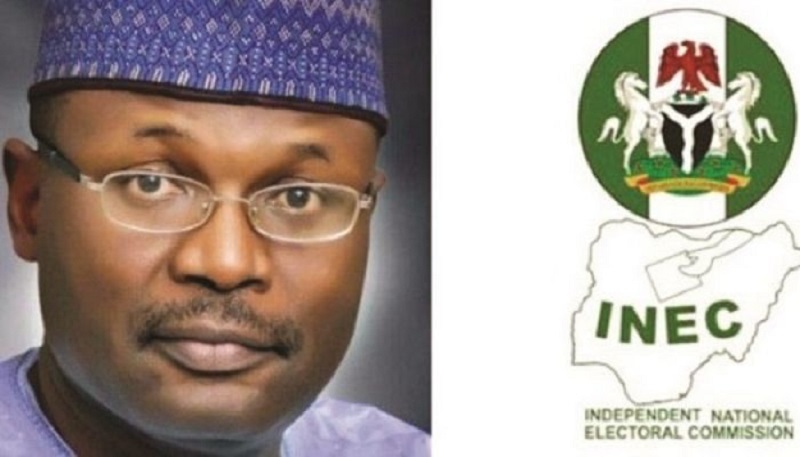
The chairman of the Independent National Electoral Commission (INEC), Mr Mahmood Yakubu, has been urged to publish the details of safeguards and mechanisms put in place to protect the privacy and security of election information and data in the custody of the organisation, including in its servers, databases and other electronic formats.

This appeal was made by the Socio-Economic Rights and Accountability Project (SERAP) in a Freedom of Information (FoI) request dated March 26, 2022.

In the document signed by SERAP deputy director, Mr Kolawole Oluwadare, SERAP urged him to “clarify whether any third-party is involved in the collection, control, and use of election information and data, the legal rules and processes guiding the choice of any such third party”.

SERAP also urged him to “clarify the other location or locations where election information is stored apart from Abuja, and the details of any third-party who has access to such a database, the safeguards and contingency plans put in place by INEC to address any threats to the privacy and security of election information”.

“Ensuring adequate safeguards and mechanisms to protect the privacy and security of election information and data would improve the ability of INEC to effectively discharge its constitutional and statutory duties”.

SERAP said: “This would also help to remove risks of attack and unlawful interference by any unauthorised person with election information and data”.

According to SERAP, “Widely publishing the details of safeguards and mechanisms of election data and information would also contribute to improving the sanctity and integrity of the electoral process, and public trust and confidence in the process”.

The letter, read in part: “Putting in place adequate technological security measures to prevent unauthorized access to election information and data would improve the credibility of the electoral process and the enjoyment of people’s right to participate in their own government.

“As an institution, which collects, controls and uses election-related information and data in the discharge of its constitutional and statutory duties, INEC has a legal responsibility to ensure adequate protection of such information and data from threats and vulnerabilities to attack or interference.

“Any interference by unauthorised third party in election information and data may be used for corrupt, political and other unlawful purposes, and would expose election systems to fraud and meddling, as well undermine the right to participation and the country’s democratic system.

“The right of people to participate in their government is a fundamental feature of any democratic society, and any infringement of privacy and security of election information and data would strike at the heart of representative government.

“We would be grateful if the recommended measures are taken within 7 days of the receipt and/or publication of this letter. If we have not heard from you by then, SERAP shall consider appropriate legal actions to compel INEC to comply with our request in the public interest.

“SERAP notes that voter registration systems and voting systems are the most vulnerable and susceptible to manipulation by corrupt politicians and other actors.

“As the experiences in other countries have shown, election information is often susceptible to unlawful interference by corrupt politicians and other actors, which can be damaging to the integrity of the electoral process and democratic practices.

“The experiences of other countries demonstrate the need for INEC to take effective and transparent measures to ensure and protect the privacy and security of election information and data, which would protect the integrity of the country’s democracy.

“Any privacy or security weakness in any component of any of the election systems can be easily exploited to cast doubt on the integrity of the electoral process.

“Our requests are brought in the public interest, and in keeping with the requirements of the Nigerian Constitution 1999 [as amended], the Electoral Act, the Freedom of Information Act, and the country’s international obligations including under the African Charter on Human and Peoples’ Rights, and the African Charter on Democracy, Elections, and Governance.

“SERAP notes that Section 9(2)(a) of the Electoral Act 2022 provides that INEC ‘shall keep the Register of Voters in its National Headquarters and other locations as the Commission may determine.’ The provision also states that INEC ‘shall keep the Register of Voters in electronic format in its central database.’

“Section 153 of the Act defines ‘electronic format’ to include ‘the electronic version of the Register of Voters or National Electronic Register of Election Results, as the case may be, created, recorded, transmitted or stored in digital form or in other intangible forms by electronic, magnetic or optical means or by any other means.”

The organisation said: “Section 37 of the Nigerian Constitution, article 17 of the International Covenant on Civil and Political Rights, and article 5 of the African Charter on Human and Peoples’ Rights protect against arbitrary or unlawful interference with one’s privacy.

“Interference with the privacy of election information and data would clearly undermine the security of any such information and data. Similarly, Article 9 (1) of the African Charter provides that, ‘Every individual shall have the right to receive information.

“Article 2(10) of the African Charter on Democracy, Elections, and Governance requires states parties including Nigeria to ‘promote the establishment of the necessary conditions to foster citizen participation, transparency, access to information, and accountability in the management of public affairs.’”


Adedapo Adesanya is a journalist, polymath, and connoisseur of everything art. When he is not writing, he has his nose buried in one of the many books or articles he has bookmarked or simply listening to good music with a bottle of beer or wine. He supports the greatest club in the world, Manchester United F.C.

Advertisement
1 Comment

Leave a Reply

Your email address will not be published. Required fields are marked *

General

AGF Fagbemi Takes Over Malami Prosecution from DSS

Published

on

remand abubakar malami

By Adedapo Adesanya

The Minister of Justice and Attorney General of the Federation, Mr Lateef Fagbemi, has taken over the prosecution of his immediate predecessor, Mr Abubakar Malami.

Mr Malami is facing terrorism and illegal firearms possession charges brought against him by the Department of State Service (DSS).

Mr Fagbemi, a Senior Advocate of Nigeria (SAN), took over the trial from the secret police on Wednesday at the Federal High Court in Abuja.

The Director of the Public Prosecution of the Federation, Mr Rotimi Oyedepo, announced the Attorney General’s appearance in the matter.

Mr Oyedepo told Justice Joyce Abdulmalik that the trial cannot proceed because Mr Fagbemi has just taken over the prosecution.

He informed the court that the prosecution needed more time to familiarise itself with the facts of the case.

Counsel to the defendants, Mr Adedayo Adedeji, who did not oppose the application, however, urged the court to strike out the matter if the prosecution fails to open its case at the next adjourned date, citing lack of diligent prosecution.

Justice Abdulmalik subsequently adjourned the matter to March 10 for trial and for the prosecution to formally open its case.

The court had, on February 27, admitted Malami and his son, Mr Abdulaziz, to N200 million bail, with two sureties, each one of whom must own landed property either in Maitama or Asokoro.

Justice Abdulmalik had said that the title of the property must be deposited with the Deputy Chief Registrar of the Court along with valid international passports.

The sureties were also ordered to depose to an affidavit of means and submit their two recent passport photographs to the court.

Mr Malami and his son were also ordered to submit their international passports and recent passport photographs to the court.

The DSS had arraigned the ex-AGF and his son, Mr Abdulaziz, on a five-count charge bordering on terrorism and illegal firearms possession.

In the charge, marked FHC/ABJ/CR/63/2026, filed before the Federal High Court in Abuja, Malami is also accused of refusing to prosecute suspected terrorism financiers, whose case files were handed to him while he served as the AGF and Minister of Justice.

Mr Malami and Mr Abdulaziz are equally accused of warehousing firearms in their residence at Gesse Phase II Area, Birain Kebbi LGA, Kebbi State, without lawful authority.

The DSS accused Mr Malami in count one of the charge, with knowingly abetting terrorism financing, while the ex-AGF and his son are charged in counts two to five, with unlawful, possession of a Sturm Magnum 17-0101 firearm, 16 Redstar AAA 5720 live rounds of cartridges and 27 expended Redstar AAA 5’20 cartridges, contrary to and punishable under relevant Sections of Terrorism (Prevention and Prohibition) Act, 2022 and Firearms Act, 2004.

Continue Reading

General

NPA Records 24.8% Growth in Total Cargo Volume for 2025

Published

on

Hike Cargo Clearing Rate

By Adedapo Adesanya

The Nigerian Ports Authority (NPA) has announced a significant 24.8 per cent increase in total cargo throughput for 2025.

According to the NPA’s 2025 Operational Performance Report, total cargo throughput rose from approximately 103.6 million metric tons in 2024 to over 129.3 million metric tons in 2025.

The report identified Lekki Port as Nigeria’s leading port, accounting for 40.6 per cent of the nation’s total cargo throughput. Onne Port followed with 19.1 per cent, while Apapa Port handled 16.7 per cent.

Beyond volume, Lekki Port also received the largest vessels, recording an average Gross Registered Tonnage (GRT) of 55,712, slightly higher than Onne Port’s 53,022 GRT.

Apapa and Tin Can Island ports recorded average vessel sizes of 33,251 GRT and 36,909 GRT, respectively, while Delta Ports handled vessels averaging 17,414 GRT.

Although Tin Can Island Port recorded the highest frequency of ship arrivals, accounting for 22.7 per cent of total ship calls, Lekki and Onne are increasingly attracting larger “heavyweight” vessels, strengthening Nigeria’s capacity to handle higher-value cargo.

The data showed that imports continued to dominate cargo traffic, and the report highlighted a steady rise in outward trade. Exports accounted for 39.0 per cent of total cargo throughput, while inward traffic represented 59.2 per cent.

Containerised cargo, widely regarded as a key indicator of trade activity, recorded substantial growth. Total container traffic increased by 25.7 per cent, surpassing 2.1 million Twenty-foot Equivalent Units (TEUs).

Import-laden containers surged by 32.8 per cent, while export containers rose by 3.1 per cent. Notably, transhipment containers recorded a remarkable 205.8 per cent increase, positioning Nigeria as an emerging regional logistics hub serving West and Central Africa.

Liquid bulk cargo, including petroleum products and chemicals, remained the dominant commodity category, accounting for 54.7 per cent of total cargo, while containerised cargo represented 24 per cent.

Speaking on the report, the Managing Director of NPA, Mr Abubakar Dantsoho, described the 2025 performance as a historic milestone.

“Nigeria’s maritime sector recorded a historic surge in activity in 2025, driven by increased cargo throughput, rising container traffic, and a growing export footprint. This underscores the Federal Government’s commitment to economic diversification,” he said.

Looking ahead, Mr Dantsoho expressed confidence that the Federal Government-approved port modernisation programme and the implementation of the National Single Window system would power the next phase of growth.

The comprehensive modernisation initiative aims to rehabilitate ageing infrastructure, deepen berths, upgrade quays, expand cargo-handling capacity, and deploy advanced digital solutions across Nigeria’s ports.

The reforms are expected to reduce vessel turnaround time, cut cargo dwell time, improve safety standards, and boost overall operational efficiency.

Continue Reading

General

Tinubu Releases Maintenance Funds to Safeguard Space Assets

Published

on

Tinubu Türkiye

By Adedapo Adesanya

President Bola Tinubu has directed the immediate release of approved funds for the maintenance of Nigeria’s space assets in line with the National Space Policy and Programme.

He reiterated his administration’s commitment to the realisation of Nigeria’s space policy and programme as outlined in the revised 25-year roadmap for space development.

“I hereby approve that the cost of the implementation of the approved revised 25-year roadmap for the implementation of the national space policy be forwarded to the Federal Executive Council for consideration and approval,” he said.

The President, who was represented by Vice President Kashim Shettima, approved on Tuesday during the first meeting of the National Space Council held at the Presidential Villa, Abuja.

“Nigeria will not watch the new frontier unfold from the sidelines. We will participate, we will compete, we will contribute. Our space ambitions must be anchored in outcomes, accountability and national value.

“We must build a programme that serves the farmer in the field, the teacher in the classroom, the entrepreneur in the market, the soldier on duty, the researcher in the laboratory and the policy maker who must plan with evidence rather than guesswork. This is how a nation turns attitude into advantage.”

President Tinubu assured that his administration, through the Renewed Hope Agenda, is committed to developing the society “by engaging relevant human resources for the socio-economic improvement of our nation.

“We shall be steadfast in providing the required support to the success of the space programme as well as relevant resources needed for its growth and the successful realisation of the mandate of the nation’s space agency,” he added.

The President noted that his administration’s investments in the sector are prompted by the opportunities in outer space “as a new frontier for human development, as a stimulus for increased technological advancement and economic diversification.”

Continue Reading

Trending