Connect with us

General

SERAP Wants Privacy Details of Election Data from INEC

Published

on

inec electoral bill

By Adedapo Adesanya

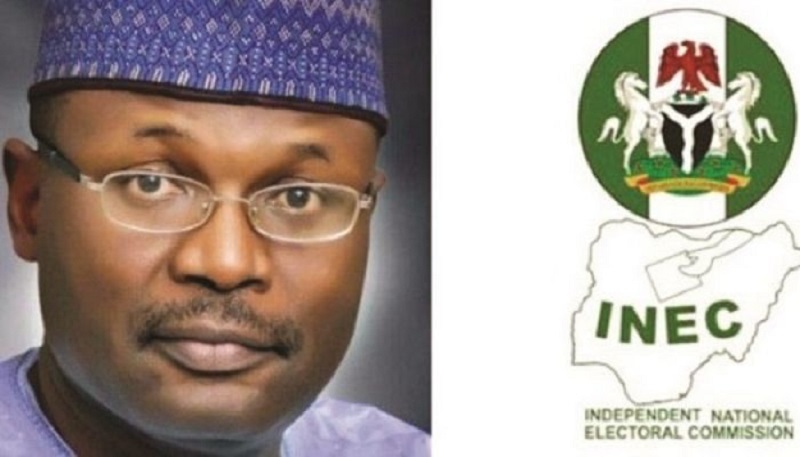
The chairman of the Independent National Electoral Commission (INEC), Mr Mahmood Yakubu, has been urged to publish the details of safeguards and mechanisms put in place to protect the privacy and security of election information and data in the custody of the organisation, including in its servers, databases and other electronic formats.

This appeal was made by the Socio-Economic Rights and Accountability Project (SERAP) in a Freedom of Information (FoI) request dated March 26, 2022.

In the document signed by SERAP deputy director, Mr Kolawole Oluwadare, SERAP urged him to “clarify whether any third-party is involved in the collection, control, and use of election information and data, the legal rules and processes guiding the choice of any such third party”.

SERAP also urged him to “clarify the other location or locations where election information is stored apart from Abuja, and the details of any third-party who has access to such a database, the safeguards and contingency plans put in place by INEC to address any threats to the privacy and security of election information”.

“Ensuring adequate safeguards and mechanisms to protect the privacy and security of election information and data would improve the ability of INEC to effectively discharge its constitutional and statutory duties”.

SERAP said: “This would also help to remove risks of attack and unlawful interference by any unauthorised person with election information and data”.

According to SERAP, “Widely publishing the details of safeguards and mechanisms of election data and information would also contribute to improving the sanctity and integrity of the electoral process, and public trust and confidence in the process”.

The letter, read in part: “Putting in place adequate technological security measures to prevent unauthorized access to election information and data would improve the credibility of the electoral process and the enjoyment of people’s right to participate in their own government.

“As an institution, which collects, controls and uses election-related information and data in the discharge of its constitutional and statutory duties, INEC has a legal responsibility to ensure adequate protection of such information and data from threats and vulnerabilities to attack or interference.

“Any interference by unauthorised third party in election information and data may be used for corrupt, political and other unlawful purposes, and would expose election systems to fraud and meddling, as well undermine the right to participation and the country’s democratic system.

“The right of people to participate in their government is a fundamental feature of any democratic society, and any infringement of privacy and security of election information and data would strike at the heart of representative government.

“We would be grateful if the recommended measures are taken within 7 days of the receipt and/or publication of this letter. If we have not heard from you by then, SERAP shall consider appropriate legal actions to compel INEC to comply with our request in the public interest.

“SERAP notes that voter registration systems and voting systems are the most vulnerable and susceptible to manipulation by corrupt politicians and other actors.

“As the experiences in other countries have shown, election information is often susceptible to unlawful interference by corrupt politicians and other actors, which can be damaging to the integrity of the electoral process and democratic practices.

“The experiences of other countries demonstrate the need for INEC to take effective and transparent measures to ensure and protect the privacy and security of election information and data, which would protect the integrity of the country’s democracy.

“Any privacy or security weakness in any component of any of the election systems can be easily exploited to cast doubt on the integrity of the electoral process.

“Our requests are brought in the public interest, and in keeping with the requirements of the Nigerian Constitution 1999 [as amended], the Electoral Act, the Freedom of Information Act, and the country’s international obligations including under the African Charter on Human and Peoples’ Rights, and the African Charter on Democracy, Elections, and Governance.

“SERAP notes that Section 9(2)(a) of the Electoral Act 2022 provides that INEC ‘shall keep the Register of Voters in its National Headquarters and other locations as the Commission may determine.’ The provision also states that INEC ‘shall keep the Register of Voters in electronic format in its central database.’

“Section 153 of the Act defines ‘electronic format’ to include ‘the electronic version of the Register of Voters or National Electronic Register of Election Results, as the case may be, created, recorded, transmitted or stored in digital form or in other intangible forms by electronic, magnetic or optical means or by any other means.”

The organisation said: “Section 37 of the Nigerian Constitution, article 17 of the International Covenant on Civil and Political Rights, and article 5 of the African Charter on Human and Peoples’ Rights protect against arbitrary or unlawful interference with one’s privacy.

“Interference with the privacy of election information and data would clearly undermine the security of any such information and data. Similarly, Article 9 (1) of the African Charter provides that, ‘Every individual shall have the right to receive information.

“Article 2(10) of the African Charter on Democracy, Elections, and Governance requires states parties including Nigeria to ‘promote the establishment of the necessary conditions to foster citizen participation, transparency, access to information, and accountability in the management of public affairs.’”


Adedapo Adesanya is a journalist, polymath, and connoisseur of everything art. When he is not writing, he has his nose buried in one of the many books or articles he has bookmarked or simply listening to good music with a bottle of beer or wine. He supports the greatest club in the world, Manchester United F.C.

General

NDPC Laments Shortage of Data Protection Officers in Nigeria

Published

on

data protection officer

By Adedapo Adesanya

The Nigeria Data Protection Commission (NDPC) has warned that the country faces a significant gap of 480,000 Data Protection Officers (DPOs), in spite of notable progress recorded in the last three years.

The National Commissioner of NDPC, Mr Vincent Olatunji, disclosed the opening of a one-week training for the second cohort of DPOs Training and Certification Programme in Abuja.

Mr Olatunji said there were still shortages even as the number of certified DPOs in Nigeria increased from fewer than 1,000 three years ago to over 10,000, while more than 27,000 professionals now operate within the broader privacy ecosystem.

However, he noted that the gap remained wide due to the increasing number of data controllers and processors in the country.

“We have identified over 500,000 data controllers and processors who require the services of data protection officers.

“At the moment, we have about 10,000 certified DPOs to work in that space.

“The gap of about 480,000 still exists, which underscores the need for sustained capacity building,” he said.

The NDPC boss said the commission was intensifying efforts to bridge the gap through continuous training programmes.

He said the initiative was aimed at positioning Nigeria as a hub for highly skilled and globally competitive data protection professionals in Africa.

“Our goal is to make Nigeria the go-to country when it comes to sourcing qualified data protection officers in Africa.

“The certification we offer meets global standards, enabling practitioners to operate not just locally but in any part of the world,” Mr Olatunji said.

He said the programme would also contribute to job creation within the digital economy, in line with the federal government’s priorities.

On her part, Mrs Tolu Fadipe, the commission’s Head of Research and Development, emphasised the critical role of data protection in the digital economy.

She said that responsible data handling was fundamental to the growth of digital systems and emerging technologies.

“As we move towards a digital economy, data becomes central and protecting that data is essential.

“This training is designed to build competence and ensure organisations comply with the Nigeria Data Protection Act,” she said.

Continue Reading

General

Lagos Discontinues Manual Property Planning Permits System

Published

on

LASPPPA Property Planning Permits

By Modupe Gbadeyanka

The processing of planning permits for property owners in Lagos State is now fully digital, discontinuing manual and semi-digital processes.

The Special Adviser to the Governor on E-GIS and Urban Development, Mr Olajide Abiodun, said the new system is the Electronic Physical Planning Process System (EPPPS).

He described it as a transformative, web-based platform designed to completely modernise the operations of the Ministry of Physical Planning and Urban Development, which is transitioning from legacy, manual systems toward a highly efficient, transparent, and scalable digital framework.

“Lagos State has entered the dawn of a new era in digital processing of Planning Permissions, Authorisations to Commence Construction Works, Stage Certification, amongst other services,” he told newsmen recently.

Mr Abiodun noted that the full automation of the planning permit process commenced on April 1, 2026, stressing that anyone processing planning permits manually from the stated date is engaging in an illegal activity and that all applications must now go through the EPPPS platform exclusively.

The Governor Babajide Sanwo-Olu’s aide added that once one receives planning approvals via EPPPS, the journey is not over. The person should immediately apply for their Authorisation to Commence Construction Works and Stage Certifications through the EPPPS platform, amongst other services, adding that there will be a task force to monitor compliance with this activity.

While updating the citizens on other developments on Urban Development and Land Administration in the State, he said the state government has introduced CAP to further strengthen LASBCA’s capability in ensuring strict building development compliance.

According to him, CAP is a strategic Public-Private Partnership that allows accredited private professionals to work alongside LASBCA in monitoring building projects.

“This helps us ensure strict compliance with the state’s building codes. It will drastically reduce the risk of building collapses while accelerating project delivery. It is a win for safety, a win for the construction industry, and a win for Lagosians,” he said.

The Lagos State Government, in the journey of moving from the built environment to Land Administration, has actively decentralised its services to ease the burden on citizens, announcing that the e-GIS Regional Office in Ikeja has officially commenced operations.

“This is a dedicated, customer-facing hub designed specifically to handle your digitised land administration activities. Citizens will no longer need to travel all the way to Alausa for every land-related inquiry.

“The Ikeja office is fully equipped to serve residents efficiently at the grassroots level, as the Government is assuring that the remaining divisional offices across the state will also commence operations very soon,” he disclosed.

Continue Reading

General

Oladiti Eyes NUPENG Presidency as Akporeha Bows Out

Published

on

NUPENG

By Adedapo Adesanya

Mr Salimon Akanni Oladiti is in pole position to take over the presidency of the Nigeria Union of Petroleum and Natural Gas Workers (NUPENG).

According to reports, Mr Oladiti, who is the current National Trustee of the union, will take over from Mr Williams Akporeha, who is set to exit office at the end of April after eight years at the helm.

Mr Akporeha announced his departure at the weekend during the Quarterly National Executive Council meeting of the Petroleum Tanker Drivers (PTD) Branch in Warri, Delta State.

He noted that the union will elect a new president on April 24 in Lagos.

If Mr Oladiti, a former PTD National Chairman, emerges as the president of the union, it would be the first time a PTD member ascends to NUPENG’s top office.

The move gained momentum at the meeting, where Mr Joseph Okafor moved a motion for Mr Oladiti’s unanimous ratification, seconded by Mr Adekunle Akinlaja.

Mr Akporeha expressed gratitude to PTD members for their steadfast support throughout his tenure.

“Eight years ago, you stood by me in this same room. You didn’t only stand by me, you supported me. When things were tough, you were there through all the challenges.

“I want to appreciate all of you. If I stand to support one of your own as President, I have no apology. If I had done anything otherwise, my conscience would have troubled me. God used you to install me,” he said.

He urged members to rally behind Oladiti and the newly elected PTD National Chairman, Mathias Ote, to sustain the union’s stability and growth.

“By the grace of God, as I move along, I want to see a union stronger than I left it. I don’t want to see PTD go into disarray. The greatest favour you can do is to support this man whom you have elected today as your national chairman. Also support your own that will be the President, by the grace of God, on April 24,” he added.

On his part, the President of the Nigerian Association of Road Transport Owners (NARTO), Mr Lawal Yusuf Othman, commended NUPENG for steering a peaceful transition.

“I once again want to appreciate NUPENG. NARTO will continue to give you the necessary support,” he said.

Continue Reading

Trending