Feature/OPED
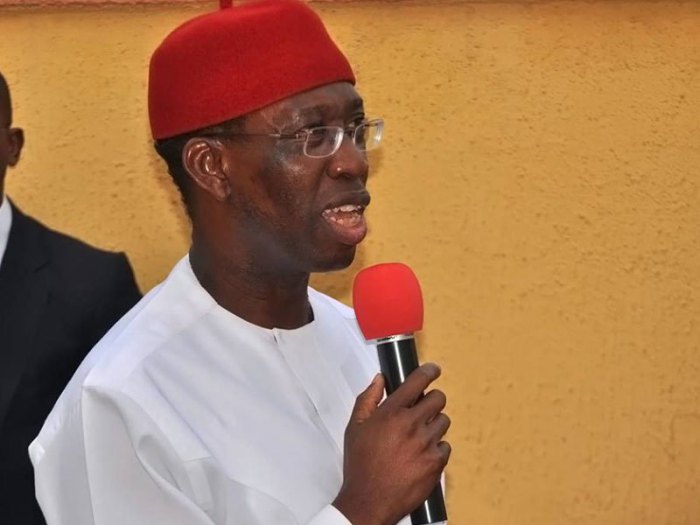
Deconstructing Malice Campaign Accusation Preferred Against Okowa
By Jerome-Mario Chijioke Utomi
In the words of Jimmy Carter, former President of the United States of America (USA), the experience of democracy is like the experience of life itself—always changing, infinite in its variety, sometimes turbulent and all the more valuable for having been tested in adversity.
In like manner, evidence abounds, if only sought for, that in every democratic setting, there are clear thinkers, muddled thinkers and people that fall in between. Clear thinkers are the ones that can cull everything down into the right points-are very hard to find. But if you get yourself a team of clear thinkers, the possibilities are endless. These are men who see tomorrow, trailblazers and high-level executives, but most often misunderstood by some fellow countrymen still stuck in the old normal of yesterday.
Ifeanyi Okowa, the incumbent Governor of Delta State, without any shadow of the doubt, fittingly falls into the bracket of a clear thinker. But like the case of every clear thinker, he is currently misunderstood by some fellow countrymen still stuck in the old normal of yesterday.
A typical instance to support this assertion is the recent drama and accusations in the ruling party in Delta State, the Peoples Democratic Party (PDP) by some councillors of the party from Delta Central Senatorial District that he is trying to push them to vote for his choice in the forthcoming governorship primary to choose the party’s flag bearer.
According to the post, the Governor is using the instruments of government and instructed them to support his supposed preferred candidate, the Speaker of the Delta State House of Assembly, Sheriff Oborevworio.
On the first thought, the above narrative seems like a reality. It looks alluring to believe particularly as the nation braces up for the general elections; a period where like war, all is considered fair; where and when political players welcome every opportunity to continually dig the mud in search of political gold.
At this level, there is no single cause of conflict. Rather, conflict becomes context-specific, multi-causal and multidimensional and can result from a combination of the following factors which include but are not limited to the issues of mutual distrust, suspicion, prejudice and name-calling.
In Delta State, such development/occurrence is exacerbated by the feudalistic and oligarch nature of a power bloc/section of the state and collaborated by this power-hungry gladiators’ incapacity, sincerity and lack of trustworthiness to negotiate and resolve contentious issues without resorting to the present political gimmicks.
But beyond this peripheral prism, there exists something deeply troubling with this latest slant, scant and calculated accusation paddled against the person of the Governor.
Aside from wilful refusal to entertain alternative opinions through a number of credible sources of information openly and freely available in the public domain that might help produce a deeper understanding of the governor’s position on the matter, and their choice to focus on convenient untruth presented with a superficial, emotional and manipulative approach that is not worthy of our democracy, making the current development in the state a reality to worry about is that these accusers exploited a mixture of fear and propaganda among gullible Deltans and postured themselves as bold defenders of our state while weakening the foundation of our unity.
But for reasons that come in double folds, this piece is not surprised.
First and very fundamental, it is globally believed that when human beings develop a higher order of thinking, they gain the ability to conceptualize threats instead of just perceiving them. But they also gained the ability to conceptualize imaginary threats. And when groups of people are persuaded to conceptualize these imaginary threats, they activate the fear response as powerfully as would real threats.
This is the foundation of the present challenge.
For yet-to-be-identified reason(s), the Governor’s accusers appear to have activated a fear response as powerful as would real threats across the lengths of the state.
Qualifying the present attack as a crisis is an awareness that it is coming at a time when Okowa as a creative leader daily professes that the PDP, of which he is the leader in the state, has a policy of rotating the governorship among the three Senatorial Districts of the state for the purposes of equity and inclusiveness through equitable distribution of appointments and projects without influencing/interference with the process that throws up such beneficiaries.
In the same light, if there is any other reason as to why Governor Okowa will not indulge in the shenanigan as alleged, it is the fact that at no time in the history of our beloved Delta State have we been as united as we are today or witnessed such magnitude of trust of ourselves and of our state under the leadership of Okowa.
As we know, the state, to use the Governor’s words, is a microcosm of Nigeria because she is peopled by different ethnic nationalities. She has had inter-ethnic conflicts/clashes, fatal boundary disputes, especially over oil-bearing land, and political tensions. She has had high unemployment and poverty rates. Luckily, successive governments of the state have tackled the issues in different ways, and I am building on the foundation they laid.
Looking at the above words coming from the Governor himself, it becomes obvious that there is no way he will join in destroying a house he assisted to build or take actions that will be inimical to the sustained peace in the state.
Instead of the present attack, name-calling and campaign of calumny against the governor, this piece holds the opinion that what the Governor needs is support and not vilification.
There are so many reasons that informed this decision; it ranges from Governor’s disposition to conflict resolution and peacebuilding in the state to his superlative performance in infrastructural development of the state particularly in the areas of road networks.
To underscore this position, let’s listen to Okowa as he captured it during a recent function in Lagos; We have erected structures for conflict resolution and peacebuilding. They include the Office of the Special Adviser on Conflict Resolution and Peace Building and the Delta State Advisory and Peace Building Council with a membership of 42 (forty-two) respected men and women in various fields drawn from every local government area of the State. These structures have proactively prevented crises by promptly and effectively resolving disputes.
Continuing, he added that; We also have a deliberate policy to tackle youth unemployment through skills training and entrepreneurship development programmes. I believe that the way out of the unemployment quagmire is to equip the youth with the technical know-how, vocational skills, values and resources to become self-employed, as distinct from one-off empowerment.
This is what my administration has done by instituting various skills training and entrepreneurship development programmes, which include: Skills Training and Entrepreneurship Programme (STEP); Youth Agricultural Entrepreneurs Programme (YAGEP); Graduate Employment Enhancement Programme (GEEP); Rural Youth Skills Acquisition Programme (RYSA); Girls Entrepreneurship Skills Training (GEST); and Women Entrepreneurship Skills Acquisition Programme (WESAP).
These programmes are trainee-centred and service-oriented. The sectors and activities covered include agriculture, agricultural value chain services, vocational skills-based microenterprises and cottage enterprises. Furthermore, the training and mentoring processes aim beyond raising entrepreneurs to produce leaders and managers that have high levels of personal responsibility and effectiveness. I am pleased to let you know that after six years of faithful implementation of these programmes, we have trained and given business support packages to several thousands of youths.
Following the success of these interventions and other efforts in promoting technical education, Delta State was ranked the Best State in Human Capital Development in the 2017 States Peer Review by the National Competitiveness Council of Nigeria. Also in 2020, Delta was adjudged to be the Second Least Poor State, coming only after Lagos, Nigeria’s business hub, according to the Nigerian Bureau of Statistics (NBS).
The above efforts can only come from a Governor that is willing to save and serve his people.
On a final note, as the commentary continues, there are two striking attributes that stand Okowa out; first, well-meaning Nigerians are in agreement that he is a national leader that is well respected by all.
Secondly, he is among the few public office holders in the country that have played politics using global rules and dictates.
He is in the opinion of this piece exposed to the present attack not because there is an established link with the said allegation, but primarily because, the accusers feel that he occupies a public office and therefore, lacks the right to private living.
Jerome-Mario Utomi is the Programme Coordinator (Media and Public Policy), Social and Economic Justice Advocacy (SEJA), Lagos. He can be reached via [email protected]/08032725374
Feature/OPED
Why the Future of PR Depends on Healthier Client–Agency Partnerships
By Moliehi Molekoa
The start of a new year often brings optimism, new strategies, and renewed ambition. However, for the public relations and reputation management industry, the past year ended not only with optimism but also with hard-earned clarity.
2025 was more than a challenging year. It was a reckoning and a stress test for operating models, procurement practices, and, most importantly, the foundation of client–agency partnerships. For the C-suite, this is not solely an agency issue.
The year revealed a more fundamental challenge: a partnership problem that, if left unaddressed, can easily erode the very reputations, trust, and resilience agencies are hired to protect. What has emerged is not disillusionment, but the need for a clearer understanding of where established ways of working no longer reflect the reality they are meant to support.
The uncomfortable truth we keep avoiding
Public relations agencies are businesses, not cost centres or expandable resources. They are not informal extensions of internal teams, lacking the protection, stability, or benefits those teams receive. They are businesses.
Yet, across markets, agencies are often expected to operate under conditions that would raise immediate concerns in any boardroom:
-
Unclear and constantly shifting scope
-
Short-term contracts paired with long-term expectations
-
Sixty-, ninety-, even 120-day payment terms
-
Procurement-led pricing pressure divorced from delivery realities
-
Pitch processes that consume months of senior talent time, often with no feedback, timelines, or accountability
If these conditions would concern you within your own organisation, they should also concern you regarding the partner responsible for your reputation.
Growth on paper, pressure in practice
On the surface, the industry appears healthy. Global market valuations continue to rise. Demand for reputation management, stakeholder engagement, crisis preparedness, and strategic counsel has never been higher.
However, beneath this top-line growth lies the uncomfortable reality: fewer than half of agencies expect meaningful profit growth, even as workloads increase and expectations rise.
This disconnect is significant. It indicates an industry being asked to deliver more across additional platforms, at greater speed, with deeper insight, and with higher risk exposure, all while absorbing increased commercial uncertainty.
For African agencies in particular, this pressure is intensified by factors such as volatile currencies, rising talent costs, fragile data infrastructure, and procurement models adopted from economies with fundamentally different conditions. This is not a complaint. It is reality.
This pressure is not one-sided. Many clients face constraints ranging from procurement mandates and short-term cost controls to internal capacity gaps, which increasingly shift responsibility outward. But pressure transfer is not the same as partnership, and left unmanaged, it creates long-term risk for both parties.
The pitching problem no one wants to own
Agencies are not anti-competition. Pitches sharpen thinking and drive excellence. What agencies increasingly challenge is how pitching is done.
Across markets, agencies participate in dozens of pitches each year, with success rates well below 20%. Senior leaders frequently invest unpaid hours, often with limited information, tight timelines, and evaluation criteria that prioritise cost over value.
And then, too often, dead silence, no feedback, no communication about delays, and a lack of decency in providing detailed feedback on the decision drivers.
In any other supplier relationship, this would not meet basic governance standards. In a profession built on intellectual capital, it suggests that expertise is undervalued.
This is also where independent pitch consultants become increasingly important and valuable if clients choose this route to help facilitate their pitch process. Their role in the process is not to advocate for agencies but to act as neutral custodians of fairness, realism, and governance. When used well, they help clients align ambition with timelines, scope, and budget, and ensure transparency and feedback that ultimately lead to better decision-making.
“More for less” is not a strategy
A particularly damaging expectation is the belief that agencies can sustainably deliver enterprise-level outcomes on limited budgets, often while dedicating nearly full-time senior resources. This is not efficiency. It is misalignment.
No executive would expect a business unit to thrive while under-resourced, overexposed, and cash-constrained. Yet agencies are often required to operate under these conditions while remaining accountable for outcomes that affect market confidence, stakeholder trust, and brand equity.
Here is a friendly reminder: reputation management is not a commodity. It is risk management.
It is value creation. It also requires investment that matches its significance.
A necessary reset
As leadership teams plan for growth, resilience, and relevance, there is both an opportunity and a responsibility to reset how agency partnerships are structured.
That reset looks like:
-
Contracts that balance flexibility and sustainability
-
Payment terms that reflect mutual dependency
-
Pitch processes that respect time, talent, and transparency for all parties
-
Scopes that align ambition with available budgets
-
Relationships based on professional parity rather than power imbalance
This reset also requires discipline on the agency side – clearer articulation of value, sharper scoping, and greater transparency about how senior expertise is deployed. Partnership is not protectionism; it is mutual accountability.
The Leadership Question That Matters
The question for the C-suite is quite simple:
If your agency mirrored your internal standards of governance, fairness, and accountability, would you still be comfortable with how the relationship is structured?
If the answer is no, then change is not only necessary but also strategic. Because strong brands are built on strong partnerships. Strong partnerships endure only when both sides are recognised, respected, and resourced as businesses in their own right.
The agencies that succeed and the brands that truly thrive will be those that recognise this early and act deliberately.
Moliehi Molekoa is the Managing Director of Magna Carta Reputation Management Consultants and PRISA Board Member
Feature/OPED
Directing the Dual Workforce in the Age of AI Agents
By Linda Saunders
We will be the last generation to work with all-human workforces. This is not a provocative soundbite but a statement of fact, one that signals a fundamental shift in how organisations operate and what leadership now demands. The challenge facing today’s leaders is not simply adopting new technology but architecting an entirely new operating model where humans and autonomous AI agents work in concert.
According to Salesforce 2025 CEO research, 99% of CEOs say they are prepared to integrate digital labor into their business, yet only 51% feel fully prepared to do so. This gap between awareness and readiness reveals the central tension of this moment: we recognise the transformation ahead but lack established frameworks for navigating it. The question is no longer whether AI agents will reshape work, but whether leaders can develop the new capabilities required to direct this dual workforce effectively.
The scale of change is already visible in the data. According to the latest CIO trends, AI implementation has surged 282% year over year, jumping from 11% to 42% of organisations deploying AI at scale. Meanwhile, the IDC estimates that digital labour will generate a global economic impact of $13 trillion by 2030, with their research suggesting that agentic AI tools could enhance productivity by taking on the equivalent of almost 23% of a full-time employee’s weekly workload.
With the majority of CEOs acknowledging that digital labor will transform their company structure entirely, and that implementing agents is critical for competing in today’s economic climate, the reality is that transformation is not coming, it’s already here, and it requires a fundamental change to the way we approach leadership.
The Director of the Dual Workforce
Traditional management models, built on hierarchies of human workers executing tasks under supervision, were designed for a different era. What is needed now might be called the Director of the dual workforce, a leader whose mandate is not to execute every task but to architect and oversee effective collaboration between human teams and autonomous digital labor. This role is governed by five core principles that define how AI agents should be structured, deployed and optimised within organisations.
Structure forms the foundation. Just as organisational charts define human roles and reporting lines, leaders must design clear frameworks for AI agents, defining their scope, establishing mandates and setting boundaries for their operation. This is particularly challenging given that the average enterprise uses 897 applications, only 29% of which are connected. Leaders must create coherent structures within fragmented technology landscapes as a strong data foundation is the most critical factor for successful AI implementation. Without proper structure, agents risk operating in silos or creating new inefficiencies rather than resolving existing ones.
Oversight translates structure into accountability. Leaders must establish clear performance metrics and conduct regular reviews of their digital workforce, applying the same rigour they bring to managing human teams. This becomes essential as organisations scale beyond pilot projects and we’ve seen a significant increase in companies moving from pilot to production, indicating that the shift from experimentation to operational deployment is accelerating. It’s also clear that structured approaches to agent deployment can deliver return on investment substantially faster than do-it-yourself methods whilst reducing costs, but only when proper oversight mechanisms are in place.
To ensure agents learn from trusted data and behave as intended before deployment, training and testing is required. Leaders bear responsibility for curating the knowledge base agents access and rigorously testing their behaviour before release. This addresses a critical challenge: leaders believe their most valuable insights are trapped in roughly 19% of company data that remains siloed. The quality of training directly impacts performance and properly trained agents can achieve 75% higher accuracy than those deployed without rigorous preparation.
Additionally, strategy determines where and how to deploy agent resources for competitive advantage. This requires identifying high-value, repetitive or complex processes where AI augmentation drives meaningful impact. Early adoption patterns reveal clear trends: according to the Salesforce Agentic Enterprise Index tracking the first half of 2025, organisations saw a 119% increase in agents created, with top use cases spanning sales, service and internal business operations. The same research shows employees are engaging with AI agents 65% more frequently, and conversations are running 35% longer, suggesting that strategic deployment is finding genuine utility rather than novelty value.
The critical role of observability
The fifth principle, to observe and track, has emerged as perhaps the most critical enabler for scaling AI deployments safely. This requires real-time visibility into agent behaviour and performance, creating transparency that builds trust and enables rapid optimisation.
Given the surge in AI implementation, leaders need unified views of their AI operations to scale securely. Success hinges on seamless integration into core systems rather than isolated projects, and agentic AI demands new skills, with the top three in demand being leadership, storytelling and change management. The ability to observe and track agent performance is what makes this integration possible, allowing leaders to identify issues quickly, demonstrate accountability and make informed decisions about scaling.
The shift towards dual workforce management is already reshaping executive priorities and relationships. CIOs now partner more closely with CEOs than any other C-suite peer, reflecting their changing and central role in technology-driven strategy. Meanwhile, recent CHRO research found that 80% of Chief Human Resources Officers believe that within five years, most workforces will combine humans and AI agents, with expected productivity gains of 30% and labour cost reductions of 19%. The financial perspective has also clearly shifted dramatically, with CFOs moving away from cautious experimentation toward actively integrating AI agents into how they assess value, measure return on investment, and define broader business outcomes.
Leading the transition
The current generation of leaders are the crucial architects who must design and lead this transition. The role of director of the dual workforce is not aspirational but necessary, grounded in principles that govern effective agent deployment. Success requires moving beyond viewing AI as a technical initiative to understanding it as an organisational transformation that touches every aspect of operations, from workflow design to performance management to strategic planning.
This transformation also demands new capabilities from leaders themselves. The skills that defined effective management in all-human workforces remain important but are no longer sufficient. Leaders must develop fluency in understanding agent capabilities and limitations, learn to design workflows that optimally divide labor between humans and machines, and cultivate the ability to measure and optimise performance across both types of workers. They must also navigate the human dimensions of this transition, helping employees understand how their roles evolve, ensuring that the benefits of productivity gains are distributed fairly, and maintaining organisational cultures that value human judgement and creativity even as routine tasks migrate to digital labor.
The responsibility to direct what comes next, to architect systems where human creativity, judgement and relationship-building combine with the scalability, consistency and analytical power of AI agents, rests with today’s leaders. The organisations that thrive will be those whose directors embrace this mandate, developing the structures, oversight mechanisms, training protocols, strategic frameworks and observability systems that allow dual workforces to deliver on their considerable promise.
Feature/OPED
Energy Transition: Will Nigeria Go Green Only To Go Broke?
By Isah Kamisu Madachi
Nigeria has been preparing for a sustainable future beyond oil for years. At COP26 in the UK, the country announced its commitment to carbon neutrality by 2060. Shortly after the event, the Energy Transition Plan (ETP) was unveiled, the Climate Change Act 2021 was passed and signed into law, and an Energy Transition Office was created for the implementations. These were impressive efforts, and they truly speak highly of the seriousness of the federal government. However, beyond climate change stress, there’s an angle to look at this issue, because in practice, an important question in this conversation that needs to be answered is: how exactly will Nigeria’s economy be when oil finally stops paying the bills?
For decades, oil has been the backbone of public finance in Nigeria. It funds budgets, stabilises foreign exchange, supports states through monthly FAAC allocations, and quietly props up the naira. Even when production falls or prices fluctuate, the optimism has always been that oil will somehow carry Nigeria through the storms. It is even boldly acknowledged in the available policy document of the energy transition plan that global fossil fuel demand will decline. But it does not fully confront what that decline means for a country of roughly 230 million people whose economy is still largely structured around oil dollars.
Energy transition is often discussed from the angle of the emissions issue alone. However, for Nigeria, it is first an economic survival issue. Evidence already confirms that oil now contributes less to GDP than it used to, but it remains central to government revenue and foreign exchange earnings. When oil revenues drop, the effects are felt in budget shortfalls, rising debt, currency pressure, and inflation. Nigerians experienced this reality during periods of oil price crashes, from 2014 to the pandemic shock.
The Energy Transition Plan promises to lift 100 million Nigerians out of poverty, expand energy access, preserve jobs, and lead a fair transition in Africa. These are necessary goals for a future beyond fossil fuels. But this bold ambition alone does not replace revenue. If oil earnings shrink faster than alternative sources grow, the transition risks deepening fiscal stress rather than easing it. Without a clear post-oil revenue strategy tied directly to the transition, Nigeria may end up cleaner with the net-zero goals achieved, but poorer.
Jobs need to be considered, too. The plan recognises that employment in the oil sector will decline over time. What should be taken into consideration is where large-scale employment will come from. Renewable energy, of course, creates jobs, but not automatically, and not at the scale oil-related value chains once supported, unless deliberately designed to do so. Solar panels assembled abroad and imported into Nigeria will hardly replace lost oil jobs. Local manufacturing, large-scale skills development, and industrial policy are what make the difference, yet these remain weak links in Nigeria’s transition conversation.
The same problem is glaringly present in public finance. States that depend heavily on oil-derived allocations are already struggling to pay salaries, though with improvement after fuel subsidy removal. A future with less oil revenue will only worsen this unless states are supported to proactively build formidably productive local economies. Energy transition, if disconnected from economic diversification, could unintentionally widen inequality between regions and states and also exacerbate dependence on internal and external borrowing.
There is also the foreign exchange question. Oil export is still Nigeria’s main source of dollars. As global demand shifts and revenues decline, pressure on the naira will likely intensify unless non-oil exports rise in a dramatically meaningful way. However, Nigeria’s non-oil export base remains very narrow. Agriculture, solid minerals, manufacturing, and services are often mentioned, but rarely aligned with the Energy Transition Plan in a concrete and measurable way.
The core issue here is not about Nigeria wanting to transition, but that it wants to transition without rethinking how the economy earns, spends, and survives. Clean energy will not automatically fix public finance, stabilise the currency, or replace lost oil income and jobs. Those outcomes require deliberate and strategic economic choices that go beyond power generation and meeting emissions targets. Otherwise, the country will be walking into a future where oil is no longer dependable, yet nothing else has been built strongly enough to pay the bills as oil did.
Isah Kamisu Madachi is a policy analyst and development practitioner. He writes from Abuja and can be reached via [email protected]
-
Feature/OPED6 years agoDavos was Different this year
-
Travel/Tourism9 years ago
Lagos Seals Western Lodge Hotel In Ikorodu
-
Showbiz3 years agoEstranged Lover Releases Videos of Empress Njamah Bathing
-
Banking8 years agoSort Codes of GTBank Branches in Nigeria
-
Economy3 years agoSubsidy Removal: CNG at N130 Per Litre Cheaper Than Petrol—IPMAN
-
Banking3 years agoSort Codes of UBA Branches in Nigeria
-
Banking3 years agoFirst Bank Announces Planned Downtime
-
Sports3 years agoHighest Paid Nigerian Footballer – How Much Do Nigerian Footballers Earn