Connect with us

General

Minister Advocates Coordinated, Trust-Driven Government Communication

Published

on

trust-driven government communication

By Aduragbemi Omiyale

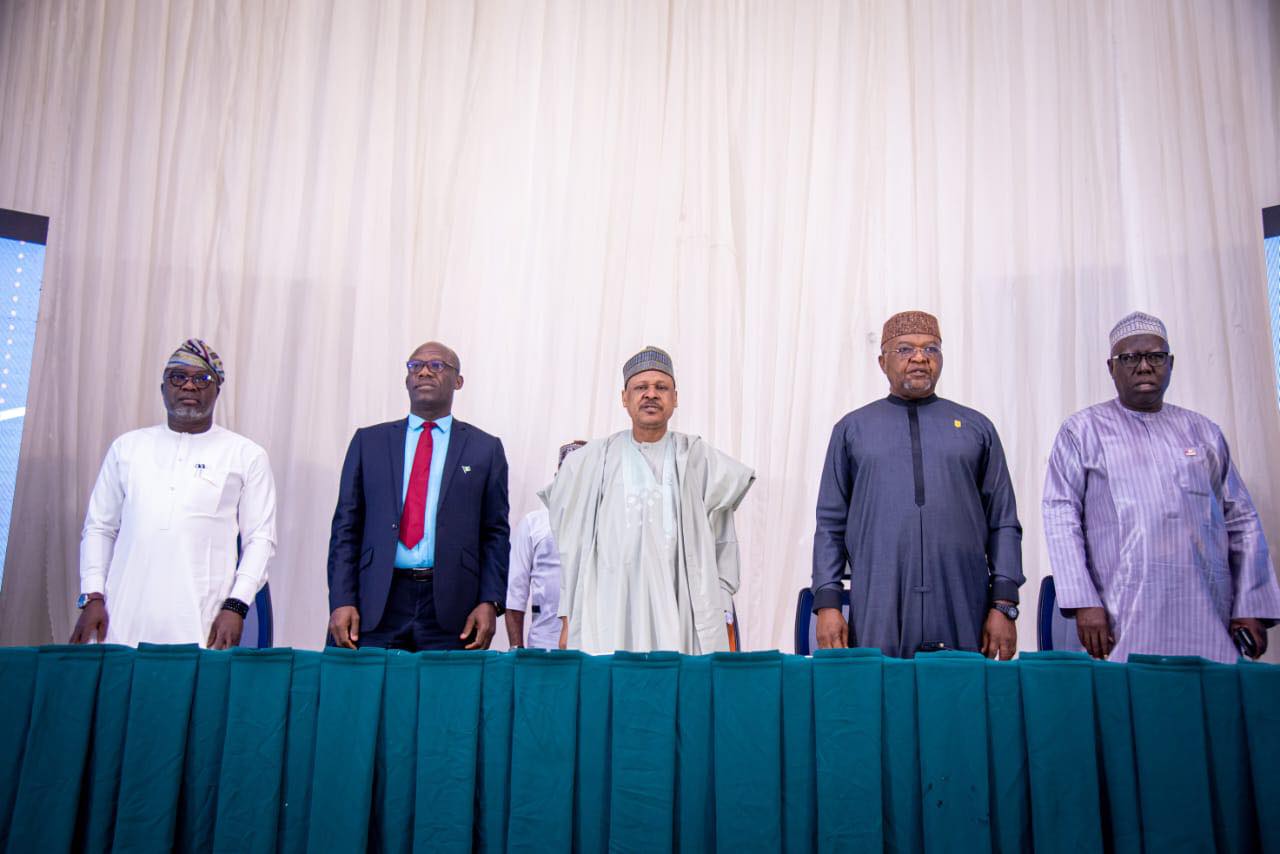
The Minister of Information and National Orientation, Mr Mohammed Idris, has emphasised that unified government messaging remains very critical to restoring public trust, especially in delivering the Renewed Hope Agenda of President Bola Tinubu.

He said this on Thursday in Abuja at an interactive session with Directors of Information and Resident Information Officers (RIOs) on grade level 14-17, deployed across Ministries, Departments and Agencies (MDAs).

The event, according to a statement issued on Friday by the Director Public Relations and Protocol of the ministry, Mr Suleiman Haruna, was themed Aligning Public Information with the Renewed Hope Agenda: Rebuilding Trust Through Effective, Transparent Communication.

The Minister noted that government officials must adopt a unified, coordinated, and trust-driven approach to government communication.

He posited that public trust remains the most valuable asset of government communication, stressing that information officers must be guided by honesty, credibility, and consistency in their work.

“Public trust is our most important capital. Once credibility is lost, no amount of messaging can fix it,” the Minister said, warning that fragmented messaging and parallel communication channels weaken government credibility and confuse citizens, insisting that the government must speak with a single, clear, and consistent voice.

“We are one government serving one national interest, and our communication must reflect that unity,” he said.

Mr Idris urged Resident Information Officers to see themselves as active partners within their host MDAs rather than passive observers, encouraging them to engage proactively with Ministers, Permanent Secretaries, and agency leadership, noting that professionalism, relevance, and initiative are key to earning trust and influence.

Addressing the growing pressure of misinformation and the speed of digital media, the founder of Blueprint Newspaper stressed the importance of timely and accurate communication, noting that delays often create space for false narratives. While reaffirming the federal government’s commitment to freedom of expression, he said such freedom must be exercised responsibly.

The Minister also outlined steps being taken to strengthen professionalism within the information cadre, including mandatory periodic reporting, improved deployment processes, continuous training, and stronger institutional support. He disclosed that the Federal Government has begun restoring the National Institute of Public Information to boost capacity building for public communicators.

He called for teamwork and mutual respect, reminding participants that they are central to the projection of government policies and achievements and that they must align their work with the priorities of the Renewed Hope Agenda.


General

Tinubu Seeks Senate Approval to Borrow $516m from Deutsche Bank

Published

on

Tinubu address nation

By Modupe Gbadeyanka

President Bola Tinubu has asked the Senate to allow him to borrow about $516.3 million for the Sokoto-Badagry highway.

In a letter addressed to the Senate President, Mr Godswill Akpabio, on Thursday, Mr Tinubu said the loan would be obtained from Deutsche Bank, as the Federal Executive Council (FEC) has already approved the financing plan in one of its meetings.

The President begged the upper chamber of the National Assembly for a quick authorisation of the fresh loan to fast-track work on the project, which is expected to further boost the nation’s economy.

According to him, the superhighway project is a flagship initiative under his administration’s Renewed Hope Agenda designed to enhance national connectivity, reduce travel time, and improve the movement of goods across key economic corridors.

He informed the Senate in the letter that the loan is structured for nine years, including a three-year grace period, with an interest rate pegged at the Chicago Mercantile Exchange SOFR plus 5.3 per cent per annum.

Speaking on the request, the Senate President, who referred the letter to the Committee on Local and Foreign Debts for legislative action and a report back in one week, emphasised that it is better to borrow for projects to improve road safety and foster national integration.

The proposed 1,000-kilometre road will link Sokoto, Kebbi, Niger, Kwara, Oyo, Ogun, and Lagos States, connecting Illela to Badagry.

Continue Reading

General

NNPC, Sonatrach Sign Decarbonisation, Innovation MoU

Published

on

Decarbonisation

By Adedapo Adesanya

The Nigerian National Petroleum Company (NNPC) Limited and Algeria’s Sonatrach have partnered through a Memorandum of Understanding (MoU) to drive decarbonisation and innovation in Africa’s oil sector.

The agreement, signed by NNPC’s Executive Vice President for Business Services, Mrs Sophia Mbakwe, and Sonatrach’s Managing Director, Ms Khodjah Mohamed, establishes collaboration in research, technology exchange, and development.

The agreement signed by the state oil companies of both nations took place during the opening ceremony of the 3rd Meeting of the African Petroleum Producers’ Organisation (APPO) Forum for R&D Directors at the PTDF Tower in Abuja, Nigeria. The event brought together research and development directors from APPO member countries.

The minister of state for Petroleum Resources (Oil), Mr Heineken Lokpobiri, said the forum was one of four measures introduced by APPO to address challenges from the global energy transition, which centre on funding, technology and markets.

“The R&D forum tackles technology and expertise needs, the African Energy Bank addresses funding constraints, and the Central African Pipeline System supports regional oil and gas market integration,” Mr Lokpobiri, who was represented by former secretary general of APPO, Mr Omar Farouk Ibrahim, stated.

On his part, the Group chief executive officer, NNPC Limited, Mr Bayo Ojulari, represented by the company’s chief financial officer, Mr Adedapo Segun, said research and development must form a central part of the overall strategy in the African oil and gas industry.

He called for research and development centres to function as engines of industrial competitiveness. “Collaboration in research and development is of strategic importance. The cost of innovation might be high, but the cost of obsolescence would be greater,” he stressed.

Mr Ojulari called for a unified strategic framework through which resources could be pooled, data integrated and risks shared across member countries. He further urged the rapid adoption of digital technologies, artificial intelligence and advanced engineering to improve upstream, midstream and downstream operations.

On his part, the APPO Secretary General, Mr Farid Ghezali, urged African petroleum-producing countries to ensure research in the oil and gas sector produced solutions that are practical and directly relevant to the continent. “We must ensure that our research delivers solutions that are practical and of direct use to Africa,” he stated.

Also speaking, Executive Secretary of the Petroleum Technology Development Fund (PTDF), Mr Shu’aibu Shehu Aliyu, highlighted the value of the partnership between NNPC Limited and PTDF in support of decarbonisation and environmental protection work across APPO member countries.

Chief innovation officer of NNPC Research, Technology and Innovation and incoming chairman of the APPO R&D Directors Forum, Mr Rasheed Ojulari, said the forum would give immediate priority to joint programmes in the core areas of upstream optimisation, artificial intelligence, decarbonisation processes and industrial systems development.

Continue Reading

General

Adelabu Proposes Creation of Coordinating Minister for Energy

Published

on

Adebayo Adelabu

By Adedapo Adesanya

The Minister of Power, Mr Adebayo Adelabu, has resigned from office and proposed the creation of a Coordinating Minister for Energy to drive integrated reforms across Nigeria’s power and gas sectors.

The former deputy governor of the Central Bank of Nigeria (CBN), in a resignation letter dated April 22, 2026, and addressed to President Bola Tinubu, said his resignation will take effect from April 30, 2026, to enable him to pursue his governorship ambition in Oyo State.

He noted that his decision is in line with the provisions of the Amended Electoral Act 2026, which bars serving political office holders from contesting elections.

Confirming the development, the Minister’s Special Adviser on Strategic Communications and Media Relations, Bolaji Tunji, said Mr Adelabu expressed appreciation to the President for the opportunity to serve, describing his tenure as a privilege to contribute to national development.

The outgoing minister stressed the need for stronger coordination in the energy sector, recommending the establishment of a Coordinating Minister for Energy to harmonise policies and ensure effective implementation across power, gas and related sectors.

Mr Adelabu highlighted key achievements recorded during his tenure, including the implementation of the Electricity Act 2023, which decentralised the electricity market and improved the investment climate.

He added that peak power generation increased to over 6,000 megawatts, driven by the integration of the Zungeru Hydropower Plant and the rehabilitation of thermal plants.

He also noted improvements in transmission capacity through grid upgrades under the Presidential Power Initiative, as well as progress in the distribution segment, including enhanced regulatory oversight, improved revenue collection and efforts to reduce Aggregate Technical, Commercial and Collection (ATC&C) losses.

According to him, strides were also made in closing the metering gap through the Presidential Metering Initiative and the World Bank-supported Distribution Sector Recovery Programme.

On the financial side, Mr Adelabu said tariff reforms and a N4 trillion debt restructuring programme boosted market revenues from N1 trillion in 2023 to N2.3 trillion in 2025, helping to restore investor confidence in the sector.

Despite these gains, he acknowledged ongoing challenges such as gas supply constraints, infrastructure vandalism and the need for full commercialisation of the electricity value chain.

To address these issues, he proposed measures including the implementation of cost-reflective tariffs with targeted subsidies, recapitalisation of distribution companies, accelerated nationwide metering, sustained investment in transmission infrastructure and stronger regulatory enforcement.

Mr Adelabu emphasised that the creation of a Coordinating Minister for Energy would provide the strategic oversight needed to improve gas supply for power generation, optimise hydroelectric resources and accelerate renewable energy development.

He assured that he would ensure a smooth handover process and thanked the President for his support throughout his time in office.

Continue Reading

Trending