General
INTERPOL Nabs Criminals Across West Africa Borders

By Dipo Olowookere
An INTERPOL-led border security operation across West Africa has resulted in the arrest of human traffickers, migrant smugglers and the seizure of drugs, stolen vehicles, cash and counterfeit goods.
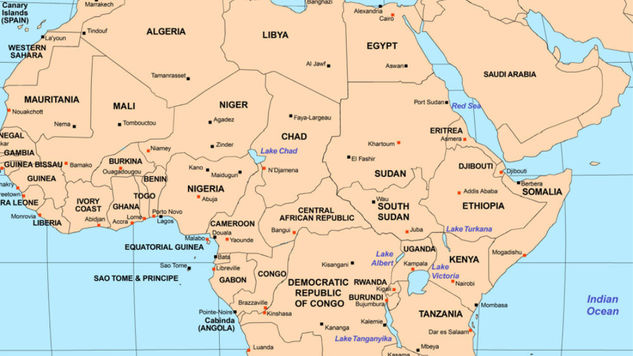
During the eight-day Operation Adwenpa II, more than 100 frontline officers used INTERPOL global policing capabilities to identify criminals, victims and illicit goods at 28 key border control points across 14 countries.
With several of the involved countries part of key people smuggling routes to Europe, at the Kourémalé checkpoint on the Mali/Guinea border, seven Guinean nationals were arrested on suspicion of facilitating the illegal immigration of seven men and women aged between 16 and 22, heading towards Italy.
At the same checkpoint, 10 men being trafficked to Europe via Libya and to gold mines in Guinea were rescued and two men arrested on suspicion of human trafficking.
At Dakola on the Burkina Faso/Ghana border, seven children from Cote d’Ivoire aged between 11 and 16 were taken into protective custody and two men from Nigeria and Cote d’Ivoire arrested on suspicion of human trafficking.
Other key results include:
- The seizure of more than 20 vehicles – including luxury cars from Belgium, France and Italy – recorded as stolen via INTERPOL databases;
- Multiple seizures of drugs including cocaine, cannabis, heroine and 90 kg of methamphetamine;
- The identification, arrest and extradition from Dakar’s Léopold-Sédar-Senghor airport of a Central African Republic national wanted by France for armed robbery;
- The recovery of USD 332,000 in cash concealed in luggage and vehicles;
- The seizure of counterfeit goods including cigarettes, pharmaceuticals and food products. Fake military badges and uniforms were also seized.
“INTERPOL clearly recognizes the severity of the transnational organized crime problem in this region, and has made it a priority to provide a wide range of tools and services to help member countries reinforce their border security procedures and coordinate police action with their neighbours,” said Commissaire Divisionnaire Kambile Pale Elie of the Cote d’Ivoire National Police.
INTERPOL National Central Bureaus coordinated activities on the ground, exchanging real-time data via INTERPOL’s global policing network supported by specialized officers from the General Secretariat and the Regional Bureau in Cote d’Ivoire.
Checks of airline passengers and crew were also made against INTERPOL’s databases to determine if any individuals were attempting to illegally enter countries using a passport reported lost or stolen to INTERPOL, or were wanted internationally.
“Operation Adwenpa II demonstrates what can be achieved when law enforcement officers on the ground are given the INTERPOL training and tools needed to detect crime and criminals effectively,” said Tim Morris, INTERPOL’s Executive Director of Police Services.
“West Africa’s border management capacity has been boosted in a sustainable manner, demonstrating the importance of INTERPOL’s global capabilities and support services in strengthening national and regional security,” added Mr Morris.
Funded by the German Federal Foreign Office, Adwenpa II builds on the success of the first operation conducted in February as part of a two-year Capacity Building Programme to Strengthen Border Management in West Africa.
With sustainability an integral part of the programme, a series of capacity building training sessions including a train-the-trainer session were held throughout West Africa prior to the operation.
Operation Adwenpa II partners include WCO, UNODC, and INTERPOL’s FormaTrain network which deployed vehicle identification experts to key land borders.
Countries which participated in Operation Adwenpa II: Benin, Burkina Faso, Cote d’Ivoire, Ghana, Gambia, Guinea, Guinea Bissau, Liberia, Mali, Niger, Nigeria, Senegal, Sierra Leone and Togo.
General
Senate Seeks Removal of CAC Boss Hussaini Magaji
By Adedapo Adesanya
The Senate has asked President Bola Tinubu to remove the Registrar General of the Corporate Affairs Commission (CAC), Mr Hussaini Ishaq Magaji, from office.
The Senate Committee on Finance, while passing a resolution in Abuja on Thursday, accused Mr Magaji, a Senior Advocate of Nigeria (SAN), of failing to honour the Senate’s invitations to account for the finances of his agency.
“He refused on so many occasions to honour our invitation to appear before this committee.
“We have issues with the reconciliation of the revenue of CAC.
“Each time we invite him, he gives us excuses,” the Chairman of the committee, Mr Sani Musa, said as the committee passed the resolution.
CAC was part of a group of agencies that the House of Representatives Public Accounts Committee (PAC) recommended zero allocation for the year 2026, for allegedly failing to account for public funds appropriated to them.
The committee, at an investigative hearing held two weeks ago, accused CAC and some other ministries, departments and agencies (MDAs) of shunning invitations to respond to audit queries contained in the Auditor-General for the Federation’s annual reports for 2020, 2021 and 2022.
The PAC chairman, Mr Bamidele Salam, stated that the National Assembly should not continue to appropriate public funds to institutions that disregard accountability mechanisms, saying this will create fiscal discipline and strengthen transparency across federal institutions and conform with extant financial regulations and the oversight powers of the parliament.
“Public funds are held in trust for the Nigerian people. Any agency that fails to account for previous allocations, refuses to submit audited accounts, or ignores legislative summons cannot, in good conscience, expect fresh budgetary provisions. Accountability is not optional; it is a constitutional obligation,” he said.
General
IBEDC Promises Stability, Growth After Board Restructuring
By Adedapo Adesanya
The Ibadan Electricity Distribution Company (IBEDC) has announced the reconstitution of its board following the resignation of three nominees of the Asset Management Corporation of Nigeria (AMCON), promising growth and stability.
Earlier this week, the disco, which serves Oyo, Ogun, Osun and Kwara States, as well as parts of Ekiti, Kogi and Niger States, unveiled its new board led by the new chairman, Mr Tunde J. Afolabi.
The newly constituted board include Mr Ayodeji Ariyo Gbeleyi, with Mr Michael I. Magaji as Alternate Director; Mr Taiwo Afolabi; Professor Oladapo Afolabi; Mr Tunde Fayinka; Mr Oluwaseyi Akinwale and Mr Adeolu Ijose.
According to the chairman, the emergence of a new core investor and the reconstituted board marks a significant milestone in the company’s corporate journey and signals a renewed strategic direction focused on stability, continuity and sustainable growth.
“This transition represents renewal, not rupture. It represents investment, not instability. It represents partnership, not division. Our goal is to strengthen governance, enhance operational performance, deepen capital investment and deliver improved service to customers across our franchise areas,” he added.
Mr Afolabi, while addressing customers directly, assured them that there would be no avoidable service disruptions as a result of the transition, stating that all IBEDC offices will remain open, while field operations will continue uninterrupted.
“The new core investor has committed to sustained capital investments in feeder rehabilitation and expansion, transformer upgrades and replacements, injection substation improvements, and the replacement of obsolete network components,” he stated.
He added that IBEDC plans to accelerate the integration of advanced digital and operational technologies, disclosing that these include enhanced outage management systems, strengthened billing platforms, expanded smart metering deployment, and digitised customer engagement channels aimed at improving transparency and service responsiveness.
On workforce stability, the chairman emphasised that there will be no job losses as a direct result of the transition, noting that the board, under his leadership, is committed to employee welfare, improved work tools, modern safety equipment, and technology upgrades to support field efficiency, while maintaining high performance standards.
Mr Afolabi also pledged proactive and structured engagement with regulators, including the Nigerian Electricity Regulatory Commission (NERC) and the Nigerian Electricity Management Services Agency (NEMSA), underscoring its commitment to full regulatory compliance, strengthened governance frameworks, transparency and accountability.
Furthermore, he reaffirmed the commitment of the distribution company to structured and timely payment cycles for vendors and suppliers, recognising their critical role in maintaining network stability.
With the new board in place, he insisted that IBEDC is poised to deepen operational excellence, strengthen financial sustainability, and position itself firmly on the path to becoming Nigeria’s leading power distribution company—powering progress across its franchise with unity, confidence and innovation.
Established in November 2013 following Nigeria’s power sector privatisation, IBEDC operates the largest distribution network serving the highest customer population within Nigeria’s electricity distribution landscape.
General
Eyesan Promises Enhanced Transparency, Digital Transformation at NUPRC
By Adedapo Adesanya
The chief executive of the Nigerian Upstream Petroleum Regulatory Commission (NUPRC), Mrs Oritsemeyiwa Eyesan, has promised to enhance transparency and ensure that the NUPRC’s internal communications are fully digital.
Mrs Eyesan said this when the Executive Secretary of the Nigeria Extractive Industries Transparency Initiative (NEITI), Mr Musa Adar, visited the commission’s corporate headquarters in Abuja.
“We have set for ourselves a 60-day programme to digitise our interactions and communications within the commission. I can assure you that once we get to day 60, there will be no paper trail within the Commission. All our transmissions will be electronic, which also means speed is assured. It means we will be able to trace where we have hiccups,” Mr Eyesan said.
The NUPRC boss said digitising processes often leads to better results, like the enforcement of payments of royalties.
“I can tell you without a shadow of doubt that for royalty payments, the default rate was enormous prior to 2025 when the Commission went live on the system. Now, compliance has improved,” Mrs Eyesan said.
The NUPRC boss sought a deepened relationship with NEITI, which will foster transparency, especially amid the 2025 Licensing Round.
In his remarks, the NEITI’s scribe said there was a need for the NUPRC to carry the agency along in its operations as this would not only enhance transparency but also deepen investor confidence.
Mr Adar also urged the commission to be firm on oil companies that run afoul of the Petroleum Industry Act.
Speaking on the Extractive Industries Transparency Initiative, Mr Adar asked that the NUPRC actively participate in the 2026 EITI flagship conference, which will provide the Commission with better insights into the standards that guide EITI implementation.
The NEITI boss also sought support from the Commission in the area of data sharing, which will enhance the operations of the agency.
“We are here to seek understanding, and we must collaborate,” Mr Adar said.
-
Feature/OPED6 years agoDavos was Different this year
-
Travel/Tourism10 years ago
Lagos Seals Western Lodge Hotel In Ikorodu
-
Showbiz3 years agoEstranged Lover Releases Videos of Empress Njamah Bathing
-
Banking8 years agoSort Codes of GTBank Branches in Nigeria
-
Economy3 years agoSubsidy Removal: CNG at N130 Per Litre Cheaper Than Petrol—IPMAN
-
Banking3 years agoSort Codes of UBA Branches in Nigeria
-
Banking3 years agoFirst Bank Announces Planned Downtime
-
Sports3 years agoHighest Paid Nigerian Footballer – How Much Do Nigerian Footballers Earn