

World
Lavrov Yet to Begin Choosing between Illusions and Reality for Africa

By Kestér Kenn Klomegâh
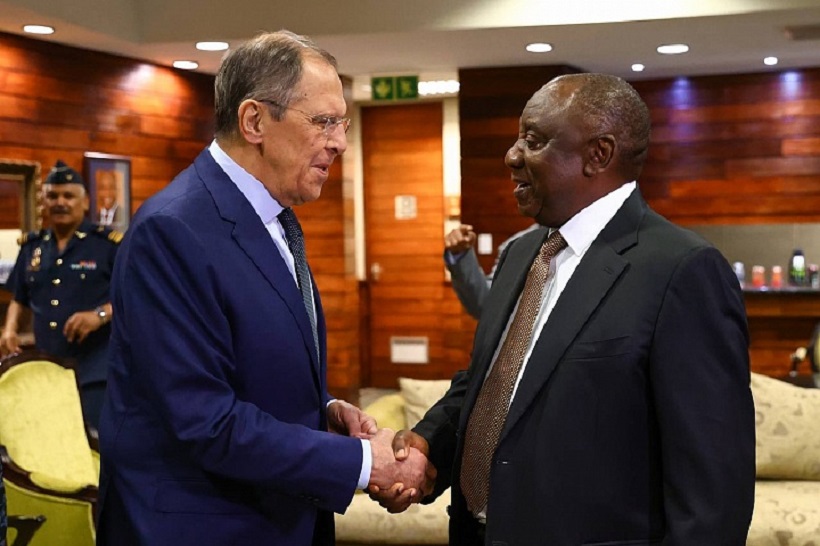
In late January, four African countries – South Africa, Eswatini, Angola and Eritrea – officially hosted Russian Foreign Minister Sergey Lavrov. He went visiting these African countries as part of laying the groundwork and testing the pulse ahead of the forthcoming second Russia-Africa summit set for late July in St. Petersburg.
The first such summit was held in Sochi in October 2019 under the motto For Peace, Security and Development, attracting a large number of African representatives.
As Russia prepares to strengthen its overall corporate economic profile during the next African leaders’ summit, many Russian policy experts are questioning bilateral agreements that were signed, many of them largely remained unimplemented, with various African countries.
At the prestigious Moscow-based Institute for African Studies, well-experienced policy researchers such as Professors Vladimir Shubin and Alexandra Arkhangelskaya have argued that Russia needs to be more strategic in aligning its interests and be more proactive with instruments and mechanisms in promoting economic cooperation in order to reap the benefits of a fully-fledged bilateral partnership.
“The most significant positive sign is that Russia has moved away from its low-key strategy to vigorous relations, and authorities are seriously showing readiness to compete with other foreign players. But, Russia needs to find a strategy that really reflects the practical interests of Russian business and African development needs,” said Arkhangelskaya, who is also a Senior Lecturer at the Moscow High School of Economics.
Currently, the signs for Russia-African relations are impressive – declarations of intentions have been made, important bilateral agreements signed – now it remains to be seen how these intentions and agreements entered into these years will be implemented in practice, she pointed out in an interview.
The revival of Russia-African relations has to be enhanced in all fields. Obstacles to the broadening of Russia-African relations have to be addressed more vigorously. These include, in particular, the lack of knowledge or information in Russia about the situation in Africa and vice versa, suggested Arkhangelskaya.
While answering questions from the “Moscow. Kremlin. Putin” television programme on December 25, 2022, Lavrov explained that Russia’s motto is the balance of interests. “This balance is the core of our foreign policy. It is the only approach that has prospects in international affairs,” he reiterated, so Russia should balance its interest (not to describe them as enemies) with other external players in Africa.
Lavrov has been in the ministerial seat these several years and, of course, seems to be up to the existing challenges and the comprehensive policy tasks in continental Africa. In Pretoria, Lavrov held discussions with South African Foreign Minister Naledi Pandor. While talking later about the Russia-Ukraine crisis at the media briefing, Lavrov said Moscow appreciated “the independent, well-balanced and considerate approach” taken by Pretoria. South Africa has refused to condemn Moscow’s invasion of Ukraine. Russia has been hit by unprecedentedly stringent sanctions and suffers from isolation.
South Africa has now assumed the chairmanship of the BRICS, a grouping that includes Brazil, Russia, India and China. It will, however, host joint maritime drills with Russia and China from February 17 to 27, off the port city of Durban and Richards Bay. Some experts say the BRICS grouping, especially in the emerging new geopolitical world, throws many challenges to the United States and European-led global governance structures.
In August 2023, South Africa will host the BRICS summit. In this context, the sides expressed confidence that Pretoria’s upcoming chairmanship of this group opened up new opportunities for its future development, including in the context of expanding the partnerships between the five BRICS countries and African states.
Currently, South Africa has little trade with Russia but champions a world view – favoured by China and Russia – that seeks to undo perceived U.S.-hegemony in favour of a “multipolar” world in which geopolitical power is more diffuse.
Nevertheless, Foreign Minister Naledi Pandor called for greater economic cooperation between South Africa and Russia at the start of her meeting with Lavrov. “Our countries share growing economic bilateral relations both in terms of trade and investments,” she said. “It is my view that both countries can and must do more to develop and capitalize on opportunities to increase our cooperation in the economic sphere.”
Besides that, as indicated above, however, Lavrov mentioned peaceful space, high technology, smart cities, and nuclear energy as promising areas of collaboration with South Africa. Pretoria expresses readiness to collaborate, but the question is how to build a supply chain and financial services for collaborative projects in the face of Western sanctions imposed on Russia.
The two are members of BRICS, a grouping of major emerging economies, although they remain relatively insignificant markets for each other: Russia ranked as South Africa’s 33rd-largest trading partner in 2021, with two-way flows amounting to just $1.46 billion. In comparison, South Africa’s trade with the United States was $10.2 billion in 2021.
Reports have also pointed to the negative effects of Russia’s opaque transactions with South Africa under the Zuma administration. “There is a split in the South African establishment between the ruling ANC party and the opposition, which is fiercely against Russian-South African collaboration. There are fears that the country’s frenetic anti-Russian media campaign may gradually tip the scales against Moscow. Nonetheless, for the time being, South Africa is interested in broadening its foreign relations, particularly through the BRICS,” a Researcher at the Institute for International Studies at MGIMO, Maya Nikolskaya, told local Russian daily Kommersant.
Maya Nikolskaya underlined the fact that 2022 was generally not an easy year for Russian-African relations. The majority of African countries found themselves under tremendous pressure from the West. However, Moscow still has great potential in Africa: Russia is a major grain exporter, and in turn, “Moscow is interested in new sales markets, so building alternative value chains is in the interests of both parties,” the expert explained about Russia’s relations with South Africa.
On his second stopover in the Kingdom of Eswatini, Lavrov expressed deep wariness about the Western dominance and situations guided mostly by the orders of the former colonial powers. “We understand the painful feelings of the US and Europe, as the structure of international relations is changing, becoming multipolar, polycentric. We cannot change our Western friends and make them polite, behave democratically,” Lavrov said at a news conference following talks with the Kingdom of Eswatini’s top diplomat, Thulisile Dladla.
Reports indicated that the King of Eswatini Mswati III, has been invited to the Russia-Africa summit to be held this year in St. Petersburg. And Moscow plans to deepen its interaction with Eswatini in the area of Russian grain supplies, the construction of irrigation systems, energy and mineral resources mining. “We stated that efforts should be focused now on the economic sphere, which by its indicators so far lags far behind other areas of our cooperation, above all the excellent level of political dialogue,” the Russian top diplomat said.
About 50 Swazi nationals are receiving military education at Russian Defence Ministry colleges, further agreeing to step up cooperation in the field of security. Tongue-twisting Lavrov repackaged a long list of projects in nearly all sectors, including industry, agriculture, information communications technology, digital, education, culture and many others. With a small population of 1.2 million, Eswatini is a tiny landlocked country in Southern Africa.
During the media conference, he made references to his previous tour in Africa (Egypt, the Republic of Congo, Uganda, and Ethiopia) and also to the Arab League headquarters. He also discussed BRICS at length, particularly proposals for its expansion, as well as its role in the global economy, globalization and global finance. “BRICS is not planning to shut the door to the rest of the world. On the contrary, we would like to cooperate with all countries as much as possible, equally and based on a balance of interests. The BRICS countries’ approach to global affairs is winning the sympathy of more and more countries across the world, including in Asia, Africa and Latin America,” he asserted.
Wrapping his “business-as-usual” meetings in Eswatini, Lavrov referred to countries such as China, India, Turkey, et cetera that are emerging together as a new multipolar world. But these countries have good economic footprints in Africa. For Russia to recognizably play dominating role similar to China, India and Turkey, it has to make a complete departure from frequent rhetorics and work seriously on its economic policy dimensions in Africa.
The Kingdom of Eswatini, officially renamed from Swaziland in 2018, is a constitutional monarchy with the current constitution in force since February 8, 2006. The country is a member of the British-led Commonwealth. Eswatini, with an approximate population of 1,2 million (2021), is bordered by South Africa and Mozambique. It has had diplomatic relations with the Russian Federation since November 19, 1999.
Upon his arrival on January 24, Lavrov and his delegation were welcomed by his Angolan counterpart, Tete Antonio. On the next day, he held an in-depth discussion with President João Lourenço. According to the transcript, the focus was on the preparations for the next meeting of the Intergovernmental Commission on Economic and Scientific-Technical Cooperation and Trade in Luanda in late April. Both, however, outlined steps to advance strategic partnerships across all areas.
With Minister of External Relations Tete Antonio, there were questions relating to the launch of Angola’s AngoSat-2 satellite and which allows continuing cooperation in the peaceful exploration of outer space and other high-tech areas. Lavrov and Antonio have ultimately agreed to expedite the coordination of several new intergovernmental agreements, including those on the opening of cultural centres and on the nuclear power industry, humanitarian missions and merchant shipping.
Eritrea was Lavrov’s final working station. With an estimated population of 5.8 million, it is located on the Red Sea, in the Horn of Africa region of Eastern Africa. Russia and Eritrea have had diplomatic relations since May 1993. President Isaias Afwerki has ruled Eritrea with an iron fist since its independence from Ethiopia in 1993. Eritrea was one of the countries that voted against a UN resolution condemning Russia over the situation in Ukraine in March 2022.
In April 2022, Eritrean Foreign Minister Osman Saleh Mohammed made a visit to Moscow. Both Lavrov and Mohammed reaffirmed Russia’s strategic interest in making coordinated efforts aimed at building a logistics hub along the coastline. During their meeting, Lavrov promised Moscow’s contribution towards stronger stability and security in the Horn of Africa.
As far back in 2018, Lavrov spoke extensively about economic cooperation. According to him, Russia’s truck maker KAMAZ was already working in Eritrea, supplying its products to that country, as was Gazprombank Global Resources, which was building cooperation in the banking sector. In the same year, 2018, concrete talks were held to build a logistics centre at the port of Eritrea, which makes the world’s class logistics and services hub for maritime transportation through the Suez Canal and is definitely set to promote bilateral trade.
According to the transcript posted on the website, Lavrov said: “we cooperate in many diverse areas: natural resources, all types of energy engineering, including nuclear and hydroelectric energy, and new sources of energy, infrastructure in all its aspects, medicine, the social sphere, transport and many more.”
Still that same year, Eritrea was interested in opening a Russian language department at one of the universities in the capital of the country, Asmara. Lavrov further indicated: “We agreed to take extra measures to promote promising projects in the sphere of mining and infrastructure development and to supply specialized transport and agricultural equipment to Eritrea.”
As always, Lavrov’s discussions with Eritrean President Isaias Afwerki focused on “strengthening bilateral relations as well as regional developments of interest to the two countries.” He, however, reaffirmed Russia’s unconditional commitment to fulfilling all of its obligations under export contracts to send critical food supplies to African countries in need, including under the package agreements reached with the participation of the United Nations.
Isaias Afwerki further listened carefully as Lavrov listed a huge number of proposals, including those relating to the economy, mining, information and communication technologies, agriculture, infrastructure projects, the possibilities of the sea and air ports of Massawa, as well as Russian proposals for the development of industry in Eritrea. “All these are topics for the upcoming consultations between our ministries of the economy. We agreed to start them soon and give them a regular character,” he convincingly assured.
In summary, Lavrov’s trip to Africa, which has become a renewed diplomatic battleground since the Ukraine war began, has taken him to Angola, Eswatini and South Africa. As previously, not a single development project was commissioned in any of those African countries he visited. It was the usual diplomatic niceties, “dating and promising,” but at least with a bouquet for the bride.
During his four-African country visit, Lavrov did not hold meetings with any youth and women groups, nor did he address a gathering of African entrepreneurs. He did not visit any Russian-funded project facility sites to first-hand assess developments and progress there, nor any educational establishment, especially those dealing with international relations. His meetings were state-centric and mostly office-centred. Throughout his speeches, not a single reference was made to the Africa Continental Free Trade Area (AfCFTA). While exploring more opportunities, there was absolutely nothing on Covid-19 and Russia’s Sputnik V vaccines or practical proposals to develop vaccines for other deadly diseases across Africa.
Lavrov left Moscow the next day after his three-hour media conference, summing up foreign policy achievements and the way forward on 18 January. During that conference, Africa only appeared at the bottom of the discussions. And yet Africa is considered “a priority” in Russia’s policy. Lavrov made a sketchy response about Africa and then reminded the gathering of the forthcoming summit planned for late July 2023. He, however, mentioned that there were drafted documents to reset cooperation mechanisms in this environment of sanctions and threats and in the context of geopolitical changes.
“There will be new trade and investment cooperation tools, logistics chains and payment arrangements. The change to transactions in national currencies is underway. This process is not a rapid one, but it is in progress and gaining momentum,” he told the gathering in quick remarks, then swiftly closed the media conference that day.
Nevertheless, African leaders are consistently asked to support Russia against Ukraine. Since the symbolic October 2019 gathering in Sochi, extremely little has happened. With high optimism and a high desire to strengthen its geopolitical influence, Russia has engaged in trading slogans, and many of its signed bilateral agreements have not been implemented, including all those from the first Russia-Africa summit. The summit fact files show that 92 agreements and contracts worth a total of $12.5 billion were signed, and before that, several pledges and promises were still undelivered.
Since his appointment in 2004 as Minister of Foreign Affairs of the Russian Federation, Sergey Lavrov has succeeded in building high-level political dialogues in Africa. But, his geopolitical lectures have largely overshadowed Russia’s achievements in Africa. Throughout these several years of his official working visits to Africa, unlike his Chinese counterparts, Lavrov hardly cuts ribbons marking the completion of development projects in Africa.
However, he needs simultaneously to understand how to approach development ideas inside Africa. These ideas could offer Russia hopes for raising its economic cooperation to a qualitatively new level and ultimately contribute to the building of sustainable relations with Africa. The new scramble for Africa is gaining momentum; therefore, Russians have to face the new geopolitical realities and their practical existing challenges. But in a nutshell, Russians seem to close their eyes to the fact that Africa’s roadmap is the African Union Agenda 2063.


