Banking
CBN Approves Open Banking Guidelines to Boost Inclusion, Innovation
By Adedapo Adesanya
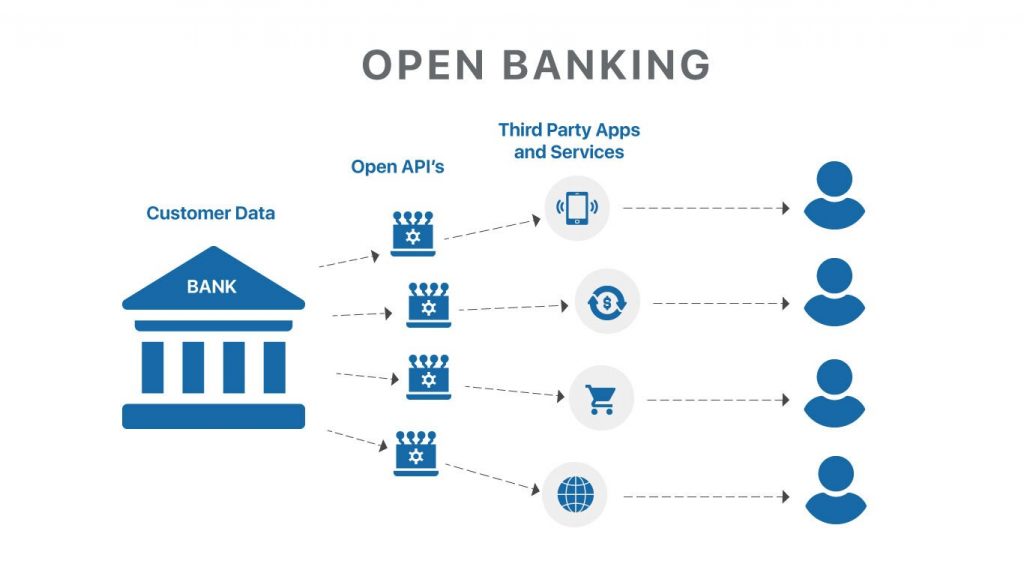
The Central Bank of Nigeria (CBN) has approved the operational guidelines to open banking in Nigeria, kickstarting an open banking regime in Nigeria.
The guideline was released via a circular by Musa Jimoh, the Director of the CBN’s Payments System Management Department, on March 7, 2023.
According to its proponents, open banking will usher in a new age of financial inclusion and innovation and prove that Nigeria is a global pioneer in payments and financial services.
The statement seen by Business Post said, “The Central Bank of Nigeria, in furtherance of a mandate for the stability of the financial system and pursuant to its role in deepening the financial system. hereby issues the Operational Guidelines for Open Banking in Nigeria
“The adoption of Open Banking in Nigeria will foster the sharing of customer pemissioned data between banks and third-party firms to enable the building of customer-focused products and services is also aimed at ang efficiency, competition and access to financial services in Nigeria.
“All stakeholders are required to ensure strict compliance with the guidelines and all other regulations, as the CBN continues to monitor developments and issue guidance as may be appropriate.”
The release of the final guideline is a culmination of a long journey for open banking in Nigeria, which started over five years ago when on June 1, 2017, a group of industry veterans, led by Mr Adedeji Olowe, decided that Nigeria needed to lead with payments innovation.
They formed an open banking working group, which became formalized as Open Banking Nigeria. The group engaged with banks, fintechs, CBN, and other international stakeholders.
Early backers of open banking in Nigeria include Sterling Bank, KPMG, PwC, EY, Paystack, TeamApt, Wallet Africa, and OnePipe.
The coalition now expanded to include the likes of Mono, Switch, Lendsqr, Palmpay, Carbon, and Trium.
Subsequently, the CBN released the regulatory framework for open banking in Nigeria on February 7, 2021, which laid the groundwork for an industry committee to create the draft of operational guidelines in May 2022. This draft is what has now become the law for bankers and fintechs supervised by the CBN.
Supporting this is also the Nigeria Data Protection Regulation (NDPR), released in 2019, as data privacy is a foundational pillar for open banking.
Banking
Polaris Bank Embeds Gift Card Feature in VULTe
By Aduragbemi Omiyale
A new Gift Card feature has been added to the digital lifestyle platform of Polaris Bank Limited, known as VULTe.
The gift card catalogue includes leading brands and platforms such as Amazon, SureGift, Visa and MasterCard Prepaid Cards, iTunes and Apple, Google Play, Steam, Razer Gold, Netflix, Spotify, Starbucks, and PaySafeCard, covering everything from physical goods and digital content to subscriptions, gaming, and everyday essentials.
This feature allows for a faster and smarter way for users to send love, appreciation, and rewards across borders, enabling customers to deliver global brand gift cards to family and friends anywhere in the world in seconds.
Designed for speed, security, and everyday relevance, the feature allows users to choose from a wide range of international and local brands spanning groceries, beauty and wellness, fashion, electronics, entertainment, gaming, and lifestyle services, all seamlessly accessible on VULTe.
Whether it is paying for a Netflix subscription in London, sending Spotify Premium to a friend in Accra, gifting a Starbucks coffee in New York, or helping a loved one shop at Amazon or Shoprite, VULTe’s Gift Card feature transforms digital transfers into meaningful real-world experiences, powered by Polaris Bank’s secure digital infrastructure.
Users log in to VULTe, select Lifestyle, choose Gift Card, pick a preferred brand, enter the amount and recipient’s email, confirm the transaction, and authorise with their PIN. The gift card is delivered instantly, removing shipping delays, currency barriers, and geographic limitations.
With this feature on VULTe, Polaris Bank reinforces its commitment to digital innovation and lifestyle banking, positioning VULTe as a bridge between financial services and everyday global experiences, enabling customers to turn simple moments into meaningful connections delivered instantly, securely, and without borders.
Banking
Sterling Bank, AltBank Meet Full Recapitalisation After N153bn Injection
By Modupe Gbadeyanka
The banking subsidiaries of Sterling Financial Holdings Company Plc, Sterling Bank and The Alternative Bank (AltBank), have met the full recapitalisation requirements of the Central Bank of Nigeria (CBN).
The chief executive of Sterling Holdings, Mr Yemi Odubiyi, said the recapitalisation strengthens the group’s ability to support economic activity while maintaining financial resilience.
“This exercise goes beyond regulatory compliance. It positions us to expand credit responsibly, accelerate innovation, and provide sustained support to businesses and households, while maintaining the discipline required in a challenging operating environment,” he said.
Mr Odubiyi noted that fully capitalising both Sterling Bank and The Alternative Bank reinforces the organisation’s dual-bank structure and its ability to serve conventional and non-interest segments.
“Our structure enables efficient deployment of capital across complementary markets and positions us to respond with agility to evolving customer needs,” he said, adding that strong investor participation across the capital programmes reflects confidence in the group’s governance and long-term strategy.
He further pointed out that the strengthened balance sheet provides a platform for the company’s next phase of growth.
“We are entering this phase from a position of significant financial strength, with the capacity to scale non-banking businesses, deepen digital capabilities, and pursue disciplined expansion opportunities while delivering sustainable value for shareholders,” Mr Odubiyi said.
Sterling Holdings achieved this feat after raising fresh capital between December 2024 and October 2025, positioning itself well ahead of the 2026 industry deadline.
In December 2024, it completed a N75 billion private placement, raising N73.86 billion in net proceeds. Of this amount, N68.8 billion was allocated to Sterling Bank and N5 billion to The Alternative Bank, strengthening the capital base of both institutions.
This was followed by a N28.79 billion rights issue, which was oversubscribed by N10.29 billion. Regulatory approvals in May 2025 enabled the allotment of N26.639 billion under the rights issue, with the oversubscription restructured into a private placement, enabling AltBank to meet the capital requirement for non-interest banks with national licences.
Sterling HoldCo further strengthened its capital position through an N88 billion public offer in October 2025, which recorded an oversubscription. The CBN has cleared the full amount of N96.69 billion for recognition as additional capital, while the Securities and Exchange Commission (SEC) approved the allotment of 13,812,239,000 shares.
In total, the group injected N153 billion into Sterling Bank and The Alternative Bank, bringing both institutions into full compliance with the revised capital requirements.
Banking
SERAP Sues CBN Over Alleged Missing N3trn
By Adedapo Adesanya
The Socio-Economic Rights and Accountability Project (SERAP) has filed a lawsuit against the Central Bank of Nigeria (CBN) for failing to account for N3 trillion in public funds, alleged to be missing or diverted.
The lawsuit followed the grave allegations contained in the latest annual report by the Auditor-General of the Federation, published on September 9, 2025. It includes over N629 billion paid to ‘unknown beneficiaries’ as part of the Anchor Borrowers’ Programme.
In the suit number FHC/ABJ/CS/250/2026 filed last week at the Federal High Court in Abuja, SERAP is seeking: “an order of mandamus to direct and compel the CBN to account for and explain the whereabouts of the missing or diverted N3 trillion of public funds, including detailed reports of how exactly the funds were spent.”
In the suit, SERAP argued that, “These grim allegations by the Auditor-General suggest grave violations of the public trust, the provisions of the Nigerian Constitution 1999 [as amended], the CBN Act, and anticorruption standards.”
SERAP is arguing that, “These grave violations also reflect a failure of CBN accountability more generally and are directly linked to the institution’s persistent failure to comply with its Act and to uphold the principles of transparency and accountability.”
According to SERAP, “These violations have seriously undermined the ability of the CBN to effectively discharge its statutory functions and the public trust and confidence in the bank. The CBN ought to be committed to transparency and accountability in its operations.”
SERAP is also arguing that, “Nigerians have the right to know the whereabouts of the missing or diverted public funds. Granting the reliefs sought would advance the right of Nigerians to restitution, compensation and guarantee of non-repetition.”
The suit filed on behalf of SERAP by its lawyers: Ms Oluwakemi Agunbiade and Ms Valentina Adegoke, read in part: “According to the Auditor-General, the CBN in 2022 failed to remit over N1 trillion [N1,445,593,400,000.00] of ‘the Federal Government’s portion of operating surplus’ into the Consolidated Revenue Fund (CRF) account.”
“The Auditor-General fears that the money may have been ‘diverted.’ He wants the money recovered and remitted to the treasury.”
“The CBN also failed to recover over N629 billion [N629,040,000,000.00] paid to ‘unknown beneficiaries’ as part of the Anchor Borrowers’ Programme, a programme ‘meant to support farmers to ensure sustainable food production in the country,’” it said.
SERAP noted that the Auditor-General raised serious concerns over financial management at the apex bank, citing unaccounted intervention funds and unrecovered loans running into hundreds of billions of naira.
The report noted that the number of beneficiaries who collected certain disbursed funds remains unknown and that efforts to recover the money have been inadequate. Over N784.4 billion in unpaid and overdue loans issued between 2018 and May 2022 remain outstanding, with fears that diversion of funds may have worsened food security challenges. The Auditor-General has called for full recovery and remittance of the funds to the treasury.
-
Feature/OPED6 years agoDavos was Different this year
-
Travel/Tourism10 years ago
Lagos Seals Western Lodge Hotel In Ikorodu
-
Showbiz3 years agoEstranged Lover Releases Videos of Empress Njamah Bathing
-
Banking8 years agoSort Codes of GTBank Branches in Nigeria
-
Economy3 years agoSubsidy Removal: CNG at N130 Per Litre Cheaper Than Petrol—IPMAN
-
Banking3 years agoSort Codes of UBA Branches in Nigeria
-
Banking3 years agoFirst Bank Announces Planned Downtime
-
Sports3 years agoHighest Paid Nigerian Footballer – How Much Do Nigerian Footballers Earn