

Economy
Insecurity and Soaring Food Prices: Why CBN’s MPC Must Target the Real Enemy Despite Favourable Macroeconomic Tailwinds

By Blaise Udunze
Obviously, one would say that the macroeconomic indicators are finally pointing in the right direction, yet, daily realities for households and businesses tell a very different story because Nigeria stands at a delicate intersection. No doubt on paper, inflation is easing, the naira is stabilising, and sovereign ratings have improved; but food prices remain painfully high, purchasing power continues to deteriorate, and insecurity is ravaging the agricultural value chain while ensuring that any progress in inflation moderation remains fragile.
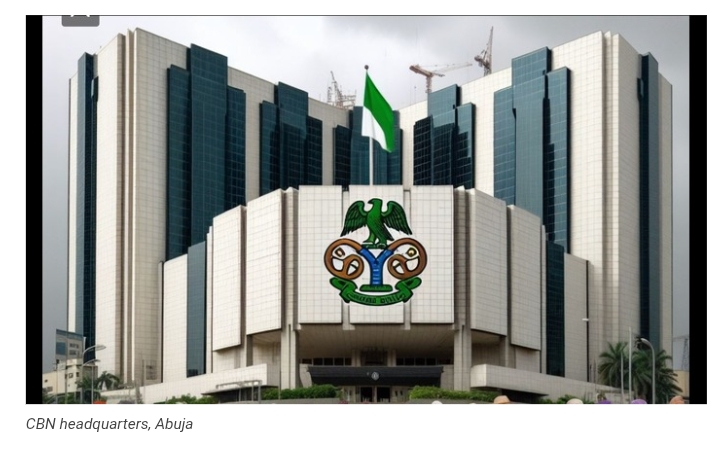
As the Central Bank of Nigeria (CBN) convenes its 303rd Monetary Policy Committee (MPC) as its final meeting of the year on 24-25 November, the dilemma before it is clear: Should it respond to improving macroeconomic data with further monetary easing, or should it recognise that the true enemy of price stability is not merely monetary but structural, deeply rooted in insecurity and collapsing food supply?
The reality confronting the nation is that, despite the favourable macroeconomic tailwinds, Nigeria’s biggest inflationary threat is insecurity-induced food inflation, which remains largely unaddressed. Until the MPC anchors its decisions around this core challenge, monetary policy will continue to chase shadows.
A Fall in Inflation, but Not in Hardship
The National Bureau of Statistics’ latest Consumer Price Index (CPI) report revealed that inflation improved for the second consecutive month, falling sharply from 18.02 percent in September to 16.05 percent in October 2025, which is the lowest in 44 months. This moderation was driven by a new CPI base year and some easing in food prices.
Whilst the headline inflation has slowed, month-on-month inflation increased from 0.72 percent to 0.93 percent, underlining persistent price pressure at the household level. Nigerians are still struggling to pay more for food, transport, energy, housing, and essential services.
Obviously, the Organised Private Sector (OPS) welcomed the drop but quickly cautioned that it does not reflect real-life conditions.
Dr. Muda Yusuf, CEO of the Centre for the Promotion of Private Enterprise, summarised this contradiction perfectly, “The sharp moderation in October inflation represents a significant win for macroeconomic stability. However, the full welfare benefits are yet to be felt due to persistent structural constraints, especially in food supply, transportation, energy, housing, and essential services.”
These “structural constraints,” in reality, are overwhelmingly traced to insecurity, which is the silent force disrupting agricultural production and distribution across Nigeria.
Food Inflation: The Heart of the Crisis
Presently, food inflation remains Nigeria’s most damaging and persevering price problem. Even with the October headline easing, food prices remain abnormally high.
Eke Ubiji, the Director-General of the Nigerian Association of Small and Medium Enterprises (NASME), flagged the inflation data as disconnected from reality, “Send people to the market now. A half-bag of rice goes for between N30,000 and N40,000. Before, a full bag was about N20,000. So, are we moving forward or backwards?”
This is not a mere anecdote; it is the lived experience of millions. Food inflation has remained structurally high for nearly five years, and the root cause is not monetary expansion; it is insecurity.
Across key food-producing belts like Benue, Plateau, Niger, Kaduna, Katsina, Zamfara, Taraba, Kebbi, and Sokoto, farmers cannot access farmlands due to the following adverse factors:
– Banditry
– Terrorist attacks
– Herdsmen conflicts
– Kidnapping-for-ransom
– Destruction of crops and storage facilities
– Extortion and illegal “harvest taxes” by criminal groups
This is why the MPC’s decisions, no matter how sound, have limited impact. Monetary tightening cannot stop gunmen from attacking farmers. Interest rate adjustments cannot clear gridlocked rural roads. Liquidity controls cannot fix the collapse of rural markets emptied by chaos.
Femi Egbesola, the President of the Association of Small Business Owners of Nigeria, echoes this lived tension, “All of this has not translated to tangible results in the lives of households and small businesses. It has been very tough, and it is even getting tougher.”
Without resolving insecurity, food inflation will continue to undermine every macroeconomic gain.
OPS: Nigerians Don’t Feel the Relief
Across all private-sector groups, one message is constant, inflation numbers are falling, but hardship remains high.
– SMEs are shutting down due to high input costs.
– Consumers’ purchasing power is collapsing.
– Operational costs remain higher.
– Food remains largely unaffordable.
According to Ubiji, there is no relationship between what is sustainable in the market and what they are quoting in their boardrooms.
This scepticism is rooted in the fact that food prices, by far the largest part of household spending, remain stubbornly high because insecurity continues to decimate supply.
Even the Lagos Chamber of Commerce and Industry (LCCI) recognized that while there are “green shoots,” they are small and fragile.
LCCI President, Gabriel Idahosa, said, “A trend is being established… but Nigerians often doubt the inflation numbers because they do not see it on their dining table.”
The MPC must confront this reality: monetary policy cannot deliver price stability while insecurity is simultaneously destroying food production.
Improving Macroeconomic Indicators: A Window of Opportunity
Apparently, Nigeria’s macroeconomic fundamentals have improved significantly as inflation is moderating, FX liquidity is rising, the naira is strengthening, non-oil exports are growing, domestic production of refined petroleum is improving, S&P upgraded Nigeria’s sovereign credit outlook, and GDP grew by 4.2 percent in Q2 and is projected to record 3.6-3.9 percent in Q3.
No doubt, these are important achievements that create fiscal and monetary space for reforms. But favourable indicators cannot cover the fact that Nigeria is still battling a food inflation crisis fueled by worsening insecurity. If the MPC does not align its policy response with this structural reality, monetary policy may remain misaligned with on-ground economic forces.
What Analysts Expect at the November MPC Meeting
Ahead of the MPC meeting, analysts remain divided. Some are calling for further easing. Umar Abdulqadir of CFG Africa believed the MPC should cut by at least 50bps, citing sustained disinflation, improved FX liquidity, better food supply conditions, and lower risk premia after S&P upgrade. He argued that high lending rates were constraining SME credit access and that a cut would “stimulate investment and bolster economic recovery.”
Similarly, Afrinvest’s Damilare Asimiyu projects a 25-50bps cut, citing favourable inflation trajectory, improved macro data, global central banks adopting mild dovish tones, and strong GDP growth. He believes cautious easing is justified.
Meanwhile, other analysts suggest a hold at 27 percent. Jessica Ifada of Rostrum Investment & Securities insists that the MPC should maintain September’s rate cuts, which are still filtering through the economy. CRR reduction has increased bank liquidity, and banks have largely met recapitalisation thresholds, while festive-season inflationary pressures are imminent. She further says that the revised policy corridor already guides short-term rates close to the MPR, limiting the need for immediate policy action.
Meanwhile, another set of analysts is calling for aggressive easing (up to 200bps). On Nairametrics’ “Drinks and Mics,” Rencap Asset Management’s Arnold Dublin-Green and Nairametrics CEO Ugodre Obi-Chukwu argue that MPC should cut rates by 200bps, pointing to decreasing yields across fixed-income instruments, lower inflation, and improved macro stability.
But Here Is the Real Issue: Monetary Policy Cannot Fix Insecurity
Regardless of the MPC’s decision, whether it cuts by 50bps, 200bps, or holds, Nigeria’s biggest inflationary threat remains structural insecurity. Three facts are undeniable:
- Over 60 percent of Nigeria’s inflation is driven by food inflation
- Food inflation is overwhelmingly driven by insecurity in farming communities.
- No monetary policy tool like MPR, CRR, OMO, or interest-rate corridor can resolve insecurity.
Until Nigeria secures its food-producing regions:
– Farmers will stay away from farmlands.
– Food supply will remain inadequate.
– Transport costs will remain elevated.
– Market prices will continue to rise.
– Inflation will remain structurally high.
The MPC can only do so much with macro tools. The real work lies in addressing the insecurity choking Nigeria’s food supply chain.
What the MPC Must Do Differently
- Overtly recognize insecurity as a core inflation driver
The MPC must move beyond generic references to “structural challenges” and specifically identify insecurity as the primary threat to price stability.
- Collaborate with security agencies and governors
Price stability is impossible without coordinated policy across security, agriculture, and transportation ministries.
- Recommend federal and state investments in food-producing regions, such as:
– Secured farming clusters
– Military-protected agro-corridors
– Subsidised insurance for farmers in high-risk zones
– Rural road rehabilitation
- Prioritise credit schemes for agricultural security because credit without safety is meaningless.
- Strengthen data collaboration
Many inflation-relevant data points, including farm output, rural insecurity, and transport disruptions, are outside the CBN’s traditional purview. It needs deeper data integration with:
– Ministry of Agriculture
– Ministry of Interior
– Security agencies
– State governments
– Farmer associations
The MPC Must Fight the Real Enemy
Nigeria’s improving macroeconomic metrics are encouraging, but they shade a deeper crisis. Structural insecurity choking the nation’s food supply remains as the true enemy of price stability is not monetary. The MPC cannot continue to focus exclusively on interest rates while overlooking the underlying forces driving food inflation. Until insecurity is tackled, Nigeria will continue to experience high food prices, collapsing purchasing power, SME closures, persistent inflation, and monetary policy disorganization.
The November meeting provides a historic opportunity for the MPC to shift its policy approach that recognises insecurity as a macroeconomic crisis, not a security issue alone.
Nigeria does not merely have a monetary policy problem. Nigeria has a food problem driven by insecurity. And until that problem is solved, macroeconomic gains will remain fragile and incomplete.
Blaise, a journalist and PR professional, writes from Lagos, can be reached via: [email protected]


