Connect with us

Economy

Isolated Trading Blocs Could Trigger 4% GDP Decline for Sub-Saharan Africa—IMF

Published

on

sub-saharan africa

By Adedapo Adesanya

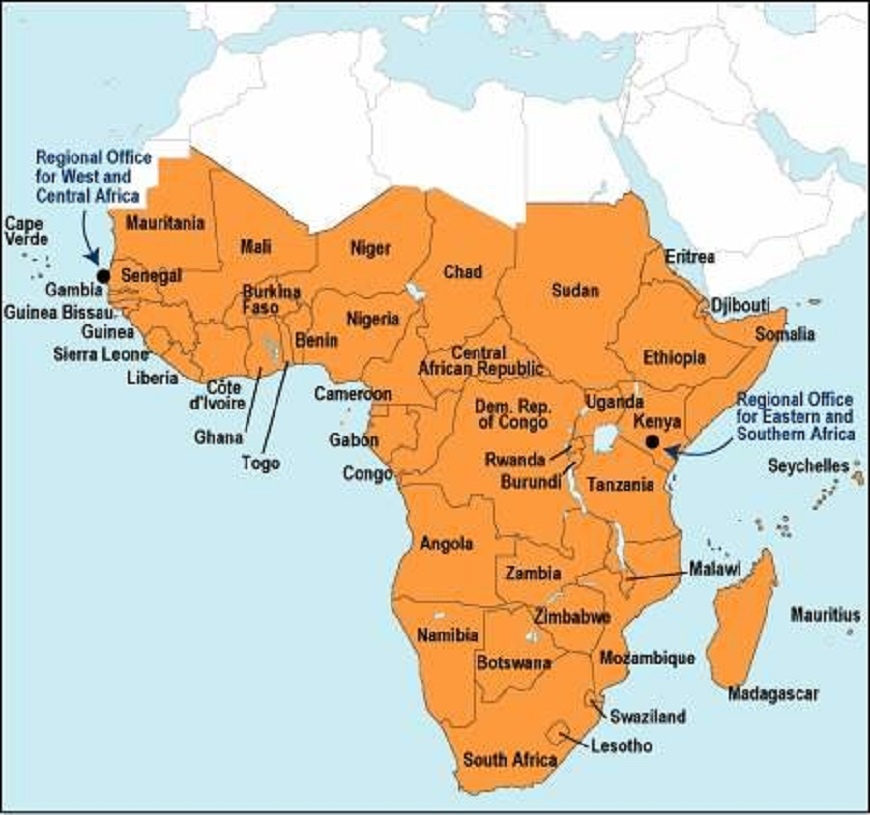
The International Monetary Fund (IMF) has warned that Sub-Saharan Africa, which includes Nigeria, could stand to lose the most if the world were split into two isolated trading blocs centred around China or the United States and the European Union (EU).

Sub-Saharan Africa refers to countries of the African continent that are not considered part of North Africa.

According to estimates released on Monday, sub-Saharan African economies could experience a permanent decline of up to 4 per cent of the real gross domestic product after 10 years, which is larger than what many countries experienced during the Global Financial Crisis of 2008-09.

It noted that economic and trade alliances with new economic partners, predominantly China, have benefited the region but have also made countries reliant on imports of food and energy more susceptible to global shocks, including disruptions from the surge in trade restrictions following Russia’s invasion of Ukraine.

“If geopolitical tensions were to escalate, countries could be hit by higher import prices or even lose access to key export markets—about half of the region’s value of international trade could be impacted,” the IMF said.

The lender warned that losses could be compounded if capital flows between trade blocs were cut off due to geopolitical tensions.

“The region could lose an estimated $10 billion of foreign direct investment (FDI) and official development assistance inflows, which is about half a per cent of GDP a year (based on an average 2017–19 estimate). The reduction in FDI, in the long run, could also hinder much-needed technology transfer.”

The IMF noted that the countries looking to restructure their debt, deepening geoeconomic fragmen­tation could also worsen coordination problems among creditors.

It advocated the need for strategic decoupling, saying the region would fare better if only the US/EU cut ties with Russia and sub-Saharan African countries continued to trade freely.

In this scenario, trade flows would be diverted towards the rest of the world, creating opportunities for new partnerships and possibly boosting intra-regional trade.

This is “because some African countries benefit from access to new export markets and cheaper imports, the region as a whole would not incur a GDP loss. Oil exporters supplying energy to Europe could even gain.”

To better manage shocks, IMF advised that countries need to build resilience. “This can be done by strengthening the ongoing regional trade integration under the African Continental Free Trade Area, which will require reducing tariff and non-tariff trade barriers, strengthening efficiency in customs, leveraging digitalization, and closing the infrastructure gaps.

“Deepening domestic financial markets can also broaden sources of financing and lower the volatility associated with relying too much on foreign inflows,” the IMF noted.

It also noted that to take advantage of the potential shifts in trade and FDI flows, countries in the region can try to identify and nurture sectors that may benefit from trade diversion, “for example, energy. Commodity exporters in the region could potentially displace much of Russia’s energy market share in Europe.”

“Countries can also rely on trade promotion agencies to help identify potential opportunities, build the necessary skills and capacity for exports, and eventually re-orient production to take advantage of new trade flows. Improving the business environment, such as by lowering entry, regulatory, and tax barriers, could also help.”

The lender also said multilateral institutions would need to continue to facilitate dialogue among nations to promote economic integration and cooperation.


Adedapo Adesanya is a journalist, polymath, and connoisseur of everything art. When he is not writing, he has his nose buried in one of the many books or articles he has bookmarked or simply listening to good music with a bottle of beer or wine. He supports the greatest club in the world, Manchester United F.C.

Economy

LIRS Shifts Deadline for Annual Returns Filing to February 7

Published

on

Annual Tax Returns

By Aduragbemi Omiyale

The deadline for filing of employers’ annual tax returns in Lagos State has been extended by one week from February 1 to 7, 2026.

This information was revealed in a statement signed by the Head of Corporate Communications of the Lagos State Internal Revenue Service (LIRS), Mrs Monsurat Amasa-Oyelude.

In the statement issued over the weekend, the chairman of the tax collecting organisation, Mr Ayodele Subair, explained that the statutory deadline for filing of employers’ annual tax returns is January 31, every year, noting that the extension is intended to provide employers with additional time to complete and submit accurate tax returns.

According to him, employers must give priority to the timely filing of their annual returns, noting that compliance should be embedded as a routine business practice.

He also reiterated that electronic filing through the LIRS eTax platform remains the only approved method for submitting annual returns, as manual filings have been completely phased out. Employers are therefore required to file their returns exclusively through the LIRS eTax portal: https://etax.lirs.net.

Describing the platform as secure, user-friendly, and accessible 24/7, Mr Subair advised employers to ensure that the Tax ID (Tax Identification Number) of all employees is correctly captured in their submissions.

Continue Reading

Economy

Airtel on Track to List Mobile Money Unit in First Half of 2026—Taldar

Published

on

Airtel Money

By Adedapo Adesanya 

The chief executive of Airtel Africa Plc, Mr Sunil Kumar Taldar, has disclosed that the company is still on track to list its mobile money business, Airtel Money, before the end of June 2026.

Recall that Business Post reported in March 2024 that the mobile network operator was considering selling the shares of Airtel Money to the public through the IPO vehicle in a transaction expected to raise about $4 billion.

The firm had been in talks with possible advisors for a planned listing of the shares from the initial public offer on a stock exchange with some options including London, the United Arab Emirates (UAE), or Europe.

However, so far no final decisions have been made regarding the timing, location, or scale of the IPO.

In September 2025, the telco reportedly picked Citigroup Incorporated as advisors for the planned IPO which will see Airtel Money become a standalone entity before it can attain the prestige of trading on a stock exchange.

Mr Taldar, noted that metrics continued to show improvements ahead of the listing with its customer base hitting 52 million, compared to around 44.6 million users it had as of June 2025.

He added that the subsidiary processed over $210 billion in a year, according to the company’s nine-month financial results released on Friday.

“Our push to enhance financial inclusion across the continent continues to gain momentum with our Mobile Money customer base expanding to 52 million, surpassing the 50 million milestone. Annualised total processed value of over $210 billion in Q3’26 underscores the depth of our merchants, agents, and partner ecosystem and remains a key player in driving improved access to financial services across Africa.

“We remain on track for the listing of Airtel Money in the first half of 2026,” Mr Taldar said.

Estimating Airtel Money at $4 billion is higher than its valuation of $2.65 billion in 2021. In 2021, Airtel Money received significant investments, including $200 million from TPG Incorporated at a valuation of $2.65 billion and $100 million from Mastercard. Later that same year, an affiliate of Qatar’s sovereign wealth fund also acquired an undisclosed stake in the unit.

The mobile money sector in Africa is expanding rapidly, driven by a young population increasingly adopting technology for financial services, making the continent a key market for fintech companies.

Continue Reading

Economy

Crypto Investor Bamu Gift Wandji of Polyfarm in EFCC Custody

Published

on

Bamu Gift Wandji of Polyfarm

By Dipo Olowookere

A cryptocurrency investor and owner of Polyfarm, Mr Bamu Gift Wandji, is currently cooling off in the custody of the Economic and Financial Crimes Commission (EFCC).

He was handed over to the anti-money laundering agency by the Nigerian Security and Civil Defence Corps (NSCDC) on Friday, January 30, 2026, after his arrest on Monday, January 12, 2026.

A statement from the EFCC yesterday disclosed that the suspect was apprehended by the NSCDC in Gwagwalada, Abuja for running an investment scheme without the authorisation of the Securities and Exchange Commission (SEC), which is the apex capital market regulator in Nigeria.

It was claimed that Mr Wandji created a fraudulent crypto investment platform called Polyfarm, where he allegedly lured innocent Nigerians to invest in Polygon, a crypto token that attracts high returns.

Investigation further revealed that he also deceived the public that his project, Polyfarm, has its native token called “polyfarm coin” which he sold to the public.

In his bid to promote the scheme, the suspect posted about this on social media platforms, including WhatsApp, X (formally Twitter) and Telegram. He also conducted seminars in some major cities in Nigeria including Kaduna, Lagos, Port Harcourt and Abuja where he described the scheme as a life-changing programme.

Further investigation revealed that in October, 2025, subscribers who could not access their funds were informed by the suspect that the site was attacked by Lazarus group, a cyber attacking group linked to North Korea.

Further investigations showed that Polyfarm is not registered and not licensed with SEC to carry out crypto transactions in Nigeria.  Also, no investment happened with subscribers’ funds and that the suspect used funds paid by subscribers to pay others in the name of profit.

Investigation also revealed that native coin, polyfarm coin was never listed on coin market cap and that the suspect sold worthless coins to the general public.

Contrary to the claim of the suspect that his platform was attacked, EFCC’s investigations revealed that the platform was never attacked or hacked by anyone and that the suspect withdrew investors’ funds and utilized the same for his personal gains.

The EFCC, in the statement, disclosed that Mr Wandji would be charged to court upon conclusion of investigations.

Continue Reading

Trending