Connect with us

Technology

Sub-Saharan Africa Must Embrace Data to Boost Growth—BCG

Published

on

sub-saharan africa

By Modupe Gbadeyanka

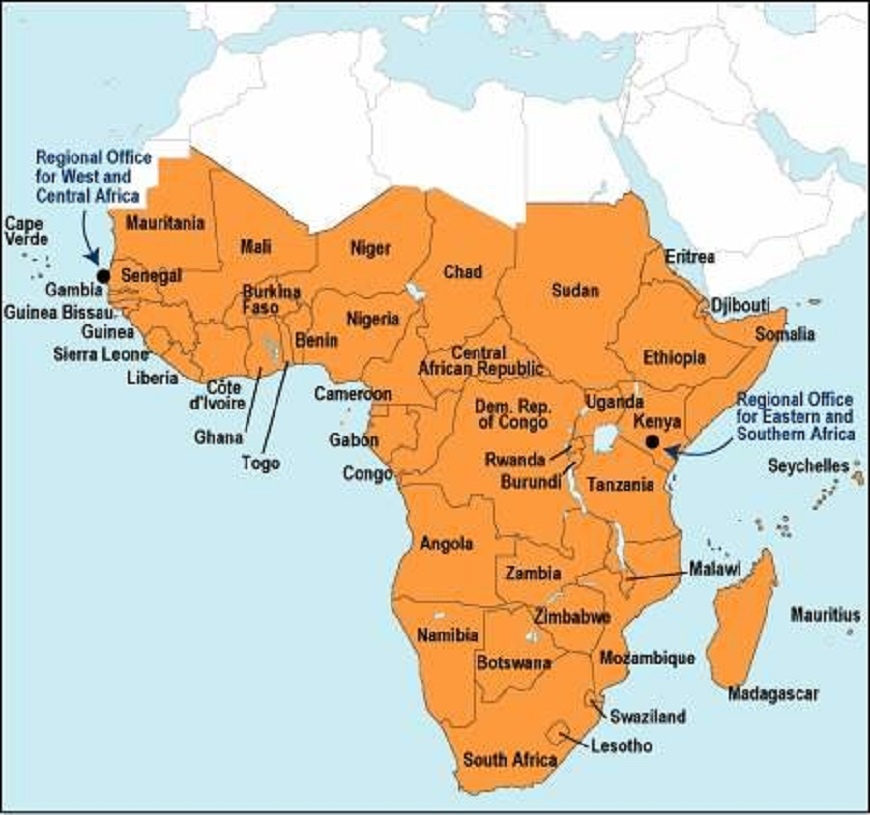
Countries in Sub-Saharan Africa have been urged to strive for improvements in the areas of data aggregation, developmental techniques and empowerment of people, to enable them to meet the Sustainable Development Goals (SDG’s) in the region by 2030.

This advice was given by the partner at Boston Consulting Group (BCG), Mr Tolu Oyekan, while highlighting the challenges that are hindering development in SSA countries and proffering possible solutions to address the numerous problems in the region.

“The UN has set a target of 2030 to reach the SDG’s goals and in effect, eliminate the developmental obstacles to growth and minimum livelihoods that hold back SSA and other countries around the world. For SSA, that is an ambitious deadline,” Mr Oyekan said.

He, however, suggested that for SSA countries to meet the set target, various governments and citizens must gather more and better data and utilize them more effectively.

He added that the governments must also increase and adjust the developmental techniques they employ to ensure they sufficiently address local concerns and issues while taking advantage of existing best practices, even from other disciplines.

Mr Oyekan noted that SSA must enlarge the tent to bring a wider and more diverse group of people into the design and implementation process.

The BCG Partner emphasized that when effectively used, data, developmental techniques and human capital can help SSA countries achieve meaningful developmental gains, thereby making the region more competitive.

According to him, statistics reflect that the region has an alarming poverty rate as about 40 per cent of sub-Saharan Africa, or over 400 million people, live on less than $1.90 a day, defined as the extreme poverty line.

He, however, stressed that good data from the SSA region is mandatory as that would enable the people to understand the prevailing challenges and conditions; and can also be used as a yardstick in comparing SSA countries with other countries of the world.

Mr Oyekan further pointed out that for meaningful development to be achieved, SSA countries must implement developmental techniques and methods that are aligned with unique regional needs.

“For instance, behavioural techniques can encourage desirable actions by sub-Saharan individuals and groups, which in turn can help in local development,” he said.

While speaking in terms of people, Oyekan appealed for a push to increasingly widen the participation of African people in the campaigns to solve Africa’s problems.

He believes that stakeholders are pivotal for the success of SSA developmental efforts; noting that these stakeholders include women, young people, the bottom of the economic pyramid, the private sector and small businesses.


Modupe Gbadeyanka is a fast-rising journalist with Business Post Nigeria. Her passion for journalism is amazing. She is willing to learn more with a view to becoming one of the best pen-pushers in Nigeria. Her role models are the duo of CNN's Richard Quest and Christiane Amanpour.

Technology

Leticia Otomewo Becomes Secure Electronic Technology’s Acting Secretary

Published

on

Secure Electronic Technology

By Aduragbemi Omiyale

One of the players in the Nigerian gaming industry, Secure Electronic Technology (SET) Plc, has appointed Ms Leticia Otomewo as its acting secretary.

This followed the expiration of the company’s service contract with the former occupier of the seat, Ms Irene Attoe, on January 31, 2026.

A statement to the Nigerian Exchange (NGX) Limited on Thursday said Ms Otomewo would remain the organisation’s scribe in an acting capacity, pending the ratification and appointment of a substantive company secretary at the next board meeting.

She was described in the notice signed by the Managing Director of the firm, Mr Oyeyemi Olusoji, as “a results-driven executive with 22 years of experience in driving business growth, leading high-performing teams, and delivering innovative solutions.”

The acting secretary is also said to be “a collaborative leader with a passion for mentoring and developing talent.”

“The company assures the investing public that all Company Secretariat responsibilities and regulatory obligations will continue to be discharged in full compliance with the Companies and Allied Matters Act, applicable regulations, and the Nigerian Exchange Limited Listing Rules,” the disclosure assured.

Meanwhile, the board thanked Ms Attoe “for professionalism and contributions to the Company during the period of her engagement and wishes her well in her future endeavours.”

Continue Reading

Technology

Russia Blocks WhatsApp Messaging Service

Published

on

WhatsApp Self Messaging Feature

By Adedapo Adesanya

The Russian government on Thursday confirmed it has blocked the WhatsApp messaging service, as it moves to further control information flow in the country.

It urged Russians to use a new state-backed platform called Max instead of the Meta-owned service.

WhatsApp issued a statement earlier saying Russia had attempted to “fully block” its messaging service in the country to force people toward Max, which it described as a “surveillance app.”

“Today the Russian government attempted to fully block WhatsApp in an effort to drive people to a state-owned surveillance app,” WhatsApp posted on social media platform X.

“Trying to isolate over 100 million users from private and secure communication is a backwards step and can only lead to less safety for people in Russia,” it said, adding: “We continue to do everything we can to keep users connected.”

Russia’s latest move against social media platforms and messaging services like WhatsApp, Signal and Telegram comes amid a wider attempt to drive users toward domestic and more easily controlled and monitored services, such as Max.

Russia’s telecoms watchdog, Roskomnadzor, has accused messaging apps Telegram and WhatsApp of failing to comply with Russian legislation requiring companies to store Russian users’ data inside the country, and of failing to introduce measures to stop their platforms from being used for allegedly criminal or terrorist purposes.

It has used this as a basis for slowing down or blocking their operations, with restrictions coming into force since last year.

For Telegram, it may be next, but so far the Russian government has been admittedly slowing down its operations “due to the fact that the company isn’t complying with the requirements of Russian legislation.”

The chat service, founded by Russian developers but headquartered in Dubai, has been a principal target for Roskomnadzor’s scrutiny and increasing restrictions, with users reporting sluggish performance on the app since January.

Continue Reading

Technology

Nigerian AI Startup Decide Ranks Fourth Globally for Spreadsheet Accuracy

Published

on

Nigerian AI Startup Decide

By Adedapo Adesanya

Nigerian startup, Decide, has emerged as the fourth most accurate Artificial Intelligence (AI) agent for spreadsheet tasks globally, according to results from SpreadsheetBench, a widely referenced benchmark for evaluating AI performance on real-world spreadsheet problems.

According to the founder, Mr Abiodun Adetona, the ranking places Decide alongside well-funded global AI startups, including Microsoft, OpenAI, and Anthropic.

Mr Adetona, an ex-Flutterwave developer, also revealed that Decide now has over 3,000 users, including some who are paying customers, a signal to the ability of the startup to scale in the near future.

SpreadsheetBench is a comprehensive evaluation framework designed to push Large Language Models (LLMs) to their limits in understanding and manipulating spreadsheet data. While many benchmarks focus on simple table QA, SpreadsheetBench treats a spreadsheet as a complex ecosystem involving spatial layouts, formulas, and multi-step reasoning. So far, only three agents rank higher than Decide, namely Nobie Agent, Shortcut.ai, and Qingqiu Agent.

Mr Adetona said SpreadsheetBench measures how well AI agents can handle practical spreadsheet tasks such as writing formulas, cleaning messy data, working across multiple sheets, and reasoning through complex Excel workflows. Decide recorded an 82.5% accuracy score, solving 330 out of 400 verified tasks.

“The result reflects sustained investment in applied research, product iteration, and learning from real-world spreadsheet workloads across a wide range of use cases,” Mr Adetona told Business Post.

For Mr Adetona, who built Decide out of frustration with how much time professionals spend manually cleaning data, debugging formulas, and moving between sheets, “This milestone highlights how focused engineering and domain-specific AI development can deliver frontier-level performance outside of large research organisations. By concentrating on practical business data problems and building systems grounded in real user environments, we believe smaller teams can contribute meaningfully to advancing applied AI.”

“For Decide, this is a foundation for continued progress in intelligent spreadsheet and analytics automation,” he added.

Continue Reading

Trending