General
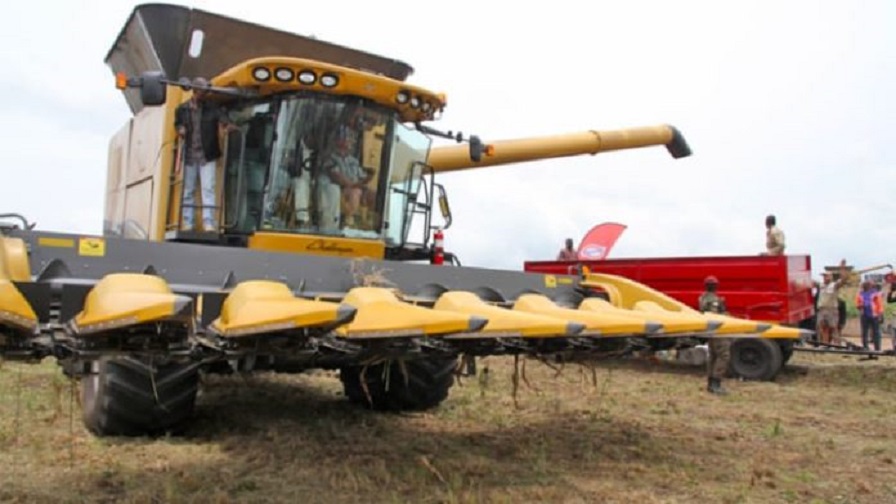
Nigeria to Fast Track SAPZ Programme
By Adedapo Adesanya
The federal government has expressed its commitment to accelerate the implementation of the African Development Bank’s (AfDB) Special Agro-Industrial Processing Zones (SAPZ) project in the country.
The Minister of Agriculture and Food Security, Mr Abubarka Kyari, said this at the SAPZ Phase II Inception Workshop on Wednesday in Abuja, noting that President Bola Tinubu’s administration is determined to give unprecedented attention to agriculture and food security.
“We are determined to fast-track Phase I and Phase II of this project to unlock the opportunities for food security, and job security and increase the contribution of the sector to the GDP.
“SAPZ has come to stay. All hands must therefore be on deck to ensure a successful implementation of the programme in Nigeria,” Mr Kyari said.
According to the Minister, the project is designed to diversify the country’s economy by changing agriculture to become a profitable economic venture.
He said it would provide a win-win scenario for investors, government and citizens, adding that it was open for more collaboration from investors.
The Minister then pledged the commitment of the government to work with the states and private sector to mobilise resources for the implementation of the project.
On his part, the Director-General of the Nigeria Country Department of AfDB, Mr Lamin Barrow, said the SAPZ sought to promote the development of a value chain for strategic commodities in Nigeria and across Africa.
“They will provide world-class infrastructure to support food agribusinesses to locate close to zones of production and develop competitive value chains supported by logistic systems that will drive food processing and value addition.
“The SAPZs will help create massive wealth and jobs in rural areas and turn rural areas away from being zones of economic misery to zones of economic prosperity,” he said
According to Mr Barrow, AfDB is developing SAPZs in 11 African countries. One each in Côte d’Ivoire, Guinea, Mali, Madagascar, Senegal, and Togo, and four in Ethiopia.
He said that the SAPZ programme in Nigeria was the largest, both in scale and scope as phase 1 is currently being implemented over five years in seven states.
He said the states included Cross River, Imo Kaduna, Kano, Kwara, Ogun and Oyo, adding that the states were chosen based on readiness and to achieve a balance across Nigeria’s six geo-political zones.
According to him, there has been a growing interest and enthusiasm from both the Government and private sector players in the Phase II of the SAPZ Programme.
“So far, the Bank has received Expression of Interest (EOI) from no fewer than 23 States across the six geo-political zones in the country. “The States are: Lagos, Anambra, Benue, Ekiti, Delta, Gombe, Ondo, Jigawa, Katsina, Kebbi, Kogi, Nasarawa, Niger, Bayelsa, Bauchi, Ebonyi, Enugu, Osun, Rivers, Sokoto, Taraba and Borno.
“It is expected that at the end of the 2-Day discussion, the participating states will be screened and onboarded based on readiness and quality of entry criteria which will be deliberated upon during the workshop,” he added.
General
Makinde Inaugurates Judicial Panel to Probe Oriire School Abduction
By Adedapo Adesanya
The Governor of Oyo State, Mr Seyi Makinde, has inaugurated a Judicial Commission of Inquiry to investigate the abduction of students and teachers from Esinele and Yawota communities in Oriire Local Government Area of Oyo State.
The governor formally inaugurated the commission at the Executive Council Chamber of the Governor’s Office, Secretariat, Agodi, Ibadan.
Speaking at the event, Governor Makinde said that although the successful rescue of the victims brought relief to the state, it did not provide complete closure.
He explained that the decision to set up an independent commission was not intended to undermine the efforts of security agencies but to ensure that every question surrounding the incident is thoroughly addressed and lessons are learnt to prevent a recurrence.
He charged members of the commission to conduct a thorough, impartial, and evidence-based investigation, assuring them of the state government’s full support. He also called on individuals and relevant institutions to cooperate fully with the panel.
Speaking on behalf of the commission, its chairman, Professor Mojeed Owoade, pledged that members would carry out the assignment with integrity, professionalism, and fairness. He added that the panel would seek an extension if necessary to complete its work.
Governor Makinde gave the commission four weeks to submit its report.
Earlier this month, the pupils and teachers abducted in Oriire Local Government Area of Oyo State regained their freedom after 56 days in captivity.
According to the Special Adviser to the President on Information and Strategy, Mr Bayo Onanuga, eight of the kidnappers had been arrested, but the Federal High Court in Abuja on July 23 sentenced three suspects in the abduction to life imprisonment.
According to the court, the sentencing of Mr Abdulrazak Umar, known under the alias Abu Khalifa/Abu Khalid; Mr Yunusa Musa, alias Yunusa Bin Musa; and Mr Shamsu Adamu Sani, alias Abu Itisar, will start from the date of their arrest.
Before their sentencing by Justice Salim Ibrahim, counsel for the defendants pleaded with the court to sentence them on liberal terms, adding that they were first-time offenders and had pleaded guilty.
General
Court Sentences Two Chinese for Illegal Mining in Lagos
By Modupe Gbadeyanka
Two Chinese, Mr Zhang Hong Lin and Mr Gao Pei Hai, have been convicted and sentenced by Justice Akintayo Aluko of the Federal High Court in Ikoyi, Lagos, for conspiracy and the illegal mining of solid minerals.
They were both found guilty on all five counts levelled against them by the Economic and Financial Crimes Commission (EFCC) and sentenced each to five years’ imprisonment on each count, with an option of a N50 million fine covering all five counts.
The court also ordered the forfeiture of the mineral resources recovered from them to the Federal Government of Nigeria.
The defendants were arraigned on a five-count charge bordering on conspiracy and the unlawful possession of mineral resources intended for export without lawful authority.
“That you, Zhang Hong Lin, Gao Pei Hai, and Gao Pei Yu (currently at large), sometime in 2025 in Lagos, within the jurisdiction of this court, conspired among yourselves, with the intent to defraud the Federal Government of Nigeria of revenue accruing therefrom, and without the permission of the appropriate authority, engaged in the exportation of mica products, copper-bearing, and lithium-bearing mineral resources out of Nigeria, thereby committing an offence contrary to Section 1(8)(a) of the Miscellaneous Offences Act, 1983, and punishable under Section 8 of the same Act,” one of the charges read.
The defendants pleaded guilty when the charges were read to them, with the prosecution counsel, H.U. Kofarnaisa, calling the investigating officer, Matthew Orogwu, who reviewed the facts of the case and tendered documentary evidence before the court.
After presenting the evidence, Kofarnaisa urged the court to convict and sentence the defendants in line with the charges.

General
NAFD, NBS Partner to Improve Nigeria’s Agricultural Database
By Adedapo Adesanya
The National Agricultural Development Fund (NADF) and the National Bureau of Statistics (NBS) have signed a Memorandum of Understanding (MoU) aimed at improving the generation, validation, sharing and analysis of agricultural data to support evidence-based financing, policymaking and investment in the country’s agricultural sector.
The agreement was signed on Thursday at the NADF headquarters in Abuja, marking the beginning of a strategic partnership designed to strengthen the quality and use of agricultural statistics for planning, programme implementation and impact assessment.
Speaking at the signing ceremony, the chief executive of NADF, Mr Mohammed Ibrahim, described reliable data as the foundation of effective agricultural development, saying the partnership would enable the fund to make better-informed investment decisions and deliver more impactful interventions across the country’s agricultural value chain.
He noted that although NADF was established by an Act of Parliament in 2022, the Fund has continued to build strategic partnerships that will enhance the delivery of its mandate.
According to him, the collaboration with the National Bureau of Statistics comes at a critical time as the Fund expands its support for agricultural financing, research, donor coordination and sub-national agricultural development.
“Data is our chief enabler. We want every intervention and every investment we make to be guided by credible evidence. Working with the National Bureau of Statistics will strengthen our ability to design programmes that respond to real needs and deliver measurable results,” Mr Ibrahim said.
On his part, the Statistician-General of the Federation and chief executive of NBS, Mr Adeyemi Adeniran, said the agreement represents a practical commitment by both institutions to strengthen Nigeria’s agricultural sector through better statistics and closer institutional collaboration.
He explained that the partnership would create a common framework for agricultural data exchange, validation and harmonisation, ensuring that policymakers and investors have access to reliable information.
“Agriculture deserves better data, and together we intend to build it. Reliable statistics remain the foundation of good governance, sound planning and effective investment,” Mr Adeniran said.
He added that the partnership would improve monitoring of agricultural programmes, support investment decisions and contribute to national food security by ensuring that critical decisions are driven by evidence rather than assumptions.
The Statistician-General also assured stakeholders that both organisations would maintain the highest standards of data governance and confidentiality throughout the implementation of the agreement.
He commended NADF for its growing role in agricultural development and expressed confidence that the partnership would deliver tangible benefits for farmers, policymakers and investors.
Also speaking, a representative of NADF’s Partnership and Investor Relations Department, Mr Nasir Ingawa, described the signing of the MoU as the culmination of a productive relationship between the two organisations.
He said the formal partnership would deepen collaboration and ensure that agricultural interventions are supported by credible and fit-for-purpose data.
The ceremony ended with the formal signing of the Memorandum of Understanding by the leadership of both organisations after legal representatives confirmed that the document reflected the agreed terms.