Auto
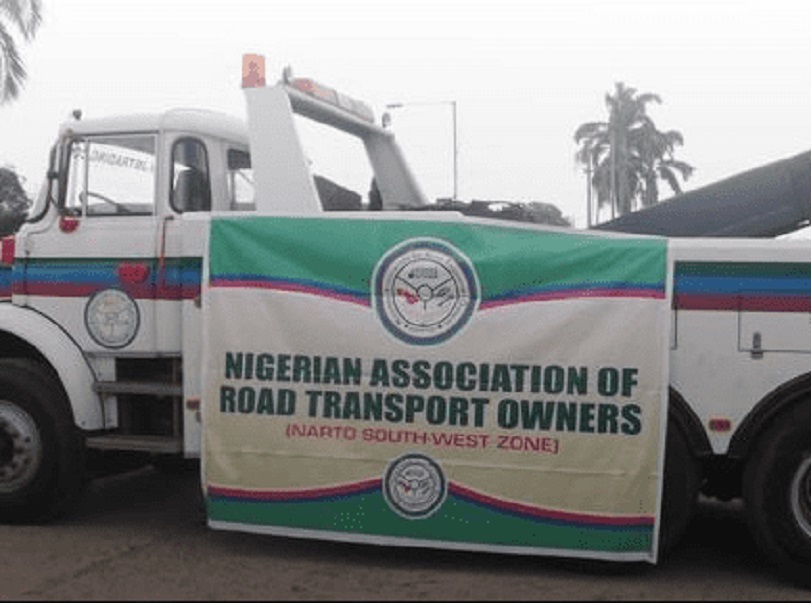
Truck Owners Under NARTO Threaten Strike from Monday
By Adedapo Adesanya
Members of the Nigerian Association of Road Transport Owners (NARTO) have vowed to suspend their operations from Monday, February 19 due to challenges in their businesses.
The National President of the group, Mr Yusuf Lawal Othman, in a statement in Abuja, declared that his members would park their trucks as the operating environment was no longer favourable to them.
“What we spend on the operation is more than what we get in total: both in local and bridging,” he said, noting that his members have been operating at a loss and it is no longer sustainable for them to endure the losses.
NARTO’s National President said, “We will have to suspend operations latest from now till on Monday. We cannot continue to operate at a loss. Most people have parked. A lot more are going to the park.
“But from the point of the association itself, we are going to suspend operations on Monday.”
He stated that efforts were made to solicit the intervention of all the key stakeholders without any positive result, stating that letters were written to the Chief of Staff to President Bola Tinubu; Minister of Petroleum Resources; Director General, Department of State Services (DSS); Nigerian Midstream and Downstream Regulatory Authority (NMDPRA) Chief Executive Officer; Nigerian National Petroleum Company Limited (NNPCL) Group Chief Executive Officer; and the marketers.
“We have written letters up to the level of the Chief of Staff. We have written to the Minister of Petroleum Resources (Oil) I will send you a copy,” he added.
“We have written to DG SSS. We have written to the GCEO. We have written to the Authority Chief Executive. We have written to the Major Marketers.”
He stressed that despite the notification to the above stakeholders, there had been no response.
He recalled that the same freight rate that was in force while former President Muhammadu Buhari was in government is still subsisting, adding that members have been enduring for several months
According to him, the previously fixed N32 Lagos to Abuja freight rate that was implemented while the dollar was N650 is still retained now that the Dollar was trading as high as N1,615.
He said, “Everybody is aware that all our consumables in terms of operation are not produced in the country.
“So, with the rate of dollars, every consumable has increased. But the freight they are paying us has been the same even during Buhari’s time.
“So, how is that feasible? During Buhari’s time, the dollar was N650. Today, the dollar is now N1,615. The average freight from Lagos to Abuja is N32.”
He further explained, “What I mean by local, you load Lagos, you discharge in Lagos. And bridging, you load from Lagos, you come to Abuja. Lagos to Lagos, we are paid N120,000.
“AGO (diesel) alone to distribute fuel within Lagos is N140,000 because it is N1,400 per litre. So, they give you N120,000 and you spend N140,000. So, how do you want to operate?” he quipped, “Talk less of cost of vehicles, cost of loading, driver’s allowance. That is for local. For bridging, Lagos to Abuja, they gave us N32.
“If you have a truck of 40,000 litres, you are talking of N1,280,000-N1,216,000. Less 5 per cent of the amount of N1,280,000 Withholding Tax N64,000. Less than 55,000 loading expenses and 15,000 driver allowance.
“Total expenses N134,000 while balance is N1,146,000. AGO is N1400 for 900 litres, totalling N1260,000. There is a total loss of N114,000. The diesel that you use from Lagos to Abuja is 900 litres. So when you use 900 litres at 1,400, that will be N1,260,000. So it is by far more than what is paid.
“Meanwhile the cost of a truck New truck head and tank is N95 million and used is N50 million. So imagine the Amount invested on each truck?”
Auto
inDrive Ranks Second in Ride-Hailing App Downloads Globally
By Modupe Gbadeyanka
A global mobility and urban services platform, inDrive, for the fourth consecutive year, has emerged as second in ride-hailing app downloads in the world.
In its latest report, a leading market intelligence firm, Sensor Tower, also disclosed that the company ranked fourth globally in the travel category for downloads, up from fifth place in 2024, reflecting growing engagement as it continues its transition into a super app.
It was also revealed that inDrive was ranked number one in the travel category by downloads in nine countries, with newcomers to the list including Peru and Pakistan, and placed among the top three most downloaded travel apps in 22 countries.
The chief executive of inDrive, Mr Arsen Tomsky, while commenting on these feats and others, said the continued rise underscores a broader shift toward multi-service platforms that deliver everyday value while remaining closely aligned with local market needs and user expectations.
“Maintaining our position as the world’s second most downloaded ride-hailing app for a fourth consecutive year is a powerful validation of the value inDrive delivers to its users every day.
“This recognition reflects the trust people place in our platform and the continued dedication of our global team.
“As inDrive evolves into a super app, we remain focused on our core principles of fairness, transparency, and user choice, while expanding access to services that make a meaningful difference in people’s daily lives,” Mr Tomsky said.
The latest report highlights that super app ecosystems are becoming a key growth driver for the ride-hailing industry, particularly in emerging markets where users are engaging more frequently and across a broader range of use cases.
The inDrive app – defined by its peer-to-peer pricing model that allows drivers and riders to agree on a fair price mutually – has now been downloaded over 400 million times since its launch. Available in 1,065 cities worldwide, it has facilitated more than 8 billion transactions.
The platform operates across 48 countries, driven by strong global adoption, including growing momentum across Africa and continued growth in Nigeria.
In 2025, inDrive accelerated its transition into a super app, expanding beyond its core ride-hailing offering to offer additional services, including intercity transportation, courier, grocery delivery, and financial services.
By expanding its offering and meeting more of its users’ daily needs, inDrive is driving deeper and more frequent user engagement – an approach that underpins its continued global momentum.
Technology under the hood, including AI and advanced analytics, plays a significant role in supporting this evolution by enabling greater personalization and more seamless user experiences.
From using machine learning to fix mapping gaps and deliver more accurate ETAs, to predictive analytics that anticipate user needs and personalize service offerings, these capabilities drive innovation. In contrast, ensuring users retain complete control over pricing decisions is consistent with inDrive’s commitment to fairness through choice.
Auto
GoCab Receive $45m to Scale Ethical Mobility Financing Platform
By Dipo Olowookere
A funding package of up to $45 million has been secured by a mobility fintech firm, GoCab, to scale its ethical mobility financing platform across emerging markets.
A statement made available to Business Post disclosed that the funds comprise $15 million equity and $30 million debt, with the equity round co-led by E3 Capital and Janngo Capital. Others involved in the transactions were KawiSafi Ventures and Cur8 Capital.
GoCab operates a drive-to-own mobility fintech model that provides credit to gig-economy workers to buy their own car, bike and others in emerging markets.
It offers vehicles in drive-to-own programmes, mobile phone BNPL, motorbike financing for delivery couriers, and other value-added services through a single digital platform powered by proprietary technology.
With this financing support, GoCab plans to expand its operations and fleet, aiming for 10,000 active vehicles and $100 million in annual recurring revenue within the next 24 months.
Across five markets, GoCab now generates over $17 million in Annual Recurring Revenue (ARR) after just 18 months of operations and is on target to reach $50 million by end of 2026 and $100 million in 2027.
The company was established in 2024 by Mr Azamat Sultan and Mr Hendrick Ketchemen to address the limited access to ethical financing and vehicle ownership for gig-economy workers in Africa.
By combining mobility, technology, and inclusive finance, the organization enables drivers and delivery couriers to generate stable income while progressively gaining ownership of their vehicles.
By 2025, GoCab had taken a leading position in several African markets, supporting thousands of drivers and contributing to cleaner, more sustainable urban mobility systems.
“Transforming lives and improving the daily reality of thousands of families is the mission we have set for ourselves. We believe that capital can and must become a powerful force for transformation across Africa and emerging markets,” Mr Ketchemen said.
His counterpart, Mr Sultan, disclosed that, “For us, GoCab is about restoring dignity and opportunity through ownership.
“Across Africa, millions of people are locked out of both mobility and finance. We saw how capital was flowing everywhere except to the people who actually needed it to work.
“This round allows us to scale responsibly expanding access to fair, ethical financing while accelerating the transition to electric mobility, lowering carbon emissions, and building a more inclusive and sustainable future in close alignment with our investors.”
One of the investors, Mr Vladimir Dugin of E3 Capital, said, “The shortage of vehicles and the high cost of transportation remain two of the most pressing challenges across Africa. GoCab is addressing both head-on through a data- and technology-driven platform that expands access to mobility while improving efficiency at scale.
“Its rapidly growing EV fleet lowers costs for riders and drivers alike, while significantly reducing emissions. We are proud to support GoCab as it builds the leading pan-African mobility platform for the future.”
“We are proud to lead GoCab’s $15 million equity round, catalysing over $30 million in debt financing. We were impressed by their vision, their world-class team, and the quality of their execution.
“With this funding, GoCab now has the scale to deploy thousands of productive vehicles, each supporting a full-time income.
“With a clear operational roadmap toward 10,000 active assets and $100 million in recurring revenue, GoCab illustrates how ethical financing can translate into tens of thousands of decent jobs, household resilience, and sustainable growth at scale,” the chairman of Janngo Capital, Fatoumata Bâ, stated.
Also, a partner at KawiSafi Ventures, Mr Marcus Watson, said, “GoCab is building critical infrastructure for climate-smart mobility and the future of work in emerging markets. The combination of disciplined execution, strong unit economics, and a clear impact thesis makes GoCab a compelling platform for sustainable growth.”
Auto
Demolitions: inDrive Shares N75m Relief Packages to Displaced Lagos Residents
By Modupe Gbadeyanka
Over N75 million worth of relief materials have been provided by foremost ride-hailing platform, inDrive, to residents of Lagos State displaced by recent demolitions in the metropolis.
The company partnered with Tolu Aniwura Welfare Foundation (GenerousMe) to distribute essential food, clothing, and school supplies to more than 2,000 affected individuals and families.
At the distribution of the items at St. Paul Catholic Church, Ebute-Metta, the Country Representative for inDrive Nigeria, Mr Timothy Oladimeji, explained that the initiative reflects the company’s people-first approach and its commitment to responding directly to urgent community challenges while maintaining a focus on long-term empowerment across its markets.
“At inDrive, we believe that our responsibility goes beyond providing mobility services; it extends to standing with communities during moments of need.
“The recent demolitions left many families vulnerable, and through our partnership with GenerousMe, we were able to respond quickly and responsibly. This intervention reflects our commitment to fairness, empathy, and ensuring that people remain at the centre of everything we do,” Mr Oladimeji said.
It was gathered that the support also extended to individuals who had previously benefited from inDrive-backed social impact programmes, reflecting the company’s continued commitment to empowering vulnerable communities across Nigeria.
The relief packages included essential dry food items such as rice, beans, garri, noodles, spaghetti, cooking oil, tomato paste, seasoning cubes, and salt. Beneficiaries also received clothing, blankets, sleeping mats, mosquito nets, rechargeable lamps, power banks, and baby care items, as well as school packs containing bags, exercise books, and writing materials for children.
In his remarks, the Partnerships Lead for GenerousMe, Mr Adetola Alade, said, “Partnering with inDrive enabled the timely and coordinated delivery of aid. We prioritize speed and collaboration in responding to urgent humanitarian needs, and working with inDrive on this project was a great experience.”
-
Feature/OPED6 years agoDavos was Different this year
-
Travel/Tourism9 years ago
Lagos Seals Western Lodge Hotel In Ikorodu
-
Showbiz3 years agoEstranged Lover Releases Videos of Empress Njamah Bathing
-
Banking8 years agoSort Codes of GTBank Branches in Nigeria
-
Economy3 years agoSubsidy Removal: CNG at N130 Per Litre Cheaper Than Petrol—IPMAN
-
Banking3 years agoSort Codes of UBA Branches in Nigeria
-
Banking3 years agoFirst Bank Announces Planned Downtime
-
Sports3 years agoHighest Paid Nigerian Footballer – How Much Do Nigerian Footballers Earn