World
Russia and Nigeria: Turning A New Page In Their Relationship?
By Kestér Kenn Klomegâh
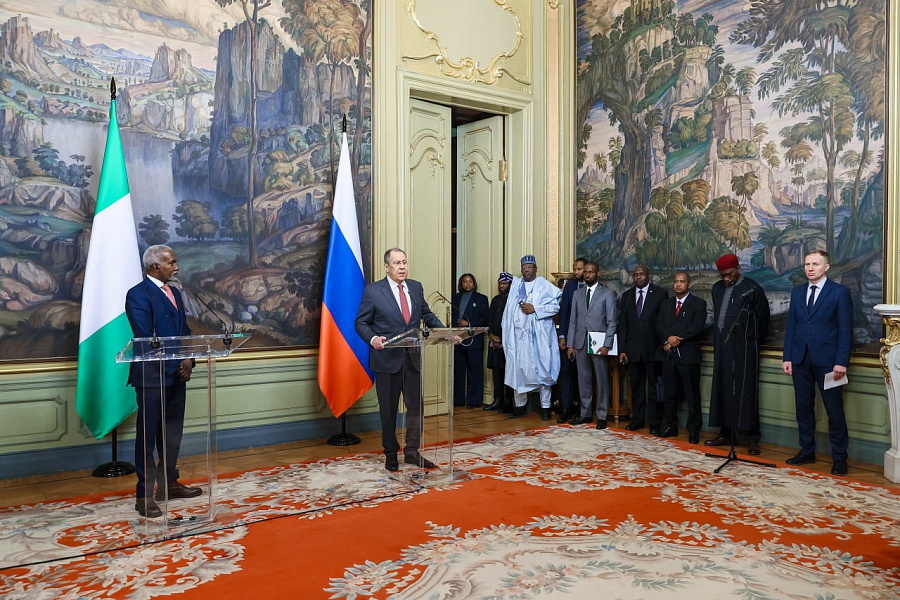
On March 6, Russian Foreign Minister, Mr Sergey Lavrov, held talks with Nigeria’s Minister of Foreign Affairs, Mr Yusuf Maitama Tuggar, who was in Moscow on an official two-day working visit.
The visit, at the invitation of the Russian Foreign Ministry, which has a lot of distinctive implications and strategic interpretations, was a conscious follow-up to review and discuss Russian-Nigerian partnership issues that were raised long ago and during the second Russia-Africa summit held last July 2023.
Vice President Kashim Shettima headed the Nigerian delegation to attend that second Russia-Africa summit in St Petersburg, and Mr Tuggar was among the group.
He often reiterated that Nigeria is one of Africa’s biggest countries and Russia’s priority partner in the West African region.
In the opening remarks and with historical precision, Lavrov mentioned the frequency of Nigeria delegations visiting Moscow, saying “This meeting reflects the long-term friendship between our nations and good prospects for the development of our relations at this stage. We consider Nigeria a priority partner on the African continent.”
In practical terms, Russia has maintained a ‘cordial relationship’ with Nigeria these several years after the collapse of the Soviet era. The greatest achievement, of course, is sustaining the political consultations and frequent dialoguing on several economic issues which have not been effectively implemented in the country.
At the media conference after their ‘behind-the-scene’ discussions on March 6, Lavrov and Tuggar reaffirmed their commitment to the Russian-Nigerian cooperation in political, trade, economic, humanitarian and other areas. It also included the prospects for expanding business contacts and implementing joint projects in energy, mining and mineral processing, construction and modernising infrastructure and agriculture.
“With this aim in view, we have agreed to stimulate the activities of the Intergovernmental Commission for Trade, Economic, Scientific and Technological Cooperation and to make use of the capabilities of the Russia-Nigeria Business Council. We need to improve our legal framework for implementing projects of mutual interest. We have an interest in implementing the agreement on military-technical cooperation, which has recently been extended. Our Nigerian friends are interested in this too,” Lavrov emphasized.
The two Ministers, during the joint media conference, inevitably never pointed to a single project implemented, undertaken and completed during these several years. The ministry’s website says Lavrov has held his position as foreign minister for two decades, since 2004, and has been dealing with Nigeria and African countries.
More than 15 years ago, Lavrov held a review meeting with his former Nigerian counterpart, Mr Ojo Mbila Maduekwe, who paid a three-day working visit to Moscow. After the closed-door bilateral talks held in March 2009, both Ministers, as always, held a brief media conference and emphatically noted that Moscow was prepared to offer trade preferences to Nigeria.
They also agreed on a broad range of bilateral economic issues, many of which have still not been implemented. Until today, Russia has never honoured its promise of extending trade preferences, in practical terms, to Nigeria. Extending trade preferences was interpreted as an integral part of strengthening bilateral economic and trade cooperation between the two countries.
For trade relations between Russia and Nigeria and other African states to improve appreciably, Professor Dmitri Bondarenko, deputy director of the Russian Academy of Sciences’ Institute for African Studies, suggested “Russia gives some trade preferences to African countries – for example, tax exceptions or reduction among other measures. This can become an effective political step to strengthen economic cooperation with African countries.”
Today, Nigeria is Russia’s second-largest trade partner, only in theory, among sub-Saharan African countries. Russian business circles show an ever greater interest, with sweet rhetoric, in entering the promising market of that large country.
The volume of trade should be in the billions of dollars, even without military hardware. One of the major hindrances to free trade and a significant increase in trade transactions between Nigeria and Russia is the lack of direct air flights. This makes it more inconvenient and expensive for potential investors to travel easily to both countries. Besides, there is no adequate economic and social information available to potential Russian and Nigerian investors.
Russian and Nigerian ambassadors have come forth and back over the years. In May 2022, the Nigerian Ambassador to the Russian Federation, Professor Abdullahi Shehu, gave an inspiring lecture at the Diplomatic Academy of the Russian Ministry of Foreign Affairs.
Most of the points he raised in that lecture included decades of Moscow’s economic failures in Nigeria and many African countries despite the boast of several years of cordial relationship with Africa.
Professor Shehu’s lecture script points to the fact that President Vladimir Putin considers Africa a so-called second frontier, after Eastern Europe for encircling Western Europe…these reasons may sound strategic yet they remain largely speculative and conjectural.
Understandably, the perceived geopolitical irrelevance of Africa by Russia has changed only a little and new dynamics have beckoned on both sides of subsisting opportunities for increased collaboration between Africa and Russia.
Despite the tidal surge in the new Africa-Russia relations and given the strategic role played by the defunct Soviet Union, now succeeded by Russia, in the attainment of the independence of many African countries, both parties must accept the constraints posed on the former [Russia] by the new economic cum geopolitical realities. The acceptance of these new realities is important to properly assist in the management of Africa’s expectations from Russia particularly in the short term.
Today, for instance, Nigeria offers Russia the advantage of cheap and robust labour. Given Russia’s recent experience of sanctions by America and its Western allies, a new model of doing business with Africa through investment has become, not only sustainable but also imperative. Perhaps, one of the sectors where this model of doing business can be symbiotically harnessed is the field of agriculture and its value chain as a result of the steep rise in the large African market and the projected certainty of huge returns on investment in this sector, according to Ambassador Shehu.
Part of the major essence of this lecture was to look at the past to chart a course for the future, inhaling the fresh aroma of the beauty of the ‘rose’ in the Africa-Russia relationship, weeding out the thorns of inconvenience on which Africa and Russia have marched and straighten any crooked path along which both have passed to arrive faster to the desired destination. While Africa cherishes the important MOUs and agreements Russia has with Africa, there is a need to translate such agreements and MOUs into concrete realities. Additionally, balancing Russia’s commercial interests of arms sales to Africa will ensure that the latter enjoys relative stability and peace so vital for its development.
Without a doubt, Russia has had a long chequered history of post-Soviet diplomacy. Nigerian President Olusegun Obasanjo visited Russia in 2001. That year, Russia and Nigeria signed the fundamental document for interstate cooperation, the Declaration on Principles of Friendly Relations and Partnership. According to President Vladimir Putin, the Russian Federation, like the former Soviet Union, has always attached great significance to promoting its relations with the African continent. Nigeria occupies a special place among African countries. It is one of the largest and most powerful countries in Africa. Its head of state is a recognised leader not only on the continent but in the whole world.
Discussions ended with the administrative long list of projects, and on top were joint activities in the sphere of high technology and the launching of several satellites to be used by Nigeria for environmental monitoring and remote sensing of the Earth are being contemplated. That was on March 6, 2001.
Since then, there have been some deals and business proposals that have never seen the bright sunlight. As far back in June 2009, Dmitry Medvedev as president visited Nigeria for the first time, and held topmost state-level talks on possible nuclear energy, oil exploration and military cooperation. There were talks also focusing on the establishment of a petrochemical plant in Nigeria. Alongside there was also a declaration on principles of friendly relations and partnership between Nigeria and the Russian Federation.
Russian investors had wanted to revamp the Ajaokuta Iron and Steel Complex which was abandoned after the collapse of the Soviet Union more than three decades ago, and further take up energy, oil and gas projects in Nigeria, as well as facilitate trade between Nigeria and Russia. In addition, Russia has been prospecting for its nuclear power ambitions over the years. The promise was to build two nuclear plants estimated cost of $20 billion – the bulk of it by Russia is to boost Nigeria’s electricity supply.
Russia’s second-largest oil company, and privately controlled Lukoil, has gone back and forth these several years with plans to expand its operations in Nigeria, and in many West African countries. There has been a long-dead silence after Gazprom, the Russian energy giant, signed an agreement with the Nigerian National Petroleum Corporation [NNPC] on the exploration and exploitation of gas reserves with a new joint venture company known as NiGaz Energy Company.
Some experts argue that there are many other aspects of the bilateral relations. With high interest, Russian officials are pushing for military-technical cooperation. The supply of Russian military equipment could play a high-value addition to the fight against notorious Boko Haram. In most of the economic deals, the Nigerian political elites are under the strong influence of Paris, London and Washington.
South African Institute of International Affairs [SAIIA], a Johannesburg-based foreign policy think tank, put out a report titled “Russia’s Military Diplomacy in Africa: High Risk, Low Reward and Limited Impact” in part says that “Russia’s growing assertiveness in Africa is a driver of instability, its approach to governance encourages pernicious practices, such as kleptocracy and autocracy in Africa.” Worse is that Russia’s strengths expressed through military partnerships fall short of what is needed to address the complexities and scale of the problems facing those African countries. Russia encourages the military regimes [Burkina Faso, Mali and Niger] to hold onto political power, instead of constitutional democracy.
Nigeria is an economic powerhouse in the West African region. As well known, Nigeria is one of Africa’s fastest-growing economies and it has the largest population. Russia and Nigeria have some sort of economic relations, but these are not consistent with the long-standing cordial relations between both countries.
In addition, Nigeria is a vast market with huge potential for prospective foreign investors and so is Russia. Regrettably, investors from both sides appear to know little about these opportunities. This is, usually attributed to the apparent inadequate knowledge of the many investment opportunities in both countries. Despite criticisms, reports show that the majority prefer traditional markets – the United States and Europe, and now the Asian region. The African political elite and business people choose the United States and Europe for their holidays and as tourism destinations.
Lest we forget that Vladimir Putin held discussions with the President of the Federal Republic of Nigeria Muhammadu Buhari, who went to Sochi to take part in the first Russia-Africa summit in October 2019. Putin reminded during talks that priority to joint search for opportunities to broaden trade, economic and investment cooperation were assigned to the Intergovernmental Commission for Economic Cooperation and the Russia – Nigeria and Nigeria – Russia Business councils set up in 2006–2007.
In response, Muhammadu Buhari said in part: “Mr President, there are many similarities between Russia under your leadership and Nigeria’s aspirations for the future. We can learn a lot from the experience of Russia’s ongoing reforms, of transitioning from an oil-dependent economy to a modern, diversified and inclusive economy. Russia has through these reforms successfully privatised several state-owned entities, which have now become global household names. This is especially so in the energy, manufacturing, defence and the metallurgical sectors.”
So, it continues, without the least interruption, that Russia and Nigeria share experiences, exchange views on national and international platforms, maintain political dialogues, and discuss economic cooperation and humanitarian issues. Russia and Nigeria share similar positions at the United Nations. Russia and Nigeria have continued to keep a cordial and mutually beneficial relationship in the past years since 1991 after Soviet’s collapse.
The term – bilateral relations – is seen as a two-way street, Nigeria’s presence in the Russian Federation is only the diplomatic representative office. Public outreach diplomacy is generally ineffective, both ways between Russia and Africa. Compared, for example, to the American Growth and Opportunity Act (AGOA) and some trade preferences granted by Europe, Russians hardly encourage African presence in the Russian Federation. On the other hand, Russia hardly in speeches refers to the African Continental Single Market (AfCFTA). With an estimated 1.4 billion people, the market is potentially the largest, Africa – is the continent of the future.
As a matter of fact, to be part of this geopolitical arena, Russia has to take practical steps to move beyond AK-47 in raising its economic influence in Africa. It has to crack the local socio-cultural barriers and, in particular, the deep-seated bureaucracy too. In a continent beleaguered by the ravages of ethnic and political conflicts, Russian officials have to thoroughly study the local conditions before imposing strategic economic initiatives and engaging local African partners and stakeholders.
In summary, the Russian strategic policy interest generally in Africa and specifically in Nigeria, given the strong limitation of its current capability and its re-emergence in Africa, is an earnest attempt to regain part of Soviet-era influence. But these current relations, within the context of geopolitical changes, must necessarily be conducted with consistency and in a concrete manner, but not with mere rhetorics. It is about time to act and most importantly, aim at noticeable results. According to various narratives inside the continent, Russia appears only as an advocate of the emerging multipolar order and as a reliable virtual investor in Africa.
World
Nigeria Exploring Economic Potential in South America, Particularly Brazil
By Kestér Kenn Klomegâh
In this interview, Uche Uzoigwe, Secretary-General of NIDOA-Brazil, discusses the economic potential in South America, particularly Brazil, and investment incentives for Brazilian corporate partners for the Federal Republic of Nigeria (FRN). Follow the discussion here:
How would you assess the economic potential in the South American region, particularly Brazil, for the Federal Republic of Nigeria? What investment incentives does Nigeria have for potential corporate partners from Brazil?
As the Secretary of NIDOA Brazil, my response to the questions regarding the economic potentials in South America, particularly Brazil, and investment incentives for Brazilian corporate partners would be as follows:
Brazil, as the largest economy in South America, presents significant opportunities for the Federal Republic of Nigeria. The country’s diverse economy is characterised by key sectors such as agriculture, mining, energy, and technology. Here are some factors to consider:
- Natural Resources: Brazil is rich in natural resources like iron ore, soybeans, and biofuels, which can be beneficial to Nigeria in terms of trade and resource exchange.
- Growing Agricultural Sector: With a well-established agricultural sector, Brazil offers potential collaboration in agri-tech and food security initiatives, which align with Nigeria’s goals for agricultural development.
- Market Size: Brazil boasts a large consumer market with a growing middle class. This represents opportunities for Nigerian businesses looking to export goods and services to new markets.
- Investment in Infrastructure: Brazil has made significant investments in infrastructure, which could create opportunities for Nigerian firms in construction, engineering, and technology sectors.
- Cultural and Economic Ties: There are historical and cultural ties between Nigeria and Brazil, especially considering the African diaspora in Brazil. This can facilitate easier business partnerships and collaborations.
In terms of investment incentives for potential corporate partners from Brazil, Nigeria offers several attractive incentives for Brazilian corporate partners, including:
- Tax Incentives: Various tax holidays and concessions are available under the Nigerian government’s investment promotion laws, particularly in key sectors like agriculture, manufacturing, and technology.
- Repatriation of Profits: Brazil-based companies investing in Nigeria can repatriate profits without restrictions, thus enhancing their financial viability.
- Access to the African Market: Investment in Nigeria allows Brazilian companies to access the broader African market, benefiting from Nigeria’s membership in regional trade agreements such as ECOWAS.
- Free Trade Zones: Nigeria has established free trade zones that offer companies the chance to operate with reduced tariffs and fewer regulatory burdens.
- Support for Innovation: The Nigerian government encourages innovation and technology transfer, making it attractive for Brazilian firms in the tech sector to collaborate, particularly in fintech and agriculture technology.
- Collaborative Ventures: Opportunities exist for joint ventures with local firms, leveraging local knowledge and networks to navigate the business landscape effectively.
In conclusion, fostering a collaborative relationship between Nigeria and Brazil can unlock numerous economic opportunities, leading to mutual growth and development in various sectors. We welcome potential Brazilian investors to explore these opportunities and contribute to our shared economic goals.
In terms of this economic cooperation and trade, what would you say are the current practical achievements, with supporting strategies and systemic engagement from NIDOA?
As the Secretary of NIDOA Brazil, I would highlight the current practical achievements in economic cooperation and trade between Nigeria and Brazil, alongside the supporting strategies and systemic engagement from NIDOA.
Here are some key points:
Current Practical Achievements
- Increased Bilateral Trade: There has been a notable increase in bilateral trade volume between Nigeria and Brazil, particularly in sectors such as agriculture, textiles, and technology. Recent trade agreements and discussions have facilitated smoother trade relations.
- Joint Ventures and Partnerships: Successful joint ventures have been established between Brazilian and Nigerian companies, particularly in agriculture (e.g., collaboration in soybean production and agricultural technology) and energy (renewables, oil, and gas), demonstrating commitment to mutual development.
- Investment in Infrastructure Development: Brazilian construction firms have been involved in key infrastructure projects in Nigeria, contributing to building roads, bridges, and facilities that enhance connectivity and economic activity.
- Cultural and Educational Exchange Programs: Programs facilitating educational exchange and cultural cooperation have led to strengthened ties. Brazilian universities have partnered with Nigerian institutions to promote knowledge transfer in various fields, including science, technology, and arts.
Supporting Strategies
- Strategic Trade Dialogue: NIDOA has initiated regular dialogues between trade ministries of both nations to discuss trade barriers, potential markets, and cooperative opportunities, ensuring both countries are aligned in their economic goals.
- Investment Promotion Initiatives: Targeted initiatives have been established to promote Brazil as an investment destination for Nigerian businesses and vice versa. This includes showcasing success stories at international trade fairs and business forums.
- Capacity Building and Technical Assistance: NIDOA has offered capacity-building programs focused on enhancing Nigeria’s capabilities in agriculture and technology, leveraging Brazil’s expertise and sustainable practices.
- Policy Advocacy: Continuous advocacy for favourable trade policies has been a key focus for NIDOA, working to reduce tariffs and promote economic reforms that facilitate investment and trade flows.
Systemic Engagement
- Public-Private Partnerships (PPPs): Engaging the private sector through PPPs has been essential in mobilising resources for development projects. NIDOA has actively facilitated partnerships that leverage both public and private investments.
- Trade Missions and Business Delegations: Organised trade missions to Brazil for Nigerian businesses and vice versa, allowing for direct engagement with potential partners, fostering trust and opening new channels for trade.
- Monitoring and Evaluation: NIDOA implements a rigorous monitoring and evaluation framework to assess the impact of various initiatives and make necessary adjustments to strategies, ensuring effectiveness in achieving economic cooperation goals.
Through these practical achievements, supporting strategies, and systemic engagement, NIDOA continues to play a pivotal role in enhancing economic cooperation and trade between Nigeria and Brazil. By fostering collaboration and leveraging shared resources, we aim to create a sustainable and mutually beneficial economic environment that promotes growth for both nations.
Do you think the changing geopolitical situation poses a number of challenges to connecting businesses in the region with Nigeria, and how do you overcome them in the activities of NIDOA?
The changing geopolitical situation indeed poses several challenges for connecting businesses in the South American region, particularly Brazil, with Nigeria. These challenges include trade tensions, shifting alliances, currency fluctuations, and varying regulatory environments. Below, I will outline some of the specific challenges and how NIDOA works to overcome them:
Current Challenges
- No Direct Flights: This challenge is obviously explicit. Once direct flights between Brazil and Nigeria become active, and hopefully this year, a much better understanding and engagement will follow suit.
- Trade Restrictions and Tariffs: Increasing trade protectionism in various regions can lead to higher tariffs and trade barriers that hinder the movement of goods between Brazil and Nigeria.
- Currency Volatility: Fluctuations in the value of currencies can complicate trade agreements, pricing strategies, and overall financial planning for businesses operating in both Brazil and Nigeria.
- Different regulatory frameworks and compliance requirements in both countries can create challenges for businesses aiming to navigate these systems efficiently.
- Supply Chain Disruptions: Changes in global supply chains due to geopolitical factors may disrupt established networks, impacting businesses relying on imports and exports between the two nations.
Overcoming Challenges through NIDOA.
NIDOA actively engages in discussions with both the Brazilian and Nigerian governments to advocate for favourable trade policies and agreements that reduce tariffs and improve trade conditions. This year in October, NIDOA BRAZIL holds its TRADE FAIR in São Paulo, Brazil.
What are the popular sentiments among the Nigerians in the South American diaspora? As the Secretary-General of the NIDOA, what are your suggestions relating to assimilation and integration, and of course, future perspectives for the Nigerian diaspora?
As the Secretary-General of NIDOA, I recognise the importance of understanding the sentiments among Nigerians in the South American diaspora, particularly in Brazil.
Many Nigerians in the diaspora take pride in their cultural roots, celebrating their heritage through festivals, music, dance, and culinary traditions. This cultural expression fosters a sense of community and belonging.
While many individuals embrace their new environments, they often face challenges related to cultural differences, language barriers, and social integration, which can lead to feelings of isolation.
Many express optimism about opportunities in education, business, and cultural exchange, viewing their presence in South America as a chance to expand their horizons and contribute to economic activities both locally and back in Nigeria.
Sentiments regarding acceptance vary; while some Nigerians experience warmth and hospitality, others encounter prejudice or discrimination, which can impact their overall experience in the host country. NIDOA BRAZIL has encouraged the formation of community organisations that promote networking, cultural exchange, and social events to foster a sense of belonging and support among Nigerians in the diaspora. There are currently two forums with over a thousand Nigerian members.
Cultural Education and Awareness Programs: NIDOA BRAZIL organises cultural education programs that showcase Nigerian heritage to local communities, promoting mutual understanding and appreciation that can facilitate smoother integration.
Language and Skills Training: NIDOA BRAZIL provides language courses and skills training programs to help Nigerians, especially students in tertiary institutions, adapt to their new environment, enhancing communication and employability within the host country.
Engaging in Entrepreneurship: NIDOA BRAZIL supports the entrepreneurial spirit among Nigerians in the diaspora by facilitating access to resources, mentorship, and networks that can help them start businesses and create economic opportunities.
Through its AMBASSADOR’S CUP COMPETITION, NIDOA Brazil has engaged students of tertiary institutions in Brazil to promote business projects and initiatives that can be implemented in Nigeria.
NIDOA BRAZIL also pushes for increased tourism to Brazil since Brazil is set to become a global tourism leader in 2026, with a projected 10 million international visitors, driven by a post-pandemic rebound, enhanced air connectivity, and targeted marketing strategies.
Brazil’s tourism sector is poised for a remarkable milestone in 2026, as the country expects to welcome over 10 million international visitors—surpassing the previous record of 9.3 million in 2025. This expected surge represents an ambitious leap, nearly doubling the country’s foreign-arrival numbers within just four years, a feat driven by a combination of pent-up global demand, strategic air connectivity improvements, and a highly targeted marketing campaign.
World
African Visual Art is Distinguished by Colour Expression, Dynamic Form—Kalalb
By Kestér Kenn Klomegâh
In this insightful interview, Natali Kalalb, founder of NAtali KAlalb Art Gallery, discusses her practical experiences of handling Africa’s contemporary arts, her professional journey into the creative industry and entrepreneurship, and also strategies of building cultural partnership as a foundation for Russian-African bilateral relations. Here are the interview excerpts:
Given your experience working with Africa, particularly in promoting contemporary art, how would you assess its impact on Russian-African relations?
Interestingly, my professional journey in Africa began with the work “Afroprima.” It depicted a dark-skinned ballerina, combining African dance and the Russian academic ballet tradition. This painting became a symbol of cultural synthesis—not opposition, but dialogue.
Contemporary African art is rapidly strengthening its place in the world. By 2017, the market was growing so rapidly that Sotheby launched its first separate African auction, bringing together 100 lots from 60 artists from 14 foreign countries, including Algeria, Ghana, Mali, Nigeria, Senegal, and others. That same year during the Autumn season, Louis Vuitton Foundation in Paris hosted a major exhibition dedicated to African art. According to Artnet, sales of contemporary African artists reached $40 million by 2021, a 434% increase in just two years. Today, Sotheby holds African auctions twice a year, and in October 2023, they raised $2.8 million.
In Russia, this process manifests itself through cultural dialogue: exhibitions, studios, and educational initiatives create a space of trust and mutual respect, shaping the understanding of contemporary African art at the local level.
Do you think geopolitical changes are affecting your professional work? What prompted you to create an African art studio?
The international context certainly influences cultural processes. However, my decision to work with African themes was not situational. I was drawn to the expressiveness of African visual language—colour, rhythm, and plastic energy. This theme is practically not represented systematically and professionally in the Russian art scene.
The creation of the studio was a step toward establishing a sustainable platform for cultural exchange and artistic dialogue, where the works of African artists are perceived as a full-fledged part of the global cultural process, rather than an exotic one.
To what extent does African art influence Russian perceptions?
Contemporary African art is gradually changing the perception of the continent. While previously viewed superficially or stereotypically, today viewers are confronted with the depth of artistic expression and the intellectual and aesthetic level of contemporary artists.
Portraits are particularly impactful: they allow us to see not just an abstract image of a “continent,” but a concrete personality, character, and inner dignity. Global market growth data and regular auctions create additional trust in African contemporary art and contribute to its perception as a mature and valuable movement.
Does African art reflect lifestyle and fashion? How does it differ from Russian art?
African art, in my opinion, is at its peak in everyday culture—textiles, ornamentation, bodily movement, rhythm. It interacts organically with fashion, music, interior design, and the urban environment. The Russian artistic tradition is historically more academic and philosophical. African visual art is distinguished by greater colour expression and dynamic form. Nevertheless, both cultures are united by a profound symbolic and spiritual component.
What feedback do you receive on social media?
Audience reactions are generally constructive and engaging. Viewers ask questions about cultural codes, symbolism, and the choice of subjects. The digital environment allows for a diversity of opinions, but a conscious interest and a willingness to engage in cultural dialogue are emerging.
What are the key challenges and achievements of recent years?
Key challenges:
- Limited expert base on African contemporary art in Russia;
- Need for systematic educational outreach;
- Overcoming the perception of African art as exclusively decorative or ethnic.
Key achievements:
- Building a sustainable audience;
- Implementing exhibition and studio projects;
- Strengthening professional cultural interaction and trust in African
contemporary art as a serious artistic movement.
What are your future prospects in the context of cultural diplomacy?
Looking forward, I see the development of joint exhibitions, educational programs, and creative residencies. Cultural diplomacy is a long-term process based on respect and professionalism. If an artistic image is capable of uniting different cultural traditions in a single visual space, it becomes a tool for mutual understanding.
World
Ukraine Reveals Identities of Nigerians Killed Fighting for Russia
By Adedapo Adesanya
The Ukrainian Defence Intelligence (UDI) has identified two Nigerian men, Mr Hamzat Kazeem Kolawole and Mr Mbah Stephen Udoka, allegedly killed while fighting as Russian mercenaries in the war between the two countries ongoing since February 2022.
The development comes after Russia denied knowledge of Nigerians being recruited to fight on the frontlines.
Earlier this week, the Russian Ambassador to Nigeria, Mr Andrey Podyolyshev, said in Abuja that he was not aware of any government-backed programme to recruit Nigerians to fight in the war in Ukraine.
He said if at all such activity existed, it is not connected with the Russian state.
However, in a statement on Thursday, the Ukrainian Defence released photographs of Nigerians killed while defending Russia.
“In the Luhansk region, military intelligence operatives discovered the bodies of two citizens of the Federal Republic of Nigeria — Hamzat Kazeen Kolawole (03.04.1983) and Mbah Stephen Udoka (07.01.1988),” the statement read.
According to the statement, both men served in the 423rd Guards Motor Rifle Regiment (military unit 91701) of the 4th Guards Kantemirovskaya Tank Division of the armed forces of the Russian Federation.
UDI said that they signed contracts with the Russian Army in the second half of 2025 – the deceased Mr Kolawole on August 29 and Mr Udoka on September 28.
“Udoka received no training whatsoever — just five days later, on October 3, he was assigned to the unit and sent to the temporarily occupied territories of Ukraine,” the report read.
It added that no training records for Mr Kolawole have been preserved; however, it is highly likely that he also received no military training, but his wife and three children remain in Nigeria.
Both Nigerians, the report added, were killed in late November during an attempt to storm Ukrainian positions in the Luhansk region.
“They never engaged in a firefight — the mercenaries were eliminated by a drone strike,” UDI stated, warning foreign citizens against travelling to the Russian Federation or taking up any work on the territory of the “aggressor state”.
“A trip to Russia is a real risk of being forced into a suicide assault unit and, ultimately, rotting in Ukrainian soil,” the statement read.
In an investigation earlier this month, CNN reported that hundreds of African men have been enticed to fight for Russia in Ukraine with the promise of civilian jobs and high salaries. However, the media organisation uncovered that they are being deceived or sent to the front lines with little combat training.
CNN said it reviewed hundreds of chats on messaging apps, military contracts, visas, flights and hotel bookings, as well as gathering first-hand accounts from African fighters in Ukraine, to understand just how Russia entices African men to bolster its ranks.
-
Feature/OPED6 years agoDavos was Different this year
-
Travel/Tourism10 years ago
Lagos Seals Western Lodge Hotel In Ikorodu
-
Showbiz3 years agoEstranged Lover Releases Videos of Empress Njamah Bathing
-
Banking8 years agoSort Codes of GTBank Branches in Nigeria
-
Economy3 years agoSubsidy Removal: CNG at N130 Per Litre Cheaper Than Petrol—IPMAN
-
Banking3 years agoSort Codes of UBA Branches in Nigeria
-
Banking3 years agoFirst Bank Announces Planned Downtime
-
Sports3 years agoHighest Paid Nigerian Footballer – How Much Do Nigerian Footballers Earn