World
Russia’s Engagement in Africa Requires In-depth Study
Kestér Kenn Klomegâh
Within the current geopolitical changes, Africa is experiencing sharp disintegration characterized by differences in political systems, economic structures and cultural norms in member countries. Unfortunately, military takeovers have become a distinctive feature (or accepted form) of regime change, particularly in West Africa. For instance, the Africa Governance Report 2023 focuses on unconstitutional changes of government in Africa.
The 35th Ordinary Session of African Leaders Summit, held in February 2022, urged leaders to deploy concerted efforts in promoting democracy and good governance, including upholding term limits, as per their respective constitutions. The Accra Forum II also underscored the commitment to facilitate the consolidation of constitutionalism in Africa through stakeholder engagement.
The Malabo, Equatorial Guinea, summit declaration (April 2022) further urges the African Union (AU) Member States, the Peace and Security Council (PSC) of the AU and the Regional Economic Communities especially ECOWAS, to strictly adhere to what was referred to as the Lomé Declaration and the Johannesburg Declaration on ‘Silencing the Guns’ in Africa, adopted at the 14th Extraordinary Session on 6 December 2020.
The declaration warned external partners collaborating and supporting military governments to hold onto political power. Given the case of and with particular reference to Russia, it condemned external interference in peace and security matters in Africa. In addition, African leaders have expressed grave concern over the resurgence of military takeovers and further urged the adoption of serious measures to intensify efforts at addressing the root causes of coup d’etats.
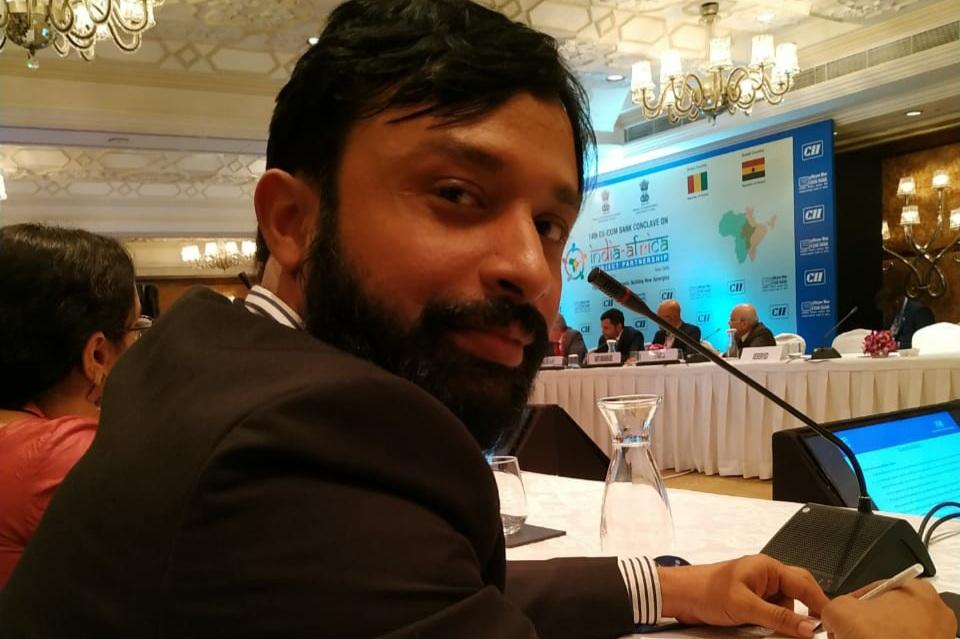
In this interview, Samir Bhattacharya, an Associate Fellow at Observer Research Foundation (ORF), where he works on geopolitics with particular reference to Africa in the changing global order, says Africa has witnessed six military takeovers since 2022, with several abortive coups, sanctions on the military juntas have been lifted but generally the French-speaking West African countries continue to face multiple democratic challenges with a wider negative impact across the region. Here are the interview excerpts:
To begin with, what are your arguments that Russia supports military coup makers (Burkina Faso, Mali, Niger et cetera) in Africa?
It is true that the Russian Private Military Company (PMC) Wagner Group provided political advice to many African leaders throughout the continent, particularly in Sudan, and had offered military support to weak authoritarian governments in nations like Mali and Libya, primarily to combat extremist organizations and insurgencies. The Western experts also emphasized how Russia frequently portrays Africa as a victim of neocolonialism and how it often supports or forms partnerships with autocrats who usually advance anti-Western regimes.
For instance, the Niger coup occurred precisely during the time Russian President Vladimir Putin was in Saint Petersburg receiving the Heads of State and ministries from Africa. There are no coincidences in politics. The president of Ukraine’s advisor, Mykhailo Podolyak, was prompted by this to openly accuse Russia of masterminding the coup. Suspicion was aroused by the coup’s timing as well as the Russian flags being flown in the streets in the days that followed.
The narrative that depicts Russia as a proactive coup advocate is compelling and seems to hold water. Nevertheless, it is based on unsubstantiated hypotheses and ignores what Russia has done to help the junta leaders in the nations where it has started to contribute. Naturally, there are claims of human rights violations followed by denials. Nobody has, however, attempted to investigate if the Wagner group attempted to impose a Russian model of governance on these junta officials.
Wagner most likely wants to promote an African style of governance by demonstrating that it is not interfering in any way beyond its duty as a security provider. My point here is that we need to study Wagner in more detail before parroting what some Western media people are repeating.
Russia is seemingly interested in military governance in Africa. Does that set the precedence for future military takeovers in Africa?
Indeed, Western observers continue to be upset by Moscow’s relative popularity in coup-hit Africa. Most African scholars from North America or Europe indeed seem emphatic that not only does Russia support military coup makers, but a greater Russian engagement would also lead to more coups across the continent. Regretfully, there is hardly any empirical evidence to support these general statements. Therefore, it’s crucial to pay attention to what is happening on the ground rather than succumbing to their narratives and attempting to formulate morally sound responses in support of these arguments.
Do transitions from democratic governance to military governments have meaning for fighting growing trends of neo-colonialism in Africa?
Coups can spread quickly. Many observers warned about Burkina Faso when Mali collapsed, and many predicted that Niger would follow when Burkina fell.
Frustration over the government’s inability to put an end to terrorism and other instability in the Sahel region is the driving force behind all of these coups. Russia seems to appeal to a lot of African sentiment when it attempts to position itself as an anti-colonial power.
However, it would be overly generalizing to attribute the coup to neo-colonialism alone. With eight coups in three years, the Sahel region in West Africa is most affected by coups. However, a close examination reveals that the Sahel Region has endured violent extremism, civil unrest, and poor governance for a very long period. It unmistakably shows how France and other Western powers are losing ground in this region. Frustration with France and other foreign powers increased fairly naturally as their military intervention failed to stem the Islamist insurgency that was spreading throughout the region.
Therefore, the West cannot address the issue merely by blaming Russia. And Russia cannot blame only neocolonialism. I am afraid as many African nations continue to be beset by widespread complaints of poor governance, nepotism, and distress, many more within the region and beyond may eventually see military takeovers of a similar nature.
Despite the above narratives, do you think ECOWAS, the 15-member regional economic bloc, must be firm with the ‘Silence-the-Guns’ policy adopted several years ago by the African Union?
The African Union has presented its flagship project, “Silence the Guns by 2030,” which is also an essential component of “Africa’s Vision 2063,” to establish an Africa free of conflicts. However, following the COVID-19 pandemic in 2020, African leaders decided to concentrate more on other concerns, like the security of food and energy. As a consequence, the 2020 deadline for “Silencing the Guns” has finally been moved to 2030.
And ECOWAS, one of the earliest regional organizations, must take the initiative and maintain its resolve. But it must demonstrate that it is capable of acting. Its image has been tarnished during the recent coup in Niger when the ECOWAS threatened the Junta government with military action in favour of a return to the democratic government before reversing course. Furthermore, claims have been made that France controls ECOWAS. In light of the circumstances, ECOWAS needs to take action in the interest of the continent and restore its reputation as a powerful regional organization.
A research report from the South African Institute of International Affairs (SAIIA) describes Russia as ‘a virtual investor’ in Africa, most of its pledges largely aimed at luring (woo-ing) African states and leaders to support its ‘special military operation’ in Ukraine. What are your expert arguments here?
I have not read the report. However, the “African agency” is the most prominent victim in the narrative outlined above. It presents Russia as an all-powerful force that supports the overthrow of elected governments, many of which have the backing of the West and seeks to woo or persuade its allies into following its lead or “corrupting” them in the process.
Russia has not been in Africa for nearly thirty years, ever since the fall of the Soviet Union. When Russia hosted the first Russia-Africa Summit in 2019, many people believed it would only add to the already many Africa+1 conferences without offering anything new. However, the pace at which Russia is gaining ground in Africa has startled Western academics. Russia has been more politically and economically involved in Africa in recent years. But in this particular case, one private military group—the Wagner Group, as we all know it—has spearheaded the most successful kind of engagement on behalf of Russia, as opposed to a government-to-government or business-to-business model.
Since late 2017, Wagner’s military presence in Africa has increased significantly. Troops have been stationed in Sudan, Libya, Mali, Mozambique, Burkina Faso, and Mali, and the company is actively seeking to expand into several more states. Nevertheless, it still cannot compete with China, the US, or the EU in terms of physical infrastructure.
In practical terms and compared to China, do you think Russia has made a visible impact on infrastructure development in the continent since the collapse of the Soviet era in 1991?
Africa currently has a $12 billion trade deficit with Russia because it imports five times as much as it exports. President Putin vowed to boost Russia’s trade with Africa from approximately $16.8 billion to $40 billion yearly in five years following the 2019 Russia-Africa Summit.
Currently, it remains stagnant at roughly $18 billion each year, representing 2% of the total trade on the continent. Furthermore, two-thirds of Russia’s overall trade with Africa is confined to merely four countries. They are Algeria, Egypt, Morocco, and South Africa.
On the other hand, China is Africa’s largest trading partner for 15 consecutive years. South Africa is China’s largest trading partner among all African economies, accounting for 19.9 per cent of total trade with the continent, followed by Nigeria and Angola. China’s total trade with Africa grew by 1.5 per cent in 2023 from 2022 to $282.1 billion. Chinese exports to Africa reached $173 billion, an increase of 7.5 per cent over 2022, while its imports from the continent dropped by 6.7 per cent to $109 billion. While the $100 million year-on-year increase made 2023 bilateral trade a record, Africa’s trade deficit with China continued to expand, from $46.9 billion in 2022 to $64 billion in 2023. Comparing Russia with China would not be logical.
Can we conclude this discussion with the significance of peace, justice and strong state institutions (UN SDG 16), what has been achieved over the past few years, the challenges and the way forward in West Africa?
Recently, a very significant event took place in West Africa. Three junta-led governments—Burkina Faso, Mali, and Niger—decided to leave ECOWAS and establish the “Alliance of Sahel States,” a mini-lateral regional organization, in response to the organization’s threat of military action. It’s being referred to as the “Brexit of Africa” by many, and it might have disastrous repercussions in the neighbouring countries. In response, ECOWAS chose to lift these nations’ economic sanctions. However, maybe it is too little, too late. The United Nations will have a tough time in its quest for SDG-16 in the Sahel.
World
Amid Rising Geopolitical Challenges India Prioritizing Global South Under its BRICS Leadership
By Kestér Kenn Klomegâh
By rotational procedures and consensus adopted in Brazil in December, India has taken over the BRICS+ presidency for 2026, underscoring its highly-enriching membership and gracious opportunity to deepen the intergovernmental association as a leading geopolitical force in the Global South. Brazil took over the BRICS presidency from Russia on January 1, 2025. Following its expansion, BRICS+ currently comprises ten countries: Brazil, China, Egypt, Ethiopia, India, Indonesia, Iran, Russia, South Africa and the United Arab Emirates.
Historically, its conceptual origins were articulated by Russian foreign minister Yevgeny Primakov in 1998, and can be traced to series of informal forums and dialogue groups such as RIC (Russia, India, and China) and IBSA (India, Brazil, and South Africa). In addition to that significant aspect of its history, BRIC was originally a term coined by British economist Jim O’Neill, and later championed by his employer Goldman Sachs in 2001, to designate a group of emerging markets.
The bloc’s inaugural summit was held in 2009 (Yekaterinburg summit) and featured the founding countries of Brazil, Russia, India, and China. These four founding members adopted the acronym BRIC and formed an informal diplomatic club where their governments could meet annually at formal summits and coordinate multilateral policies. The following year, South Africa officially became a member after it was formally invited and supported by China, and unreservedly backed by India and Russia.
South Africa joined the organization in September 2010, which was then renamed BRICS, and attended the third summit in 2011 as a full member. The biggest expansion witnessed Iran, Egypt, Ethiopia, and the United Arab Emirates attending the first summit as member states in 2024 in Kazan, the autonomous Republic of Tatarstan, part of the Russian Federation. Later on, Indonesia officially joined in early 2025, becoming the first Southeast Asian member. The acronym BRICS+ or BRICS Plus has been informally used to reflect new membership since 2024.
On 24 October 2024, an additional 13 countries, namely Algeria, Belarus, Bolivia, Cuba, Indonesia, Kazakhstan, Malaysia, Nigeria, Thailand, Turkey, Uganda, Uzbekistan and Vietnam, were invited to participate as “partner countries”. The partner status would allow these countries to engage with and benefit from BRICS initiatives. It is still unclear whether the countries in this tier have received official membership invitations. But there is the high possibility to ascend the association as full-fledged members in future.
Persistent Multiple Differences
Now as India takes on the helm of BRICS+, experts and research analysts are showing deep interest and are discussing possibilities of multilateral cooperation, existing challenges and identifying diverse priorities, the strength and weaknesses of BRICS+. On a more negative note, multiple contradictions keep piling up among the group, including questions about the future of BRICS as anything other than an ineffective growing talk-shop market.
The biggest obstacle being political divergencies and economic development perceptions. Cultures are distinctive different among the members of this informal BRICS+ association, while all are consistently advocating for wholesale reforms, especially of the United Nations Security Council, and multinational financial institution such as the World Bank (WB) and International Monetary Fund (IMF). Some the members have been adamant to undertake internal reforms at their own state institutions.
As a founding member of BRICS, India plans to find a more suitable path for balancing its non-aligned policy, forge new directions for the development of the Global South under its BRICS+ presidency, while emphasizing trends on the global economic landscape. Arguably, India will definitely act with precision. India is most likely to be non-critical, and moreso with an insight understanding that, not antagonism, but rather ‘cooperation’ must be the underlying basic principle of a multipolar environment.
India’s Rotating BRICS Presidency
Leaders’ meetings (or leaders’ summits) are held once a year on a rotating basis. BRICS has neither a permanent seat nor secretariat. A number of ministerial meetings, for example, between foreign ministers, finance ministers, central bank governors, trade ministers and energy ministers in the country which is presiding BRICS+ association.
Speaking at the BRICS summit back in 2014, Prime Minister Narendra Modi has assertively said that “reform of institutions of global governance … has been on the BRICS agenda since its inception.”
Later, prior to the Kazan summit, Prime Minister Modi explicitly stated that BRICS was never meant to be against anyone or be anti-western, and that it is only non-western. At the Kazan summit, Prime Minister Modi further stated: “We must be careful to ensure that this organization does not acquire the image of one that is trying to replace global institutions”.
At the 17th BRICS Summit held in Rio de Janeiro on 7 July 2025, Prime Minister Modi stated that India would give a “new form” to the BRICS grouping during its presidency in 2026.
Prime Minister Modi proposed redefining BRICS as “Building Resilience and Innovation for Cooperation and Sustainability” and emphasized a people-centric approach, drawing parallels with India’s G-20 presidency where the Global South was prioritized.
Prime Minister Modi affirmed that India would advance BRICS with a focus on “humanity first” highlighting the need for joint global efforts to address common challenges such as pandemics and climate change.
Prime Minister Modi also called for urgent reform of global institutions to reflect the realities of the 21st century, emphasizing greater representation for the Global South and criticizing outdated structures like the UN Security Council and World Trade Organization.
Clarifying further and clearly BRICS+ position: In a briefing in October 2024, Russian Foreign Ministry stated, on its website, that “BRICS framework is non-confrontational and constructive” and that “it is a viable alternative to a world living by someone else’s, alien rules” and by this functional definition, it reinforces BRICS role in the world. BRICS members has the opportunity to mutually deal with any country in the world. It is not prohibited to forge amicable relations with United States and in Europe.
President Putin quoted Prime Minister Narendra Modi in saying that “BRICS is not anti-western but simply non-western” and even suggested that BRICS countries could be a part of the Ukraine peace process.
There are other classical analysis. For instance, Joseph Nye wrote in January 2025 that BRICS, “as a means of escaping diplomatic isolation, it is certainly useful to Russia” and that the same goes for Iran. Nevertheless, political expert Nye explained that the expansion of the BRICS could bring in more “intra-organizational rivalries” which is limiting the groups’ effectiveness. Yet, BRICS consolidation has turned the group into a potent negotiation force that now challenges Washington’s geopolitical and economic goals.
Despite frequent criticisms against Donald Trump, most of BRICS members are pursuing relations with United States, with Kremlin appointing Chief Executive Officer of Russian Direct Investment Fund (RDIF) Kirill Dmitriev as the Special Representative of the Russian President for Economic Cooperation with Foreign Countries. Since his appointment, returning U.S. business to Russia’s market forms the primary focus in the United States. Russian President Vladimir Putin has tasked him to promote business dialogue between the two countries, and further to negotiate for the return of U.S. business enterprises. Without much doubts, similar trends are not difficult to find as India, Ethiopia and South Africa fix eyes on identifying pragmatic prospects for economic cooperation, further to earn significant revenue from trade, and also including pathways to sustain the huge Diaspora’s financial remittances from the United States.
BRICS+ Financial Architecture
The group is dominated by China, which has the largest share of the group’s GDP, accounting to about 70% of the organization total. The financial architecture of BRICS is made of the New Development Bank (NDB) and the Contingent Reserve Arrangement (CRA). These components were signed into a treaty in 2014 and became active in 2015. The New Development Bank (NDB), formally referred to as the BRICS Development Bank, is a multilateral development bank operated by the five BRICS states.
The bank’s primary focus of lending is infrastructure projects with authorized lending of up to $34 billion annually. South Africa hosts the African headquarters of the bank. The bank has a starting capital of $50 billion, with wealth increased to $100 billion over time. Records show Brazil, Russia, India, China, and South Africa initially contributed $10 billion each to bring the total to $50 billion. As of 2020, it had 53 projects underway worth around $15 billion. By 2024 the bank had approved more than $32 billion for 96 projects. In 2021, Bangladesh, Egypt, the United Arab Emirates and Uruguay joined the NDB.
Future of BRICS+ in Geopolitical World
Last year, several countries began working within the BRICS framework, and many states are planning to join this association. In practical terms, BRICS needs to increase its practical impact of its partnership on the level of qualitative development, not just organizational symbolism and public rhetoric as it has been during the past few years. Time has come to avoid excessive bureaucracy and avoid any undesirable rigid attachment to an organizational structure. BRICS has to enhance its economic potential, develop appropriate mechanisms for financial, trade, and economic cooperation.
With India’s presidency in 2026, which is estimated to be a comprehensive and promising eventful year for BRICS, as India has already outlined its framework of priorities, as it did during its G20 presidency several years ago. In close-coordination with members and partner-states within the BRICS association, India has to ensure the balance of multifaceted interests, and ensure or establish mutual-trust in the multipolar world system. The goal of transforming into a full-fledged international organization must go beyond addressing current geopolitical challenges, the necessity to develop effective ways of engaging in global development to reflect multipolarity.
Since its inception, BRICS has undergone a transformation and has gone through several stages of qualitative change. The organizers are still touting the expansion as part of a plan to build a competing multipolar world order that uses Global South countries to challenge and compete against the western-dominated world order. There is obvious interest in this consensus-based platform, hundreds of economic and political areas for cooperation, and for collaborating including politics, economic development, education, and scientific research. The New Development Bank finances various projects in member countries: Brazil, Russia, India, China and South Africa.
On January 1, 2024, five new members officially entered BRICS, namely Egypt, Iran, the United Arab Emirates, Saudi Arabia, and Ethiopia. At a BRICS Summit in Kazan, Russia in October 2024, it was decided to establish a category of BRICS partner countries. The first countries to become partners were Belarus, Bolivia, Kazakhstan, Cuba, Malaysia, Thailand, Uganda and Uzbekistan. The expanded BRICS+ generates 36% of global GDP. That however, according to Economist Intelligence Unit, the collective size of the economies of BRICS+ will overtake G7 by 2045. Today, collectively, BRICS comprises more than a quarter of the global economy and nearly half the world’s population.
World
Comviva Wins at IBSi Global FinTech Innovation Award
By Modupe Gbadeyanka
For transforming cross-border payments through its deployment with Global Money Exchange, Comviva has been named Best In-Class Cross Border Payments.
The global leader in digital transformation solutions clinched this latest accolade at the IBS Intelligence Global FinTech Innovation Award 2025.
The recognition highlights how Comviva’s mobiquity Pay is helping shape a modern cross-border payment ecosystem that stretches far beyond conventional remittance services.
Deployed as a white label Wallet Platform and launched as Global Pay Oman App, it fulfils GMEC’s dual vision—positioning itself as an innovative payment service provider while digitally extending its core money transfer business.
The solution allows GMEC to offer international money transfers alongside seamless forex ordering and other services. These capabilities sit alongside a broad suite of everyday financial services, including bill and utility payments, merchant transactions, education-related payments, and other digital conveniences — all delivered through one unified experience.
“This award is a testament to Oman’s accelerating digital transformation and our commitment to reshaping how cross-border payments serve people and businesses across the Sultanate.
“By partnering with Comviva and bringing the Global Pay Oman Super App, we have moved beyond traditional remittance services to create a truly inclusive and future-ready financial ecosystem.
“This innovation is not only enhancing convenience and transparency for our customers but is also supporting Oman’s broader vision of building a digitally empowered economy,” the Managing Director at Global Money Exchange, Subromoniyan K.S, said.
Also commenting, the chief executive of Comviva, Mr Rajesh Chandiramani, said, “Cross-border payments are becoming a daily necessity, not a niche service, particularly for migrant and trade-linked economies.
“This recognition from IBS Intelligence validates our focus on building payment platforms that combine global reach with local relevance, operational resilience and a strong user experience. The deployment with Global Money Exchange Co. demonstrates how mobiquity® Pay enables financial institutions to move beyond remittances and deliver integrated digital services at scale.”
“The deployment of mobiquity Pay for GMEC showcases how scalable, API-driven digital wallet platforms can transform cross-border payments into seamless, value-rich experiences.
“By integrating remittances, bill payments, forex services, and AI-powered engagement into a unified Super App, Comviva has reimagined customer journeys and operational agility.
“This Best-in-Class Cross-border Payments award win stands as a testament to Comviva’s excellence in enabling financial institutions to compete and grow in a digitally convergent world,” the Director for Research and Digital Properties at IBS Intelligence, Nikhil Gokhale, said.
World
Russia Renews Africa’s Strategic Action Plan
By Kestér Kenn Klomegâh
At the end of an extensive consultation with African foreign ministers, Russian Foreign Minister, Sergey Lavrov, has emphasized that Moscow would advance its economic engagement across Africa, admittedly outlining obstacles delaying the prompt implementation of several initiatives set forth in Strategic Action Plan (2023-2026) approved in St. Petersburg during the Russia-Africa Summit.
The second Ministerial Conference, by the Russian Foreign Ministry with support from Roscongress Foundation and the Arab Republic of Egypt, marked an important milestone towards raising bilateral investment and economic cooperation.
In Cairo, the capital city of the Arab Republic of Egypt, Lavrov read out the final resolution script, in a full-packed conference hall, and voiced strong confidence that Moscow would achieve its strategic economic goals with Africa, with support from the African Union (AU) and other Regional Economic blocs in the subsequent years. Despite the complexities posed by the Russia-Ukraine crisis, combined with geopolitical conditions inside the African continent, Moscow however reiterated its position to take serious steps in finding pragmatic prospects for mutual cooperation and improve multifaceted relations with Africa, distinctively in the different sectors: in trade, economic and investment spheres, education and culture, humanitarian and other promising areas.
The main event was the plenary session co-chaired by Russian Foreign Minister Sergey Lavrov and Egyptian Minister of Foreign Affairs, Emigration, and Egyptians Abroad Bashar Abdelathi. Welcome messages from Russian President Vladimir Putin and Egyptian President Abdelhak Sisi were read.
And broadly, the meeting participants compared notes on the most pressing issues on the international and Russian-African agendas, with a focus on the full implementation of the Russia-Africa Partnership Forum Action Plan for 2023-2026, approved at the second Russia-Africa Summit in St. Petersburg in 2023.
In addition, on the sidelines of the conference, Lavrov held talks with his African counterparts, and a number of bilateral documents were signed. A thematic event was held with the participation of Russian and African relevant agencies and organizations, aimed at unlocking the potential of trilateral Russia-Egypt-Africa cooperation in trade, economic, and educational spheres.
With changing times, Africa is rapidly becoming one of the key centers of a multipolar world order. It is experiencing a second awakening. Following their long-ago political independence, African countries are increasingly insisting on respect for their sovereignty and their right to independently manage their resources and destiny. Based on these conditions, it was concluded that Moscow begins an effective and comprehensive work on preparing a new three-year Cooperation and Joint Action Plan between Russia and Africa.
Moreover, these important areas of joint practical work are already detailed in the Joint Statement, which was unanimously approved and will serve as an important guideline for future work. According to reports, the Joint Statement reflects the progress of discussions on international and regional issues, as well as matters of global significance.
Following the conference, the Joint Statement adopted reflects shared approaches to addressing challenges and a mutual commitment to strengthening multifaceted cooperation with a view to ensuring high-quality preparation for the third Russia-Africa Summit in 2026.
On December 19-20, the Second Ministerial Conference of the Russia-Africa Partnership Forum was held in Cairo, Egypt. It was held for the first time on the African continent, attended by heads and representatives of the foreign policy ministries of 52 African states and the executive bodies of eight regional integration associations.
-
Feature/OPED6 years agoDavos was Different this year
-
Travel/Tourism9 years ago
Lagos Seals Western Lodge Hotel In Ikorodu
-
Showbiz3 years agoEstranged Lover Releases Videos of Empress Njamah Bathing
-
Banking8 years agoSort Codes of GTBank Branches in Nigeria
-
Economy3 years agoSubsidy Removal: CNG at N130 Per Litre Cheaper Than Petrol—IPMAN
-
Banking3 years agoFirst Bank Announces Planned Downtime
-
Banking3 years agoSort Codes of UBA Branches in Nigeria
-
Sports3 years agoHighest Paid Nigerian Footballer – How Much Do Nigerian Footballers Earn