Connect with us

World

China-India Conflict a Potential Threat to BRICS Association

Published

on

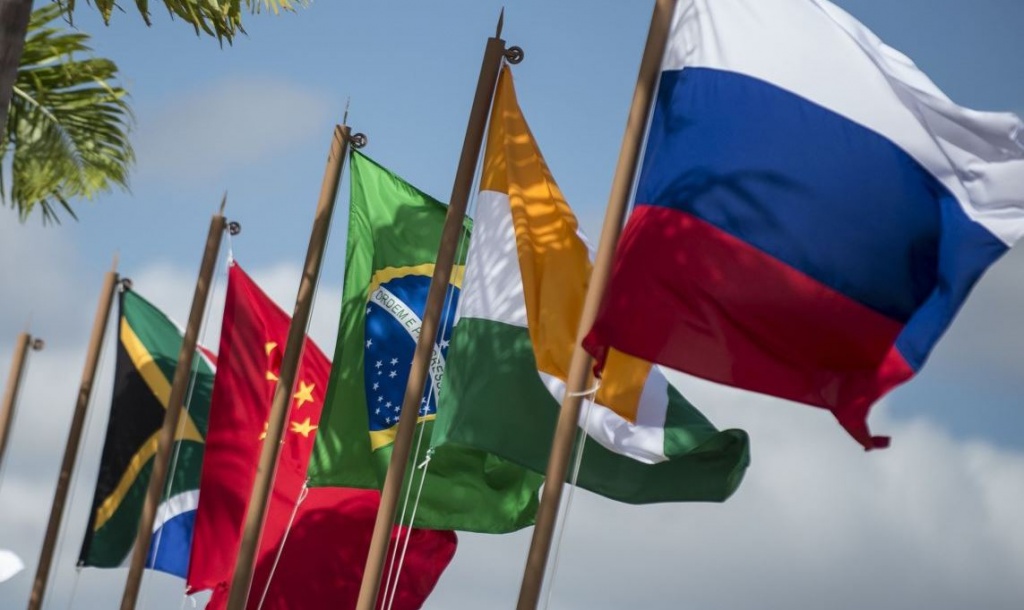
BRICS leaders

By Kestér Kenn Klomegâh

The tension between China and India threatens to paralyse BRICS – the association of five major emerging national economies: Brazil, Russia, India, China and South Africa. While struggling to expand and influence on the global stage, China and India have locked horns over issues in their bilateral relations, ranging from border security to trade conflicts and information war.

The latest strains began in early May and culminated in hand-to-hand fighting in the Galwan Valley, a remote stretch of the 3,380-kilometre (2,100-mile) Line of Actual Control – the border established following a war between India and China in 1962 that resulted in an uneasy truce.

Punsara Amarasinghe, a former research fellow at the Faculty of Law, Higher School of Economics in Moscow, and now a PhD candidate in international law at the Sant’Anna School of Advanced Studies in Pisa, Italy, argues that this tension is rather ironic given that in the past the two countries shared many civilisational values and both were victims of Western colonialism.

When India gained independence in 1947 from the British, its first prime minister Jawaharlal Nehru built a rapport with Communist China by accepting the government of Mao Zedong with great anticipation that both China and India would become the stalwarts in the global campaign against Western imperialism. For example, it was Nehru’s idea that China should be granted a place in the non-aligned movement despite some of opposition from some members at the famous Bandung Conference in 1955.

However, the comity between the two nations was short-lived as China claimed the territory near Arunachal Pradesh whereas India adhered to the line of control known as the McMahon Line established by the British under the 1914 Simla Convention with the consent of Tibet. From the 1950s onwards, China showed its interest in the Aksai Chin area albeit its cordial relations with Nehru’s India. This long dispute finally ended in military escalation in 1962 and became known as the Sino-Indian War.

While acknowledging that some other issues have marred their relationship apart from the current border conflict, Amarasinghe told this article author that “both China and India have longed for global governance as emerging powers, and particularly, the influence expanded by China in South Asia has rapidly increased India’s doubt on China’s presence. Secondly, China’s ambitious Belt and Road Initiative project has encircled India geopolitically, creating a plethora of doubts about India’s state apparatus.”

He added that the notion of nuclear weapon strategies and India’s affinity with the USA are the biggest dilemmas that China has persistently had in dealing with India. Moreover, India has been the sanctuary for Tibetan refugees, including the Dalai Lama.

As to the fundamental question of whether all these issues put together could reappear in future, Amarasinghe emphasized: “Having looked at the trajectories of the history of Indo-China conflict, one can ascertain that the India-China issue has always been imbued with a question of power. Both states are yearning for global governance. Yet India is ahead of the curve as the world’s largest democracy and a state with one of the strongest soft powers, making the Indian narrative stronger, whereas Beijing is known for its autocracy.”

On the other hand, he reminded, “We should not forget that the pact signed between China and India in 1996 clearly says that two states cannot use firearms in a border dispute escalation. However, there have been several events that have shown the acts of aggression in the Indo-China border conflict. The Chinese efforts to build a road in the Doklam area near the border created a tense situation in 2017. Three years after that event, the conflict erupted again.”

China’s Foreign Ministry stipulated measures that would be implemented to normalise the situation and prevent future armed conflicts. “The sides welcomed the developments of relations between defence agencies and the external affairs ministries, agreed to support such consultations in the future and implement agreements that were reached by the two sides during the talks between the border troops commanders, as well complete as soon as possible the process of frontline troop withdrawal,” read a ministry statement.

The Foreign Ministry noted that the sides also reached an agreement to implement measures to “prevent the reoccurrence of incidents which may influence the situation and peace in the border region.”

“The relationship of China and India underwent various trials and their progress towards modern development was not always swift. As had been recently demonstrated correctly, and at the same time incorrectly, by the recent incident in the western sector of the China-India border in the Galwan River valley, China will continue to assert its territorial sovereignty as well as peace and tranquillity in the border region,” according to the statement.

The sides expressed readiness to respect the agreements achieved previously by the heads of state, pay specific attention to the issue of state borders and prevent “disagreements from becoming conflicts.” The sides also confirmed their adherence to the earlier agreements on the state border and expressed readiness to implement measures to normalise the situation in the border region.

Sino-Indian geopolitical rivalry is certainly not new, but today it has multifaceted implications for developments in the South Asian region and most possibly for BRICS. For example, in email discussions, Dr. Zhu Ming of the Institute for Global Governance Studies at the Shanghai Institute for International Studies (SIIS), noted that while there have been several disagreements between China and India, some have been resolved within the framework of international law but others have remained without comprehensive solutions.

Within the context of geopolitical alliances and emerging challenges, Tahama Asadis, a graduate of Strategic Studies from the National Defence University in Islamabad, noted the changing alliances and power equilibrium among the United States, China, India and Pakistan that bear key implications for inter-state rivalry and the consequent crisis dynamics in South Asia.

China has so far been successful in influencing South Asia because of many factors. One of the major reasons is that China has managed to project itself as a neighbour that would not interfere in the internal affairs of other countries, least of all, in the internal affairs of its friends and partners. In the light of its ‘Good Neighbour Policy’, China’s increased diplomatic and economic engagements in South Asia are aimed at enhancing its strategic influence in the region.

Professor Ian Taylor at the University of St Andrews in the United Kingdom explained that he did not see any long-term future for the BRICS as a coherent grouping on the world stage. According to Taylor, the China-India rivalry (as exemplified by border clashes) shows how shallow the alliance is. Furthermore, Brasilia has its own “Brazilian Trump” who sees alliance with the West as the way forward, not with other “developing countries”.

Originally, BRIC was a four-member alliance until South Africa officially became a member in December 2010, after formally being invited by China to join and subsequently being accepted by the founding BRIC countries. The group was renamed BRICS – with the “S” standing for South Africa – to reflect the group’s expanded membership. South Africa is a staunch member of the Southern African Development Community (SADC).

“South Africa is in terminal decline and was only admitted to the BRICS for politically expedient-politically correct reasons. Its membership damaged the group’s credibility. And of course, China will resist to the very end the notion that India be admitted to the UN Security Council as a Permanent Member,” Taylor explained, adding that so much for the vaunted “South-South solidarity” that the BRICS was supposed to represent and what all the noise was about when it was launched.

Zhu Ming holds conservative not so negative views on the future of BRICS amid India-China conflicts, giving two reasons. The first and most important is that Beijing is still keeping a low profile on this conflict. For instance, Chinese local media coverage of this conflict is still quite low, and Beijing has not revealed losses on the Chinese side in order not to form the impression of too huge a gap in losses between the two sides as to humiliate the Indian side. “Just imagine, if two people were fighting, the situation would be extremely hard to turn back to normal very soon. But if one side could keep relatively calm, the situation would be more optimistic.”

Secondly, the disputed land is not worthy of a war between the two countries. “However, the rising nationalist mood of India is a bit troublesome. BRICS is not nothing to New Delhi, it will not be a good option for India to quit BRICS. Since BRICS was formed jointly by five powers, China does not own BRICS,” he told this article author, adding, “It is a bit early to judge the prospects of BRICS. It is quite possible that the global and BRICS health governance system could be another rising cooperation field within the BRICS group after the forthcoming BRICS summit.”

“While there are no official claims from the Kremlin that Putin was brokering any negotiation between the two to reconcile the border dispute if Russia can make a good move in meddling with the Indo-China border conflict, I assume it will work to a greater extent. Given the history of Russia’s dominant role in South Asia since its Soviet past, Moscow has a greater capacity to play the role of mediator. Besides that, BRICS is a platform for emerging powers and its capacity cannot be discarded as a regional political talk shop. Thus, I believe BRICS would create some steps for a more amicable solution,” Amarasinghe concluded on an optimistic note.

Alicia Garcia-Herrero is Senior Research Fellow at the Brussels-based think tank Bruegel and Adjunct Professor at the Hong Kong University of Science and Technology, noted in her article headlined “China Continues To Dominate An Expanded BRICS” published by the East Asia Forum that China has been the leading proponent of expanding BRICS to BRICS+. The main reason for the expansion was to make BRICS more representative of the developing world and give it a stronger voice on the global stage.

But the six countries invited to join — which has become five after Argentina’s withdrawal — are quite heterogeneous. Some are net creditors (such as Saudi Arabia and the United Arab Emirates), while others are net debtors and in a very weak financial position. Half of them are large exporters of fossil fuels (Saudi Arabia, the United Arab Emirates and Iran). Ethiopia and Egypt stand out as members from Africa, a continent that has become increasingly important for China’s and India’s foreign policy, according to Garcia-Herrero.

The BRICS countries are considered the foremost geopolitical rival to the G7 bloc of leading advanced economies, implementing competing initiatives such as the New Development Bank, the BRICS Contingent Reserve Arrangement, the BRICS pay, the BRICS Joint Statistical Publication and the BRICS basket reserve currency. But in practical reality, China has large control and uses the platform to widen its economic influence. Most of the trade growth has been China-centric, with contributions from the rest of BRICS remaining quite flat until recently. Russia, with its limited economic impact, only remains an excellent public relations organizer for BRICS.

The BRICS members are known for their significant influence on regional affairs, and all are members of the G20. Since its establishment in 2009, the BRICS nations have met annually at several summits, with South Africa having hosted the most recent 15th BRICS Summit in August 2023. Currently, Russia is heading the rotating in 2024 and plans to push forward significant issues, particularly the association’s expansion and transforming it into an anti-Western coalition. Reports indicate about 40 countries, the majority in Africa and Asia have expressed readiness to join BRICS from the Global South. The association has three areas of strategic partnership: policy and security, economy and finance, and cultural and educational cooperation.

Between now and until October when Kazan will host the 16th summit, Moscow has scheduled various activities including the BRICS Games, BRICS Foreign Ministers, BRICS Academic and BRICS Parliamentary meetings, these aim at showcasing BRICS geopolitical influence and increasing coalition for building a fairer, better and multipolar world. It also operates based on non-interference and equality with the hope of ensuring members get mutual economic benefits in the world. BRICS has received both praise and criticism from academics, researchers, politicians geopolitical analysts and writers around the world.

The origins of BRICS — a bloc comprising Brazil, Russia, India, China, South Africa and, as of 2024, new members Egypt, Ethiopia, Iran and the United Arab Emirates — can be traced back to a 2001 publication by Goldman Sachs economist Jim O’Neill titled ‘Building Better Global Economic BRICs’. O’Neill argued that Brazil, Russia, India and China were poised to play an increasingly significant role in the global economy. BRIC was officially launched in 2009 and was renamed BRICS in 2010 when South Africa joined, and Russia will make history by admitting the largest ever in 2024.

The founding countries of Brazil, Russia, India, and China held the first summit in Yekaterinburg in 2009, with South Africa joining the association a year later. Egypt, Ethiopia, Iran and the United Arab Emirates joined on 1 January 2024 The five BRICS countries together represent over 3.1 billion people, or about 41 percent of the world population. The five nations had a combined nominal Gross Domestic Product (GDP) of 18.6 trillion dollars and an estimated 4.46 trillion dollars in combined foreign reserves.


World

Reviewing the Dynamics of Indian–Russian Business Partnership

Published

on

Sammy Kotwani Indian Business Association Indian–Russian Business Partnership

By Kestér Kenn Klomegâh

The Executive President of the Indian Business Alliance (IBA), Sammy Manoj Kotwani, discusses the landmark moment in deepening Russian-Indian collaboration. Kotwani explains the groundbreaking insights into President Vladimir Putin’s working visit to India, the emerging opportunities and pathways for future cooperation, especially for the two-sided economic collaboration. Follow Sammy Manoj Kotwani’s discussions here:

Interpretation of the latest development in Russian-Indian relations

From my viewpoint in Moscow, this visit has effectively opened a new operational chapter in what has always been described as a “Special and Privileged Strategic Partnership.” It did not just reaffirm political goodwill; it translated that goodwill into a structured economic roadmap through Programme 2030, a clear target to take bilateral trade to around USD 100 billion by 2030, and concrete sectoral priorities: energy, nuclear cooperation, critical minerals, manufacturing, connectivity, fertilizers, and labour mobility.

On the ground, the business community reads this summit as a strong signal that India and Russia are doubling down on strategic autonomy in a multipolar world order. Both sides are trying to de-risk their supply chains and payment systems from over-dependence on any single centre of power. This is visible in the focus on national currencies, alternative payment mechanisms, and efforts to stabilise Rupee–Ruble trade, alongside discussions on a Free Trade Agreement with the Eurasian Economic Union and the reinforcement of corridors like the INSTC and the Chennai–Vladivostok route.

In short, my interpretation is that this summit has moved the relationship from “politically excellent but structurally imbalanced” towards a more diversified, long-term economic framework in which companies are expected to co-produce, co-innovate, and invest, not just trade opportunistically.

Significance of the visit for Indian business in Russia and for the Indian Business Alliance (IBA)

For Indian business operating in the Russian Federation, the visit has three immediate effects: confidence, clarity, and continuity. Confidence, because Indian entrepreneurs now see that despite external pressure, New Delhi and Moscow have explicitly committed to deepening economic engagement—especially in energy, fertilizers, defence co-production, nuclear, and critical minerals—rather than quietly scaling it back.

Clarity, because the summit outcomes spell out where the real opportunities lie:

Energy & Petrochemicals: Long-term crude and LNG supply, but also downstream opportunities in refining, petrochemicals, and logistics, where Indian EPC and service companies can participate.

Pharmaceuticals & Medical Devices: Russia’s import substitution drive makes high-quality Indian generics, formulations, and even localized manufacturing extremely relevant.

IT, Digital & AI: There is growing appetite in Russia for Indian IT services, cybersecurity, and digital solutions that are not dependent on Western tech stacks.

Fertilizers, Agro & Food Processing: New joint ventures in fertilizers and agriculture supply chains were explicitly flagged during and around the summit, which is important for both food security and farm incomes.

Continuity, because the Programme 2030 framework and the expected EAEU FTA give businesses a medium-term policy horizon. Tariff reductions, improved market access and predictable regulation are precisely what Indian SMEs and mid-sized companies need to justify long-term investments in Russia.

For the Indian Business Alliance (IBA), this inevitably means more work and more responsibility. We already see increased incoming requests from Indian firms—from large listed companies to first-time exporters—asking very practical questions: Which Russian region should we enter? How do we navigate compliance under the sanctions environment? Which banks are still handling Rupee–Ruble or third-currency settlements? How can we structure joint ventures to align with Russia’s import substitution goals while protecting IP and governance standards?

IBA’s role, therefore, becomes that of economic diplomacy in action: translating high-level summit language into actual B2B meetings, sectoral delegations, regional partnerships, and deal-making platforms such as the India–Russia Business Dialogue in Moscow. This visit will undoubtedly stimulate and intensify IBA’s work as a bridge between the two ecosystems.

India’s current economic presence in the Russian Federation

If we look beyond the headline trade figures, India’s economic presence in Russia today is significant, but not yet commensurate with its potential. Bilateral trade has grown sharply since 2022, largely on the back of discounted Russian oil and coal, making India one of Russia’s top energy customers.  However, the structure is still heavily skewed: Russian exports to India dominate, while Indian exports and investments in Russia remain relatively modest and under-diversified.

On the ground in Moscow and across the regions, we see several strong Indian footholds:

Pharmaceuticals: Indian pharma is well-established, respected for its affordability and quality, and poised to deepen localization in line with Russian import substitution policy.

Tea, Coffee, Spices & Food: Traditional segments with deep historical roots, now expanding into ready-to-eat, wellness, and ethnic food categories.

IT & Services: Still under-represented, but with growing interest as Russian entities look for non-Western software, integration, and outsourcing partners.

Diamonds, Textiles, Apparel, and Light Engineering: Present but fragmented, with enormous room to scale, especially if logistics and payment challenges are addressed.

Where India is still behind is on-the-ground investment and manufacturing presence compared to countries like China. Russian policymakers today are clearly favouring investors who help them achieve technological sovereignty and local value addition. For serious Indian companies willing to commit capital, adapt to Russian standards, and accept the complexities of the current environment, this is a period of unusual opportunity. For purely transactional players looking for quick arbitrage, it is becoming progressively harder.

So, I would characterise India’s economic presence as: strategically important, quickly growing in value, but still under-leveraged in terms of depth, diversification, and localization.

Geopolitical pressure from Washington and future predictions

Pressure from Washington—through sanctions, secondary sanctions risk, financial restrictions, and now even tariff measures linked to India’s energy purchases from Russia—is undoubtedly a real and continuing challenge.  It affects everything from shipping insurance and dollar transactions to technology transfers and the risk appetite of global banks. In practical terms, it can complicate even a simple India–Russia trade deal if it touches a sanctioned bank, vessel, or technology.

However, my own assessment, based on 35 years of living and working in Russia, is that this pressure will not fundamentally derail India–Russia friendship, but it will reshape how the relationship functions. India’s foreign policy is anchored in strategic autonomy; it seeks strong ties with the United States and Europe, but not at the cost of abandoning a time-tested partner like Russia. Russia, for its part, sees India as a crucial Asian pole in an emerging multipolar world order and as a long-term market, technology partner, and political counterpart in forums like BRICS, SCO, and the G20.

Looking ahead, I see a few clear trends:

Normalization of alternative payment and logistics systems

We will see more institutionalised use of national currencies, alternative messaging systems, regional banks outside the direct sanctions line, and maybe even digital currencies for specific corridors. Rupee–Ruble trade mechanisms that are today seen as “workarounds” will gradually become part of the normal infrastructure of bilateral commerce.

Shift from pure trade to co-production and joint innovation

To reduce vulnerability to sanctions, both sides will push for manufacturing in India and Russia rather than simple exports: defence co-development, localized pharma and medical devices, high-tech and AI collaborations, and joint ventures in critical minerals and clean energy.

Greater role for regions and business associations

Regional governments in Russia (Far East, Arctic regions, industrial hubs) and Indian states will increasingly drive project-level cooperation, supported by platforms like IBA. This “bottom-up” economic diplomacy will make the relationship more resilient than if it relied only on central governments.

Managed balancing by India

India will continue to deepen technology and investment ties with the West while maintaining energy, defence and strategic cooperation with Russia. The challenge will be to manage U.S. and EU expectations without compromising its core national interests. My prediction is that India will stay firm on this course of balanced engagement, even if it means occasional friction with Washington.

In essence, external pressure may complicate the methods of Indo-Russian cooperation, but it is unlikely to overturn the foundations of trust, mutual interest, and long-term complementarity that have been built over decades.

Continue Reading

World

United States Congress Pursuing AGOA Extension

Published

on

African Growth and Opportunity Act AGOA

By Kestér Kenn Klomegâh

After the expiration of bilateral agreement on trade, the US Congress as well as African leaders, highly recognizing its significance, has been pursuing the extension of the African Growth and Opportunity Act (AGOA). The agreement, which allows duty-free access to American markets for African exporters, expired on September 30, 2025.

The US Congress is advancing a bill to revive and extend AGOA, but South Africa’s continued inclusion remains uncertain. The trade pact still has strong bipartisan support, with the House Ways and Means Committee approving it 37-3. However, US Trade Representative, Jamieson Greer, raised concerns about South Africa, citing tariffs and non-tariff barriers, and said the administration could consider excluding the country.

This threat puts at risk the duty-free access that has significantly benefited South African automotive, agricultural, and wine exports. The debate highlights how trade policy is becoming entangled with broader diplomatic tensions, casting uncertainty over a key pillar of US-Africa economic relations.

Nevertheless, South Africa continues to lobby for inclusion. South Africa trade summary records show that the US goods and services trade with South Africa estimated at $26.2 billion in 2024. The US and South Africa signed a Trade and Investment Framework Agreement (TIFA) as far back as in 2012.

The duty-free access for nearly 40 African countries has boosted development and fostered more equitable and sustainable growth in Africa. By design AGOA is a useful mechanism for improving accessibility to trade competitiveness, connectivity, and productivity. During these past 25 years, AGOA has been the cornerstone of US economic engagement with the countries of sub-Saharan Africa.

Key features and benefits of AGOA:

It’s worth reiterating here that during these past several years, AGOA has been the cornerstone of US economic engagement with the countries of sub-Saharan Africa. In this case, as AGOA is closely working with the African Continental Free Trade Area (AfCFTA) Secretariat and with the African Union (AU), trade professionals could primarily leverage various economic sectors and unwaveringly act as bridges between the United States and Africa.

* Duty-free Access: AGOA allows eligible products from sub-Saharan African countries to enter the US market without paying tariffs.

* Promotion of Economic Growth: The program encourages economic growth by providing incentives for African countries to open their economies and build free markets.

* Encouraging Economic Reforms: AGOA encourages economic and political reforms in eligible countries, including the rule of law and market-oriented policies.

* Increased Trade and Investment: The program aims to strengthen trade and investment ties between the United States and sub-Saharan Africa.

With the changing times, Africa is also building its muscles towards a new direction since the introduction of the African Continental Free Trade Area (AfCFTA), which was officially launched in July 2019.

In practical terms, trading under the AfCFTA commenced in January 2021. And the United States has prioritized the AfCFTA as one mechanism through which to strengthen its long-term relations with the continent. In the context of the crucial geopolitical changes, African leaders, corporate executives, and the entire business community are optimistic over the extension of AGOA, for mutually beneficial trade partnerships with the United States.

Worthy to say that AGOA, to a considerable degree, as a significant trade policy has played a crucial role in promoting economic growth and development in sub-Saharan Africa.

Continue Reading

World

Accelerating Intra-Africa Trade and Sustainable Development

Published

on

Intra-Africa Trade

By Kestér Kenn Klomegâh

Africa stands at the cusp of a transformative digital revolution. With the expansion of mobile connectivity, internet penetration, digital platforms, and financial technology, the continent’s digital economy is poised to become a significant driver of sustainable development, intra-Africa trade, job creation, and economic inclusion.

The African Union’s Agenda 2063, particularly Aspiration 1 (a prosperous Africa based on inclusive growth and sustainable development), highlights the importance of leveraging technology and innovation. The implementation of the African Continental Free Trade Area (AfCFTA) has opened a new chapter in market integration, creating opportunities to unlock the full potential of the digital economy across all sectors.

Despite remarkable progress, challenges persist. These include limited digital infrastructure, disparities in digital literacy, fragmented regulatory frameworks, inadequate access to financing for tech-based enterprises, and gender gaps in digital participation. Moreover, Africa must assert its digital sovereignty, build local data ecosystems, and secure cyber-infrastructure to thrive in a rapidly changing global digital landscape.

Against this backdrop, the 16th African Union Private Sector Forum provides a timely platform to explore and shape actionable strategies for harnessing Africa’s digital economy to accelerate intra-Africa trade and sustainable development.

The 16th High-Level AU Private Sector forum is set to take place in Djibouti, from the 14 to 16 December 2025, under the theme “Harnessing Africa’s Digital Economy and Innovation for Accelerating Intra-Africa Trade and Sustainable Development”

The three-day Forum will feature high-level plenaries, expert panels, breakout sessions, and networking opportunities. Each day will spotlight a core pillar of Africa’s digital transformation journey.

Day 1: Digital Economy and Trade Integration in Africa

Focus: Leveraging digital platforms and technologies to enhance trade integration and competitiveness under AfCFTA.

Day 2: Innovation, Fintech, and the Future of African Economies

Focus: Driving economic inclusion through fintech, innovation ecosystems, and youth entrepreneurship.

Day 3: Building Policy, Regulatory Frameworks, and Partnerships for Digital Growth

Focus: Creating an enabling environment for digital innovation and infrastructure through effective policy, governance, and partnerships.

To foster strategic dialogue and action-oriented collaboration among key stakeholders in Africa’s digital ecosystem, with the goal of leveraging digital economy and innovation to boost intra-Africa trade, accelerate economic transformation, and support inclusive, sustainable development.

* Promote Digital Trade: Identify mechanisms and policy actions to enable seamless cross-border digital commerce and integration under AfCFTA.

* Foster Innovation and Fintech: Advance inclusive fintech ecosystems and support innovation-driven entrepreneurship, especially among youth and women.

* Policy and Regulatory Harmonization: Build consensus on regional and continental digital regulatory frameworks to foster trust, security, and interoperability.

* Encourage Investment and Public-Private Partnerships: Strengthen collaboration between governments, private sector, and development partners to invest in digital infrastructure, R&D, and skills development.

* Advance Digital Inclusion and Sustainability: Ensure that digital transformation contributes to environmental sustainability and the empowerment of marginalized communities.

The AU Private Sector Forum has held several forums, with key recommendations. These recommendations provide valuable insights into the challenges and opportunities facing the African private sector and offer guidance for policymakers on how to support its growth and development.

Continue Reading

Trending