Feature/OPED
2023 Electricity Act and NDDC’s Illumination of 5 Ondo LGAs After Decades of Darkness
By Jerome-Mario Utomi
Each passing day brings to mind evidence that the Niger Delta region is on the march to becoming a zone of peace and sustainable development as promised some months ago by the Chairman of the Governing Board of the Niger Delta Development Commission (NDDC). Through their actions and inactions so far, the board and management have demonstrated to be the true response to the social and economic challenges in the Niger Delta region.
Reports and organised commentaries from critical stakeholders also indicate that both the governing board and management are laced with the capacity to articulate the developmental needs of the people of the region as encapsulated in the agency’s mission and vision statement ‘to offer a lasting solution to the socioeconomic difficulties of the Niger Delta region and facilitate the rapid and sustainable development of the Niger Delta region into a region that is economically prosperous, socially stable, ecologically regenerative and politically peaceful’.
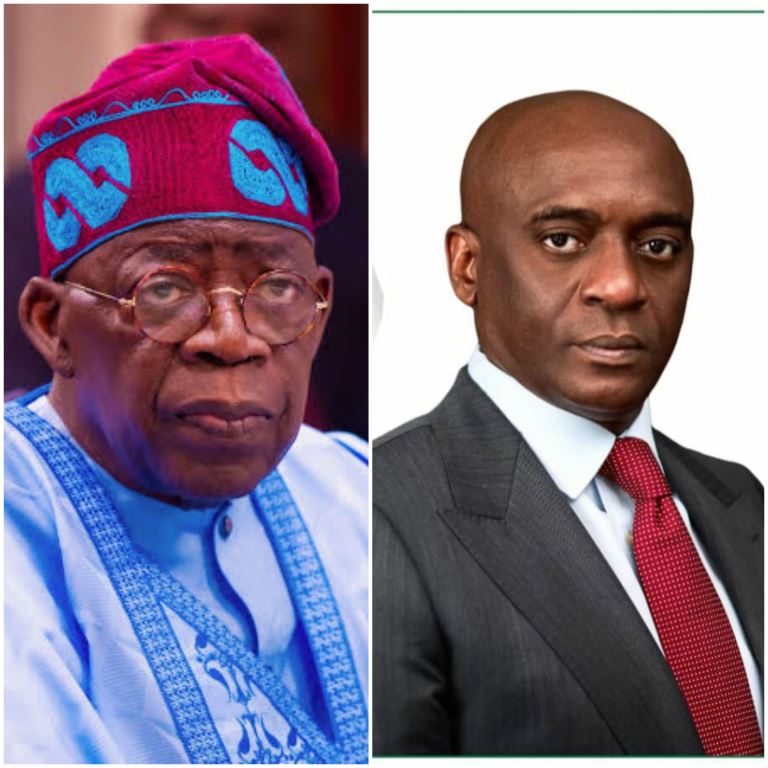
Out of so many examples supporting the above assertion, the latest that stands out is the recent news report that the NDDC, in line with President Bola Ahmed Tinubu, renewed hope agenda, completed and connected the 132/33kv electricity substation built at Ode-Erinje in the Okitipupa Local Government Area of Ondo State to the national grid.
Aside from the power station boosting economic activities in the state coupled with a promise by the agency to replicate this legacy project across all states in the Niger Delta, also very remarkable is the fact that the power substation would provide electricity to over 2,000 communities across five local government areas within the oil-producing region of Ondo State that had been without electricity for the past 15 years, and will significantly impact lives by ending decades of darkness.
“We are committed to lighting up all the local government areas and the oil-producing communities in Ondo South Senatorial District. This is part of NDDC’s mandate to provide infrastructure and development projects in the Niger Delta region.”
Very unique is the awareness that before the ‘dust of excitement’ that trailed the agency’s breakthrough in Ondo state could settle, another was up, this time around in Edo State. It was reported a few days ago that the agency is in a similar style set to commission a 1×15mva 33/11kv electricity project, electricity injection sub-station in Amufi-Ikpoba Okha Local Government Area, Benin City, Edo State.
Without a doubt, these double feats, for reasons that will be stated in the subsequent paragraphs, have finally made Niger Deltans with critical minds conclude that NDDC is serious with its ambitious goal of transitioning from a transactional entity to one deeply committed to sustainable development and transformation in the region.
Here are the points why NDDC’s current effort is not only newsy but adjudged commendable.
Electricity is globally recognised as one of the most important blessings that science has given to mankind. It has also become a part of modern life and one cannot think of a world without it. Electricity has many uses in our day-to-day life. It is used for lighting rooms, working fans and domestic appliances like electric stoves, air conditioners, and more. All these provide comfort to people. In factories, large machines are worked with the help of electricity. Essential items like food, cloth, paper and many other things are the product of electricity.
Also, the world is in agreement that modern means of transportation and communication have been revolutionized by it. Electric trains and battery cars are quick means of travel. Electricity, it was recently argued, provides means of amusement, radio, television and cinema, which are the most popular forms of entertainment as a result of electricity. Modern equipment like computers and robots have also been developed because of electricity. Electricity plays a pivotal role in the fields of medicines and surgery too — such as X-ray, and ECG. The use of electricity is increasing day by day.
More specifically and of course a fundamental reason why what NDDC governing board and management are presently doing in the region should be appreciated is the fact that it is seamlessly in concord with President Tinubu’s burning desire to have electricity reach every nook and cranny of the country-a desire that birthed the 2023 Electricity Act, which replaced the Electricity and Power Sector Reform Act of 2005.
The 2023 Electricity Act brought about the de-monopolisation of Nigeria’s electricity generation, transmission, and distribution of electricity at the National level and empowers states, companies, and individuals to generate, transmit and distribute electricity.
It replaced the Electricity and Power Sector Reform Act of 2005. It provides a framework to guide the post-privatization phase of the Nigerian Electricity Supply Industry (NESI) as well as encourage private sector investments in the sector. States can issue licenses to private investors who can operate mini-grids and power plants within the state. However, the Act precludes interstate and transnational electricity distribution.
Under the Electricity Act 2023, the Nigerian Electricity Regulatory Commission (NERC) will be able to regulate the electricity sector within Nigeria without prejudice to the powers of the states to make laws and create electricity markets within those states and to regulate those markets.
The Act mandates how NERC can transition regulatory responsibilities from itself to state regulators when they are established. Until a state has passed its electricity market laws, NERC will continue to regulate electricity business exclusively carried out in those states.
The Act grants lawmakers the power to carry out oversight responsibilities and function over the NESI through its respective Committees on Power in the Senate and House of Representatives. This is to be carried out notwithstanding the supervisory powers of any government Ministry over government-owned enterprises or other entities operating in the Nigerian electricity supply industry.
Electricity generation licensees are obligated to meet renewable generation obligations as may be prescribed by NERC. Under the Act, electricity generating companies will be mandated to either generate power from renewable energy sources, purchase power generated from renewable energy or procure any instrument representing renewable energy generation.
It also mandates the imposition of renewable purchase obligations on distribution or supply licensees.
The Act also states that anyone may construct, own or operate an undertaking for generating electricity not exceeding 1 megawatt (MW) in aggregate at a site or an undertaking for distribution of electricity with a capacity not exceeding 100 kilowatts (KW) in aggregate at a site, or such other capacity as NERC may determine from time to time, without a license.
Indeed, while there is no argument anymore that the 2023 Electricity Act has revolutionized electricity generation and supply in the country, which has, in turn, brought significant stability in power supply in the country, of which credit goes to Mr President, this piece will in a similar vein align with the recently formed opinion by Niger Deltans of goodwill that under Mr Chiedu Ebie-led governing board and management of NDDC, the interventionist agency has finally gotten a board with the understanding that they must serve our communities and embrace its aspirations, both now and in the future, by assuring the people economic growth, education, health, security, stability, comfort, leisure opportunities and freedom in ways that will allow for the most conducive atmosphere to achieve the targets that will guarantee our welfare and a bright future.
Utomi is the Programme Coordinator for Media and Public Policy at Social and Economic Justice Advocacy (SEJA), Lagos
Feature/OPED
Navigating Nigeria’s $1 Trillion Roadmap: Growth Indexes and PR Intelligence That Define Success in 2026
By Nosa Iyamu
As we navigate the threshold of 2026, the Nigerian economic landscape is finally shedding the “survivalist” skin that defined the previous two years. The data from 2025 paints a compelling picture of a nation pivoting toward stability. Headline inflation, which sat at a staggering 34.8% in December 2024, underwent a significant decline through 2025, cooling to 14.45% by November. This disinflationary trend, paired with economic reforms such as the Nigerian Electricity Regulatory Commission’s (NERC) aggressive reforms and strategic shifts in the Oil and Gas sector, has effectively reopened the floodgates for Foreign Direct Investment (FDI). The narrative has shifted from a desperate scramble for survival to a strategic quest for sustainability. Investors who were once hesitant are now looking at Nigeria not as a volatility risk, but as a market undergoing profound structural re-engineering. This transition is marked by a renewed focus on transparency and a commitment to market-driven policies that reward institutional resilience and long-term planning.
Building on the stability achieved last year, 2026 is projected to be a period of “Growth Consolidation.” With GDP expansion forecasted between 4.1% and 4.2% and headline inflation expected to settle into a manageable range of 12.5% to 20%, the mandate for brands should shift. It is no longer about merely surviving the storm of volatility; it is about scaling within high-impact corridors that have been cleared by these macroeconomic reforms. Strategic opportunities are ripening in four key sectors: Energy, driven by the Electricity Act 2023 and NERC’s cost-reflective market reforms; Healthcare, anchored by the landmark $5.1B Bilateral MOU between the U.S. and Nigeria; Financial Services, fueled by post-recapitalization lending power; and the Digital Economy, accelerated by the 5G rollout and the maturity of social commerce. Brands playing in these spaces and other industries must recognize that the consumer of 2026 is more discerning, having been refined by the economic hardships of the past, and will only reward businesses that offer clear value and authentic connection.
Perhaps the most pivotal anchor for 2026 is that $2 billion bilateral health Memorandum of Understanding (MOU) signed between the U.S. and Nigeria. This five-year agreement, which began its full implementation cycle in early 2026, is far more than a healthcare play; it is a massive economic stimulus and a resounding vote of global confidence in Nigeria’s institutional reforms. It signals that Nigeria is ready for high-level international cooperation and that the groundwork for a stable, productive economy is being laid. As we march toward the ambitious goal of a $1 trillion economy by 2030, visibility is no longer the endgame for any serious brand. To survive and thrive during this transition from subsistence to high productivity, brands must be deeply understood. It is about moving from the “top of mind” awareness to “top of heart” resonance, where the brand’s purpose aligns with the aspirations of a nation on the move.
In the fast-evolving communications landscape of 2026, visibility has become a cheap commodity, but clarity is a premium asset. The Public Relations industry has officially entered the era of Narrative Intelligence. Traditional Search Engine Optimization (SEO) is being rapidly superseded by Generative Engine Optimization (GEO). As consumers increasingly rely on AI agents and large language models (LLMs) rather than scrolling through pages of search results, brands must ensure they aren’t just “present” on the web—they must be cited as authoritative, credible voices by AI models. This requires a shift from keyword stuffing to high-context storytelling and data-backed authority. If an AI agent cannot summarize your brand’s value proposition accurately in two sentences, you are effectively invisible to the next generation of digital consumers. Narrative Intelligence is about ensuring your brand’s story is coherent, consistent, and machine-readable across all digital touchpoints.
However, this AI-driven world brings a darker side – the proliferation of Deepfakes and hyper-realistic misinformation. As the 2027 political cycle begins to warm up in late 2026, the Nigerian digital space could become a minefield of synthetic media designed to manipulate public opinion. For brands, this represents a significant reputational risk. PR professionals must now act as “Narrative Bodyguards,” deploying advanced AI detection tools to monitor, detect, and neutralize synthetic media before it erodes brand equity. Authenticity is no longer a buzzword or a marketing slogan; it is a defensive necessity. Brands must lean into “Responsible Communication,” ensuring that every piece of content is verifiable and that their response mechanisms for crisis management are faster than the speed of a viral deepfake. Trust, once lost in this high-speed environment, is nearly impossible to regain.
The era of the “Press Release for the sake of it” is officially dead. In 2026, Nigerian boardrooms are demanding a direct, quantifiable line between PR activity and business impact. This marks the definitive death of vanity metrics. Success is no longer measured by the thickness of a press clipping file or the number of generic “likes” on a social media post. Instead, we are seeing a shift from volume to impact, where the primary KPIs are how a campaign drives customer acquisition, increases investor interest, or improves employee retention. Measurement has shifted focus to quality over quantity; it is about the sentiment of the conversation and the conversion rate of the audience. If your PR strategy does not move the needle on the set measurable objectives, it is considered mere noise. PR is now a performance-driven discipline, integrated deeply into the sales and growth funnels of the modern Nigerian enterprise.
The age of the N100 million celebrity brand ambassador is also rapidly fading. Battle-hardened by years of economic shifts and broken promises, Nigerian consumers are increasingly skeptical of high-gloss, low-substance celebrity endorsements. In 2025, the Creator Economy has professionalized and matured. We will see the ascendancy of Niche Creators—the personal finance expert on TikTok, the sustainable farmer on YouTube, or the tech-policy analyst on Instagram. These voices offer what traditional celebrities cannot: community, deep credibility, and a mastery of their craft. Brands in 2026 will pivot toward long-term “Responsible Communication” partnerships with these creators who speak the hyper-local language of their audience. The “next big creator” is no longer a movie star; they are a subject matter expert with a loyal, high-intent community that values authentic insight over superficial fame.
While we must continue to support and prioritize independent media platforms to maintain democratic health, the reality is that traditional newsrooms continue to shrink under the weight of digital disruption. In response, savvy brands are increasingly becoming their own media houses. “Owned Media”—newsletters, podcasts, proprietary research reports, and custom-built community platforms—is the new frontier for brand storytelling. By owning the platform, brands can ensure their story is not diluted or lost in the noise of a fragmented media landscape. This allows for Direct Empathy, speaking to the consumer’s daily reality without a third-party filter. It provides Narrative Control, which is essential in an era of deepfakes, and grants Data Ownership, allowing brands to deeply understand who is engaging with their story and why. Owned media is the bridge that moves a brand from being seen to being truly understood and must be a strategy for 2026.
The 2026 landscape is a high-stakes arena of immense complexity and opportunity. With the active involvement of global powers like China, Russia, and the USA in trade and commerce, and a renewed national commitment to fighting insecurity to protect the $1 trillion goal, Nigeria is a land of profound transformation. But for a brand to capture this opportunity, it must move beyond the surface-level metrics of the past. Brands must empathize through genuine partnerships, drive cross-sector collaboration, and tell stories that resonate with the Nigerian spirit of resilience. The verdict for the year is clear: Trust is the new currency. In a world of AI-generated noise and economic restructuring, the brands that win will be those that have spent the time to build a foundation of understanding. The mandate for 2026 is simple: Don’t just show up. Ensure your audience knows exactly who you are, what you stand for, and why you are essential to their future.
Nosa Iyamu is the CEO of IVI PR
Feature/OPED
On the Gazetted Tax Laws: What if Dasuki Was Indifferent?
By Isah Kamisu Madachi
For over a week now, flipping through the pages of Nigerian newspapers, social media, and other media platforms, the dominant issue trending nationwide has been the discovery of significant discrepancies between the gazetted version of the tax laws made available to the public and what was actually passed by the Nigerian legislature.
Since this shocking discovery by a member of the House of Representatives, opinions from tax experts, public affairs analysts, activists, civil society organisations, opposition politicians, and professional bodies have been pouring in.
Many interesting events capable of burying the tempo of the debate have recently surfaced in the media, yet the tax law discussion persists due to how deeply entrenched public interest is in the contested laws.
However, while many view the issue from angles such as a breach of public trust, a violation of legislative privilege by the executive council, the passage of an ill-prepared law and so on, I see it from a different, narrower, and governance-centred perspective.
What brought this issue to public attention was an alarm raised by Abdulsammad Dasuki, a member of the House of Representatives from Sokoto State, during a plenary on December 17, 2025. He called the attention of the House to what he identified as discrepancies between the gazetted version of the tax laws he obtained from the Federal Ministry of Information and what was actually debated, agreed upon, and passed on the floors of both the House and the Senate.
He requested that the Speaker ensure all relevant documents, including the harmonised versions, the votes and proceedings of both chambers, and the gazetted copies, are brought before the Committee of the Whole for careful scrutiny. The lawmaker expressed concern over what he described as a serious breach of his legislative privilege.
Beyond that, however, my concern is about how safe and protected Nigerians’ interests are in the hands of our lawmakers at the National Assembly. This ongoing discussion raises a critical question about representation in Nigeria. Does this mean that if Dasuki had also been indifferent and had not bothered to utilise the Freedom of Information Act 2011 to obtain the gazetted version of the laws from the Federal Ministry of Information, take time to study it, and make comparisons, there would have been no cause for alarm from any of Nigeria’s 360 House of Representatives members and 109 senators? Do lawmakers discard the confidence we reposed in them immediately after election results are declared?
This debate should indeed serve a latent function of waking us up to the reality of the glaring disconnect between public interest and the interests of our representatives. The legislature in a democratic setting is a critical institution that goes beyond routine plenaries that are often uninteresting and sparsely attended by the lawmakers. It is meant to be a space for scrutiny, deliberation, and the protection of public interest, especially when complex laws with wide social consequences are involved.
We saw Ali Ndume in a short video clip that recently swept the media, furiously saying during a verbal altercation with Adams Oshiomhole over ambassadorial screening that “the Senate is not a joke.” The Senate is, of course, not a joke, and either should the entire National Assembly be.
Ideally, it should not be a joke to us or to the legislators themselves. Therefore, we should not shy away from discussing how disinterested those entrusted with the task of representing us, and primarily protecting our interests, appear to be in our collective affairs.
It is not a coincidence that even before the current debate around the tax reform law, it had continued to generate controversy since its inception. It also does not take quantum mechanics to understand that something is fundamentally wrong when almost nobody truly understands the law. Thanks to social media, I have come across numerous skits, write-ups, and commentaries attempting to explain it, but often followed by opposing responses saying that the authors either did not understand the law themselves or did not take sufficient time to study it.
The controversy around the gazetted Tax Reform Laws should not end with public outrage or media debates alone. It should force a deeper reflection on how laws are made, checked, and defended in Nigeria’s democracy. A system that relies on the alertness of one lawmaker to prevent serious legislative discrepancies is not a resilient or reliable system. Representation cannot be occasional and vigilance cannot be optional.
Nigerians deserve a legislature that safeguards their interests, not one that notices breaches only when a few individuals choose to be different and look closely. If this ongoing debate does not lead to formidable internal checks and a renewed sense of responsibility among lawmakers, then the problem is far bigger than a flawed gazette. When legislative processes fail, it is ordinary Nigerians who bear the cost through policies they did not scrutinize and consequences they did not consent to.
Isah Kamisu Madachi is a public policy enthusiast and development practitioner. He writes from Abuja and can be reached via: [email protected]
Feature/OPED
After the Capital Rush: Who Really Wins Nigeria’s Bank Recapitalisation?
By Blaise Udunze
By any standard, Nigeria’s ongoing bank recapitalisation exercise is one of the most consequential financial sector reforms since the 2004-2005 consolidation that shrank the number of banks from 89 to 25. Then, as now, the stated objective was stability to have stronger balance sheets, better shock absorption, and banks capable of financing long-term economic growth.
The Central Bank of Nigeria (CBN), in 2024, mandated a sweeping recapitalisation exercise compelling banks to raise substantially higher capital bases depending on their license categories. The categorisation mandated that every Tier-1 deposit money bank with international authorization is to warehouse N500 billion minimum capital base, and a national bank must have N200 billion, while a regional bank must have N50 billion by the deadline of 31st March 2026. According to the apex bank, the objectives were to strengthen resilience, create a more robust buffer against shocks, and position Nigerian banks as global competitors capable of funding a $1 trillion economy.
But in the thick of the race to comply and as the dust gradually settles, a far bigger conversation has emerged, one that cuts to the heart of how our banking system works. What will the aftermath of recapitalisation mean for Nigeria’s banking landscape, financial inclusion agenda, and real-sector development?
Beyond the headlines of rights issues, private placements, and billionaire founders boosting stakes, every Nigerians deserve a sober assessment of what has changed, and what still must change, if recapitalisation is to translate into a genuinely improved banking system.
The points are who benefits most from its evolution, and whether ordinary Nigerians will feel the promised transformation in their everyday financial lives, because history has taught us that recapitalisation is never a neutral policy. The fact remains that recapitalization creates winners and losers, restructures incentives, and often leads to unintended outcomes that outlive the reform itself.
Concentration Risk: When the Big Get Bigger
Recapitalisation is meant to make banks stronger, and at the same time, it risks making them fewer and bigger, concentrating power and risks in an ever-narrowing circle. Nigeria’s Tier-1 banks, those already controlling roughly 70 percent of banking assets, are poised to expand further in both balance sheet size and market influence. This deepens the divide between the “haves” and “have-nots” within the sector.
A critical fallout of this exercise has been the acceleration of consolidation. Stronger banks with ready access to capital markets, like Access Holdings and Zenith Bank, have managed to meet or exceed the new thresholds early by raising funds through rights issues and public offerings. Access Bank boosted its capital to nearly N595 billion, and Zenith Bank to about N615 billion.
In contrast, banks that lack deep pockets or the ability to quickly mobilise investors are lagging. The results always show that the biggest banks raise capital faster and cheaper, while smaller banks struggle to keep pace.
As of mid-2025, fewer than 14 of Nigeria’s 24 commercial banks met the required capital base, meaning a significant number were still scrambling, turning to rights issues, private placements, mergers, and even licensing downgrades to survive.
The danger here is not merely numerical. It is systemic: as capital becomes more concentrated, the banking system could inadvertently mimic oligopolistic tendencies, reducing competition, narrowing choices for customers, and potentially heightening systemic risk should one of these “too-big-to-fail” institutions falter.
Capital Flight or Strategic Expansion? The Foreign Subsidiary Question
One of the most contentious aspects of the recapitalisation aftermath has been the deployment of newly raised capital, especially its use outside Nigeria. Several banks, flush with liquidity from rights issues and injections, have signalled or executed investments in foreign subsidiaries and expansions abroad, like what we are experiencing with Nigerian banks spreading their tentacles to the Ivory Coast, Ghana, Kenya, and beyond. Zenith Bank’s planned expansion into the Ivory Coast exemplifies this outward push.
While international diversification can be a sound strategic move for multinational banks, there is an uncomfortable optics and developmental question here: why is Nigerian money being deployed abroad when millions of Nigerians remain unbanked or underbanked at home?
According to the World Bank, a large number of Nigeria’s adult population still lack access to formal financial services, while millions of SMEs, micro-entrepreneurs, and rural households remain on the edge, underserved by traditional banks that now chase profitability and scale.
Of a truth, redirecting Nigerian capital to foreign markets may deliver shareholder returns, but it does little in the short term to advance domestic financial inclusion, poverty reduction, or grassroots economic participation. The optics of capital flight, even when legal and strategic, demand scrutiny, especially in a nation still struggling with deep regional and demographic disparities.
Impact on Credit and the Real Economy
For the ordinary Nigerian, the most important question is simple: will recapitalisation make credit cheaper and more accessible?
History suggests the answer is not automatic. The tradition in Nigeria’s bank system is mainly to protect returns, and for this reason, many banks respond to higher capital requirements by tightening lending standards, raising interest rates, or focusing on low-risk government securities rather than private-sector loans, because raising capital is expensive, and banks are profit-driven institutions. Small and medium-sized enterprises (SMEs), often described as the engine of growth, are usually the first casualties of such risk aversion.
If recapitalisation results in stronger balance sheets but weaker lending to the real economy, then its benefits remain largely cosmetic. The economy does not grow on capital adequacy ratios alone; it grows when banks take measured risks to finance production, innovation, and consumption.
Retail Banking Retreat: Handing the Mass Market to Fintechs?
In recent years, we have witnessed one of the most striking shifts, or a gradual retreat of traditional banks from mass retail banking, particularly low-income and informal customers.
The question running through the hearts of many is whether Nigerian banks are retreating from retail banking, leaving space for fintech disruptors to fill the void.
In recent years, players like OPAY, Moniepoint, Palmpay, and a host of digital financial services arms have become de facto retail banking platforms for millions of Nigerians. They provide everyday payment services, wallet functionalities, micro-loans, and QR-enabled commerce, areas traditional banks once dominated. This trend has accelerated as banks chase corporate clients where margins are higher and risk profiles perceived as more manageable. The true picture of the financial landscape today is that the fintechs own the retail space, and banks dominate corporate and institutional finance. But it is unclear or uncertain if this model can continue to work effectively in the long term.
Despite the areas in which the Fintechs excel, whether in agility, product innovation, and customer experience, they still rely heavily on underlying banking infrastructure for liquidity, settlement, and regulatory compliance. Should the retail banking ecosystem become split between digital wallets and corporate corridors, rather than being vertically integrated within banks, systemic liquidity dynamics and financial stability could be affected.
Nigerians deserve a banking system where the comforts and conveniences of digital finance are backed by the stability, regulatory oversight, and capital strength of licensed banks, not a system where traditional banks withdraw from retail, leaving unregulated or lightly regulated players to carry that mantle.
Corporate Governance: When Founders Tighten Their Grip
The recapitalisation exercise has not been merely a technical capital-raising exercise; it has become a theatre of power plays at the top. In several banks, founders and major investors have used the exercise to increase their stakes, concentrating ownership even as they extol the virtues of financial resilience.
Prominent founders, from Tony Elumelu at UBA to Femi Otedola at First Holdco and Jim Ovia at Zenith Bank, have all been actively increasing their shareholdings. These moves raise legitimate questions about corporate governance when founders increase control during a regulatory exercise. Are they driven by confidence in their institutions, or are they fortifying personal and strategic influence amid industry restructuring?
Though there might be nothing inherently wrong with founders or shareholders demonstrating faith in their institutions, one fact remains that the governance challenge lies not simply in who holds the shares, but how decisions are made and whose interests are prioritised. Will banks maintain robust internal checks and balances, ensuring that capital deployment aligns with national development goals? The question is whether the CBN is equipped with adequate supervisory bandwidth and tools to check potential excesses if emerging shareholder concentrations translate into undue influence or risks to financial stability. These are questions that transcend annual reports; they strike at the heart of trust in the system.
Regional Disparity in Lending: Lagos Is Not Nigeria
One of the persistent criticisms of Nigerian banking is regional lending inequality. It has been said that most bank loans are still overwhelmingly concentrated in Lagos and the Southwest, despite decades of financial deepening in this region; large swathes of the North, Southeast, and other underserved regions receive disproportionately smaller shares of credit. This imbalance not only undermines inclusive growth but also fuels perceptions of economic exclusion.
Recapitalisation, in theory, should have enhanced banks’ capacity to support broader economic activity. Yet, the reality remains that loans and advances are overwhelmingly concentrated in economic hubs like Lagos.
The CBN must deploy clear incentives and penalties to encourage geographic diversification of lending. This could include differentiated capital requirements, credit guarantees, or tax incentives tied to regional loan portfolios. A recapitalised banking system that does not finance national development is a missed opportunity.
Cybersecurity, Staff Welfare, and the Technology Deficit
Beyond balance sheets and brand expansion, there is a human and technological dimension to the banking sector’s challenge. Fraud remains rampant, and one of the leading frustrations voiced by Nigerians involves failed transactions, delayed reversals, and poor digital experience. Banks can raise capital, but if they fail to invest heavily in cybersecurity, fraud detection, staff training, and welfare, the everyday customer will continue to view the banking system as unreliable.
Nigeria’s fintech revolution has thrived precisely because it has pushed incumbents to become more customer-centric, agile, and tech-savvy. If banks now flush with capital don’t channel a portion of those funds into robust IT systems, workforce development, fraud mitigation, and seamless customer service, then the recapitalisation will have achieved little beyond stronger balance sheets. In short, Nigerians should feel the difference, not merely in stock prices and market capitalisation, but in smooth banking apps, instant reversals, responsive customer care, and secure platforms.
The Banks Left Behind: Mergers, Failures, or Forced Restructuring?
With fewer than half the banks having fully complied with the recapitalisation requirements deep into 2025, a pressing question is: what awaits those that lag? Many banks are still closing capital gaps that run into hundreds of billions of naira. According to industry estimates, the total recapitalisation gap across the sector could reach as much as N4.7 trillion if all requirements are strictly enforced.
Banks that fail to meet the March 2026 deadline face a few options:
– Forced M&A. Regulators could effectively compel weaker banks to merge with stronger ones, echoing the consolidation wave of 2005 that reduced the sector from 89 to 25 banks.
– License downgrades or conversions. Some banks may choose to operate at a lower license category that demands a smaller capital base.
– Exits or closures. In extreme cases, banks that can neither raise capital nor find a merger partner might be forced out of the market.
This regulatory pressure should not be construed merely as punitive. It is part of the CBN’s broader architecture of ensuring that only solvent, well-capitalised, and risk-prepared institutions operate. However, the transition must be managed carefully to prevent contagion, protect depositors, and preserve confidence.
Why Are Tier-1 Banks Still Chasing Capital?
Perhaps the most intriguing puzzle is why some Tier-1 banks, long regarded as strong and profitable, are aggressively raising capital. Even banks thought to be among the strongest, such as UBA, First Holdco, Fidelity, GTCO, and FCMB, have struggled to close their capital gaps. UBA, for instance, succeeded in raising around N355 billion toward its N500 billion target at one point and planned additional rights issues to bridge the remainder.
This reveals another reality that capital is not just numbers on paper; it is investor confidence, market appetite, and macroeconomic stability.
One can also say that the answer lies partly in ambition to expand into new markets, infrastructure financing, and compliance with stricter global standards.
However, it also reflects deeper structural pressures, including currency depreciation eroding capital, rising non-performing loans, and the substantial funding required to support Nigeria’s development needs. Even giants are discovering that yesterday’s capital is no longer sufficient for tomorrow’s challenges.
Reform Without Deception
As the Nigerian banking sector recapitalization exercise comes to a close by March 31, 2026, the ultimate test will be whether the reforms deliver on their transformational promise.
Some of the concerns in the minds of Nigerians today will be to see a system that supports inclusive growth, equitable credit distribution, world-class customer service, and resilient financial intermediation. Or will we see a sector that, despite larger capital bases, still reflects old hierarchies, geographic biases, and operational friction? The cynic might say that recapitalisation simply made big banks bigger and empowered dominant shareholders.
But a more hopeful perspective invites stakeholders, including regulators, customers, civil society, and bankers themselves, to co-design the next chapter of Nigerian banking; one that balances scale with inclusion, profitability with impact, and stability with innovation. The difference will be made not by press releases or shareholder announcements, but by deliberate regulatory action and measurable improvements in how banks serve the economy.
For now, the capital has been raised, but the true capital that counts is the confidence Nigerians place in their banks every time they log into an app, make a transfer, or deposit their life’s savings. Only when that trust is visible in everyday experience can we say that recapitalisation has truly succeeded.
Blaise, a journalist and PR professional, writes from Lagos and can be reached via: [email protected]
-
Feature/OPED6 years agoDavos was Different this year
-
Travel/Tourism9 years ago
Lagos Seals Western Lodge Hotel In Ikorodu
-
Showbiz3 years agoEstranged Lover Releases Videos of Empress Njamah Bathing
-
Banking8 years agoSort Codes of GTBank Branches in Nigeria
-
Economy3 years agoSubsidy Removal: CNG at N130 Per Litre Cheaper Than Petrol—IPMAN
-
Banking3 years agoFirst Bank Announces Planned Downtime
-
Banking3 years agoSort Codes of UBA Branches in Nigeria
-
Sports3 years agoHighest Paid Nigerian Footballer – How Much Do Nigerian Footballers Earn