Connect with us

Feature/OPED

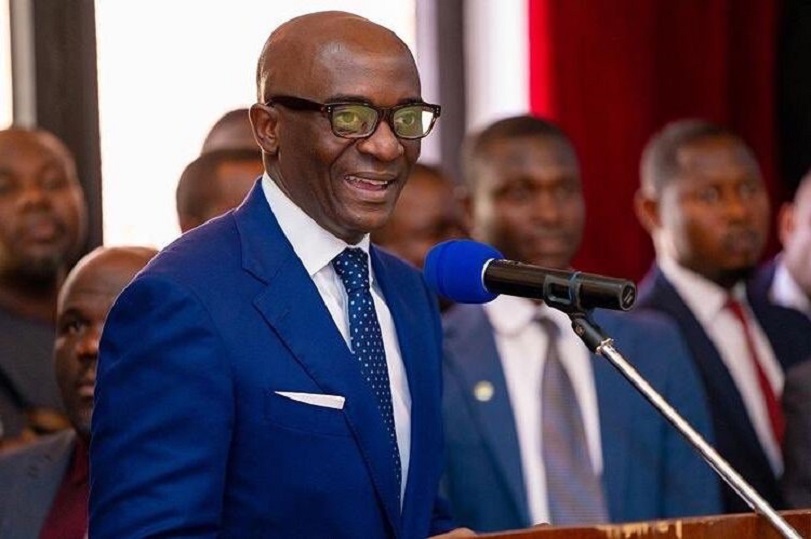
Ebie: 55 Garlands to a Rare Breed of Human

Published

on

Chiedu Ebie NDDC Chairman

By Jerome-Mario Utomi

Some persons are born as a special breed of humans. Chiedu Ebie, Chairman of the Governing Board of the Niger Delta Development Commission (NDDC) is one of such persons.

In fact, at 55, Ebie encapsulates Menachem Mendel Schneerson’s postulation about people born as a special breed. Schneerson: “Because time itself is like a spiral, something special happens on your birthday each year: The same energy that God invested in you at birth is present once again.”.

When you look at Ebie’s career trajectory, his exhilarating performances in all the public offices he has held, his contributions to making Delta State a dream state for Deltans, and his current efforts to saturate the Niger Delta region with socio-economic, infrastructural, and human capital development as NDDC chairman, you won’t but agree that he indeed, as submitted by Menachem Mendel Schneerson, belongs to a rare breed of humans. Born January 2, 1970, Ebie’s birthday is a huge celebration of excellence.

Though he wears no airs and does not sound his own trumpet, anyone who encounters him will readily see in him a personality whose life is characterised by remarkable, legendary, and exemplary feats.

A thoroughbred attorney and oil and gas exploration executive, before his appointment as NDDC Board Chairman in November 2023, Ebie had served as Delta State Commissioner for Basic and Secondary Education and later, Secretary to the State Government.

Private and public sector stakeholders share common, refreshing commentaries about Ebie’s eventful and impactful 55 years on earth and his salutary accomplishments.

The common denominator, however, is that this “birthday boy,” this illustrious son of the Ika ancient kingdom who had contributed immensely to the realisation of the Smart and Stronger Delta agenda of the Governor Ifeanyi Okowa administration”, is worthy of commendation, emulation, and celebration as he turns 55 today.

Late American President John Quincy Adams was probably talking about Ebie when he argued that “If your actions inspire others to dream more, learn more, do more, and become more, you are a leader.” Indeed, in Ebie, you see a man whose knack for hard work, honesty, integrity, purposefulness, and excellence has been a source of inspiration to his subordinates and admirers.

His amiable and genial attributes, his traits of transparency and rock-solid integrity, as well as his goal-orientated nature, are arguably traceable to his grandfather, who was the first ordained reverend of the Anglican Church in the Ika nation, and whose two sons later became ordained reverend gentlemen themselves.

As Commissioner for Basic and Secondary Education from 2015-2019, for instance, Ebie achieved unprecedented set goals, which included the massive renovation and rehabilitation of schools and the revamping of grassroots sports through the Zenith Bank Delta Principal’s and Headmaster’s Cup.

In 2019, he achieved a record-breaking and, of course, the transparent recruitment of 1,000 teachers, posted across secondary schools in the state. This merit-based and high-level transparency recruitment exercise made it possible for most of the beneficiaries to scale through without knowing anyone in the ministry or government.

In recognition of his rare attributes, then Governor Okowa made the following elegant statement about Ebie during his inauguration as SSG: “Mr Ebie is a fine gentleman who served meritoriously as Commissioner for Basic and Secondary Education in the first tenure of his administration. His civility, analytical intelligence, communication skills, and diligence are essential qualities needed for the office of the SSG.

In addition to these, modern statecraft, with all its complexities and challenges, requires team players, proactive leaders, and men with a large appetite for work. Mr Ebie meets these criteria, and I am convinced that he is well equipped to enrich the social, political, and economic narrative of our dear state.”

In just one year as NDDC Board Chairman, the Board under his leadership has turned not just the Commission round for the better but also the entire Niger Delta region through purposeful and result-orientated superintendence.

Today is not just Ebie’s birthday but also the dawn of a new year for him, the beginning of another cycle of 365 days of rendering quality, humane, deliberate, intentional, and transformational service to Nigeria and the people of the Niger Delta in particular.

Happy birthday, sir!

Utomi, a media specialist, writes from Lagos, Nigeria. He can be reached via [email protected]/08032725374.

Feature/OPED

Guide to Employee Training That Reinforces Workplace Safety Standards

Published

on

Workplace Safety Standards

Workplace safety is not sustained by policies alone. It is built through consistent training that shapes daily behaviour, decision-making, and accountability across every level of an organisation. When employees understand not only what safety rules exist but why they matter, they are far more likely to follow them and intervene when risks arise. Effective safety-focused training protects workers, strengthens operations, and reduces costly incidents that disrupt productivity and morale.

As industries evolve and workplaces become more complex, employee training must go beyond basic orientation sessions. Reinforcing safety standards requires an ongoing, structured approach that adapts to new risks, changing regulations, and real-world job demands. A thoughtful training strategy helps create a culture where safety is a shared responsibility rather than a checklist item.

Establishing a Foundation of Safety Awareness

The first purpose of workplace safety training is awareness. Employees cannot avoid hazards they do not understand. Comprehensive training introduces common workplace risks, clarifies acceptable behaviour, and sets expectations for personal responsibility. This foundational knowledge empowers employees to recognise unsafe conditions before incidents occur.

Safety awareness training should be tailored to the specific environment in which employees work. Office settings require education on ergonomics, electrical safety, and emergency evacuation procedures, while industrial workplaces demand detailed instruction on machinery risks, protective equipment, and material handling. When training reflects actual job conditions, employees are more engaged and better equipped to apply what they learn.

Clear communication is essential during this stage. Using plain language and real examples helps employees connect training concepts to daily tasks. When safety awareness becomes part of how employees think and talk about their work, it begins to shape behaviour consistently across the organisation.

Integrating Safety Training into Daily Operations

Safety training is most effective when it is integrated into everyday work rather than treated as a one-time event. Ongoing reinforcement ensures that safety standards remain top of mind as tasks, equipment, and responsibilities change. Regular training sessions create opportunities to refresh knowledge, address new risks, and correct unsafe habits before they lead to injury.

Incorporating short safety discussions into team meetings helps normalise these conversations. Supervisors play a critical role by modelling safe behaviour and reinforcing expectations during routine interactions. When employees see safety emphasised alongside productivity goals, it reinforces the message that both are equally important.

Hands-on training also strengthens retention. Demonstrations, practice scenarios, and real-time feedback allow employees to apply safety principles in controlled settings. This experiential approach builds confidence and reduces hesitation when employees encounter hazards in real situations.

Aligning Training with Regulatory Requirements

Workplace safety training must align with applicable regulations and industry standards to ensure legal compliance and worker protection. Laws and regulations change frequently, making it essential for organisations to keep training materials updated. Failure to do so can expose employees to unnecessary risk and organisations to legal consequences.

Training programs should clearly explain relevant safety regulations and how they apply to specific roles. Employees are more likely to comply when rules are presented as practical safeguards rather than abstract mandates. Documenting training completion and maintaining accurate records also demonstrates organisational commitment to compliance.

Many organisations rely on support from compliance training companies to navigate complex regulatory landscapes and design programs that meet both legal and operational needs. These partnerships can help ensure training remains accurate, consistent, and aligned with evolving requirements without overwhelming internal resources.

Encouraging Participation and Accountability

Effective safety training depends on active participation rather than passive attendance. Employees should be encouraged to ask questions, share concerns, and contribute insights based on their experiences. When workers feel heard, they become more invested in maintaining a safe environment.

Creating accountability is equally important. Training should clarify individual responsibilities and outline the consequences of ignoring safety standards. Employees need to understand that safety is not optional or secondary to performance goals. Reinforcement from leadership ensures that unsafe behaviour is addressed consistently and constructively.

Peer accountability also strengthens safety culture. When training emphasises teamwork and shared responsibility, employees are more likely to watch out for one another and intervene when they see risky behaviour. This collective approach reduces reliance on supervision alone and builds resilience across the workforce.

Adapting Training for Long-Term Effectiveness

Workplace safety training must evolve alongside organisational growth and workforce changes. New hires, role transitions, and technological updates introduce risks that require refreshed instruction. Periodic assessments help identify gaps in knowledge and opportunities for improvement.

Data from incident reports, near misses, and employee feedback provides valuable insight into training effectiveness. Adjusting content based on real outcomes ensures that training remains relevant and impactful. Organisations that treat training as a dynamic process are better equipped to respond to emerging risks.

Long-term effectiveness also depends on reinforcement beyond formal sessions. Visual reminders, updated procedures, and accessible reporting tools help sustain awareness. When safety standards are supported through multiple channels, employees receive consistent cues that reinforce training messages daily.

Conclusion

Reinforcing workplace safety standards through employee training requires intention, consistency, and adaptability. Training that builds awareness, integrates into daily operations, aligns with regulations, and encourages accountability creates a safer environment for everyone involved. When employees understand their role in maintaining safety, they are more confident, engaged, and prepared to prevent harm.

A strong training program is not simply a compliance exercise. It is an investment in people and performance. Organisations that prioritise meaningful safety training protect their workforce while fostering trust, stability, and long-term success.

Continue Reading

Feature/OPED

Debt is Dragging Nigeria’s Future Down

Published

on

more concessional debt

By Abba Dukawa 

A quiet fear is spreading across the hearts of Nigerians—one that grows heavier with every new headline about rising debt. It is no longer just numbers on paper; it feels like a shadow stretching over the nation’s future. The reality is stark and unsettling: nearly 50% of Nigeria’s revenue is now used to service debt. That is not just unsustainable—it is suffocating.

Behind these figures lies a deeper tragedy. Millions of Nigerians are trapped in what experts call “Multidimensional Poverty,” struggling daily for dignity and survival, while a privileged few continue to live in comfort, untouched by the hardship tightening around the nation. The contrast is painful, and the silence around it is even louder.

Since assuming office, Bola Ahmed Tinubu has embarked on an aggressive borrowing path, presenting it as a necessary step to revive the economy, rebuild infrastructure, and stabilise key sectors.

Between 2023 and 2026, billions of dollars have been secured or proposed in foreign loans. On paper, it is a strategy of hope. But in the hearts of many Nigerians, it feels like a gamble with consequences yet to unfold.

The numbers are staggering. A borrowing plan exceeding $21 billion, backed by the National Assembly, alongside additional billions in loans and grants, signals a government determined to keep spending and building. Another $6.9 billion facility follows closely behind. These are not just financial decisions; they are commitments that will echo into generations yet unborn.

And so, the questions refuse to go away. Who will bear this burden? Who will repay these debts when the time comes? Will it not fall on ordinary Nigerians already stretched thin to carry the weight of decisions they never made?

There is a growing fear that the nation may be walking into a future where its people become strangers in their own land, bound by obligations to distant creditors.

Even more troubling is the sense that something is not adding up. The removal of fuel subsidy was meant to free up resources, to create breathing room for meaningful development.

But where are the results? Why does it feel like sacrifice has not translated into relief? The silence surrounding these questions breeds suspicion, and suspicion slowly erodes trust.  As of December 31, 2025, Nigeria’s public debt has risen to N159.28 trillion, according to the Debt Management Office.

The numbers keep climbing, but for many citizens, life keeps declining. This disconnect is what hurts the most. Borrowing, in itself, is not the enemy. Nations borrow to grow, to build, to invest in their future. But borrowing without visible progress, without accountability, without compassion for the people, it begins to feel less like strategy and more like a slow descent.

If these borrowed funds are truly building roads, schools, hospitals, and opportunities, then Nigerians deserve to see it, to feel it, to live it. But if they are funding excess, waste, or luxury, then this path is not just dangerous—it is devastating.

Nigeria’s growing loan profile is a double-edged sword. It can either accelerate development or deepen economic challenges. The key issue is not just borrowing, but what the country does with the money. Strong governance, transparency, and investment in productive sectors will determine whether these loans become a foundation for growth or a long-term liability. Because in the end, debt is not just an economic issue. It is a moral one. And if care is not taken, the price Nigeria will pay may not just be financial—it may be the future of its people.

Dukawa writes from Kano and can be reached at [email protected]

Continue Reading

Feature/OPED

Nigeria’s Power Illusion: Why 6,000MW Is Not An Achievement

Published

on

Nigeria Electricity Act 2023

By Isah Kamisu Madachi

For decades, Nigeria has been called the Giant of Africa. The question no one in government wants to answer is why a giant cannot keep the lights on.

Nigeria sits on the largest proven oil reserves in Africa, holds the continent’s most populous nation at over 220 million people, and commands the fourth largest GDP on the continent at roughly $252 billion. It possesses vast deposits of solid minerals, a fintech ecosystem that accounts for 28% of all fintech companies on the African continent, and a diaspora that remits billions of dollars annually.

If potential were electricity, Nigeria would have been powering half the world. Instead, an immediate former minister is boasting about 6,000 megawatts.

Adebayo Adelabu resigned as Minister of Power on April 22, 2026, citing his ambition to contest the Oyo State governorship election. In his resignation letter, he listed among his achievements that peak generation had increased to over 6,000 megawatts during his tenure, supported by the integration of the Zungeru Hydropower Plant. It was presented as a great crowning legacy. The claim deserves scrutiny, and the numbers deserve context.

To begin with, the context. Ghana, Nigeria’s neighbour in West Africa, has a national electricity access rate of 85.9%, with 74% access in rural areas and 94% in urban areas. Kenya, with a 71.4% national electricity access rate, including 62.7% in rural areas, leads East Africa. Nigeria, by contrast, recorded an electricity access rate of just 61.2 per cent as of 2023, according to the World Bank. This is not a distant or poorer country outperforming Nigeria. Ghana’s GDP stands at approximately $113 billion, less than half of Nigeria’s. Kenya’s economy is around $141 billion. Ethiopia, which has invested massively in the Grand Ethiopian Renaissance Dam and is already exporting electricity to neighbouring countries, has a GDP of roughly $126 billion. All three are doing more with far less.

Now to examine the 6,000-megawatt, Daily Trust obtained electricity generation data from the Association of Power Generation Companies and the Nigerian Electricity Regulatory Commission, covering quarterly performance from 2023 to 2025 and monthly data from January to March 2026. The data shows that in 2023, peak generation was approximately 5,000 megawatts; in 2024, it reached approximately 5,528 megawatts; in 2025, it ranged between 5,300 and 5,801 megawatts; and by March 2026, available capacity had declined to approximately 4,089 megawatts. The grid never recorded a verified peak of 6,000 megawatts or higher. Adelabu had, in fact, set the 6,000-megawatt target publicly on at least three separate occasions, missing each deadline, and later admitted the target was not achieved, attributing the failure to vandalism of key transmission infrastructure.

In February 2026, Nigeria’s national grid produced an average available capacity of 4,384 megawatts, the lowest monthly average since June 2024. For a country with over 220 million people, this means electricity supply remains far below national demand, with the grid delivering only about 32 per cent of its theoretical installed capacity of approximately 13,000 megawatts. To put that in sharper comparison: in 2018, 48 sub-Saharan African countries, home to nearly one billion people, produced about the same amount of electricity as Spain, a country of 45 million. Nigeria, the continent’s most resource-rich large economy, is a significant part of that embarrassing equation.

The tragedy here is not just technical. It is a governance failure with compounding human costs. An economy that cannot provide reliable electricity cannot competitively manufacture goods, cannot industrialise at scale, cannot attract the volume of foreign direct investment its endowments warrant, and cannot build the digital infrastructure that would allow it to lead on artificial intelligence, data governance, and the emerging critical minerals economy where Africa’s next great opportunity lies. Countries with a fraction of Nigeria’s mineral wealth and human capital are already debating those frontiers. Nigeria is still campaigning on megawatts.

What a departing minister should be able to say, given Nigeria’s endowments, is not that peak generation touched 6,000 megawatts at some unverified moment. He should be saying that Nigeria now generates reliably above 15,000 megawatts, that rural electrification has crossed 70 per cent, and that the country is on a credible trajectory toward the kind of energy sufficiency that unlocks industrial growth. That is the standard Nigeria’s size and resources demand. Anything below it is not an achievement. It is an apology dressed in a press release.

The power sector has received billions of dollars in investment across multiple administrations. The 2013 privatisation exercise, the Presidential Power Initiative, the Electricity Act of 2023, and successive reform promises have produced a sector that still, in 2026, cannot guarantee eight hours of reliable supply to the average Nigerian household. That a minister exits that ministry citing a megawatt figure that fact-checkers have shown was never actually reached, and that even if reached would be unworthy of celebration given Nigeria’s potential, captures the full depth of the problem. The ambition is too small. The accountability is too thin. And the country deserves better from those who are privileged to manage its extraordinary, squandered potential.

Isah Kamisu Madachi is a policy analyst and development practitioner. He writes via [email protected]

Continue Reading

Trending