Feature/OPED
NDDC: When Public Policy and Public Good Combine To Bring Development
By Jerome-Mario Utomi
Public policy, going by experts’ definition, is an institutionalized proposal or a decided set of elements like laws, regulations, guidelines and actions to solve or address relevant and real-world problems, guided by a conception and often implemented by programs and encompasses what the government does, or does not do to solve a problem in society.
Correspondingly, policymaking and problem-solving are what citizens expect from their elected and appointed government representatives once they have taken office, and are entrusted with serving their constituency.
Given the foregoing, developing public policy decisions for the good of those in, and on behalf of those outside the government (public) has become not only a culture but vital for public officers and all levels of government — municipal, state, and federal Ministries, Parastatals, Commissions and agencies among others. They met this culture when they joined the service, guided by the culture while in service and ultimately transferred this culture to their successors in office. It is imperative to note that the root of public policy in our nation, just as in other parts of the world, is deep and there is something massive and positive about it.
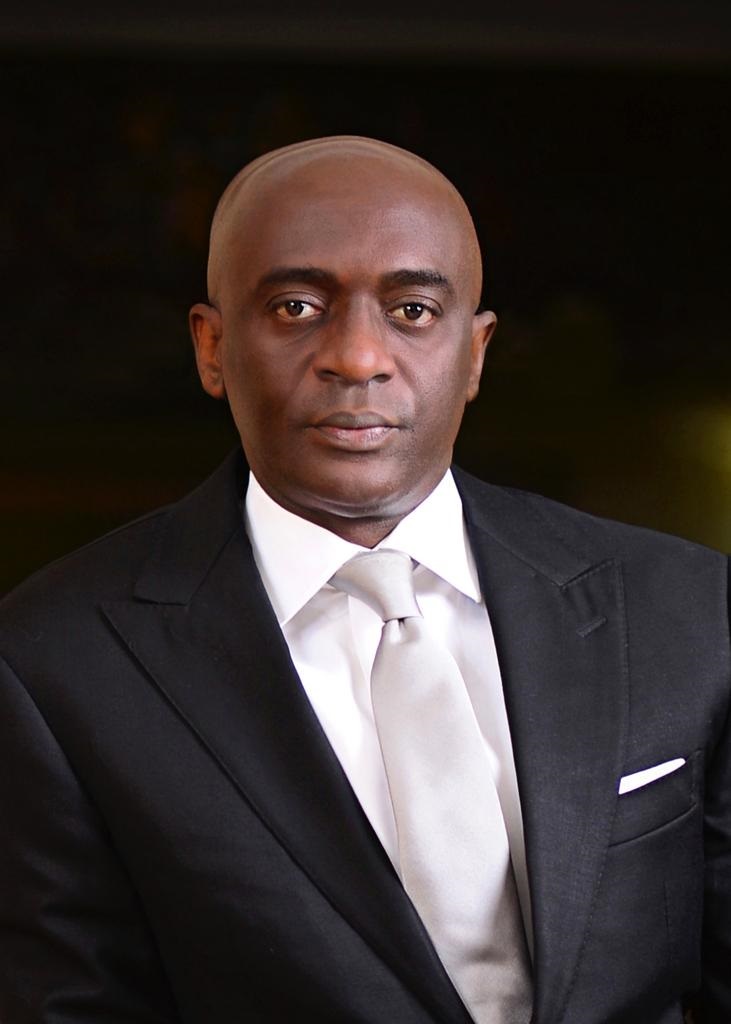
A veritable example is the people-oriented and sustained development-minded actions and policies of the Mr Chiedu Ebie-led Governing Board and Management of the Niger Delta Development Commission (NDDC), a federal government agency established by former Nigerian president, Olusegun Obasanjo in 2000, with the sole mandate of developing the oil-rich Niger Delta region of Nigeria.
Upon inauguration in November 2023, the NDDC board, to the admiration of all stakeholders, came up with well-thought-out initiatives and projects. Prominent among these projects, programmes and initiatives are the building of partnerships, lighting up the region, initiating sustainable livelihood, improving youth capacity and skills base, executing efficient and cost-effective projects, including Project Hope for Renewed Hope, reducing carbon emission, and improving peace and security.
While the above initiatives and policies remain admirable, there is another policy by the Governing Board and Management that this piece would underline as something massive and positive.
Some months ago, the Commission’s leadership, during the presentation of its N1.91 trillion 2024 budget to the Senate Committee on NDDC, emphasized priorities such as security, job creation, youth and women empowerment, social welfare, education and the profound initiative to raise N1 trillion, from development and commercial banks, for the completion of 1,006 legacy projects spread across the region. These projects were reportedly in specific areas such as roads, bridges, electricity, schools, hospitals, shore protection and reclamation, among others.
Aside from the overt awareness that when abandoned projects are completed and put into use, it saves the nation from wastage, boosts national assets and promotes socio-economic development of the people, region and the nation in general, there are, however, other covert reasons that render this present development as both newsy and commendable. Students of history is familiar with the origin of project abandonment and neglect of national assets in Nigeria and the politics that fuel this will agree that the NDDC governing board and management are on the path to ending an ugly ‘culture’ that has over the years held down the region’s development.
If this policy framework is achieved as envisaged, it is abundantly clear that future historians and, of course, development professionals shall refer to the present board and management as a bunch that restored new order in the region and hope to the people. Beyond what future historians may say, there is equally the need to highlight why this piece is fixated on NDDC’s departure from the old order, and at the very moment on a mission to tackle a challenge that has not only become a culture of a sort but has its origin deeply rooted in history that predates the nation’s independence in October 1960.
Beginning with the historical undertone as to why Nigerians and successive leaderships in the country daily demonstrate a lackadaisical attitude towards national assets and see nothing wrong with project desertion, history has it that during colonial rule, Nigerians developed the anti-colonial belief that public property is no man’s property. This belief, according to reports, was intended to fight colonialism but it continued after independence and brought insensitivity to government property as well as ineptitude, nepotism, neglect of duty, etc.; it gravely explains as to the reckless way in which government property and projects are handled.
Indeed, what the above information tells us is that both project abandonment and public asset neglect in the country are two striking human tragedies, and the pain they inflict on the nation is deepened by the realisation that they were avoidable.
Beyond this understanding, there are reasons to believe that this piece is not alone in the understanding that NDDC leadership is doing something positively new.
A few days ago, the Pan Niger Delta Development Forum, PANDEF, commended the leadership of the Niger Delta Development Commission, NDDC, for its commitment to transparency, accountability, and infrastructure development in the region.
Giving the commendation during a courtesy visit by a delegation from the umbrella organization of Niger Delta people at the NDDC headquarters in Port Harcourt, PANDEF’s National Chairman, Ambassador Godknows Igali, lauded the Commission’s leadership, describing it as visionary and result-driven.
His words: “We have never seen a leadership team like this, and we thank President Bola Ahmed Tinubu for his support. Your interventions in infrastructure, particularly the Benin-Ore Road and the Light Up Niger Delta initiative, are commendable. Your youth development programmes are also making a significant impact.”
He further assured the Commission of PANDEF’s continued collaboration, reiterating the group’s role as the voice of the Niger Delta people in the civic space: “We believe in working closely with you and reaffirm our support for your administration. We urge Mr. President, the governors, and other stakeholders to provide you with the necessary tools to succeed,” he concluded.
No doubt, some books teach how to build a house, how to repair an engine and how to write a book, but there are no codified books on how to build a region, society or nation. Conversely, nation-building, in my view, depends on ceaseless creative and far-reaching public policies designed and implemented by well-forsighted leaders- a case in point is the NDDC’s resolve to complete abandoned projects that presently litter its mandate states.
This author, therefore, believes that closing ranks to learn from NDDC’s latest template is not only important but eminently desirable for other agencies and Commissions in the country as “we cannot continue to do one thing repeatedly and be expecting a different result-or tackling our societal challenges with the same mentality used when the problems were created”
Finally, while it is obvious that it is a season of public good for the Niger Delta region and its people, for me, the positive public policies so far generated by the Governing Board/Management of NDDC align with the famous words of Martin Luther King Jnr: “Human progress never rolls in on the wheels of inevitability but is achieved through the tireless efforts and the persistent work of dedicated individuals who are willing to be coworkers with God”
Utomi, a media specialist, writes from Lagos, Nigeria. He can be reached via [email protected]/08032725
Feature/OPED
A Simple Guide to Obtaining Pension Clearance Certificate in Nigeria
By Gbolahan Oluyemi
In 2025, the National Pension Commission (PenCom) directed all Licensed Pension Fund Operators (LPFOs) to demand a Pension Clearance Certificate (PCC) from service providers before engaging their services. This new policy typically affects various types of entities, including small and medium-scale enterprises, most of which are not usually compliance-driven. Following this directive, the PCC has become an essential compliance document for both large, medium and small-scale firms. This article provides a guide on what a PCC is, why it matters, and how it can be obtained.
What is a Pension Clearance Certificate (PCC)?
A Pension Clearance Certificate (PCC) is an official document issued by PenCom confirming that an organisation has complied with the provisions of the Pension Reform Act. It is an annual document that must be renewed every year at no cost. The yearly renewal is intended to ensure that organisations treat compliance as a continuous activity rather than a one-off act.
Why is a PCC Important?
The PCC is important because it demonstrates that an organisation is compliant with the provisions of the Pension Reform Act, especially as it relates to employee pension contributions under Section 4 (1) of the Pension Reform Act and subscription to group life insurance under Section 4 (5) of the Pension Reform Act. It is also required for certain transactions, such as government contracts and engagements with compliance-sensitive partners. In essence, a PCC assures investors, partners, and clients that your business is properly structured and compliant with regulatory requirements.
Who Needs a Pension Clearance Certificate?
Under Nigerian law, companies with three or more employees are required to participate in the Contributory Pension Scheme (CPS). If your organisation employs at least three staff members and provides or intends to provide services to Licensed Pension Fund Operators (LPFOs) or other regulated entities, you are expected to obtain a PCC annually.
How Do I Obtain a PCC?
PenCom issues the PCC electronically and at no cost through its web portal: https://pcc.pencom.gov.ng/. Please note that Applicants who are just beginning compliance and remitting employees’ pensions are required to first obtain an employer code from a Pension Fund Administrator (PFA). This code is necessary to initiate the PCC application on the PenCom portal.
Upon logging into the portal, you will be required to complete your company profile by providing your date of incorporation, contact details, and website (if applicable), as well as uploading your CAC documents.
Next, you will upload an Excel schedule (using the template provided on the website) containing your employee list. After this, you will be required to upload Excel sheets detailing pension contributions. You will also need to upload your organisation’s group life insurance documentation and payment instrument.
Finally, you will review your application and submit it for further processing by PenCom. Before commencing an application, ensure you have the following:
- Certificate of Incorporation (CAC documents)
- Group Life Insurance Policy for employees
- Evidence of Pension Fund Administrator (PFA) registration for employees
- Three years’ proof of monthly pension remittances, including penalties for any defaults (where applicable). For companies less than three years old, provide proof of remittances from the date of incorporation
- A valid Tax Identification Number (TIN)
- An employee schedule showing staff details and contributions (usually in Excel format) Templates are available on the PenCom portal
Also note that for the portal to accept employee details and remittance records, employees must have completed their data capture with their respective Pension Fund Administrator and updated their records to reflect their current employer.
Conclusion
Obtaining a Pension Clearance Certificate in Nigeria may seem technical at first, but once proper processes are established, it becomes routine. The key is consistency in remittance, maintenance of accurate records and prioritisation of compliance in overall operations.
For many Nigerian businesses, the PCC is more than a regulatory requirement; it is a mark of credibility. In a competitive environment, that credibility can make all the difference.
Gbolahan Oluyemi is a Legal Practitioner and currently leads Olives and Candles – Legal Practitioners. For further information, enquiries, or clarification, please contact Gbolahan via: [email protected] or [email protected]
Feature/OPED
David Ogbueli and the Emerging Framework for Value-Driven Global Leadership
By Blaise Udunze
Milestones often invite reflection. Birthdays, especially, offer a pause to measure time not merely in years lived, but in lives shaped and systems influenced. This is especially true for David Ogbueli, who is celebrating his birthday. But instead of focusing on how old he is getting, it is more interesting to think about the impact he has had, not just building visible success, but the quiet, persistent architecture of transformation that his ministry has helped construct across continents.
Come to think of it, that in an era obsessed with visibility, metrics, and viral impact, Ogbueli’s work represents something different and distinguishing, slower, deeper, and far more enduring. Yes, multitude within and outside the country who know him either closely or from a distance definitely can attest that it is common with him, as this happens to be the kind of influence that rarely trends but steadily alters the trajectory of individuals, institutions, and nations.
To understand the global footprint of his work, one must first confront a fundamental shift he embodies, which emphatically is the redefinition of ministry itself. Through Dominion City International, founded from humble beginnings as a campus fellowship in 1991 at the University of Nigeria and later formalised in 1995 in Enugu, Ogbueli has built what is now a vast global movement. With over 2,000 chapters spanning Africa, Europe, Asia, the Middle East, and the Americas, alongside regional offices in the United States, the United Kingdom, and Nigeria, Dominion City has evolved into far more than a church network, into a leadership engine with an ambitious ongoing vision across Nigeria and beyond.
What distinguishes this expansion is not just its scale, but its philosophy. Beyond running a church, Dominion City was never designed merely to gather people; it was built to raise leaders who transform society. One emerging fact today is that the philosophy has shaped a generation of professionals, entrepreneurs, public servants, and ministers who carry its influence into boardrooms, government institutions, and grassroots communities across the world.
At the heart of this ecosystem is a deliberate investment in human capital development. Verifiably, through platforms like the Dominion Leadership Institute, which has produced over 30,000 graduates globally, Ogbueli has undeniably and consistently built a leadership pipeline that addresses one of Africa’s most persistent challenges. These prevailing challenges are the deficit of capable, values-driven leadership. At this point, this narrative definitely contradicts societal beliefs that his curriculum must be confined to spiritual formation; rather, it will interest society to know that his agenda integrates systems thinking, governance, productivity, and ethical leadership, equipping participants to function effectively in complex environments.
This emphasis on leadership extends into a broader scope and platforms. One of them is the Global Leadership Forum, and it would be of interest that it is not just designed for spiritual pursuit, but it is a mentorship and training hub designed to enhance performance and productivity across sectors, including business, politics, ministry, and enterprise. It reflects Ogbueli’s conviction that transformation must be holistic, that transcendence and cutting across every sphere of human endeavour.
Yet leadership, in his framework, is incomplete without economic empowerment. Across his ministry network, initiatives have been structured to move individuals from dependency to productivity. This is evident in large-scale interventions such as a N1 billion entrepreneurship support fund introduced to equip participants with the resources, skills, and networks required to succeed in business and career pursuits. At leadership retreats and empowerment programs, thousands are trained in areas ranging from agriculture and food security to innovation, healthcare, and global enterprise.
Beyond structured programs, his personal actions reinforce this philosophy. has sparked widespread reactions following a remarkable act of generosity during a recent church service
From distributing financial support to individuals in need during church services to empowering teams within the ministry with significant financial gifts, as one recent such act sparked widespread reactions following a remarkable benevolence, gifting about 35 choristers N1 million each during a recent church service. With several other instances of generosity in the past, Ogbueli consistently underscores a critical principle that reveals that while immediate relief matters, sustainable change comes from enabling people to create value. In the course of one such intervention, which captures this ethos succinctly, he said that giving alone is not enough; people must be equipped to build.
With the right mindset, this approach aligns with a broader development truth that clearly states nations do not rise on charity, but on the strength of productive citizens. By embedding this mindset within a faith-based structure, Ogbueli is redefining how development can be pursued at scale.
Equally significant is his ability to mobilise faith as a development asset. It is an irony that in many parts of Africa and the global South, religious institutions remain among the most trusted social structures. Yet, their potential as vehicles for development often remains underutilised. Ogbueli’s model challenges that limitation by positioning the church as a hub for leadership incubation, economic activation, and social accountability.
Through initiatives like the Golden Heart Foundation, he has extended this vision into the nonprofit space. One of the good feats is that the foundation’s flagship program, the National Youth Summit, attracts over 50,000 participants annually from across Africa, focusing on leadership education, value reorientation and entrepreneurial development. These interventions target young people, especially a demographic that represents both Africa’s greatest asset and its most urgent responsibility.
His influence also extends into collaborative networks such as the Global Missions Network, which usher in developmental change, thereby bringing together leaders with a shared mandate of expanding the reach of the Gospel while driving national transformation. One important aspect of Ogbueli’s strategic drive for change is that through such alliances, his ideas are not confined to a single organisation but are disseminated across a broader ecosystem of leaders and institutions.
Beyond ministry and nonprofit initiatives, Ogbueli’s engagement with development takes on an institutional and structural dimension. This is driven through ventures like Huram Development, which is involved in large-scale projects including auditoriums, estates, and universities. Noteworthy also is that he is contributing to physical infrastructure that supports long-term growth. Similarly, Priesthood Institute is equipping ministry professionals with the competence and capacity required for modern-day leadership, while Shalom World ensures the distribution of knowledge resources through books and media.
Also, one significant dimension of Ogbueli’s influence lies in his intellectual contributions, which portray him as a prolific author with nearly a hundred published titles spanning leadership, personal development, spirituality, and nation-building. His more recent works include Pillars of King Solomon’s Wisdom & Wealth, Jewish Secrets, and The Laws of Proper Speech. Meanwhile, this reflects his continued effort to distil timeless principles into practical frameworks for contemporary living and reinforce his broader mission of transforming minds as a pathway to transforming societies.
Ogbueli is the host of the TV and Radio Program Expand Your World, which runs on TV and radio stations across Nigeria, extending his influence to seven continents, reinforcing his role not just as a pastor but as a global thought leader in transformation and leadership.
Importantly, Ogbueli’s credibility is not confined to religious circles only. Being a management and public policy consultant, an alumnus of institutions such as the Harvard Business School, Lagos Business School, and National Institute for Policy and Strategic Studies, he operates at the intersection of spirituality and strategy. It must be established that his engagements with governments, corporate organisations, and policy platforms reflect a rare ability to translate faith-based principles into actionable frameworks for development.
Unbeknownst to many, perhaps the most enduring feature of his model is its emphasis on multiplication. Rather than building a personality-driven movement, Ogbueli has focused on raising leaders who can replicate systems independently. This distributed approach ensures that his influence is not limited by geography or personal presence. It also guarantees continuity, a critical factor in sustainable development.
Of course, the challenge of measuring such an impact remains. Unlike infrastructure projects or economic indices, which are factors on which the government’s progress is reliant, the outcomes of leadership development and mindset transformation are not immediately quantifiable but have a greater impact. They unfold over time, often expressed in stories rather than statistics used for evaluation, a thriving business birthed from a training program, a principled leader emerging in public service, a community mobilised for collective progress.
Yes, in most cases, these outcomes may be difficult to measure, but they are foundational to nation-building and transformation beyond boundaries.
One important aspect the world must clearly know is that Pastor David Ogbueli’s contribution lies not merely in what he has built, but in what he has set in motion, which is transgenerational. This tells that his work challenges conventional development paradigms by emphasising that lasting change begins with people, their values, their thinking and their capacity to build systems that endure.
One of Ogbueli’s outstanding influences, beneath the surface, even in a world grappling with complex challenges, from economic instability to leadership crises, is such that his model offers a compelling reminder that transformation is not only engineered through policies and capital but through the deliberate cultivation of human potential.
His legacy is rapidly unfolding. But already, it is evident that the structures he has built, across ministry, leadership development, youth empowerment, and enterprise, are quietly shaping a future that extends far beyond the pulpit.
And perhaps that is the most powerful kind of transformation, the kind that is not always seen, but is deeply felt, widely spread, and ultimately, enduring.
Blaise, a journalist and PR professional, writes from Lagos and can be reached via: [email protected]
Feature/OPED
3 Lessons Nigerian Marketers Can Learn from Top YouTube Creators
By Olumide Balogun
The Nigerian digital landscape is evolving rapidly. Across the country, YouTube creators have become the new mainstream entertainment. They command millions of views, shape modern culture, and heavily influence purchasing decisions.
For digital marketers and advertisers, observing these creators provides a masterclass in modern audience engagement. Creators understand exactly how to hold attention and drive action in a crowded digital space. They know how to speak to their communities, keep them entertained, and build lasting loyalty.
By studying their methods, brands can transform their marketing strategies to build deeper, more profitable relationships with consumers. Here are three powerful lessons your brand can learn from the success of top YouTube creators.
1. Prioritise Authenticity and Relatability
Corporate videos typically rely on high budgets and perfect scripts. Top creators prove that raw, relatable content builds much stronger trust. Audiences connect deeply with real people sharing genuine experiences. They want to see the real faces behind the screen.
Brands can apply this by showing the human side of their business. You can share behind-the-scenes moments from your office, highlight real employee stories, or feature unscripted user-generated content. When you prioritise authenticity over absolute perfection, your message resonates perfectly with modern consumers. They begin to see your brand as a relatable partner rather than just a faceless corporation.
2. Master the Multiformat Storytelling Approach
Successful creators utilise the entire YouTube ecosystem to reach their fans. They use YouTube Shorts to attract new viewers quickly with bite-sized entertainment. They create long-form videos to explore topics in depth. Finally, they use Live streams to build real-time connections with their most dedicated followers.
Marketers need to adopt this exact mixed format strategy to stay relevant. You can capture attention quickly with an engaging short video and then lead those interested viewers to a comprehensive product review or tutorial. Utilising all available formats ensures you reach your customers exactly how they prefer to consume content on any given day. It allows you to tell a complete story from quick discovery to deep consideration.
3. Cultivate Community and Borrow Influence Safely
Traditional advertising relies heavily on one-way broadcasting. YouTube thrives on active community participation. Creators ask their viewers for input, respond to comments, and build fiercely loyal fandoms. This creates immense credibility. Viewers are 98% more likely to trust the recommendations of YouTube creators compared to other platforms.
Brands can mirror this interactive approach by hosting live Q&A sessions, asking for audience feedback, and making customers feel involved in the brand’s journey. Furthermore, marketers can tap into this existing loyalty by collaborating directly with trusted voices.
Using specific collaboration tools allows your brand to align seamlessly with popular channels. For example, Creator Takeovers give your brand a dedicated presence on a creator’s channel, while Partnership Ads let you boost creator-made content directly to a wider audience. This approach allows you to respect the creator’s unique voice while turning their authentic endorsements into highly effective marketing assets for your business.
The Bottom Line: YouTube is a dynamic, community-driven ecosystem. By adopting a creator mindset, Nigerian marketers can completely revitalise their digital video strategy. Embrace authenticity, utilise multiple video formats, and partner with trusted voices to turn casual viewers into loyal brand advocates.
Olumide Balogun is the Director of Google West Africa
-
Feature/OPED6 years agoDavos was Different this year
-
Travel/Tourism10 years ago
Lagos Seals Western Lodge Hotel In Ikorodu
-
Showbiz3 years agoEstranged Lover Releases Videos of Empress Njamah Bathing
-
Banking8 years agoSort Codes of GTBank Branches in Nigeria
-
Economy3 years agoSubsidy Removal: CNG at N130 Per Litre Cheaper Than Petrol—IPMAN
-
Banking3 years agoSort Codes of UBA Branches in Nigeria
-
Banking3 years agoFirst Bank Announces Planned Downtime
-
Sports3 years agoHighest Paid Nigerian Footballer – How Much Do Nigerian Footballers Earn