General
Adesina Warns Against FG Massive Food Import Plans
By Adedapo Adesanya
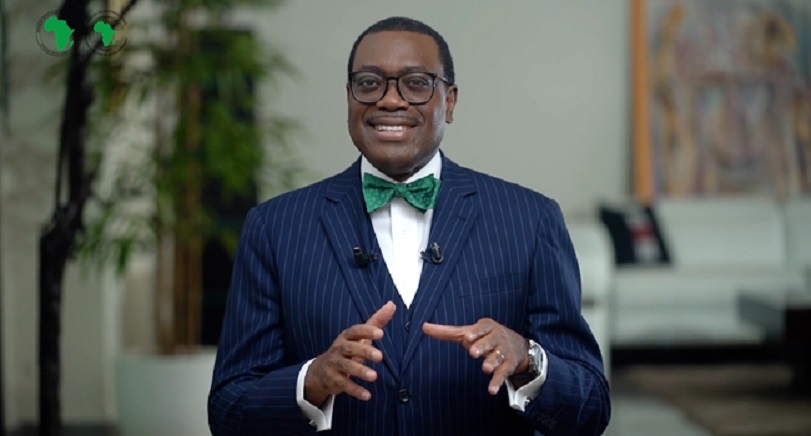
The President of the African Development Bank (AfDB) Group, Mr Akinwumi Adesina, has kicked against the decision of the Nigerian government to allow massive food importation.
Mr Adesina, a former Minister of Agriculture, said the move risks destroying the country’s agriculture.
He was reacting to the announcement by Nigeria’s Minister for Agriculture, Mr Abubakar Kyari, on July 10, that the federal government would suspend duties, tariffs, and taxes on the importation of maize, husked brown rice, wheat, and cowpeas through the country’s land and sea borders, for 150 days.
In a post on the AFDB’s X account on Sunday, Mr Adesina said, “Nigeria’s recently announced policy to open its borders for massive food imports, just to tackle short-term food price hikes, is depressing.”
While addressing African Primates of the Anglican Church at a Retreat in Abuja, on the theme Food security and financial sustainability in Africa: The role of the Church, he warned that the policy could undermine all the hard work and private investments, that have gone into Nigeria’s agriculture sector.
“Nigeria cannot rely on the importation of food to stabilise prices. Nigeria should be producing more food to stabilise food prices while creating jobs and reducing foreign exchange spending, which will further help stabilise the Naira,” the AfDB chief stated.
“Nigeria cannot import its way out of food insecurity,” he said, “Nigeria must not be turned into a food import-dependent nation.”
Mr Adesina said Nigeria “must feed itself with pride,” warning, “a nation that depends on others to feed itself, is independent only in name.”
He noted that Africa accounts for nearly a third of the more than 780 million people worldwide who are hungry, adding that agriculture is critical for the diversification of economies, and for the transformation of rural areas, where over 70 per cent of the population of Africa live.
“It is clear therefore that unless we transform agriculture, Africa cannot eliminate poverty,” he insisted.
Mr Adesina said Africa has 65 per cent of the uncultivated arable land left in the world, to feed 9.5 billion people by 2050. Therefore, what Africa does with agriculture will determine the future of food in the world.
“Essentially, food is money. The size of Africa’s food and agriculture market will reach $1 trillion by 2030.”
Mr Adesina briefed the primates on the Bank’s $25 billion program to transform agriculture, by providing high-performing agricultural technologies for 40 million farmers and making Africa food self-sufficient by 2030.
General
NGIC Pipeline Network to Experience 4-Day Gas Supply Shortage
By Modupe Gbadeyanka
The pipeline network of the NNPC Gas Infrastructure Company Limited (NGIC) will witness a temporary reduction in gas supply for four days.
This information was revealed by the Chief Corporate Communications Officer of the Nigerian National Petroleum Company (NNPC) Limited, Mr Andy Odeh, in a statement on Thursday night.
A key supplier of gas into the NGIC pipeline network is Seplat Energy Plc, a joint venture partner of the state-owned oil agency.
It was disclosed that the facility would undergo routine maintenance from Thursday. February 12 to Sunday, February 15, 2026.
The NNPC stated that, “This planned activity forms part of standard industry safety and asset integrity protocols designed to ensure the continued reliability, efficiency, and safe operation of critical gas infrastructure.”
“Periodic maintenance of this nature is essential to sustain optimal system performance, strengthen operational resilience, and minimise the risk of unplanned outages,” it added.
“During the four-day maintenance period, there will be a temporary reduction in gas supply into the NGIC pipeline network. As a result, some power generation companies reliant on this supply may experience reduced gas availability, which could modestly impact electricity generation levels within the timeframe.
“NNPC Ltd and Seplat Energy are working closely to ensure that the maintenance is executed safely and completed as scheduled. In parallel, NNPC Gas Marketing Limited (NGML) is engaging alternative gas suppliers to mitigate anticipated supply gaps and maintain stability across the network,” the statement further said.
“Upon completion of the maintenance exercise, full gas supply into the NGIC system is expected to resume promptly, enabling affected power generation companies to return to normal operations,” it concluded.
General
Judge Withdraws from EFCC Cases Against Former AGF Malami
By Adedapo Adesanya
Justice Obiora Egwuatu of the Federal High Court in Abuja has recused himself from the two cases involving the former Attorney General of the Federation, Mr Abubakar Malami, filed by the Economic and Financial Crimes Commission (EFCC).
Mr Egwuatu was recently reassigned the cases by the Chief Judge of the Federal High Court, and he disclosed that he withdrew for personal reasons and in the interest of justice.
The cases against Mr Malami were formerly before Justice Emeka Nwite of the same court, who was a vacation judge during the festive season.
Mr Egwuatu’s recusal comes after the civil suit for the forfeiture of 57 properties allegedly linked to Mr Malami was called for mention.
The former AGF, his wife, and son are facing a 16-count money laundering charge. They were granted bail on January 7 in the sum of N500 million with two sureties by Justice Emeka Nwite of the Federal High Court in Abuja.
Justice Nwite stated that the sureties must have landed property in Asokoro, Maitama, and Gwarinpa.
The judge added that the trio must submit their travel documents to the court.
The former Minister of Justice is facing a fresh persecution over the arms and ammunition found in his house by the Department of State Service (DSS). The arms were reportedly uncovered at his Kebbi country home by the operatives of the EFCC during a search.
The anti-graft agency handed the weapon to the secret police for a comprehensive probe, citing a lack of constitutional authority to investigate the possession.
Similarly, the former AGF was accused of knowingly abetting terrorism financing by refusing to prosecute terrorism financiers whose case files were brought to his office as the AGF in the last administration for prosecution. Alongside his son, the lawyer was accused by the DSS of engaging in conduct in preparation to commit an act of terrorism by having in their possession and without a licence, a Sturm Magnum 17-0101 firearm, 16 Redstar AAA 5’20 live rounds of Cartridges and 27 expended Redstar AAA 5’20 Cartridges.
General
NLNG Says Low-Risk Key to Unlocking Value in Nigeria’s Gas Industry
By Adedapo Adesanya
Nigeria LNG (NLNG) has reaffirmed that a well-structured, low-risk approach in Nigeria’s energy sector is essential to unlocking investments, accelerating economic development and strengthening energy security.
NLNG’s General Manager, Production, Mr Nnamdi Anowi, said this at a panel session titled De-Risking Investments in African Oil and Gas Projects during the Sub-Saharan Africa International Petroleum Exhibition and Conference (SAIPEC) in Lagos, noting that when oil and gas projects are perceived as too risky, investors tend to withdraw, leading to stalled projects, job losses, and missed revenue opportunities critical for national growth.
According to a statement by Mrs Anne-Marie Palmer-Ikuku, Manager, Corporate Communication and Public Affairs, he stated that reducing risks in oil and gas projects, beyond being a business strategy, was a matter of national importance for Nigeria’s economy, energy security, and long-term development.
He further explained that for NLNG, lowering risk means keeping gas flowing reliably, meeting long-term contracts, and ensuring the company remains a trusted supplier to global and domestic markets.
He said this will allow investors to fund projects at a lower cost, which ultimately benefits both companies and the country.
Mr Anowi also highlighted the importance of good infrastructure, local skills, and modern technology in reducing everyday operational risks.
He said that when pipelines, processing facilities, and digital systems work well, projects are safer, cheaper to run, and more reliable over time.
“If we reduce risk the right way and work together, investment will come; the next decade must focus on growing proven, bankable projects that deliver real value to the country, ” he further said.
In his closing remarks, Mr Anowi noted that Africa and Nigeria in particular are investable when risks are planned for and managed carefully, not ignored.
-
Feature/OPED6 years agoDavos was Different this year
-
Travel/Tourism10 years ago
Lagos Seals Western Lodge Hotel In Ikorodu
-
Showbiz3 years agoEstranged Lover Releases Videos of Empress Njamah Bathing
-
Banking8 years agoSort Codes of GTBank Branches in Nigeria
-
Economy3 years agoSubsidy Removal: CNG at N130 Per Litre Cheaper Than Petrol—IPMAN
-
Banking3 years agoSort Codes of UBA Branches in Nigeria
-
Banking3 years agoFirst Bank Announces Planned Downtime
-
Sports3 years agoHighest Paid Nigerian Footballer – How Much Do Nigerian Footballers Earn