Connect with us

Economy

Dangote Refinery to Reduce Nigeria’s FX Pressure by 40%

Published

on

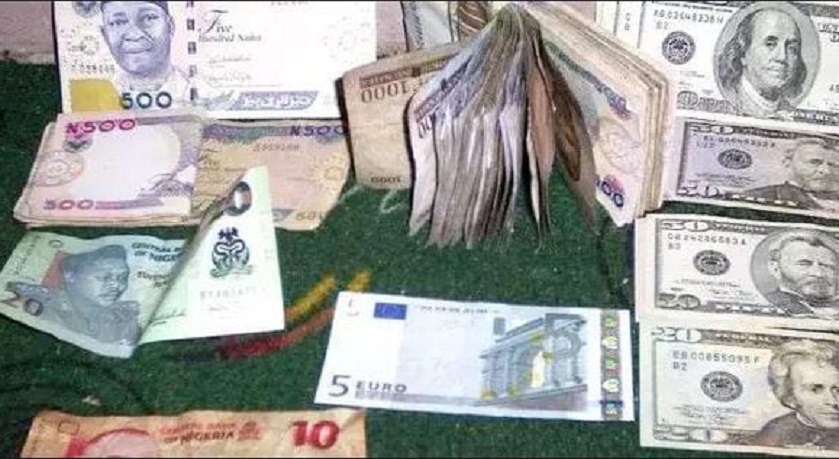
Nigeria's fx pressure

By Adedapo Adesanya

The chief executive of Dangote Group, Mr Aliko Dangote, says the injection of petrol from his 650,000 barrels per day refinery into the domestic market will help ease Nigeria’s foreign exchange pressure by 40 per cent.

This was one of his soundbites from his recent interview with Bloomberg Television in New York earlier this week.

“We will sell the crude in Naira after we have bought in Naira. So now, we are currently working out with the committee that the exchange rate is going to be priced. It is going to be normal pricing, you know, if crude is at $80, we will pay that price at an agreed exchange rate.

“And then, we will also sell in the domestic market. What that will do is that it’s going to remove 40 per cent pressure on the naira. So because see, the petroleum products consume about 40 per cent of foreign exchange, so you know, and then, you know, it’s like you have 40 per cent of demand been taken out so that can actually stabilize the naira and even if they subsidise, they would know what they are paying for,” the businessman said.

He said that the idea was to leverage an agreement that would serve its business operation and the government.

“The deal is to give the government something that they want. It’s also a win-win situation for all and it would benefit the country.

“Currently, discussions are still ongoing to determine the details of the agreement. They are working out something that I think would be a win-win between us and the NNPC.

“The agreement is very robust. Well, first of all, we would have energy security where they will give us crude. For example, in October, they’re going to give us 12 million barrels, which is on average, about 390,000 barrels a day, which will sell both gasoline, diesel, and aviation fuel,” he explained.

He also revealed the details of the pricing disagreement that occurred with the NNPC Limited.

He said the national oil company bought its current stock from the refinery at a cheaper price than its imported fuel but gave a uniform price for all products.

“There wasn’t really a disagreement, per se. NNPC bought from us on the 15th of September at the international price, which they also bought, about 800,000 metric tons of gasoline imported. So the one that they bought from us actually is cheaper than the one they are importing.

“And so when they announced our price, the guy, I don’t know whether he was authorized. It wasn’t really the real price. What they have announced is most likely that is what it cost them, including profit and other expenses.

“And then the other one is one that they imported. But the people don’t know how much they spend in terms of imports, but their importation is almost, maybe about 15 per cent more expensive than ours, you know.

“So what they are supposed to do is to sell at a basket price, or if they want to remove subsidy, they can announce that they will remove subsidy, which is okay, everybody you know will adjust it.”

Mr Dangote said that discussions are still ongoing and a detailed agreement will be finalised this week on the planned crude oil sales anticipated to begin in October.


Adedapo Adesanya is a journalist, polymath, and connoisseur of everything art. When he is not writing, he has his nose buried in one of the many books or articles he has bookmarked or simply listening to good music with a bottle of beer or wine. He supports the greatest club in the world, Manchester United F.C.

Economy

NGX Records 2026 Highest Daily Gain of 1.65% as YtD Return Hits 13.62%

Published

on

Cross Deals

By Dipo Olowookere

The Nigerian bourse showed no signs of slowing its bull run as it further appreciated by 1.65 per cent on Tuesday, its highest daily gain in 2026.

This was influenced by continued interest in shares in the energy, consumer goods and industrial goods sectors.

Data from the Nigerian Exchange (NGX) Limited revealed that the energy space increased by 2.97 per cent, the industrial goods counter appreciated by 2.93 per cent, the banking index expanded by 1.83 per cent, the consumer goods sector improved by 0.16 per cent, and the insurance segment rose by 0.01 per cent.

As a result, the All-Share Index (ASI) added 2,863.20 points to close at 176,809.42 points compared with the previous day’s 173,946.22 points, and the market capitalisation soared by N1.838 trillion to N113.497 trillion from N111.659 trillion.

The growth recorded by Customs Street yesterday was mainly due to buying pressure on some bellwether stocks like MTN, GTCO, BUA Cement, Lafarge Africa and others.

Sixty-six equities ended on the gainers’ chart during the session, while 22 equities finished on the losers’ chart, indicating a positive market breadth index and bullish investor sentiment.

The quartet of Omatek, Deap Capital, eTranzact, and John Holt chalked up 10.00 per cent each to sell for N3.19, N8.25, N20.35, and N8.80 apiece, while Vitafoam Nigeria gained 9.98 per cent to settle at N105.80.

Conversely, Abbey Mortgage Bank lost 9.82 per cent to trade at N12.40, SAHCO declined by 9.06 per cent to N150.00, Guinea Insurance slipped by 6.67 per cent to N1.54, Consolidated Hallmark shrank by 6.64 per cent to N4.50, and Livestock Feeds depleted by 6.34 per cent to N6.65.

A total of 1.3 billion stocks valued at N50.4 billion exchanged hands in 58,965 deals on Tuesday compared with the 775.2 million stocks worth N27.9 billion transacted in 65,960 deals on Monday, implying a fall in the number of deals by 10.61 per cent, and a growth in the trading volume and value by 67.70 per cent and 80.65 per cent, respectively.

Deap Capital was the most active stock for the day with a turnover of 283.1 million units valued at N2.0 billion, Access Holdings traded 135.5 million units worth N3.2 billion, Veritas Kapital transacted 67.3 million units for N149.7 million, Tantalizers exchanged 54.7 million units valued at N289.8 million, and Zenith Bank sold 52.1 million units worth N4.0 billion.

Continue Reading

Economy

Oil Slips as Markets Await US–Iran Signals, Ukraine Peace Moves

Published

on

OPEC Global Oil Demand

By Adedapo Adesanya

Oil went down less than 1 per cent on Tuesday as the markets waited for direction from news on diplomatic relations between the US and Iran, while the traders monitored efforts to end Russia’s war in Ukraine.

Brent futures fell 24 cents or 0.3 per cent to settle at $68.80 a barrel, while US West Texas Intermediate (WTI) crude declined by 40 cents or 0.6 per cent to $63.96 per barrel.

US and Iranian diplomats held talks through mediators in Oman last week in an effort to revive diplomacy, after President Donald Trump positioned a naval fleet in the region, raising fears of new military action.

According to Iran’s foreign ministry spokesperson on Tuesday, nuclear talks with the US allowed Iran to gauge the seriousness of the American government and showed enough consensus to continue on the diplomatic track.

Market analysts noted that unless there are concrete signs of supply disruptions, prices will likely start going lower, especially since there was no blockade to the Strait of Hormuz. About a fifth of the oil consumed globally passes through the Strait of Hormuz between Oman and Iran, making any escalation in the area a major risk to global oil supplies.

Iran and fellow Organisation of the Petroleum Exporting Countries (OPEC) members Saudi Arabia, United Arab Emirates, Kuwait and Iraq export most of their crude via the strait, mainly to Asia.

The European Union (EU) is moving to propose a list of concessions that Europe should demand from Russia as part of a settlement to end the war in Ukraine. The move is part of efforts to squeeze Russian revenue. Russia was the world’s third-biggest crude producer behind the U.S. and Saudi Arabia in 2025.

Reuters reported that already, India, through its state oil company, Indian Oil Corporation (IOC), bought six million barrels of crude from West Africa and the Middle East, traders said, as India steered clear of Russian oil.

The American Petroleum Institute (API) estimated that crude oil inventories in the US increased by a whopping 13.4 million barrels in the week ending February 6. Official data from the Energy Information Administration (EIA) will be released later on Wednesday.

Continue Reading

Economy

Nigeria Revenue Service Targets N40.7trn in 2026

Published

on

tax-to-GDP ratio

By Adedapo Adesanya

The Nigeria Revenue Service (NRS), formerly known as the Federal Inland Revenue Service (FIRS), has fixed a collection target of N40.7 trillion for the 2026 fiscal year.

This is hinged on its last year’s record revenue collection of N28.3 trillion, which the Executive Director overseeing Government and Large Taxpayers, Mrs Amina Kurawa, said represents an increase of more than 30 per cent when compared to the N25.5 trillion recorded in 2024.

Mrs Kurawa, while speaking at a staff retreat organised by the service, explained that a bulk of the revenue collected during the period was driven by the non-oil sector.

According to her, the ambitious target for this year will be supported by stronger non-oil revenue contributions and improved collections from royalty-based income streams.

Meanwhile, the Chairman of the agency, Mr Zacch Adedeji, urged staff to raise their performance in the coming year, emphasising that transparency and accountability remain central to the agency’s operations.

The organisation also projected growth in non-oil tax receipts in 2026, with Company Income Tax (CIT), Value Added Tax (VAT), and the Development Levy expected to play leading roles in boosting government revenue.

On June 26, 2025, President Bola Tinubu signed into law a historic package of tax reform legislation, marking the most comprehensive overhaul of Nigeria’s fiscal architecture in decades. The four Acts: The Nigeria Tax Act, Nigeria Revenue Service (Establishment) Act, Nigeria Tax Administration Act, and the Joint Revenue Board (Establishment) Act, seek to streamline revenue administration, enhance compliance, strengthen intergovernmental coordination, and reposition the tax system to support inclusive growth.

By consolidating over a dozen outdated statutes and introducing modern mechanisms for enforcement, digitalisation, and dispute resolution, these reforms are expected to significantly reshape Nigeria’s fiscal future, which will translate to more Nigerians entering the tax base.

For instance, the Nigeria Tax Act, 2025, repeals and consolidates over a dozen federal tax laws into a single unified statute. It replaces legacy laws such as the Companies Income Tax Act (CITA), Personal Income Tax Act (PITA), Capital Gains Tax Act (CGTA), Value Added Tax Act, and the Stamp Duties Act, among others. This consolidation aims to reduce fragmentation, promote consistency, and modernise Nigeria’s tax framework for a digital and globally integrated economy.

Business Post reports that the Federal Inland Revenue Service (Establishment) Act, 2007, was repealed and formally established the NRS as the central authority for the assessment, collection, accounting, and enforcement of federally collectable taxes and other designated revenues.

Continue Reading

Trending