Connect with us

Feature/OPED

Liberated Africa: Pathways to Self-Transformational Development

Published

on

By Ehiedu Iweriebor

In the period since independence in the 1950s, Africa has undergone profound social, cultural, economic and political changes. Some inherited and historically rootless colonialist political and social systems have collapsed, been transcended and reconstituted. Different political systems – single party rule, personal rule and military governments have come and gone. New post-independence political and social systems; economic institutions, professional associations and labour unions, various types – traditional and new and varied cultural expressions have all emerged. Creative efforts to foster effective nation-building, develop a sense of belonging and manage diversity productively have also been made. New political systems, different forms of electoral democracy and democratic government;  political parties and groups, varied social and intelligentsia organizations, confident youth groups, civil society organizations are also emerging. Disruptive and traumatic political and social crises have occurred. These include civil wars, secessionist wars, famines, elite generated manipulative ethnicity and deadly intergroup conflicts, and recently home grown and imported religious terrorism and their destructive wars, spectacular damaging actions, the creation of refugees and internally displaced peoples and the generation of general feelings of insecurity.

Social development institutions like health and educational facilities that barely existed under colonialism have been built. For example, vast numbers of schools at all levels including universities and other tertiary institutions – conventional and specialized have been established and dot various parts of Africa. They have produced millions of educated Africans as never existed before in African history. New physical infrastructures: roads, railways, water ways and airports have been built. This is a rough profile of profound changes in Africa since the 1950s.

However, given Africa’s size and vast unmet human, social and economic needs there is no question that substantial as what has been built is, the extant physical and social infrastructures are not adequate or abundant enough.

At the same time, it is quite clear that the physical and social landscapes of Africa today are vastly different from what they were 60 years ago such that it is unlikely that people from those times will recognize Africa of today.

Yet it is also true that there are some aspects of African realities that have not changed substantively or for the better during this period because Africa did not regain, recover or assert its ownership and use of its autonomous self-direction capacities in some spheres over the past six decades. These are primarily in the areas of economic sovereignty, development capacitation, self-actuated development and ideological self-direction. This failure is manifested in such conditions as persistent underdevelopment, the pre-eminence of primary commodities production and export in its economic interactions with the world, import dependency, development incapacitation and poverty generation. It is also manifested in Africa’s ideological subordination to external diktat through the acceptance and implementation of the economic management dogmas and prescriptions of the multilateral imperialist agencies – the World Bank, IMF and similar bilateral external agencies. These prescribed non-development dogmas include: privatization, deregulation and African states self-withdrawal from promoting socio-economic development and the simultaneous promotion of the ascendancy of  “MARKET FORCES, FOREIGN INVESTORS, FOREIGN DIRECT INVESTMENTS and FOREIGN TECHNOLOGY TRANSFER ” as the primary and indispensable engines of African economic growth.

The forceful application of these disempowering dogmas through the active complicity of psychologically programmed and ideologically defeated African leaders and elite over the past three decades has yielded or in fact consolidated Africa in its status as under- developed, under-equipped and incapable of development self-propulsion. With African economies arrested in primary commodity export and the mass importation of manufactured goods they are mired in the same exocentric rut and this inevitably results in the export of jobs and import of poverty, therefore recurrent poverty-generation.

This condition and its persistence over this period suggest that IT CANNOT BE RESOLVED WITHIN ITSELF. It has to be transcended by African strategies of psycho-cultural recovery and development capacitation. Psycho-cultural recovery will entail the self-conscious efforts of liberated Africans to peel off the layers of self-deceit, self-delusion, psycho-ideological incapacitation, diminution of African self-worth, self-marginalization of African agency in African development. It would also require the expurgation from African leaderships and elite of their worshipful dependence on outsiders and preference for all things foreign including pre-fabricated solutions that have been introduced into Africa as dogmas of disempowerment and mechanisms of control from the slave trade era to the present. In its various incarnations, African disempowerment was partially procured through various  seemingly neutral but ultimately destructive external ideological constructs such as “Christianization”, “Islamization”; European “Civilization” during the colonial era; “Modernization” in the neo-colonial period after independence and its latest expression, as multilateral imperialist “globalism” and dictatorial globalization that ideologically and politically dictates a single, global capitalist and liberal democratic system as the only “approved” economic, political and social and order for all times. This would be composite world of the rich and powerful, and the weak and powerless with Africa at the top.

But all these disempowering political, social, cultural and economic constructs and systems of domination were politically and self-consciously created by organized and mission-driven national and racial elites pursuing the objectives of group ascendancy and global domination. They are not divine constructs imposed on the world. In the same way, liberated Africans can self-consciously choose and work to exit from this state of UNFREEDOM AND INDIGNITY by dismantling and reconstituting the extant world order (as Asians have done) and chose to create and enter the realms of FREEDOM AND SELF-DIRECTION through development capacitation, psychological liberation, cultural recuperation, mental freedom and self-actuated development so as to emerge as powerful participants in the world system as actors not subjects. This is the liberatory imperative.

In order for Africa to assume responsibility for its own transformation and elevation, and be able to undertake self-reliant development and create secure domestic prosperity, it has to create its own specific ideology and strategy of self-development. To do this there are a number of irreducible components that have to be designed and put in place. These are: the recovery and application of African agency in African development, the creation of the liberated African state, establishment of an African development capacitation system, the creation and dissemination of the Affirmative Africa Narrative and African comprehensive military empowerment.

The Centrality of African Agency in African Development

The first requirement of this liberated development strategy and process is the emplacement of African Agency at the centre of African thought and action as the primary psycho-cultural foundation, ideological premise and endogenous propellant for Africa’s self-actuated development. In this context African Agency is the endogenously created psycho-cultural software embedded in societies with which African societies train, organize, motivate, self-activate and direct themselves to accomplish desirable ends individually and collectively. It is the absolute psycho-cultural grounding and ideological ownership of the African project devoid of compromises to any external imperatives. African Agency is grounded on the supremacy of African endocentric thought and motive-forces as the propellants of development as a self-directed imperative.

Without contemporary Africans’ psychological internalization of this understanding and ownership of their development vision and their assumption of complete responsibility for self-actuated development, African societies will remain dependent, underdeveloped and insecure. Therefore the new liberated Africa vision must recognize the absolute necessity of the restoration of African Agency to primacy for any successful African actuated process of transformation. This new perspective is critically important because it has to be realized that one of the major challenges and primary impediment to Africa’s development since independence in the 1960s has been the absence of African Agency in African development as the directive force. This was due to the concerted and largely successful efforts of external multilateral imperialist forces (posing as omniscient advisers) working with psycho-ideologically unprepared and even naive African collaborator-leaders to promote exocentric authority and the corresponding marginalization, diminution and de-activation of African Agency in African development. Consequently, without the unquestioned ascendancy, centrality and directive role of African Agency, African development understood as Africans’ self-equipment for total liberation and radical transformation can never occur.

The Liberated African State

Second, is the imperative of the creation of a new Liberated African State through the rigorous ideological cleansing, psychological re-empowerment and administrative reconstruction of the contemporary politically compromised and disabled neo-colonial African states that are more representative of external forces than national interests.

The decolonization of the colonial African state and the evolution and emergence of the liberated state after independence was disrupted in the 1980s when most African states were captured and disabled by the cancerous ideologies, dogmas and prescriptions of the multilateral imperialist agencies – the World Bank and the IMF and their bilateral supporters in the context of the economic crises of the late 1970s and early 1980s. Embodied in various formulations and policy diktats such as the Structural Adjustment Programme (SAP), and its unvarying conditionalities: currency devaluation, subsidy removal, trade liberalization and others like deregulation, privatization, poverty reduction; these prescriptions have transformed African states into disabled, compromised, neo-colonial political-administrative contraptions that are responsible to neo-imperialist multilateral institutions and not to Africans. They therefore cannot serve Africa’s interests

This is why it is imperative to create the new Liberated African state. It will be a strong and interventionist developmental state. Its raison d’ etre would be the representation and promotion of national interests. This Liberated African state will be grounded on the affirmation and militant expression of its untrammeled sovereignty; and the absolute non-compromise of national interests to any external agencies, formulations, dogmas and imperatives. It would self-consciously assume and assert uncontested ideological ascendancy. In fact the new liberated state will represent the completion of the decolonization of the African states and the emergence of truly endogenous states. It is only such Liberated African developmental states that can lead to the realization of the African citizens’ expectations for defence and protection, advanced development, material prosperity and freedom from want and colonialist philanthropy, psychological security and empowerment, dignity and equity with all other groups in the world.

The African Development Capacitation System

The third critical requirement is the development and placement of an African Development Capacitation System as the primary motive-force for Africa’s social and economic transformation and creation of advanced societies. This is proposed against the background of the complete failure of the extant neo-colonial economic system inherited and maintained from colonialism. In over five decades of its use and application as the dominant economic management system and growth strategy it has yielded and maintained Africa in a state of development incapacitation, primary commodity exportation, secondary goods importation, dependency, poverty generation, incapacity for self-propulsion, and subjection to the diktat and control of multilateral imperialist agencies – the World Bank and IMF. It is quite clear that the extant exocentric economic system with its development motive forces externally situated is organically defective, un-reformable and inherently incapable of propelling Africa to the highest levels of development.

Therefore in order for Africa to develop and achieve the highest levels of human development it has to own the instruments and systems of self-actuated development. This perspective is partly based on this author’s succinct definition of Development – as a society’s self-equipment with the resources and capacities for its self-reproduction. Consequently, the African Development Capacitation system is the creation and existence within all African societies of the endogenous capacities to conceive, design, construct, manage and operate projects in ALL sectors of the economy. These include the technological, scientific, managerial and operational capabilities for all facets of modern industrial and agricultural production and development self-propulsion.

Practically, the components of the development capacitation system include the domestic possession and ownership of the following capacities: Project Conception and Design capabilities; Technological Production Capacity or Capital Goods Industries comprising : Engineering Industries for the manufacture of all types and levels of machine tools, industrial machinery and equipment, transport equipment, electrical and power equipment;  electronic and professional tools and equipment. Intermediate Goods Industries (Metals, Heavy Chemicals, Petrochemicals, Paper, Rubber etc); Civil Engineering Construction Capabilities for large, medium and small scale projects; and Project management and operation and supervision Capabilities.

This endogenous development capacitation system is found in all successful  global examples of societal self-development as the prime movers of any society’s self-actuated transformation from conditions of UN-FREEDOM: material underdevelopment, mass poverty, indignity and colonialist philanthropy to new empowered conditions of FREEDOM: expressed as self-created material abundance and prosperity, psycho-cultural confidence and dignified existence. This is practically expressed in mass industrialization, modernized mass agricultural production, mass mineral exploitation and beneficiation primarily for domestic use; mass employment, mass prosperity generation; cultural elevation, self-actuation, self-agency, human dignity and societal power. This is in effect the enthronement of the strategy and process of endocentricity and its ineluctable creation and production of a state of development.

The Affirmative Africa Narrative

The fourth basic requirement is the creation and permanent dissemination of a self-elevating paradigm or narrative to be known as the Affirmative Africa Narrative. Currently there is no global African created narrative that conceives, presents, projects and widely propagates a truthful, complex and elevating narrative of Africa and Africans. In its absence there exists a universal externally fabricated, pervasive and routinely propagated perverse perspective on Africa that I describe as the Pathological Africa Narrative. This narrative which evolved from the era of the European slave trade; was expansively propagated and consolidated during colonialism and has been fine-tuned and expanded since independence to the present to include other foreign propagators like Asians and even Africans. It presents an image and impression; perception and narrative of Africa as a world of deficits, lack, deprivation, absence, danger, disease, inaction, native incapacity, immobility and a basket charity case that is rescueable only by the self-assigned salvationary efforts of Western multilateral imperialist agencies – World Bank and IMF – their dogmas, experts and prescriptions. This Pathological Africa Narrative is not only inaccurate but it is also dangerous and damaging as it represents the software of African self-denigration, servility, surrender and incapacitation.

In order to pursue the vision of liberated Africa it is imperative to create and propagate the Affirmative Africa Narrative. This would be a robust and unapologetic statement of African accomplishments in all areas of human endeavor since independence despite all internal and external obstacles. It would provide the psychological props and grounding among Africans for their self-representation. The Affirmative Africa Narrative is intended to confront, combat, degrade, pulverize, defeat, eliminate and replace the Pathological Africa Narrative that currently pervades external and internal descriptions and representations of Africa and Africans. In its place, the Affirmative Africa Narrative should become the primary perceptual representation and imagistic projection of an energetic and boundless; resurgent and self-directed Africa.

Consequently, for Africans committed to racial upliftment and continental advancement and empowerment embodied in the new liberated Africa vision, the requisite framework of self-representation, self-projection and self-activation is the Affirmative Africa Narrative. This is thus a necessary and indispensable accompaniment and organic adjunct to the determined pursuit of the liberated African vision and mission.

The Imperative of African Military Empowerment

A fifth requirement of the liberated Africa vision is the imperative of Africa’s military empowerment through deliberate provisions for continent-wide development of military capabilities. In order to meet the defence needs of a self-conscious people and continent determined to assume responsibility for its own self-advancement,  self-protection, self-projection and emergence as a powerful and dynamic participant in global affairs, two range of actions are minimally imperative.

First is the establishment and development of military industries throughout Africa to ensure that virtually all military equipment from the most basic to the most advanced are manufactured (not assembled) in Africa. This is will free Africa from its current pathetic situation of dependency for military wares from the countries which participated in the past in Africa’s conquest and colonization as well as from new armament producers and traders. To be militarily none self-equipped and self-reliant is to reside in a state of UNFREEDOM.

The second aspect of African military empowerment is the revival, re-steaming and realization of the long-standing grand visions from the 1960s for continental defence institutions and systems. The founding nationalist and pan Africanist leaders of the 1960s and 1970s, had canvassed and proposed the development a comprehensive continental military defence system. This is was to be known as the African Military High Command. These pioneer leaders envisaged it as a powerful continental defence force for self-protection, internal security issues, intra-continental intervention, conflict resolution, contributions to continental and global peace keeping and management as needed and as a force of self-projection that announces Africa’s global presence. It would also be responsible for the security of African geo-political and oceanic spaces against foreign powers desirous of containing, controlling and constraining Africa by the establishment of their military cordon around the continent.

The over-all rationale for the prescription of Africa’s military empowerment is due to the historical purblindness and psychological incapacitation of African leaderships and dominant elite since independence.  In the light of the rapid conquest, colonization and exploitation of African communities after the Berlin Conference between the 1880s-1900s, self-conscious Africans should never have the luxury of forgetting that Africa was conquered primarily because of Western military superiority in arms and armaments. Thus it would seem minimally patriotic, psychologically imperative, behaviourially logical and eminently sensible that such a people and continent should give premium attention to the establishment of a powerful military capacity for defence and offense as indicated by its historical experiences and new status as sovereign states.

Therefore a fulsome strategy for African military self-equipment and a powerful and expansive African Military High Command should be developed and incorporated as part of the liberated development strategy to equip Africa to defend, protect and project itself and to play a dynamic role in global affairs.

Conclusion

The various elements outlined above constitute a new strategy and process of endocentric development or African Liberated Development and their application would produce Liberated Africa. This Africa would be truly self-made: developmentally transformed, ideologically self-directed, politically stable, technologically advanced, industrially developed, socially prosperous, culturally renascent, psychologically assertive, militarily powerful, a globally ascendant continent with self-restored human dignity, an Africa of which all Africans will be duly proud.

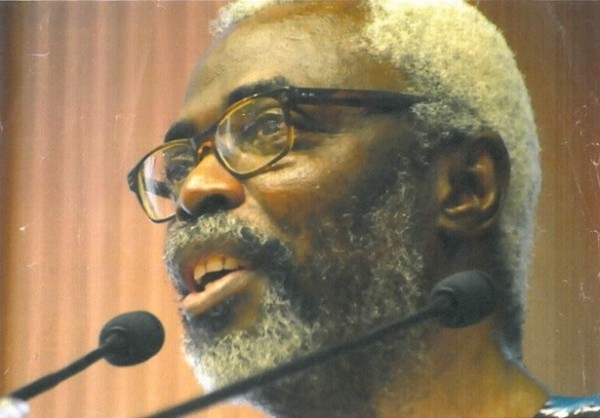
Ehiedu Iweriebor, Ph.d (Columbia) is a Professor and former Chair of the Department of Africana and Puerto Rican/Latino Studies, Hunter College, City University of New York, USA.


Modupe Gbadeyanka is a fast-rising journalist with Business Post Nigeria. Her passion for journalism is amazing. She is willing to learn more with a view to becoming one of the best pen-pushers in Nigeria. Her role models are the duo of CNN's Richard Quest and Christiane Amanpour.

Advertisement
Click to comment

Leave a Reply

Your email address will not be published. Required fields are marked *

Feature/OPED

Navigating Nigeria’s $1 Trillion Roadmap: Growth Indexes and PR Intelligence That Define Success in 2026

Published

on

Nosa Iyamu IVI PR

By Nosa Iyamu

As we navigate the threshold of 2026, the Nigerian economic landscape is finally shedding the “survivalist” skin that defined the previous two years. The data from 2025 paints a compelling picture of a nation pivoting toward stability. Headline inflation, which sat at a staggering 34.8% in December 2024, underwent a significant decline through 2025, cooling to 14.45% by November. This disinflationary trend, paired with economic reforms such as the Nigerian Electricity Regulatory Commission’s (NERC) aggressive reforms and strategic shifts in the Oil and Gas sector, has effectively reopened the floodgates for Foreign Direct Investment (FDI). The narrative has shifted from a desperate scramble for survival to a strategic quest for sustainability. Investors who were once hesitant are now looking at Nigeria not as a volatility risk, but as a market undergoing profound structural re-engineering. This transition is marked by a renewed focus on transparency and a commitment to market-driven policies that reward institutional resilience and long-term planning.

Building on the stability achieved last year, 2026 is projected to be a period of “Growth Consolidation.” With GDP expansion forecasted between 4.1% and 4.2% and headline inflation expected to settle into a manageable range of 12.5% to 20%, the mandate for brands should shift. It is no longer about merely surviving the storm of volatility; it is about scaling within high-impact corridors that have been cleared by these macroeconomic reforms. Strategic opportunities are ripening in four key sectors: Energy, driven by the Electricity Act 2023 and NERC’s cost-reflective market reforms; Healthcare, anchored by the landmark $5.1B Bilateral MOU between the U.S. and Nigeria; Financial Services, fueled by post-recapitalization lending power; and the Digital Economy, accelerated by the 5G rollout and the maturity of social commerce. Brands playing in these spaces and other industries must recognize that the consumer of 2026 is more discerning, having been refined by the economic hardships of the past, and will only reward businesses that offer clear value and authentic connection.

Perhaps the most pivotal anchor for 2026 is that $2 billion bilateral health Memorandum of Understanding (MOU) signed between the U.S. and Nigeria. This five-year agreement, which began its full implementation cycle in early 2026, is far more than a healthcare play; it is a massive economic stimulus and a resounding vote of global confidence in Nigeria’s institutional reforms. It signals that Nigeria is ready for high-level international cooperation and that the groundwork for a stable, productive economy is being laid. As we march toward the ambitious goal of a $1 trillion economy by 2030, visibility is no longer the endgame for any serious brand. To survive and thrive during this transition from subsistence to high productivity, brands must be deeply understood. It is about moving from the “top of mind” awareness to “top of heart” resonance, where the brand’s purpose aligns with the aspirations of a nation on the move.

In the fast-evolving communications landscape of 2026, visibility has become a cheap commodity, but clarity is a premium asset. The Public Relations industry has officially entered the era of Narrative Intelligence. Traditional Search Engine Optimization (SEO) is being rapidly superseded by Generative Engine Optimization (GEO). As consumers increasingly rely on AI agents and large language models (LLMs) rather than scrolling through pages of search results, brands must ensure they aren’t just “present” on the web—they must be cited as authoritative, credible voices by AI models. This requires a shift from keyword stuffing to high-context storytelling and data-backed authority. If an AI agent cannot summarize your brand’s value proposition accurately in two sentences, you are effectively invisible to the next generation of digital consumers. Narrative Intelligence is about ensuring your brand’s story is coherent, consistent, and machine-readable across all digital touchpoints.

However, this AI-driven world brings a darker side – the proliferation of Deepfakes and hyper-realistic misinformation. As the 2027 political cycle begins to warm up in late 2026, the Nigerian digital space could become a minefield of synthetic media designed to manipulate public opinion. For brands, this represents a significant reputational risk. PR professionals must now act as “Narrative Bodyguards,” deploying advanced AI detection tools to monitor, detect, and neutralize synthetic media before it erodes brand equity. Authenticity is no longer a buzzword or a marketing slogan; it is a defensive necessity. Brands must lean into “Responsible Communication,” ensuring that every piece of content is verifiable and that their response mechanisms for crisis management are faster than the speed of a viral deepfake. Trust, once lost in this high-speed environment, is nearly impossible to regain.

The era of the “Press Release for the sake of it” is officially dead. In 2026, Nigerian boardrooms are demanding a direct, quantifiable line between PR activity and business impact. This marks the definitive death of vanity metrics. Success is no longer measured by the thickness of a press clipping file or the number of generic “likes” on a social media post. Instead, we are seeing a shift from volume to impact, where the primary KPIs are how a campaign drives customer acquisition, increases investor interest, or improves employee retention. Measurement has shifted focus to quality over quantity; it is about the sentiment of the conversation and the conversion rate of the audience. If your PR strategy does not move the needle on the set measurable objectives, it is considered mere noise. PR is now a performance-driven discipline, integrated deeply into the sales and growth funnels of the modern Nigerian enterprise.

The age of the N100 million celebrity brand ambassador is also rapidly fading. Battle-hardened by years of economic shifts and broken promises, Nigerian consumers are increasingly skeptical of high-gloss, low-substance celebrity endorsements. In 2025, the Creator Economy has professionalized and matured. We will see the ascendancy of Niche Creators—the personal finance expert on TikTok, the sustainable farmer on YouTube, or the tech-policy analyst on Instagram. These voices offer what traditional celebrities cannot: community, deep credibility, and a mastery of their craft. Brands in 2026 will pivot toward long-term “Responsible Communication” partnerships with these creators who speak the hyper-local language of their audience. The “next big creator” is no longer a movie star; they are a subject matter expert with a loyal, high-intent community that values authentic insight over superficial fame.

While we must continue to support and prioritize independent media platforms to maintain democratic health, the reality is that traditional newsrooms continue to shrink under the weight of digital disruption. In response, savvy brands are increasingly becoming their own media houses. “Owned Media”—newsletters, podcasts, proprietary research reports, and custom-built community platforms—is the new frontier for brand storytelling. By owning the platform, brands can ensure their story is not diluted or lost in the noise of a fragmented media landscape. This allows for Direct Empathy, speaking to the consumer’s daily reality without a third-party filter. It provides Narrative Control, which is essential in an era of deepfakes, and grants Data Ownership, allowing brands to deeply understand who is engaging with their story and why. Owned media is the bridge that moves a brand from being seen to being truly understood and must be a strategy for 2026.

The 2026 landscape is a high-stakes arena of immense complexity and opportunity. With the active involvement of global powers like China, Russia, and the USA in trade and commerce, and a renewed national commitment to fighting insecurity to protect the $1 trillion goal, Nigeria is a land of profound transformation. But for a brand to capture this opportunity, it must move beyond the surface-level metrics of the past. Brands must empathize through genuine partnerships, drive cross-sector collaboration, and tell stories that resonate with the Nigerian spirit of resilience. The verdict for the year is clear: Trust is the new currency. In a world of AI-generated noise and economic restructuring, the brands that win will be those that have spent the time to build a foundation of understanding. The mandate for 2026 is simple: Don’t just show up. Ensure your audience knows exactly who you are, what you stand for, and why you are essential to their future.

Nosa Iyamu is the CEO of IVI PR

Continue Reading

Feature/OPED

On the Gazetted Tax Laws: What if Dasuki Was Indifferent?

Published

on

Abdussamad Dasuki

By Isah Kamisu Madachi

For over a week now, flipping through the pages of Nigerian newspapers, social media, and other media platforms, the dominant issue trending nationwide has been the discovery of significant discrepancies between the gazetted version of the tax laws made available to the public and what was actually passed by the Nigerian legislature.

Since this shocking discovery by a member of the House of Representatives, opinions from tax experts, public affairs analysts, activists, civil society organisations, opposition politicians, and professional bodies have been pouring in.

Many interesting events capable of burying the tempo of the debate have recently surfaced in the media, yet the tax law discussion persists due to how deeply entrenched public interest is in the contested laws.

However, while many view the issue from angles such as a breach of public trust, a violation of legislative privilege by the executive council, the passage of an ill-prepared law and so on, I see it from a different, narrower, and governance-centred perspective.

What brought this issue to public attention was an alarm raised by Abdulsammad Dasuki, a member of the House of Representatives from Sokoto State, during a plenary on December 17, 2025. He called the attention of the House to what he identified as discrepancies between the gazetted version of the tax laws he obtained from the Federal Ministry of Information and what was actually debated, agreed upon, and passed on the floors of both the House and the Senate.

He requested that the Speaker ensure all relevant documents, including the harmonised versions, the votes and proceedings of both chambers, and the gazetted copies, are brought before the Committee of the Whole for careful scrutiny. The lawmaker expressed concern over what he described as a serious breach of his legislative privilege.

Beyond that, however, my concern is about how safe and protected Nigerians’ interests are in the hands of our lawmakers at the National Assembly. This ongoing discussion raises a critical question about representation in Nigeria. Does this mean that if Dasuki had also been indifferent and had not bothered to utilise the Freedom of Information Act 2011 to obtain the gazetted version of the laws from the Federal Ministry of Information, take time to study it, and make comparisons, there would have been no cause for alarm from any of Nigeria’s 360 House of Representatives members and 109 senators? Do lawmakers discard the confidence we reposed in them immediately after election results are declared?

This debate should indeed serve a latent function of waking us up to the reality of the glaring disconnect between public interest and the interests of our representatives. The legislature in a democratic setting is a critical institution that goes beyond routine plenaries that are often uninteresting and sparsely attended by the lawmakers. It is meant to be a space for scrutiny, deliberation, and the protection of public interest, especially when complex laws with wide social consequences are involved.

We saw Ali Ndume in a short video clip that recently swept the media, furiously saying during a verbal altercation with Adams Oshiomhole over ambassadorial screening that “the Senate is not a joke.” The Senate is, of course, not a joke, and either should the entire National Assembly be.

Ideally, it should not be a joke to us or to the legislators themselves. Therefore, we should not shy away from discussing how disinterested those entrusted with the task of representing us, and primarily protecting our interests, appear to be in our collective affairs.

It is not a coincidence that even before the current debate around the tax reform law, it had continued to generate controversy since its inception. It also does not take quantum mechanics to understand that something is fundamentally wrong when almost nobody truly understands the law. Thanks to social media, I have come across numerous skits, write-ups, and commentaries attempting to explain it, but often followed by opposing responses saying that the authors either did not understand the law themselves or did not take sufficient time to study it.

The controversy around the gazetted Tax Reform Laws should not end with public outrage or media debates alone. It should force a deeper reflection on how laws are made, checked, and defended in Nigeria’s democracy. A system that relies on the alertness of one lawmaker to prevent serious legislative discrepancies is not a resilient or reliable system. Representation cannot be occasional and vigilance cannot be optional.

Nigerians deserve a legislature that safeguards their interests, not one that notices breaches only when a few individuals choose to be different and look closely. If this ongoing debate does not lead to formidable internal checks and a renewed sense of responsibility among lawmakers, then the problem is far bigger than a flawed gazette. When legislative processes fail, it is ordinary Nigerians who bear the cost through policies they did not scrutinize and consequences they did not consent to.

Isah Kamisu Madachi is a public policy enthusiast and development practitioner. He writes from Abuja and can be reached via: [email protected]

Continue Reading

Feature/OPED

After the Capital Rush: Who Really Wins Nigeria’s Bank Recapitalisation?

Published

on

CBN Building Governor Yemi Cardoso

By Blaise Udunze

By any standard, Nigeria’s ongoing bank recapitalisation exercise is one of the most consequential financial sector reforms since the 2004-2005 consolidation that shrank the number of banks from 89 to 25. Then, as now, the stated objective was stability to have stronger balance sheets, better shock absorption, and banks capable of financing long-term economic growth.

The Central Bank of Nigeria (CBN), in 2024, mandated a sweeping recapitalisation exercise compelling banks to raise substantially higher capital bases depending on their license categories. The categorisation mandated that every Tier-1 deposit money bank with international authorization is to warehouse N500 billion minimum capital base, and a national bank must have N200 billion, while a regional bank must have N50 billion by the deadline of 31st March 2026. According to the apex bank, the objectives were to strengthen resilience, create a more robust buffer against shocks, and position Nigerian banks as global competitors capable of funding a $1 trillion economy.

But in the thick of the race to comply and as the dust gradually settles, a far bigger conversation has emerged, one that cuts to the heart of how our banking system works. What will the aftermath of recapitalisation mean for Nigeria’s banking landscape, financial inclusion agenda, and real-sector development?

Beyond the headlines of rights issues, private placements, and billionaire founders boosting stakes, every Nigerians deserve a sober assessment of what has changed, and what still must change, if recapitalisation is to translate into a genuinely improved banking system.

The points are who benefits most from its evolution, and whether ordinary Nigerians will feel the promised transformation in their everyday financial lives, because history has taught us that recapitalisation is never a neutral policy. The fact remains that recapitalization creates winners and losers, restructures incentives, and often leads to unintended outcomes that outlive the reform itself.

Concentration Risk: When the Big Get Bigger

Recapitalisation is meant to make banks stronger, and at the same time, it risks making them fewer and bigger, concentrating power and risks in an ever-narrowing circle. Nigeria’s Tier-1 banks, those already controlling roughly 70 percent of banking assets, are poised to expand further in both balance sheet size and market influence. This deepens the divide between the “haves” and “have-nots” within the sector.

A critical fallout of this exercise has been the acceleration of consolidation. Stronger banks with ready access to capital markets, like Access Holdings and Zenith Bank, have managed to meet or exceed the new thresholds early by raising funds through rights issues and public offerings. Access Bank boosted its capital to nearly N595 billion, and Zenith Bank to about N615 billion.

In contrast, banks that lack deep pockets or the ability to quickly mobilise investors are lagging. The results always show that the biggest banks raise capital faster and cheaper, while smaller banks struggle to keep pace.

As of mid-2025, fewer than 14 of Nigeria’s 24 commercial banks met the required capital base, meaning a significant number were still scrambling, turning to rights issues, private placements, mergers, and even licensing downgrades to survive.

The danger here is not merely numerical. It is systemic: as capital becomes more concentrated, the banking system could inadvertently mimic oligopolistic tendencies, reducing competition, narrowing choices for customers, and potentially heightening systemic risk should one of these “too-big-to-fail” institutions falter.

Capital Flight or Strategic Expansion? The Foreign Subsidiary Question

One of the most contentious aspects of the recapitalisation aftermath has been the deployment of newly raised capital, especially its use outside Nigeria. Several banks, flush with liquidity from rights issues and injections, have signalled or executed investments in foreign subsidiaries and expansions abroad, like what we are experiencing with Nigerian banks spreading their tentacles to the Ivory Coast, Ghana, Kenya, and beyond. Zenith Bank’s planned expansion into the Ivory Coast exemplifies this outward push.

While international diversification can be a sound strategic move for multinational banks, there is an uncomfortable optics and developmental question here: why is Nigerian money being deployed abroad when millions of Nigerians remain unbanked or underbanked at home?

According to the World Bank, a large number of Nigeria’s adult population still lack access to formal financial services, while millions of SMEs, micro-entrepreneurs, and rural households remain on the edge, underserved by traditional banks that now chase profitability and scale.

Of a truth, redirecting Nigerian capital to foreign markets may deliver shareholder returns, but it does little in the short term to advance domestic financial inclusion, poverty reduction, or grassroots economic participation. The optics of capital flight, even when legal and strategic, demand scrutiny, especially in a nation still struggling with deep regional and demographic disparities.

Impact on Credit and the Real Economy

For the ordinary Nigerian, the most important question is simple: will recapitalisation make credit cheaper and more accessible?

History suggests the answer is not automatic. The tradition in Nigeria’s bank system is mainly to protect returns, and for this reason, many banks respond to higher capital requirements by tightening lending standards, raising interest rates, or focusing on low-risk government securities rather than private-sector loans, because raising capital is expensive, and banks are profit-driven institutions.  Small and medium-sized enterprises (SMEs), often described as the engine of growth, are usually the first casualties of such risk aversion.

If recapitalisation results in stronger balance sheets but weaker lending to the real economy, then its benefits remain largely cosmetic. The economy does not grow on capital adequacy ratios alone; it grows when banks take measured risks to finance production, innovation, and consumption.

Retail Banking Retreat: Handing the Mass Market to Fintechs?

In recent years, we have witnessed one of the most striking shifts, or a gradual retreat of traditional banks from mass retail banking, particularly low-income and informal customers.

The question running through the hearts of many is whether Nigerian banks are retreating from retail banking, leaving space for fintech disruptors to fill the void.

In recent years, players like OPAY, Moniepoint, Palmpay, and a host of digital financial services arms have become de facto retail banking platforms for millions of Nigerians. They provide everyday payment services, wallet functionalities, micro-loans, and QR-enabled commerce, areas traditional banks once dominated. This trend has accelerated as banks chase corporate clients where margins are higher and risk profiles perceived as more manageable. The true picture of the financial landscape today is that the fintechs own the retail space, and banks dominate corporate and institutional finance. But it is unclear or uncertain if this model can continue to work effectively in the long term.

Despite the areas in which the Fintechs excel, whether in agility, product innovation, and customer experience, they still rely heavily on underlying banking infrastructure for liquidity, settlement, and regulatory compliance. Should the retail banking ecosystem become split between digital wallets and corporate corridors, rather than being vertically integrated within banks, systemic liquidity dynamics and financial stability could be affected.

Nigerians deserve a banking system where the comforts and conveniences of digital finance are backed by the stability, regulatory oversight, and capital strength of licensed banks, not a system where traditional banks withdraw from retail, leaving unregulated or lightly regulated players to carry that mantle.

Corporate Governance: When Founders Tighten Their Grip

The recapitalisation exercise has not been merely a technical capital-raising exercise; it has become a theatre of power plays at the top. In several banks, founders and major investors have used the exercise to increase their stakes, concentrating ownership even as they extol the virtues of financial resilience.

Prominent founders, from Tony Elumelu at UBA to Femi Otedola at First Holdco and Jim Ovia at Zenith Bank, have all been actively increasing their shareholdings. These moves raise legitimate questions about corporate governance when founders increase control during a regulatory exercise. Are they driven by confidence in their institutions, or are they fortifying personal and strategic influence amid industry restructuring?

Though there might be nothing inherently wrong with founders or shareholders demonstrating faith in their institutions, one fact remains that the governance challenge lies not simply in who holds the shares, but how decisions are made and whose interests are prioritised. Will banks maintain robust internal checks and balances, ensuring that capital deployment aligns with national development goals? The question is whether the CBN is equipped with adequate supervisory bandwidth and tools to check potential excesses if emerging shareholder concentrations translate into undue influence or risks to financial stability. These are questions that transcend annual reports; they strike at the heart of trust in the system.

Regional Disparity in Lending: Lagos Is Not Nigeria

One of the persistent criticisms of Nigerian banking is regional lending inequality. It has been said that most bank loans are still overwhelmingly concentrated in Lagos and the Southwest, despite decades of financial deepening in this region; large swathes of the North, Southeast, and other underserved regions receive disproportionately smaller shares of credit. This imbalance not only undermines inclusive growth but also fuels perceptions of economic exclusion.

Recapitalisation, in theory, should have enhanced banks’ capacity to support broader economic activity. Yet, the reality remains that loans and advances are overwhelmingly concentrated in economic hubs like Lagos.

The CBN must deploy clear incentives and penalties to encourage geographic diversification of lending. This could include differentiated capital requirements, credit guarantees, or tax incentives tied to regional loan portfolios. A recapitalised banking system that does not finance national development is a missed opportunity.

Cybersecurity, Staff Welfare, and the Technology Deficit

Beyond balance sheets and brand expansion, there is a human and technological dimension to the banking sector’s challenge. Fraud remains rampant, and one of the leading frustrations voiced by Nigerians involves failed transactions, delayed reversals, and poor digital experience. Banks can raise capital, but if they fail to invest heavily in cybersecurity, fraud detection, staff training, and welfare, the everyday customer will continue to view the banking system as unreliable.

Nigeria’s fintech revolution has thrived precisely because it has pushed incumbents to become more customer-centric, agile, and tech-savvy. If banks now flush with capital don’t channel a portion of those funds into robust IT systems, workforce development, fraud mitigation, and seamless customer service, then the recapitalisation will have achieved little beyond stronger balance sheets. In short, Nigerians should feel the difference, not merely in stock prices and market capitalisation, but in smooth banking apps, instant reversals, responsive customer care, and secure platforms.

The Banks Left Behind: Mergers, Failures, or Forced Restructuring?

With fewer than half the banks having fully complied with the recapitalisation requirements deep into 2025, a pressing question is: what awaits those that lag? Many banks are still closing capital gaps that run into hundreds of billions of naira. According to industry estimates, the total recapitalisation gap across the sector could reach as much as N4.7 trillion if all requirements are strictly enforced.

Banks that fail to meet the March 2026 deadline face a few options:

–       Forced M&A. Regulators could effectively compel weaker banks to merge with stronger ones, echoing the consolidation wave of 2005 that reduced the sector from 89 to 25 banks.

–       License downgrades or conversions. Some banks may choose to operate at a lower license category that demands a smaller capital base.

–       Exits or closures. In extreme cases, banks that can neither raise capital nor find a merger partner might be forced out of the market.

This regulatory pressure should not be construed merely as punitive. It is part of the CBN’s broader architecture of ensuring that only solvent, well-capitalised, and risk-prepared institutions operate. However, the transition must be managed carefully to prevent contagion, protect depositors, and preserve confidence.

Why Are Tier-1 Banks Still Chasing Capital?

Perhaps the most intriguing puzzle is why some Tier-1 banks, long regarded as strong and profitable, are aggressively raising capital. Even banks thought to be among the strongest, such as UBA, First Holdco, Fidelity, GTCO, and FCMB, have struggled to close their capital gaps. UBA, for instance, succeeded in raising around N355 billion toward its N500 billion target at one point and planned additional rights issues to bridge the remainder.

This reveals another reality that capital is not just numbers on paper; it is investor confidence, market appetite, and macroeconomic stability.

One can also say that the answer lies partly in ambition to expand into new markets, infrastructure financing, and compliance with stricter global standards.

However, it also reflects deeper structural pressures, including currency depreciation eroding capital, rising non-performing loans, and the substantial funding required to support Nigeria’s development needs. Even giants are discovering that yesterday’s capital is no longer sufficient for tomorrow’s challenges.

Reform Without Deception

As the Nigerian banking sector recapitalization exercise comes to a close by March 31, 2026, the ultimate test will be whether the reforms deliver on their transformational promise.

Some of the concerns in the minds of Nigerians today will be to see a system that supports inclusive growth, equitable credit distribution, world-class customer service, and resilient financial intermediation. Or will we see a sector that, despite larger capital bases, still reflects old hierarchies, geographic biases, and operational friction? The cynic might say that recapitalisation simply made big banks bigger and empowered dominant shareholders.

But a more hopeful perspective invites stakeholders, including regulators, customers, civil society, and bankers themselves, to co-design the next chapter of Nigerian banking; one that balances scale with inclusion, profitability with impact, and stability with innovation. The difference will be made not by press releases or shareholder announcements, but by deliberate regulatory action and measurable improvements in how banks serve the economy.

For now, the capital has been raised, but the true capital that counts is the confidence Nigerians place in their banks every time they log into an app, make a transfer, or deposit their life’s savings. Only when that trust is visible in everyday experience can we say that recapitalisation has truly succeeded.

Blaise, a journalist and PR professional, writes from Lagos and can be reached via: [email protected]

Continue Reading

Trending